Author: Bao Ngan Nguyen
บางทีในชีวิต คุณจะอยากชมคนอื่นน่ารักเป็นภาษาอังกฤษเหมือนที่คุณเจอคนๆหนึ่งในครั้งแรกและอยากสร้างความประทับใจกับเขา ชมเพื่อนๆ ญาติ คนรัก คู่ชีวิต งั้นชมว่าน่ารักในภาษาอังกฤษต้องพูดอย่างไรเพื่อทำให้คนฟังรู้สึกดีใจ งั้นเพื่อนๆห้ามพลาดบทความนี้ของ ELSA Speak นะ เพื่อจะได้คำศัพท์เพิ่มเติมเกี่ยวกับคำว่าน่ารักภาษาอังกฤษนะ
คำศัพท์น่ารักที่สุดภาษาอังกฤษ
คำว่า น่ารัก ในภาษาอังกฤษ มีหลายคำให้เลือกใช้ คำที่เราได้ยินบ่อยที่สุดคือคำว่า cute ซึ่งแปลตรงตัวว่าน่ารัก แต่จริง ๆ แล้ว ยังมีคำอีกมากมายที่สามารถใช้แทนคำว่า น่ารักในภาษาอังกฤษ ได้เช่นกัน เช่นคำว่า adorable, charming, หรือ lovely แต่ละคำก็มีความหมายและความรู้สึกที่แตกต่างกันเล็กน้อย
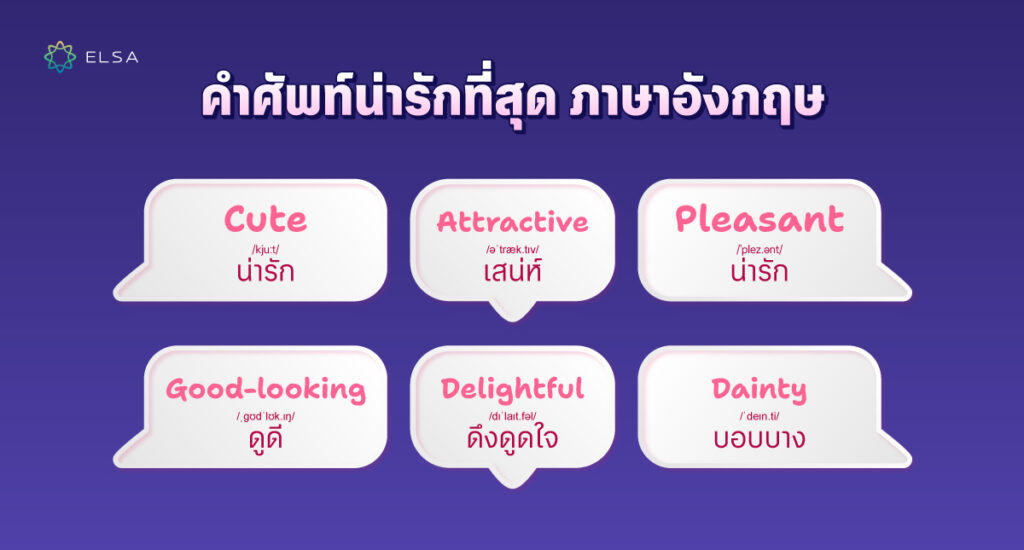
| คำศัพท์ | ถอดเสียง | แปล | ตัวอย่าง |
| Cute | /kjuːt/ | น่ารัก | She is really cute. (เธอน่ารักจริงๆ) |
| Adorable | /əˈdɔː.rə.bəl/ | น่ารัก | Your son is so adorable. (ลูกชายของคุณน่ารักมาก) |
| Lovely | /ˈlʌv.li/ | น่ารัก น่าเอ็นดู (ใช้ได้กับคนและสิ่งของ) | She is a lovely girl. (เธอเป็นผู้หญิงที่น่ารัก) |
| Pretty | /ˈprɪt.i/ | สวย | She is very pretty. (เธอสวยมาก) |
| Attractive | /əˈtræk.tɪv/ | เสน่ห์ มีแรงดึงดูด | She is very attractive. (เธอมีเสน่ห์มาก) |
| Gorgeous | /ˈɡɔː.dʒəs/ | หรูหรา สง่างาม (ใช้ได้เลยนะ! แต่จะเน้น “สวยมาก” มากกว่า “น่ารัก” เฉย ๆ) | You look gorgeous in that dress! (คุณดูสง่างามมากในชุดนั้น) |
| Alluring | /əˈljʊər/ | เย้ายวน | Her perfume is very alluring. (กลิ่นน้ำหอมของเธอเย้ายวนมาก) |
| Appealing | /əˈpiː.lɪŋ/ | ดึงดูดใจ | She looks appealing. (เธอดูน่าดึงดูด) |
| Seductive | /sɪˈdʌk.tɪv/ | เสน่ห์ | He has a seductive voice. (เขามีเสียงที่มีเสน่ห์) |
| Captivating | /ˈkæp.tɪ.veɪ.tɪŋ/ | เสน่ห์ | He is captivating. (เขาเป็นผู้ที่มีเสน่ห์) |
| Charming | /tʃɑːm/ | เสน่ห์ (ใช้กับคนบ่อย) | Lona is a charming girl. โลน่าเป็นผู้หญิงที่มีเสน่ห์) |
| Enchanting | /ɪnˈtʃɑːn.tɪŋ | เสน่ห์ ทำให้หลงใหล | She looks enchanting. (เธอดูหลงใหลมาก) |
| Bewitching | /bɪˈwɪtʃt/ | เสน่ห์ ทำให้หลงใหล | Her bewitching smile captivated everyone in the room. (รอยยิ้มอันมีเสน่ห์ของเขาทำให้ทุกคนในห้องหลงใหล) |
| Angelic | /ænˈdʒel.ɪk/ | นางฟ้า นางสวรรค์ | She has an angelic smile. (เธอมีรอยยิ้มเหมือนนางฟ้า) |
| A goddess | /ˈɡɒd.es/ | เทพธิดา | She moved with the grace of a goddess. (เธอคลื่อนไหวด้วยความสง่างามของเทพธิดา) |
| Marvelous | /ˈmɑːr.vəl.əs/ | มหัศจรรย์ | She looks marvelous. (เธอดูมหัศจรรย์มาก) |
| Sensuous | /ˈsen.sju.əs/ | กระตุ้นความรู้สึก | The sensuous touch of the silk against her skin sent shivers down her spine. (สัมผัสที่นุ่มนวลและเย้ายวนของผ้าไหมบนผิวของเธอทำให้เขาตัวสั่น) |
| Handsome | /ˈhæn.səm/ | หล่อ | He was a tall, handsome man with striking blue eyes. (เขาเป็นผู้ชายที่หล่อเหลา สูง มีดวงตาสีฟ้าโดดเด่น) |
| Beautiful | /ˈbjuː.tɪ.fəl/ | สวย (ทั่วไป ใช้ได้กับคน สิ่งของ ธรรมชาติ) | Such a beautiful smile! (รอยยิ้มสวยมาก) |
| Good-looking | /ˌɡʊdˈlʊk.ɪŋ/ | ดูดี | She had always been considered good-looking by her peers. (เพื่อนร่วมงานของเขามองว่าเขาดูดีอยู่เสมอ) |
| Pleasant | /ˈplez.ənt/ | ชวนมอง | Linda has a pleasant personality. (ลินดามีบุคลิกที่น่าชวนมอง) |
| Dainty | /ˈdeɪn.ti/ | บอบบาง/เล็กกระทัดรัด (ใช้กับเด็ก, สิ่งของที่รักมาก) | She has dainty hands and feet. (เธอมีมือและเท้าเล็ก ๆ น่ารัก) |
| Darling | /ˈdɑː.lɪŋ/ | ที่รัก, สุดที่รัก (ใช้เป็นคำเรียกที่แสดงถึงความน่ารักและที่รัก) | You are darling. (คุณน่ารักจัง [เป็นที่รัก]) |
>>> Read more:
- Describing people: คำศัพท์และวิธีการบรรยายบุคคลในภาษาอังกฤษ
- 150+ คำศัพท์เกี่ยวกับนิสัยภาษาอังกฤษ อธิบายถึงคนที่พบบ่อยที่สุด

ไวยากรณ์ที่ใช้กันทั่วไปเมื่อชมคนใดคนหนึ่งที่น่ารักมากๆ ภาษาอังกฤษ
You’re so + คำคุณศัพท์น่ารัก
ตัวอย่าง
- You’re so cute. – คุณน่ารักมาก
- You’re so pretty. – คุณสวยมาก
- You’re so adorable – คุณน่ารักมาก

>>> อ่านเพิ่มเติม:
- Adjective คือ อะไร? Adjective มีอะไรบ้าง คำศัพท์ การใช้งาน และตัวอย่างอย่างละเอียด
- 100+ คําศัพท์ วันวาเลนไทน์ ภาษาอังกฤษ พร้อมคําอ่านและความหมายดี
ประโยคภาษาอังกฤษ น่ารักๆ ไว้ชื่นชมผู้อื่น
| ประโยคภาษาอังกฤษ น่ารักๆ | แปล |
| He’s sweet. | เขาเป็นคนอ่อนหวาน |
| It’s cute. | มันน่ารัก |
| It’s lovely. | มันน่ารักมาก |
| You’re a lovely woman. | คุณเป็นผู้หญิงที่น่ารัก |
| You have a beautiful family. | คุณมีครอบครัวที่สวยงาม |
| You look great today. | วันนี้คุณดูดีมาก |
| You have the best style. | คุณมีสไตล์ที่สวยงาม |
| You’re just lovely. | คุณน่ารักมาก |
| You look flawless without makeup on. | คุณดูสมบูรณ์แบบโดยไม่ต้องแต่งหน้า |
| You look like the real life version of a Disney princess. | คุณดูเหมือนเจ้าหญิงดิสนีย์ในเวอร์ชันชีวิตจริง |
| I never want to stop looking in your eyes – they’re stunning. | ฉันไม่อยากหยุดมองตาคุณเลย มันน่าทึ่งมาก |
| You have the prettiest smile I’ve ever seen. | คุณมีรอยยิ้มสวยที่สุดที่ผมเคยเห็น |
| You look absolutely stunning! | คุณดูงดงามจริงๆ |
| You’re so beautiful/gorgeous! | คุณสวยมาก/งดงามมาก |
| You have a radiant smile. | คุณมีรอยยิ้มที่สดใส |
| You’re a true natural beauty. | คุณช่างงดงามตามธรรมชาติอย่างแท้จริง |
| You’re absolutely breathtaking! | คุณน่าทึ่งจริงๆ |
| You have an elegant and graceful presence. | คุณมีรูปลักษณ์ที่สง่างาม |
| Your smile lights up the room. | รอยยิ้มของคุณทำให้ห้องสว่างขึ้น |
| You have such lovely features. | คุณมีคุณสมบัติที่น่ารักจริงๆ |
| You have been blowing lately. | คุณดูเปล่งประกายสุดๆ |
| จากบทความ คำศัพท์น่ารักภาษาอังกฤษ ที่ใช้ชื่นชมผู้อื่น คุณสามารถนำโทนนุ่มนวลและคำหวานเหล่านี้ไปประยุกต์ใช้ในโอกาสพิเศษต่าง ๆ ได้ด้วย โดยเฉพาะเวลาต้องส่งข้อความ happy wedding day ให้คู่บ่าวสาว คำชมเล็ก ๆ น่ารัก ๆ จะช่วยทำให้คำอวยพรดูอบอุ่นและมีความหมายมากขึ้น |

>>> Read more:
- 150+ คำชมภาษาอังกฤษที่เรียบง่ายและดีที่สุด
- รวบรวมโครงสร้างคำอุทานภาษาอังกฤษ
- 100+ คำอวยพร Happy Valentine’s Day พร้อมคำแปล และไอเดียแคปชั่น 2026
ความหมายของคำพูดบางคำที่แสดงถึงคำชมที่น่ารักในภาษาอังกฤษ
You’re just lovely
You’re just lovely (คุณน่ารักมาก)
• ประโยคนี้มักใช้โดยคนอังกฤษ ประโยคนี้อาจดูเป็นทางการน้อยกว่าน่ารัก แต่สามารถใช้เพื่อชื่นชมคน สัตว์ และสถานที่ได้ คำชมเหล่านี้เป็นคำชมที่ให้ความรู้สึกสบายใจ เข้าถึงได้ และเป็นมิตร มักใช้เพื่อชื่นชมคนที่คุณรักหรือเพื่อนสนิทที่เรารู้สึกพอใจด้วย
• ตัวอย่าง My boyfriend is just lovely. He prepares dinner for me every evening. (แฟนฉันน่ารักจังเลย เขาเตรียมอาหารเย็นให้ฉันทุกเย็น)
You’re so cheeky.
You’re so cheeky (คุณขี้เล่นมาก)
• คำว่าขี้เล่นหมายถึงคนที่น่ารักและในขณะเดียวกันก็มีอารมณ์ขันหรือคนที่มีนิสัยซุกซน ประโยคนี้ใช้เพื่อบ่งบอกถึงนิสัยหรือพฤติกรรมซุกซนเล็กน้อย แต่ไม่ถึงขั้นดื้อรั้นหรือก้าวร้าว
• ตัวอย่าง I love working with Emma. She is so cheeky girl who is kind to the core. (ฉันชอบทำงานกับเอ็มม่า เธอเป็นสาวขี้เล่นที่มีจิตใจดี)
You’re absolutely stunning
You’re absolutely stunning (คุณดูน่าทึ่งมาก)
• คำชมนี้สามารถใช้เพื่อชมผู้ชายหรือผู้หญิงได้ มันเหมือนกับคำชมไทยที่บอกว่าคุณดูสวยหรือสมบูรณ์แบบ
• ตัวอย่าง I think you’re absolutely stunning. Just simply gorgeous (ฉันคิดว่าคุณน่าทึ่งจริงๆ ดูงดงามเรียบง่าย)
You sort of shine
You sort of shine (คุณมีความโดดเด่น สะดุดตา)
• นี่เป็นคำชื่นชมที่ใช้กันอย่างแพร่หลาย คำชมนี้ไม่ใช่แต่เจาะจงว่าเขาหรือเธอดูดีเท่านั้น ไม่จำเป็นต้องบอกว่าอะไรทำให้สวยหรือหล่อ แต่มันเป็นเสน่ห์ที่สามารถดึงดูดความสนใจของผู้คนได้ คุณจะเห็นว่าแม้แต่คำชมง่ายๆ ก็ยังเป็นวิธีที่ดีในการเริ่มบทสนทนา
• ตัวอย่าง I’ll be honest. You sort of shine. Your look really caught my eye. (ฉันขอพูดความจริง คุณมีความเปล่งประกาย รูปร่างหน้าตาของคุณดูโดดเด่นสะดุดตา ดึงดูดความสนใจของฉันจริงๆ)
I love your smile
I love your smile (ฉันรักรอยยิ้มของคุณ)
• การยิ้มหรือหัวเราะแสดงว่าเพื่อนหรือคนที่คุณกำลังคุยด้วยอารมณ์ดีหรือมีความสุข ใช้โอกาสนี้บอกเพื่อนคนนั้นว่าคุณชอบที่จะเห็นรอยยิ้มของเขา หมายความว่าคุณชอบที่จะเห็นบุคคลนั้นมีความสุข ลองพูดวลีเหล่านี้กับคนนั้นเพื่อแสดงให้เห็นว่าคุณชอบรอยยิ้มของเขามากแค่ไหน
• ตัวอย่าง I love your smile, it brightens up my day! (ฉันชอบรอยยิ้มของคุณ มันทำให้วันของฉันสดใสขึ้น)
Everything about you is gorgeous
Everything about you is gorgeous (ทุกอย่างในตัวคุณสวยงามเสมอ)
• นี่เป็นคำชมโดยตรงเกี่ยวกับรูปร่างหน้าตาของบุคคล นี่เป็นคำชมที่อาจดูไม่เหมาะสมกับคนที่คุณเพิ่งพบ ดังนั้นคุณต้องระมัดระวังเมื่อใช้คำชื่นชมเหล่านี้ แต่จะเกิดอะไรขึ้นถ้าความสัมพันธ์ของคุณเกิดขึ้นมาระยะหนึ่งแล้ว หรือจะชื่นชมคนที่เรารู้จักก็สามารถใช้คำชมนี้ แปลว่า สวย หล่อ ดูดีได้
• ตัวอย่าง I really love every part of you. Everything about you is gorgeous! (ผมรักทุกอย่างเกี่ยวกับคุณ คุณงดงามมาก)
Have you been hitting the gym?
Have you been hitting the gym? (คุณออกกำลังกายไหม)
•นี่เป็นคำถามที่ใช้เป็นคำชื่นชม สำหรับคนไปยิม คำชมนี้เหมาะสำหรับใช้ชมผู้ชายหรือผู้หญิงที่ชอบออกกำลังกายในภาษาอังกฤษ
• ตัวอย่าง Have you been hitting the gym lately, you have such a well-toned body. (ช่วงนี้คุณไปออกกำลังกายหรือเปล่า? คุณมีร่างกายที่สวยงามมาก)
Your style is awesome
Your style is awesome (สไตล์ของคุณดีมาก)
• นี่เป็นคำชื่นชมอีกประการหนึ่งเกี่ยวกับรูปลักษณ์ทั่วไป ถ้าคุณชอบสไตล์ของคนนั้นก็แสดงให้เขาเห็นว่าคุณก็ชอบสไตล์นั้นเหมือนกัน
• ตัวอย่าง Where did you get that shirt? Your style is awesome! (คุณซื้อเสื้อตัวนั้นที่ไหน? สไตล์ของคุณดีมาก)
Your eyes are dazzling
Your eyes are dazzling (ดวงตาของคุณสดใสมาก)
• คำชื่นชมนี้สร้างความประทับใจว่าบุคคลนั้นฉลาดหรือน่ารักและสดใส มันเป็นคำชมในสายตาของคนที่เรากำลังคุยด้วย ทำให้บุคคลนั้นรู้สึกเหมือนเราเห็นเขาในดวงตาของเรา นี่เป็นคำชมที่ลึกซึ้งกว่าคำชมทั่วไป เหมาะสำหรับการชื่นชมคนรักของคุณหรือคนที่คุณแอบชอบ
• ตัวอย่าง Your dazzling eyes are the most beautiful thing I’ve ever seen. (ดวงตาที่เป็นประกายของคุณเป็นสิ่งที่สวยงามที่สุดที่ฉันเคยเห็น)
You’re such a thoughtful person
You’re such a thoughtful person (คุณเป็นคนดี)
• เมื่อเราใช้ประโยคนี้เพื่ออธิบายบุคลิกภาพของบุคคล นั่นหมายความว่าบุคคลดังกล่าวเป็นคนที่คิดทุกอย่างอย่างรอบคอบโดยเฉพาะเรื่องที่เกี่ยวข้องกับผู้อื่น สามารถใช้ได้ในหลายสถานการณ์
• ตัวอย่าง Anne is a very thoughtful person. She gives small New Year gifts to our janitors to show her gratitude. (แอนเป็นคนคิดมาก เธอมอบของขวัญเล็กๆ น้อยๆ ในวันปีใหม่ให้กับภารโรงของเราเพื่อแสดงความขอบคุณ)
You’re kind to the core
You’re kind to the core (คุณใจดีมากๆ)
• ประโยคนี้มีความหมายว่า มาก มากๆ วลีนี้ใช้ชมใครก็ได้ ไม่ว่าจะเป็นคนรัก คนในครอบครัว หรือเพื่อนที่ทำงานด้วกัน
• ตัวอย่าง Thank you for helping me with this project. You’re kind to the core. (ขอบคุณที่ช่วยฉันในโครงการนี้ คุณใจดีมากๆเลย)

ELSA Premium 1 ปี
8,497 บาท ->1,999 บาท

ELSA Premium ตลอดชีพ
9,999 บาท ->4,699 บาท
คำถามที่พบบ่อย
Lovely Pretty แตกต่างอย่างไร
Lovely มักใช้เพื่อบรรยายบางสิ่งที่น่ารัก น่าเอ็นดู หรือสร้างความรู้สึกอบอุ่น สบาย ๆ นี่อาจเป็นการแสดงออกถึงบุคลิกภาพ พฤติกรรม หรือรูปลักษณ์ของบุคคลที่คุณกำลังพูดถึง
Pretty มักใช้เพื่ออธิบายสิ่งที่สวยงามหรือน่าดึงดูด มักเกี่ยวข้องกับความงามทางกายภาพหรือรูปลักษณ์ของบุคคลหรือสิ่งของ
ความแตกต่างระหว่าง Adorable และ Cute คืออะไร
Adorable คำนี้มักใช้เพื่ออธิบายบางสิ่งที่น่ารักและใกล้ชิด มักทำให้เกิดความรู้สึกรักและปกป้อง ซึ่งมักจะหมายถึงความน่ารักในแบบพิเศษ มีเอกลักษณ์ และไม่อาจปฏิเสธได้
Cute คำนี้มักใช้เพื่ออธิบายความน่ารักโดยทั่วไป ไม่จำเป็นต้องถึงระดับพิเศษสุดอย่าง “adorable” “Cute” สามารถสื่อถึงความน่ารักจากมุมมองที่กว้างขึ้น ไม่จำเป็นต้องมีเอกลักษณ์หรือพิเศษเสมอไป
ใช้ Cutie อย่างไร
คำว่า “Cutie” มักใช้เพื่ออ้างถึงบางสิ่งที่น่ารัก น่าเอ็นดู หรือเพื่ออธิบายบุคคลในลักษณะที่เป็นมิตรและความรัก
คุณสามารถพูดว่าน่ารักภาษาอังกฤษได้กี่วิธี
มีหลายวิธีในการพูดคำว่าน่ารักในภาษาอังกฤษ คุณสามารถอ่านคำศัพท์ภาษาอังกฤษเกี่ยวกับคำว่าน่ารักเพิ่มเติมในบทความนี้ได้นะ
น่ารักจัง ภาษาอังกฤษ เป็นภาษาอังกฤษคืออะไร
น่ารักจัง ภาษาอังกฤษ คือ So cute
ชมว่าน่ารัก ภาษาอังกฤษ เป็นภาษาอังกฤษคืออะไร
ชมว่าน่ารัก ภาษาอังกฤษ คือ Look cute
ด้านบนนี้คือคำศัพท์และรูปแบบประโยคน่ารักภาษาอังกฤษ ที่จะช่วยให้คุณสื่อสารในชีวิตประจำวันได้อย่างมีประสิทธิภาพอย่าลืมมาอ่านบทความ ELSA Speak เกี่ยวกับการสื่อสาร คำศัพท์ และบทสนทนาได้ในครั้งต่อไปนะ
วิเศษณานุประโยค (Adverbial Clause) ในภาษาอังกฤษมักใช้เพื่อขยายคำกริยา คำคุณศัพท์ หรือ คำวิเศษณ์อื่นๆ งั้น adverb clause มีอะไรบ้าง วิเศษณานุประโยคมักอยู่ตรงไหนในประโยค มาเรียนรู้อย่างละเอียดกับ ELSA Speak ในบทความด้านล่างนี้เลยนะ
Adverbial Clause คือ?
วิเศษณานุประโยค (Adverb Clause or Adverbial Clause) เป็นกลุ่มคำที่ทำหน้าที่เหมือนคำวิเศษณ์ กล่าวอีกนัยหนึ่ง อนุประโยคนี้อธิบายหรือขยายคำกริยา คําคุณศัพท์ ภาษาอังกฤษ หรือคำวิเศษณ์อื่นๆ แตกต่างกับอนุประโยคที่พบบ่อย วิเศษณานุประโยคจะขึ้นอยู่กับประโยคเสมอ – หมายความว่ามันจะอยู่เดี่ยวๆเป็นประโยคเดียวไม่ได้
Adverb clause ตัวอย่างประโยค :
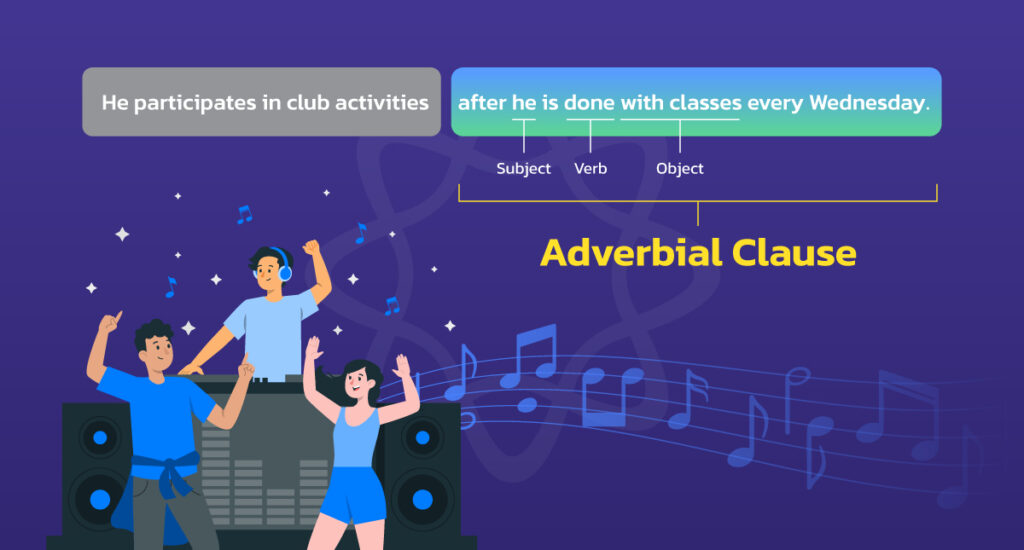
- He participates in club activities weekly. (เขาเข้าร่วมกิจกรรมของสโมสรทุกสัปดาห์)
=> He participates in club activities after he’s done with classes every Wednesday. (เขาเข้าร่วมกิจกรรมของชมรมทุกวันพุธหลังเลิกเรียน)
- Eagerly, my cousin agreed to the proposal. (ลูกพี่ลูกน้องของฉันยินดียอมรับข้อเสนอนี้)
=> As dollar signs flashed in her eyes, my cousin agreed to the proposal. (เมื่อนึกถึงความคุ้มค่า ลูกพี่ลูกน้องของฉันก็ยอมรับกับข้อเสนอ)
ตำแหน่งของ Adverbial Clause ในประโยค
| ตำแหน่ง | ตัวอย่าง |
| หากอนุประโยคทำหน้าที่ขยายคำกริยา ก็สามารถวางได้หลายตำแหน่งในประโยค ไม่ใช่แบบตายตัว | I want to buy a new car because my car is old. (ผมอยากซื้อรถใหม่เพราะรถของผมเก่าแล้ว) |
| หากวิเศษณานุประโยคใช้เพื่อขยายคำวิเศษณ์หรือคำคุณศัพท์ในภาษาอังกฤษ มันจะวางหลังคำที่มันขยายเสมอ | You will be tired after you work so late. (คุณจะเหนื่อยหลังจากคุณทำงานดึก) |
| เมื่อใช้คำวิเศษณ์แบบง่าย (ตัวย่อ) ตำแหน่งในประโยคจะเหมือนกับประโยคหลัก | ประโยค “While eating, he talked nonstop” คือตัวย่อของ “While [he was] eating, he talked nonstop.” (ระหว่างกินข้าว เขาก็คุยกันไม่หยุด) |

แยกความแตกต่างระหว่างวิเศษณานุประโยค (Adverbial clause) และ กริยาวิเศษณ์วลี (Adverbial phrase)
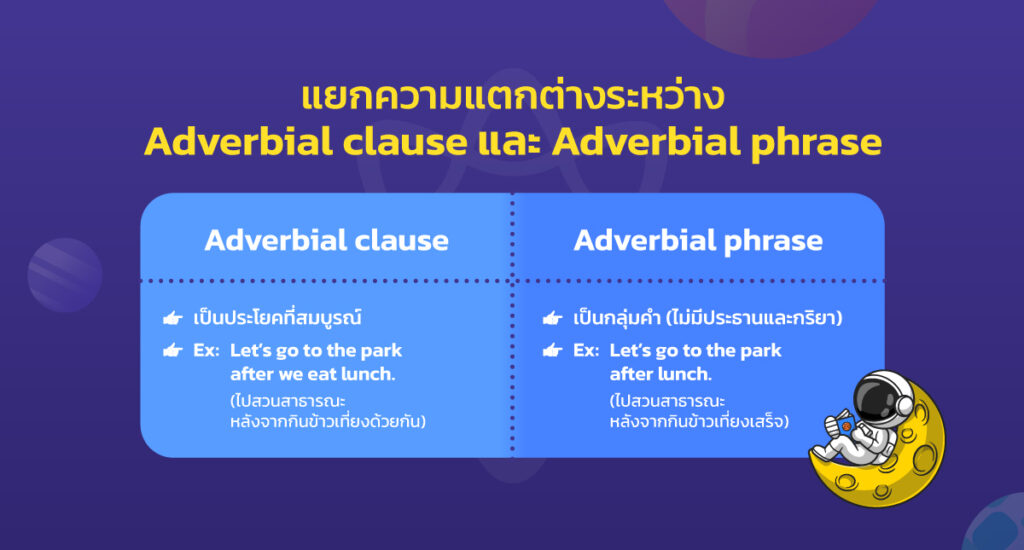
วิเศษณานุประโยคและกริยาวิเศษณ์วลีมีบางอย่างที่เหมือนกันแต่ไม่เหมือนกันทุกประการ ทั้งสองกลุ่มเป็นกลุ่มคำที่ทำหน้าที่เป็นคำวิเศษณ์พร้อมทำหน้าที่เพิ่มเติมในประโยค อย่างไรก็ตาม วิเศษณานุประโยคประกอบด้วยประธานและกริยา ในขณะที่กริยาวิเศษณ์วลีไม่มี อย่างเช่น
| วิเศษณานุประโยค (Adverbial clause) | กริยาวิเศษณ์วลี (Adverbial phrase) | |
| ลักษณะ | เป็นประโยคที่สมบูรณ์พร้อมประธานและกริยา | เป็นกลุ่มคำ (ไม่มีประธานและกริยา) ทำหน้าที่ของคำวิเศษณ์ในประโยค |
| ตัวอย่าง | Let’s go to the park after we eat lunch.(ไปสวนสาธารณะหลังจากกินข้าวเที่ยงด้วยกันนะ) | Let’s go to the park after lunch.(ไปสวนสาธารณะหลังจากกินข้าวเที่ยงเสร็จกันเถอะ) |
ประเภทของ Adverbial Clause ในภาษาอังกฤษ
วิเศษณานุประโยคเพื่อแสดงเวลา (Adverbial Clause of time)
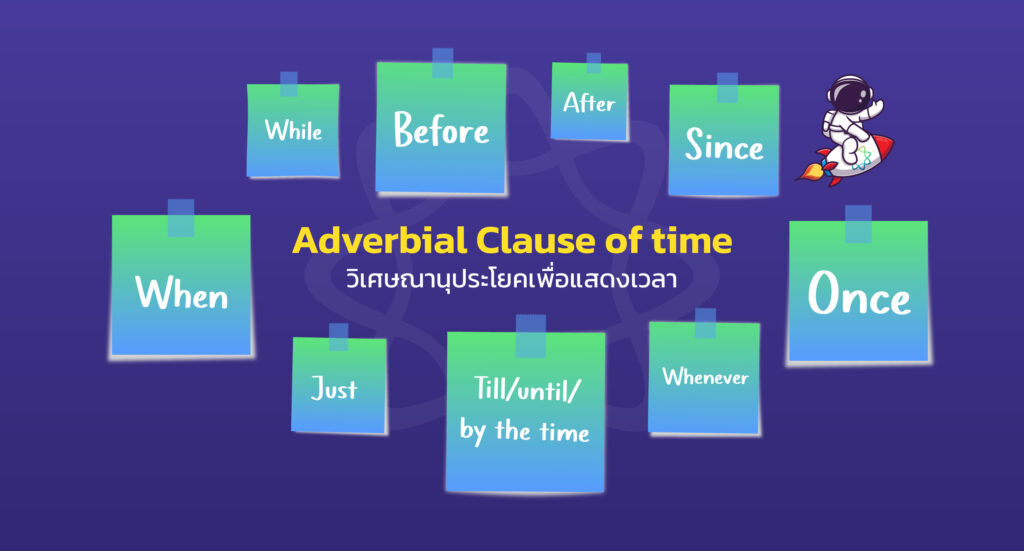
| วิเศษณานุประโยคเพื่อแสดงเวลา | แปล | ตัวอย่าง |
| Once | ครั้งหนึ่ง | Once he comes, you have to leave. (เมื่อเขามาคุณก็ต้องไป) |
| When | เมื่อ ตอน | When I visited him, she was there. (เมื่อฉันไปเยี่ยมเขา เธอก็อยู่ที่นั่น) |
| While | ในขณะที่ | While my brother is playing the guitar, I am painting. (ในขณะที่น้องชายกำลังเล่นกีตาร์ ฉันก็กำลังวาดรูปด้วย) |
| Before | ก่อน | Before going out, don’t forget to turn off the light. (ก่อนออกจากห้องอย่าลืมปิดไฟ) |
| After | หลังจาก | You should send them to his father after you have received them. (คุณควรส่งมันไปให้พ่อของเขาหลังจากที่คุณได้รับมันแล้ว) |
| Since | ตั้งแต่ | Since he graduated, he has done everything more carefully. (ตั้งแต่เขาเรียนจบเขาทำทุกอย่างอย่างระมัดระวังมากขึ้น) |
| Till/until/by the time | จนกระทั่ง | By the time we came back to the city again, he hadn’t agreed to meet her. (จนกระทั่งเรากลับมาถึงเมืองอีกครั้ง เขาก็ไม่ยอมพบเธอ) |
| Just as | ขณะที่ | Just as we received these items, we sent them to him immediately. (ขณะที่เราได้รับสิ่งของเหล่านี้แล้วเราก็ส่งไปให้เขาทันที) |
| Whenever | เมื่อไรก็ตาม | She cries whenever she misses her mother. (เมื่อไรก็ตามที่เธอคิดถึงแม่เธอก็จะร้องไห้) |
| No sooner …. than/Hardly/Scarcely … when | เมื่อกี้นี้ | No sooner had he gone out than he came back (เขาเพิ่งออกไปและกลับมาเมื่อกี้นี้) Hardly/Scarcely had she had a shower when the phone rang (เธอเพิ่งอาบน้ำเมื่อกี้นี้โทรศัพท์ก็ดังขึ้น) |
>>> อ่านเพิ่มเติม: By แปลว่าอะไร? วิธีการใช้ by อย่างละเอียดเป็นภาษาอังกฤษ
| แพ็กเกจ ELSA Pro | ราคาเดิม | ข้อเสนอพิเศษ |
| ELSA Pro 1 ปี | 2,499 บาท | 1,425 บาท |
| ELSA Pro Lifetime | 3,659 บาท | 2,561 บาท |
วิเศษณานุประโยคเพื่อบอกสถานที่ (Adverbial Clause of place)
| วิเศษณานุประโยคเพื่อแสดงสถานที่ | แปล | ตัวอย่าง |
| Where | ที่ไหน | We want to visit Bangkok, where we met each other. (พวกเราอยากไปเที่ยวกรุงเทพ ไปที่ที่เราเคยพบกัน) |
| Wherever | ที่ไหนก็ตาม | Wherever we visited, we took a lot of photos. (พวกเราไปเที่ยวที่ไหนก็ตาม พวกเราก็จะถ่ายรูปมาเยอะมาก) |
| Anywhere | ที่ไหนก็ตาม | Anywhere she goes, he will go with her. (เธออยากไปที่ไหนก็ตามที่เขาก็ไปด้วย) |
| Everywhere | ทุกที่ | We looked everywhere she could come. (เรามองหาทุกที่ที่เขาสามารถมาได้) |

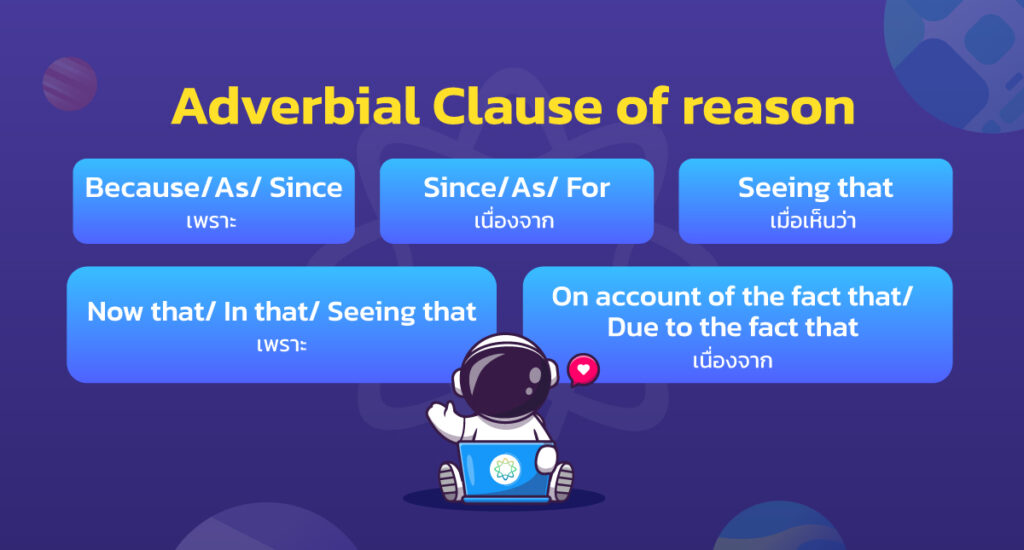
วิเศษณานุประโยคเพื่อบอกเหตุผล (Adverbial Clause of reason)
| วิเศษณานุประโยคเพื่อบอกเหตุผล | แปล | ตัวอย่าง |
| Because/As/ Since | เพราะ | Because I invited her, she couldn’t refuse my invitation. (เพราะฉันชวนเขาแล้วเขาก็ปฏิเสธไม่ได้) |
| Since/As/ For | เนื่องจาก | Since/As/ For he is tired, he stays at home. (เนื่องจากเขาเหนื่อยเขาจึงอยู่ที่บ้าน) |
| Now that/ In that/ Seeing that | เพราะ | Now that I am in a foreign country, I visit my home once a year. (เพราะตอนนี้ฉันอยู่ต่างประเทศ ฉันจึงกลับบ้านเพียงปีละครั้งเท่านั้น) |
| On account of the fact that/ Due to the fact that | เนื่องจาก | On account of the fact that his leg is broken, he cannot play football. (เนื่องจากขาหักเขาจึงไม่สามารถเล่นฟุตบอลได้) |
| Seeing that | เมื่อเห็นว่า | Seeing that he is angry with her, I tell him the truth. (เมื่อเห็นว่าเขาโกรธเธอ ฉันจึงบอกความจริงกับเขา) |
>>> Read more: Relative Clause คือ? โครงสร้าง หลักการใช้งาน ตัวอย่าง และแบบฝึกหัด
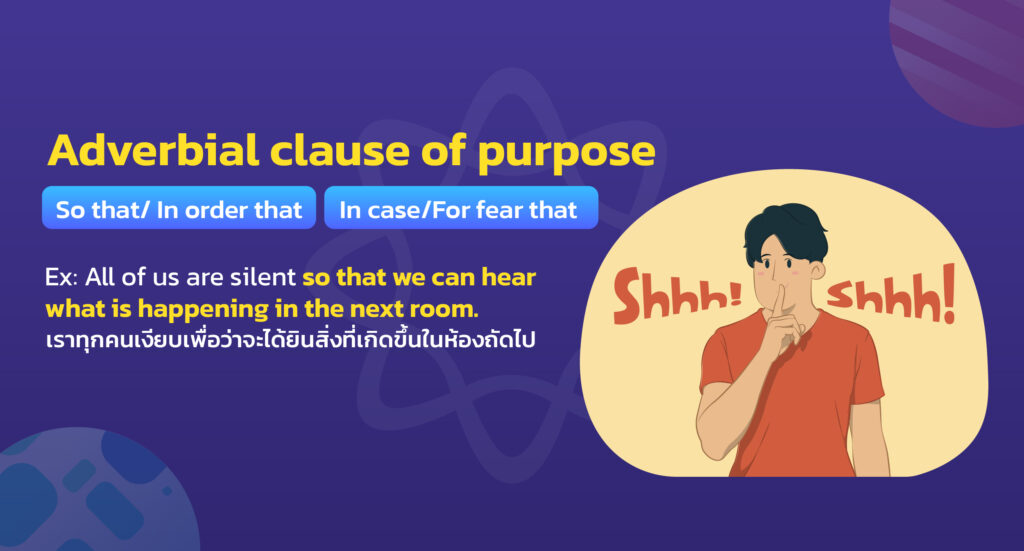
วิเศษณานุประโยคเพื่อแสดงวัตถุประสงค์ (Adverbial Clause of purpose)
| วิเศษณานุประโยคเพื่อแสดงวัตถุประสงค์ | แปล | ตัวอย่าง |
| So that/ In order that | เพื่อว่า | All of us are silent so that we can hear what is happening in the next room. (เราทุกคนเงียบเพื่อว่าจะได้ยินสิ่งที่เกิดขึ้นในห้องถัดไป) |
| In case/For fear that | ในขณะที่/เผื่อ | You should prepare everything, in case that you forget something when you are in a hurry. (เธอควรเตรียมทุกอย่างให้พร้อมก่อนเข้านอน เผื่อลืมอะไรเวลารีบ) |
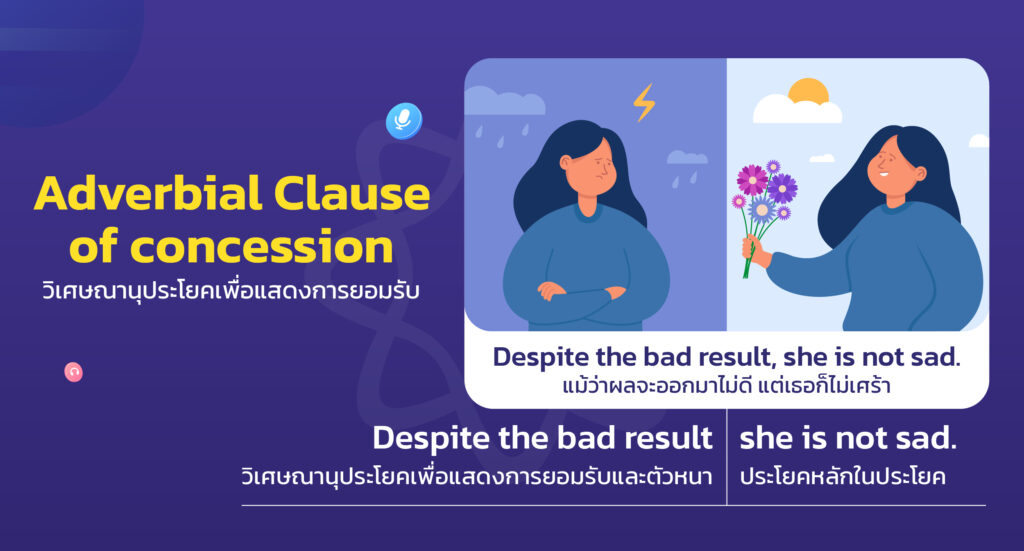
วิเศษณานุประโยคเพื่อแสดงการยอมรับ (Adverbial Clause of concession)
| วิเศษณานุประโยคเพื่อแสดงการยอมรับ | แปล | ตัวอย่าง |
| Although/ Even though/though/in spite of the fact that | ถึงแม้ว่า | Although she tries to hide what happened, we know about it. (ถึงแม้ว่าเธอจะพยายามซ่อนสิ่งที่เกิดขึ้น แต่พวกเราก็รู้ดี) |
| In spite of/despite + N phrase | แม้ว่า ทั้งๆ ที่ | Despite the bad result, she is not sad. (แม้ว่าผลจะออกมาไม่ดี แต่เธอก็ไม่เศร้า) |
| While/Whereas/Meanwhile | ในขณะที่ | I like cartoons while my brother likes comedy. (ฉันชอบการ์ตูน ในขณะที่น้องชายของฉันชอบตลก) |
| Nevertheless/Nonetheless | ขณะที่ | He doesn’t like her, nevertheless he decided to marry her. (เขาไม่ชอบเธอ แต่เขาตัดสินใจแต่งงานกับเธอ) |
| Whatever/Whoever/However/Wherever | …ก็ตาม | However sad I am, I always smile. (แม้จะเศร้าแค่ไหนก็ตามฉันก็ยิ้มได้เสมอ) |
>>> Read more: Subordinating Conjunctions ในภาษาอังกฤษ กลุ่มคำที่พบบ่อยพร้อมแบบฝึกหัด
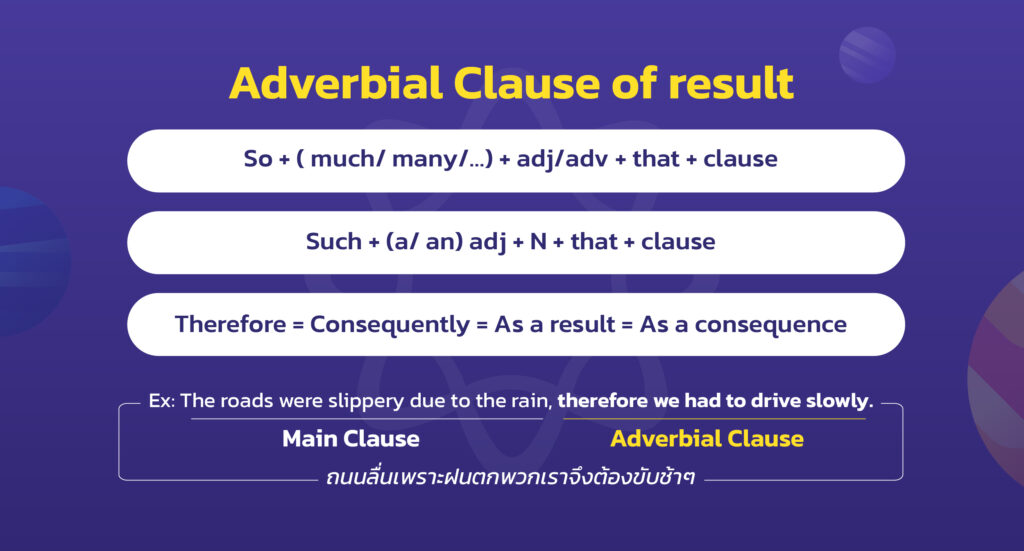
วิเศษณานุประโยคที่ใช้แสดงผล (Adverbial Clause of result)
| วิเศษณานุประโยคที่ใช้แสดงผล | แปล | ตัวอย่าง |
| So + ( much/ many/…) adj/adv that clause… | จนถึง | The concert was so loud that my ears were ringing for hours afterwards. (คอนเสิร์ตดังมากจนหูของฉันดังไปหลายชั่วโมงหลังจากนั้น) |
| Such + (a/ an) adj + N + that clause…. | จนถึง | She made such a delicious cake that everyone wanted a second slice. (เธอทำเค้กแสนอร่อยจนทุกคนอยากกินชิ้นที่สอง) |
| Therefore = Consequently = As a result = As a consequence | เนื่องจากนั้น | The roads were slippery due to the rain, therefore we had to drive slowly. (ถนนลื่นเนื่องจากฝนตก ดังนั้นเราจึงต้องขับรถช้าๆ) |
วิเศษณานุประโยคที่ใช้แสดงวิธีการ(Adverbial Clause of manner)
| วิเศษณานุประโยคที่ใช้แสดงวิธี | แปล | ตัวอย่าง |
| As/Like | เหมือนกับ | They dance like professionals on the stage. (พวกเขาเต้นเหมือนมืออาชีพบนเวที) |
| As if / As though | ราวกับว่า เหมือนกับว่า | She smiled at him as if she knew him well. (เธอยิ้มให้เขาเหมือนกับว่าเธอรู้จักเขาดี) The student answered the question confidently as though he knew the answer for sure. (นักเรียนตอบคำถามอย่างมั่นใจราวกับว่าเขารู้คำตอบแน่ชัด) |
>>> Read more: Adverb of manner คืออะไร? วิธีการใช้ Adverb of manner พร้อมตัวอย่าง
วิเศษณานุประโยคเพื่อบอกการเปรียบเทียบ (Adverbial clause of comparison)
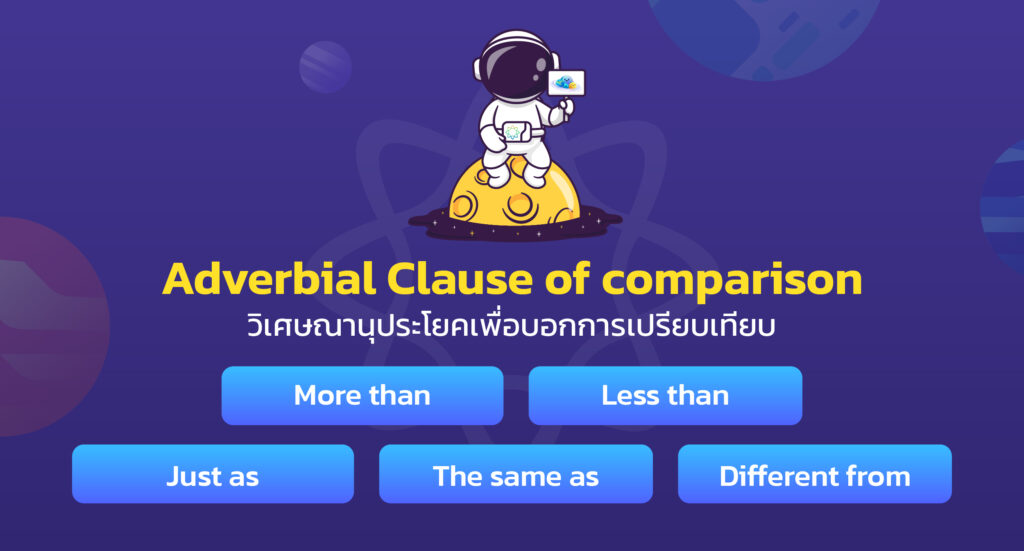
| วิเศษณานุประโยคเพื่อบอกการเปรียบเทียบ | แปล | ตัวอย่าง |
| More than | มากกว่า | They managed to complete the marathon more quickly than they did in the previous year. (พวกเขาจัดการวิ่งมาราธอนได้สำเร็จเร็วกว่าปีที่แล้ว) |
| Less than | น้อยกว่า | There are less students in the class today than yesterday. (วันนี้มีนักเรียนในชั้นเรียนน้อยกว่าเมื่อวาน) |
| Just as | เช่นเดียวกัน | Just as a seed grows into a tree, so does a small idea grow into a great achievement. (ฉันใดเมล็ดพันธุ์ก็เติบโตเป็นต้นไม้ ความคิดเล็กๆ ก็สามารถเติบโตเป็นความสำเร็จอันยิ่งใหญ่ได้เช่นกัน) |
| The same as | เหมือนกับ | The new product has the same quality as the old one. (สินค้าใหม่มีคุณภาพเหมือนกับสินค้าเก่า) |
| Different from | ต่างจาก | American English is different from British English. (ภาษาอังกฤษแบบอเมริกันต่างจากภาษาอังกฤษแบบอังกฤษ) |
วิเศษณานุประโยคเพื่อบอกความขัดแย้ง (Adverbial clause of contrast)
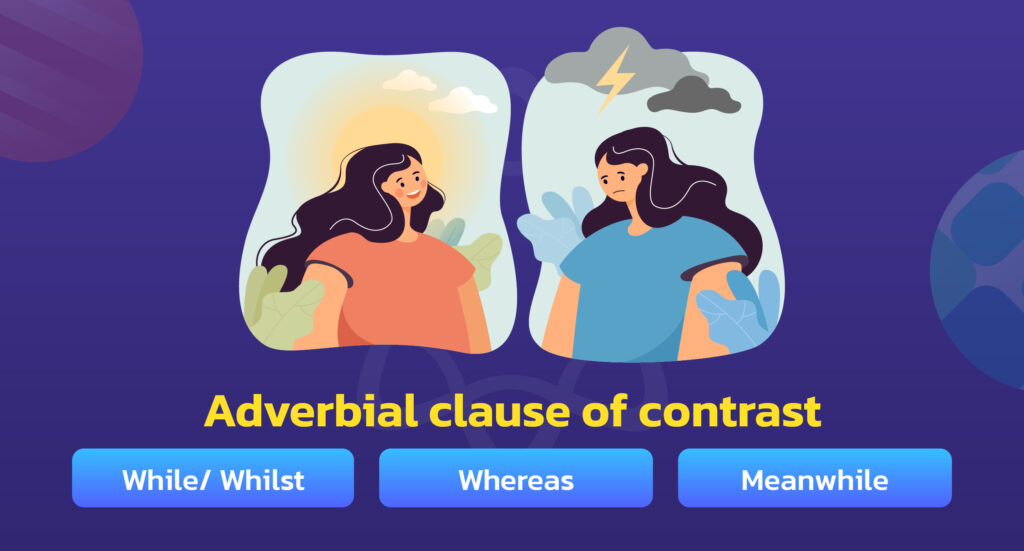
| วิเศษณานุประโยคเพื่อบอกความขัดแย้ง | แปล | ตัวอย่าง |
| While/ Whilst | ในขณะที่ | John is very rich while his friends are extremely poor. (จอห์นรวยมากในขณะที่เพื่อนของเขายากจนมาก) While some people work better with music, others do not. (ในขณะที่บางคนทำงานได้ดีกว่าเวลาอยู่กับดนตรีดนตรี แต่บางคนก็ทำไม่ได้) |
| Whereas | แต่จริงๆ | We thought she was arrogant, whereas in fact she was just very shy. (พวกเราคิดว่าเธอหยิ่ง แต่จริงๆ แล้วเธอแค่ขี้อายมาก) |
| Meanwhile | ขณะเดียวกัน | He continued going there. Meanwhile, his friends decided to go back home. (เขายังคงไปที่นั่น ขณะเดียวกันเพื่อนๆ ของเขาก็ตัดสินใจกลับบ้าน) |
วิเศษณานุประโยคที่ใช้แสดงเงื่อนไข (Adverbial clause of condition)
| วิเศษณานุประโยคที่ใช้แสดงเงื่อนไข | แปล | ตัวอย่าง |
| If | ถ้า | If you don’t come, I will go without you. (ถ้าคุณไม่มา ฉันจะไป) |
| Unless | ถ้าไม่ | Unless you learn hard, you can’t pass your exam. (ถ้าคุณไม่ตั้งใจเรียน คุณจะสอบไม่ผ่าน) |
| As long as | ตราบเท่าที่ | As long as you are hardworking, you will finish it. (ตราบใดที่คุณทำงานอย่างขยัน คุณก็จะทำมันให้เสร็จ) |

>>> Read more: If Clause ประโยคเงื่อนไข: โครงสร้าง วิธีใช้ แบบฝึกหัด และเคล็ดลับการท่องจำ
กรณีพิเศษของ Adverbial Clause
| กรณีพิเศษ | วิธีใช้ | ตัวอย่าง |
| คำกริยาคือ tobe (is/am/are) หรือกริยาเชื่อม (linking verb) เช่น just as, however, although, during, also,… | สามารถละเว้นประธานและกริยาได้ (เหลือเพียงคำคุณศัพท์/คำนามในประโยค) | Although my dad is tired, he still plays chess with me. => Although tired, my dad still plays chess with me. (แม้ว่าจะเหนื่อยแต่พ่อของฉันก็ยังเล่นหมากรุกกับฉัน) |
| ในกรณีวิเศษณานุประโยคเพื่อบอกเหตุผล | ละคำเชื่อมและประธาน (เหลือแต่คำกริยา) ในขณะเดียวกันคำกริยาก็ต้องเปลี่ยนเป็นรูป “Ving” หรือ “being” ตามลำดับ | Because I’m sick, I won’t be able to come to your birthday party. => Being sick, I won’t be able to come to your birthday party. (เพราะฉันป่วย เลยมางานวันเกิดคุณไม่ได้) |
| ในกรณีที่การกระทำของกริยาวิเศษณ์เกิดขึ้นก่อนประโยคหลัก | ลดลงอนุประโยคข้างต้นเป็น having + V(PII) | After finishing her degree, Maria decided to travel around Europe. => Having finished her degree, Maria decided to travel around Europe. (เมื่อสำเร็จการศึกษาแล้ว มาเรียจึงตัดสินใจเดินทางท่องเที่ยวไปรอบๆ ยุโรป) |

Adverbial Clause ลดลง
วิเศษณานุประโยคถูกตัดให้สั้นลงเมื่อทั้งสองประโยคในประโยคมีหัวข้อเดียวกันและมีคำสันธานเชื่อมกัน งั้นการลดลงอนุประโยคต้องทำอย่างไร มาเรียนรู้ด้วยตารางด้านล่างนี้
| แบบฟอร์มที่สั้นลง | วิธีใช้ | ตัวอย่าง |
| ด้วยประโยคที่ประธานเป็นผู้กระทำ | ประธานเดียวกัน –> ละเว้นประธาน- แทนที่+ ถ้า Verb –> Verb-ing+ ถ้า Verb tobe –> being | When my mother met this boy, she realized that he is her old friend. => When meeting this boy, she realized that he is her old friend. (เมื่อแม่ของฉันพบเขา แม่กลับจำเขาเป็นเพื่อนเก่าของแม่) |
| ถ้ามีประธานเดียวกัน –> ละคำเชื่อมและประธาน- แทนที่ Verb –> Verb-ing | When my mother met this boy, she realized that he is her old friend. => Meeting this boy, she realized that he is her old friend. (เมื่อแม่ของฉันพบเขา แม่กลับจำเขาเป็นเพื่อนเก่าของแม่) | |
| ด้วยประโยคที่ประธานเป็นผู้ถูกกระทำ | ละเว้นประธาน- แทนที่+ ถ้า Verb –> Verb-ing+ ถ้า Verb tobe –> being | As I am called a liar, I become sad. => As being called a liar, I become sad. (เมื่อถูกเรียกว่าคนโกหก ฉันก็เศร้าใจมาก) |
| ลดประธานและ tobe (ถ้าสองประโยคมีประธานเดียวกัน) | As I am called a liar, I become sad. => As called a liar, I become sad. (เมื่อถูกเรียกว่าคนโกหก ฉันก็เศร้าใจมาก) | |
| ลดประธาน tobe และคำเชื่อม (ถ้าสองประโยคมีประธานเดียวกัน) | As I am called a liar, I become sad. => Called a liar, I become sad. (เมื่อถูกเรียกว่าคนโกหก ฉันก็เศร้าใจมาก) |

| Adverbial Clause คือประโยคย่อยที่ทำหน้าที่ขยายกริยา โดยให้ข้อมูลเกี่ยวกับเวลา เหตุผล เงื่อนไข หรือความขัดแย้ง ผู้เรียนควรทำความเข้าใจโครงสร้างให้ชัดเจน เพื่อพิจารณาได้ว่า whether ควรใช้รูปประโยคใดให้เหมาะสมกับบริบทและความหมายที่ต้องการสื่อ |
Adverb clause แบบฝึกหัดพร้อมเฉลย
Adverb clause exercise
บทที่ 1 เติมคำที่เหมาะสมเพื่อสร้างประโยคกริยาวิเศษณ์
1. Although the movie received rave reviews, it failed to impress me due to its slow pacing.
=> …………….…………….…………….……………………….…………….…………
2. When I am stressed, I find it difficult to focus on anything else.
=> …………….…………….…………….……………………….…………….…………
3. Because he missed the bus, he was late for his meeting with the client.
=> …………….…………….…………….……………………….…………….…………
4. Even though he is a talented musician, he didn’t get accepted into the music school.
=> …………….…………….…………….……………………….…………….…………
5. As I was feeling sick, I decided to stay home instead of going to the party.
=> …………….…………….…………….……………………….…………….…………
6. As soon as I finish my work, I’ll join you for lunch.
=> …………….…………….…………….……………………….…………….…………
บทที่ 2 เลือกคำตอบที่ถูกต้องเพื่อสร้างประโยคกริยาวิเศษณ์
1. What did you do on Sunday? It was ………… day that I went to the lake.
A. Such nice
B. Such a nice
C. So nice
D. Very nice
2. Did you hear the phone ring last night?. I didn’t hear anything, I was ………… that I didn’t wake up.
A. Very tired
B. Such tired
C. So tired
D. Enough tired
3. Why wasn’t Mr. Fitzgerald offered a better room in the hotel?. I don’t know. It’s surprising how ………… important people are treated.
A. So
B. Such
C. A such
D. Such an
4. How many trips are there to Panama? Wonderful, except that we spent ………… money.
A. So much
B. Such much
C. Many
D. So many
5. What is your opinion of the Smiths?. They are ………… people.
A. Such an interesting
B. So interesting a
C. So interesting
D. Such interesting
6. Did you like the band last night?. Yes, ………… I bought their record”.
A. Such much
B. So much that
C. Very much that
D. Too much that
7. That’s a beautiful dress jean has on. She always wears ………… clothes.
A. Such a lovely
B. So lovely
C. Such lovely
D. So much lovely
8. Paul is a very competent salesperson. He’s ………… good that I am going to give him a raise and a promotion.
A. Definite
B. Definitely
C. So
D. So much
เฉลย
บทที่ 1
1. Although receiving rave reviews, it failed to impress me due to its slow pacing.
2. When stressed, I find it difficult to focus on anything else.
3. Missing the bus, he was late for his meeting with the client.
4. Even though a talented musician, he didn’t get accepted into the music school.
5. Feeling sick, I decided to stay home instead of going to the party.
6. On finishing my work, I’ll join you for lunch.
บทที่ 2
| 1. B | 2. C | 3. D | 4. A | 5. D | 6. B | 7. C | 8. C |

คำถามที่พบบ่อย
Adverbial Clause คืออนุประโยคไม่อิสระใช่ไหม?
ใช่ วิเศษณานุประโยคทั้งหมดเป็นอนุประโยคไม่อิสระ
ประเภทของ Adverbial Clause มีอะไรบ้าง?
วิเศษณานุประโยคทั่วไปมีดังต่อไปนี้
- วิเศษณานุประโยคเพื่อแสดงเวลา (Adverbial Clause of time)
- วิเศษณานุประโยคเพื่อบอกสถานที่ (Adverbial Clause of place)
- วิเศษณานุประโยคเพื่อบอกเหตุผล (Adverbial Clause of reason)
- วิเศษณานุประโยคเพื่อแสดงวัตถุประสงค์ (Adverbial Clause of purpose)
- วิเศษณานุประโยคเพื่อแสดงการยอมรับ (Adverbial Clause of concession)
- วิเศษณานุประโยคที่ใช้แสดงผล (Adverbial Clause of result)
- วิเศษณานุประโยคที่ใช้แสดงวิธีการ (Adverbial Clause of manner)
- วิเศษณานุประโยคเพื่อบอกการเปรียบเทียบ (Adverbial clause of comparison)
- วิเศษณานุประโยคเพื่อบอกความขัดแย้ง (Adverbial clause of contrast)
- วิเศษณานุประโยคที่ใช้แสดงเงื่อนไข (Adverbial clause of condition)
วิเศษณานุประโยคขึ้นต้นประโยคคืออะไร?
วิเศษณานุขึ้นต้นประโยค (บางทีได้เรียกว่าคำวิเศษณ์ขึ้นต้น) ปรากฏที่จุดเริ่มต้นของประโยค วิเศษณานุขึ้นต้นประโยคจะต้องตามด้วยลูกน้ำเสมอ
ตัวอย่าง Until, Leo comes back, we won’t be able to start cooking. (จนกว่าลีโอจะกลับมาเราจะทำอาหารไม่ได้)
วิธีการระบุวิเศษณานุประโยค?
วิเศษณานุประโยคใช้เพื่ออธิบายหรือขยายคำกริยา คำคุณศัพท์ หรือคำวิเศษณ์อื่นๆ มักใช้เพื่อเชื่อม 2 ประโยคเข้าด้วยกัน โดยใช้คำสันธาน เช่น as, like, once, when, until, by the time, whereas, just as,…
ด้านบนนี้คือความรู้ทั้งหมดเกี่ยวกับวิเศษณานุประโยค (Adverbial Clause) ในภาษาอังกฤษเพื่อให้เพื่อนๆได้เรียนรู้หวังว่าการแบ่งปันข้างต้นจะช่วยให้คุณเข้าใจประโยคประเภทนี้ได้ดีขึ้น นอกจากนั้น อย่าลืมติดตาม ELSA Speak เพื่ออัปเดทความรู้ภาษาอังกฤษล่าสุดทุกวันนะ
“Where are you from?” เป็นคำถามในบทสนทนาภาษาอังกฤษทั่วไปเมื่อพบกันครั้งแรกและมักปรากฏในข้อสอบ IELTS Speaking ในบทความต่อไปนี้ ELSA Speak จะวิเคราะห์และเสนอวิธีการตอบคำถามนี้ ในขณะเดียวกันก็แนะนำคำศัพท์ที่เกี่ยวข้องเพื่อให้ผู้เรียนสามารถฝึกฝนในสถานการณ์การสื่อสารที่แตกต่างกันได้
Where are you from แปลว่า
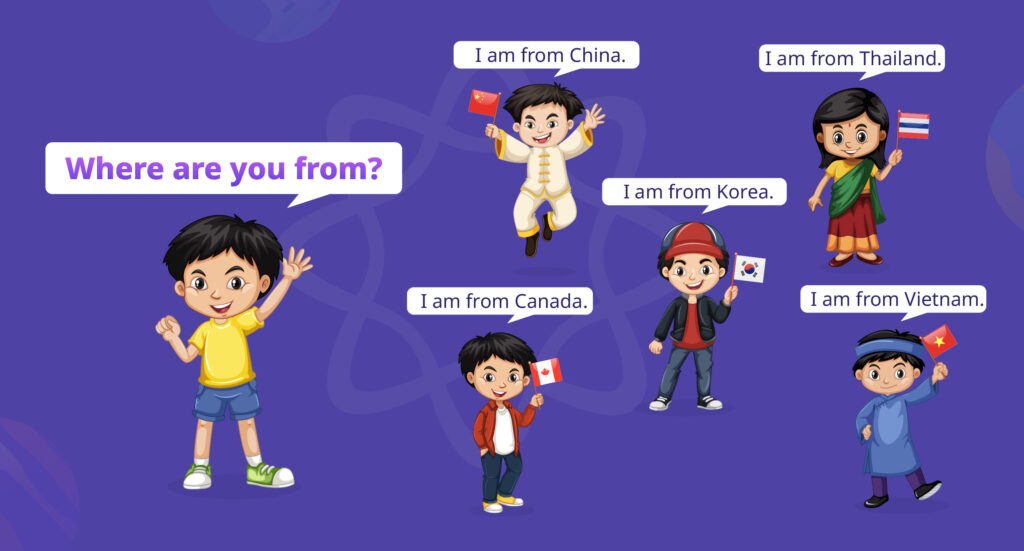
“Where are you from?” (การออกเสียง: /wer ɑːr juː frʌm/) เป็นคำถามที่พบบ่อยในการสนทนาภาษาอังกฤษในชีวิตประจำวัน Where are you from? หมายความว่า “คุณมาจากไหน“
คำถามนี้ใช้เมื่อพบบุคคลคนหนึ่งเป็นครั้งแรก เพื่อถามเกี่ยวกับบ้านเกิด ถิ่นกำเนิด หรือสถานที่ที่บุคคลนั้นเกิดหรือมาจากที่ไหน คำถามนี้ช่วยให้ข้อมูลเพิ่มเติมเกี่ยวกับภูมิหลังของบุคคลคนนั้น
สูตรโดยรวมของคำถาม Where are you from?
Where + to be + subject + from?
เมื่อ subject (ประธาน) เป็นเอกพจน์บุรุษ/พหูพจน์บุรุษที่ ๒ (คุณ) หรือพหูพจน์ที่ ๓ (they) คำกิริยา to be ที่ใช้คือ “are“;
เมื่อ subject (ประธาน) เป็นเอกพจน์ที่ ๓ (he / she / it) คำกิริยา to be ที่ใช้คือ “is“
ตัวอย่าง
- Where are they from? (พวกเขามาจากไหน)
- Where is she from? (เขามาจากไหน)
>>> Read more:
- คํานามเอกพจน์และคำนามพหูพจน์คืออะไร คู่มือการใช้พร้อมกับแบบฝึกหัด
- แยกแยะระหว่าง Countable และ Uncountable nouns ในเวลาเพียง 5 นาที
วิธีการตอบคำถาม “Where are you from”?
ในการตอบคำถาม “where are you from” ผู้เรียนต้องระบุสถานที่เกิดหรือสถานที่ที่เรามาจากอย่างชัดเจนในคำตอบ
สูตรโดยรวมของการตอบคำถาม Where are you from?
Subject + to be + from +
country (ชื่อประเทศ)/ city (ชื่อเมือง/นคร) / province (ชื่อจังหวัด) / place (ชื่อสถานที่)
- เมื่อ subject (ประธาน) เป็นเอกพจน์บุรุษ/พหูพจน์บุรุษที่ ๒ ( I ) คำกิริยา to be ที่ใช้คือ “am“
- เมื่อ subject (ประธาน) เป็นพหูพจน์ที่ ๑ (we) หรือพหูพจน์ที่ ๓ (they) คำกิริยา to be ที่ใช้คือ “are“
- เมื่อ subject (ประธาน) เป็นเอกพจน์ที่ ๓ (he / she / it) คำกิริยา to be ที่ใช้คือ “is“
ตัวอย่าง
- I am from Chiang Mai City. (ฉันมาจากเมืองเชียงใหม่)
- We are from Poland. (เรามาจากโปแลนด์)
- He is from South Korea. (เขามาจากเกาหลีใต้)
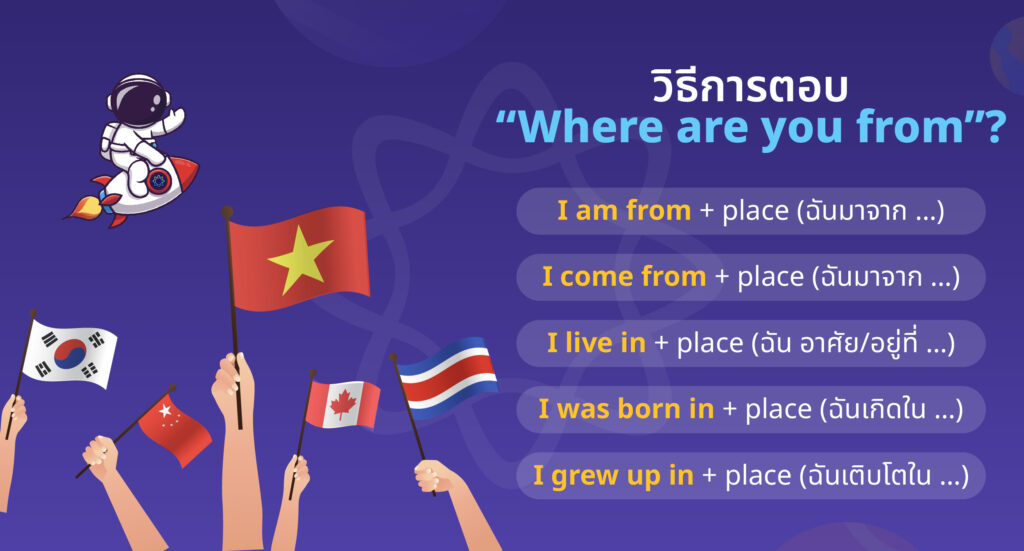
สูตรง่ายๆ บางอย่างมักใช้ในการตอบคำถาม “Where are you from?”
| สูตร | ความหมาย | ตัวอย่าง |
| I am from + place | ฉันมาจาก … | I am from Russia. (ฉันมาจากรัสเซีย) |
| I come from + place | ฉันมาจาก … | He comes from Russia. (เขามาจากรัสเซีย) |
| I live in + place | ฉัน (อาศัย)อยู่ที่ … | I live in the countryside of Thailand. (ฉันอาศัยอยู่ในชนบทของไทย) |
| I was born in + place | ฉันเกิดใน … | I was born in a small village on the outskirts of Seoul. (ฉันเกิดในหมู่บ้านเล็กๆ แห่งหนึ่งนอกเขตกรุงโซล) |
| I grew up in + place | ฉันเติบโตใน … | I grew up in Paris, the capital of France. (ฉันเติบโตในปารีส เมืองหลวงของฝรั่งเศส) |
>>> Read more: แนะนำวิธีเขียนที่อยู่ภาษาอังกฤษอย่างถูกต้องและเข้าใจง่าย
วิธีการตอบคำถาม Where are you from ใน IELTS
Where are you from? เป็นคำถามที่พบบ่อย ซึ่งมักปรากฏในข้อสอบ IELTS Speaking โดยเฉพาะข้อสอบ IELTS Speaking Part 1
วิธีการตอบคำถาม Where are you from? ใน IELTS Speaking มีความแตกต่างเมื่อเทียบกับวิธีการตอบในการสนทนาภาษาอังกฤษในชีวิตประจำวัน วิธีการตอบใน IELTS Speaking กำหนดให้ผู้สมัครต้องอธิบายเพิ่มเติมเกี่ยวกับบ้านเกิด ต้นกำเนิด สถานที่เกิดหรือสถานที่มาจาก แทนที่จะให้ข้อมูลเกี่ยวกับภูมิหลังเพียงอย่างเดียว
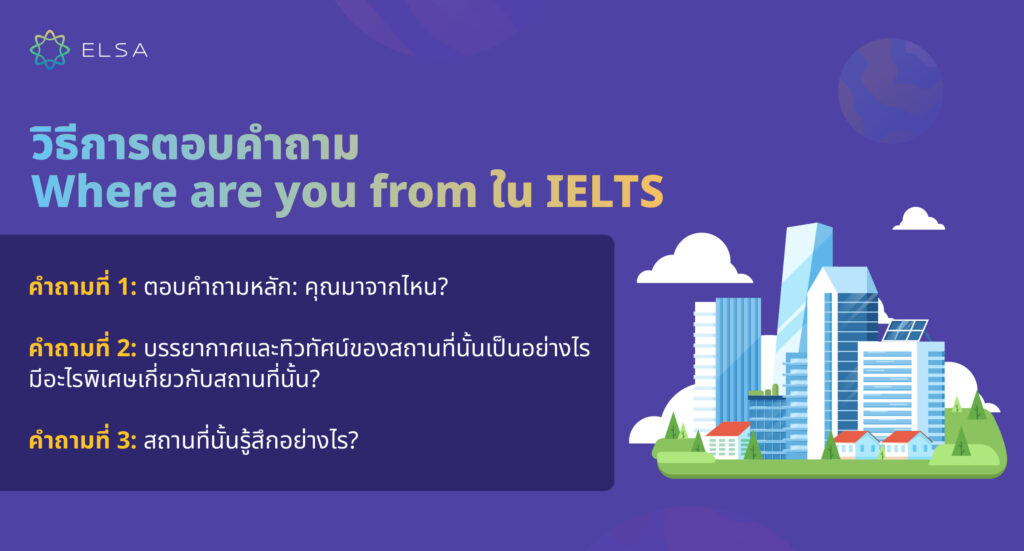
คำตอบใน IELTS Speaking Part 1 มักจะมีประโยค 3 ข้อ โครงสร้างทั่วไปในการตอบคำถาม Where are you from? ในการสอบ IELTS Speaking
- คำถามที่ 1: ตอบคำถามหลัก: คุณมาจากไหน?
- คำถามที่ 2: บรรยากาศและทิวทัศน์ของสถานที่นั้นเป็นอย่างไร มีอะไรพิเศษเกี่ยวกับสถานที่นั้น?
- คำถามที่ 3: สถานที่นั้นรู้สึกอย่างไร?
>>> Read more: IELTS คืออะไร? สรุปข้อมูลทั้งหมดที่คุณจำเป็นต้องรู้เกี่ยวกับการสอบ IELTS
ตัวอย่างวิธีการตอบคำถาม “Where are you from” ใน IELTS Speaking
ตัวอย่างที่ ๑ I was born in South Korea and grew up in Seoul, the vibrant capital city. Growing up in such a culturally rich environment exposed me to a wide range of traditions, delicious cuisine, and a strong sense of community.
ความหมาย ฉันเกิดที่เกาหลีใต้และเติบโตที่โซล เมืองหลวงที่มีชีวิตชีวา การเติบโตในสภาพแวดล้อมที่อุดมสมบูรณ์ทางวัฒนธรรมทำให้ฉันได้สัมผัสกับประเพณีที่หลากหลาย อาหารที่อร่อย และความรู้สึกผูกพันกับชุมชนอย่างแน่นแฟ้น
ตัวอย่างที่ ๒ I am from a small village in the countryside of France. Growing up in the countryside of France provided me with a unique perspective on life, surrounded by picturesque landscapes and a close-knit community. The tranquility and simplicity of rural living taught me the value of nature and the importance of cherishing the little things in life.
ความหมาย ฉันมาจากหมู่บ้านเล็กๆ ในชนบทของฝรั่งเศส การเติบโตในชนบทของฝรั่งเศสทำให้ฉันมีมุมมองต่อชีวิตที่ไม่เหมือนใคร รายล้อมไปด้วยทิวทัศน์ที่งดงามและชุมชนที่แน่นแฟ้น ความเงียบสงบและความเรียบง่ายของการใช้ชีวิตในชนบทสอนให้ฉันรู้ถึงคุณค่าของธรรมชาติและความสำคัญของการทะนุถนอมสิ่งเล็กๆ น้อยๆ ในชีวิต
คำศัพท์ที่น่ารู้
| คำศัพท์ | การออกเสียง | ความหมาย |
| vibrant | /ˈvaɪ.brənt/ | สั่นสะเทือน |
| expose | /ɪkˈspoʊz/ | เปิดเผยออกมา |
| bustling | /ˈbʌs.lɪŋ/ | อึกทึกครึกโครม |
| deep-rooted | /ˈdip.ˈruː.təd/ | แน่นแฟ้น |
| instill | /ɪnˈstɪl/ | ค่อย ๆ ใส่เข้าไป |
| tranquility | /træŋˈkwɪl.ə.ti/ | ความเงียบสงบ |
>>> Read more:
- แนะนําตัวภาษาอังกฤษ – ตัวอย่าง IELTS Speaking Part 1
- [รวบรวม] 5,000 + คำศัพท์ IELTS ตามหัวข้อที่พบบ่อยที่สุด

คำถามต่อไปนี้คล้ายกับคำถาม Where are you from
นอกจากคำถาม Where are you from? ผู้เรียนยังสามารถใช้คำถามอื่นๆ ที่มีความหมายคล้ายกันได้อีกด้วย คำถามเหล่านี้อาจมีความหมายเกี่ยวกับบ้านเกิด สัญชาติ หรือภาษาที่บุคคลคนหนึ่งใช้
คำถามต่อไปนี้คล้ายกับคำถาม Where are you from?
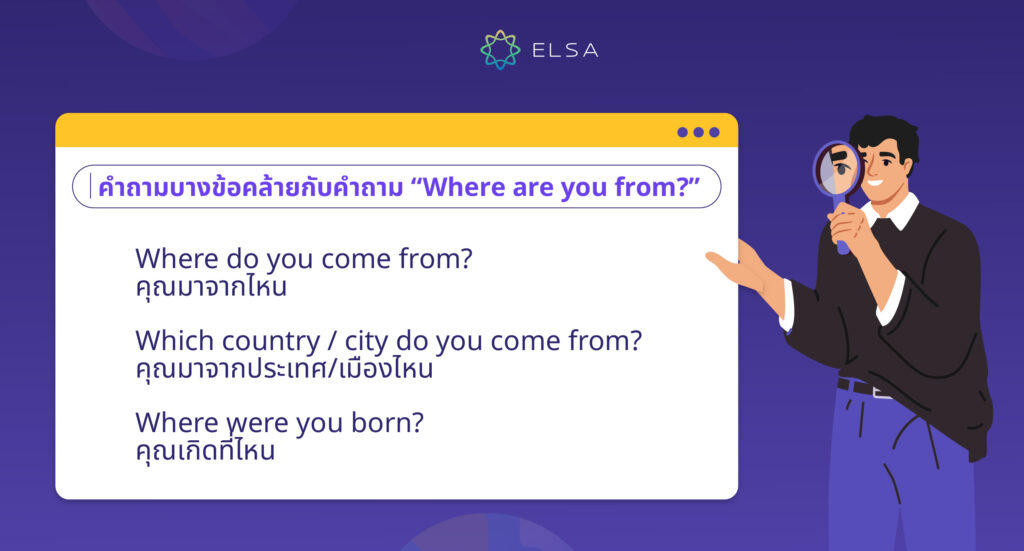
| คำถาม | ความหมาย | ตัวอย่างการตอบรับ |
| Where do you come from? | คุณมาจากไหน | I come from Ho Chi Minh City. (ฉันมาจากนครโฮจิมินห์) |
| Which country / city do you come from? | คุณมาจากประเทศ/เมืองไหน? | I come from a small city in the south of Thailand. (ฉันมาจากเมืองเล็กๆ ทางภาคใต้ของประเทศไทย) |
| Where were you born? | คุณเกิดที่ไหน | I was born in Britain. (ฉันเกิดในประเทศอังกฤษ) |
| In which country / city were you born or raised? | คุณเกิด/เติบโตในประเทศ/เมืองไหน | I was born in Australia but grew up in South Korea. (ฉันเกิดที่ออสเตรเลียแต่เติบโตที่เกาหลีใต้) |
| Where is your hometown? | บ้านเกิดของคุณอยู่ที่ไหน? | My hometown is in Bangkok. (บ้านเกิดของฉันคือกรุงเทพฯ) |
| Which language do you speak? | คุณพูดภาษาอะไร? | I speak Korean. (ฉันพูดภาษาเกาหลี) /I was born in Australia but grew up in South Korea, so now I speak Korean. (ฉันเกิดที่ออสเตรเลียแต่โตที่เกาหลีใต้ ดังนั้นตอนนี้ฉันจึงพูดภาษาเกาหลีได้) |
| What is your nationality? | สัญชาติของคุณคืออะไร | I am American. (ฉันเป็นคนอเมริกัน) |
| What is your place of origin? | คุณมาจากที่ไหน | I was born in London, England. (ฉันเกิดที่เมืองลอนดอน ประเทศอังกฤษ) |
| What is your native country? | คุณเกิดที่ประเทศอะไร | I was born in France, so France is my native country. (ฉันเกิดที่ฝรั่งเศส ดังนั้นฝรั่งเศสจึงเป็นบ้านเกิดของฉัน) |
| Where did you grow up? | คุณเติบโตมาจากที่ไหน | I grew up in Bangkok, but my family is from the countryside. (ฉันเติบโตในกรุงเทพฯ แต่ครอบครัวของฉันมาจากชนบท) |
| Where is your family originally from? | ครอบครัวของคุณมีต้นกำเนิดมาจากไหน | My family is originally from Chiang Mai. (ครอบครัวของฉันมีถิ่นกำเนิดจากเชียงใหม่) |
| Where ya from? | คุณมาจากไหน | I’m from Thailand. (ฉันมาจากประเทศไทย) |
ความแตกต่างระหว่าง “Where are you from?” และ “Where do you come from?”
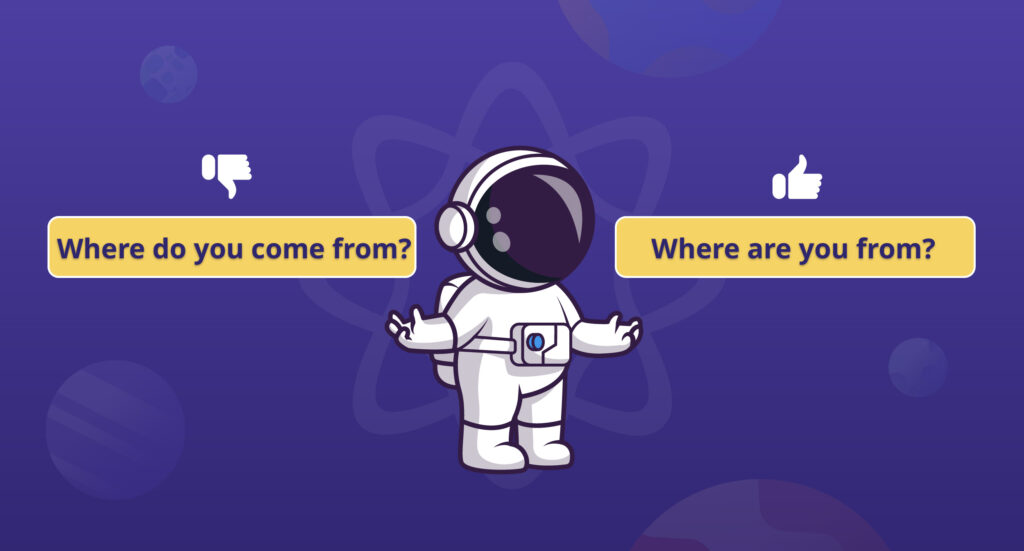
คำถามทั้งสองข้อถามเกี่ยวกับเมือง รัฐ นคร หรือประเทศที่คุณเติบโต (หรืออาศัยอยู่ในปัจจุบัน) รวมถึงภูมิหลังทางชาติพันธุ์ของคุณ อย่างไรก็ตาม “where do you come from?” ในทางไวยากรณ์มันฟังดูน่าอึดอัดและสับสน
- หากคุณถามใครสักคนว่าพวกเขาอาศัยอยู่ที่ไหน คำถาม “where did you come from?” ฟังดูเป็นธรรมชาติมากขึ้น
- หากคุณอยากรู้ว่าพวกเขาโตมาจากไหน ให้ถามคำถามว่า “where are you from?” หรือ “where did you grow up?” มันเป็นที่นิยมมากขึ้น
- หากคุณต้องการถามเกี่ยวกับเชื้อชาติของเขา คำถาม “where is your family originally from?” ฟังดูน่านับถือมากขึ้น
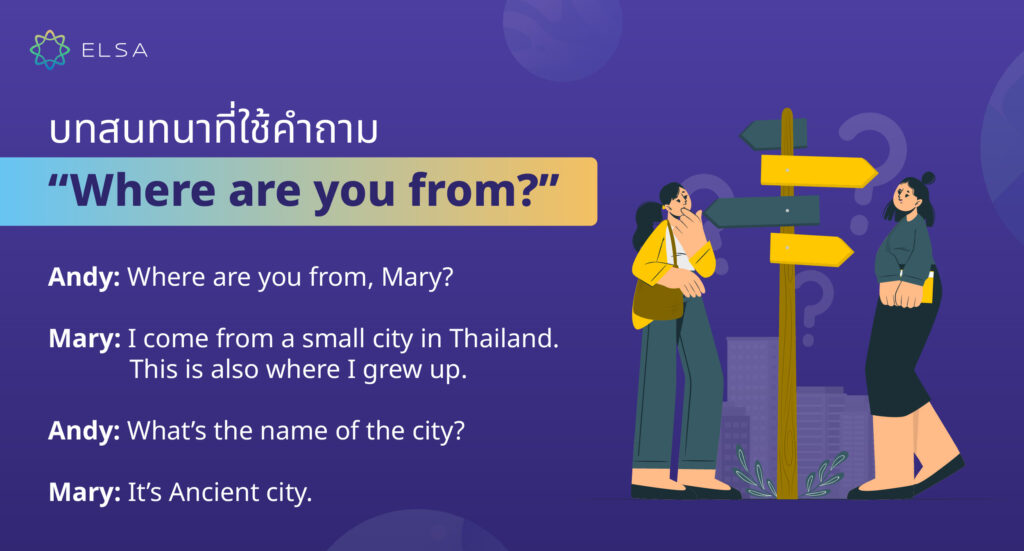
บทสนทนาที่ใช้คำถาม “Where are you from?”
| ตัวละคร | ภาษาอังกฤษ | ความหมาย |
| Andy | Where are you from, Mary? | แมรี่คุณมาจากไหน? |
| Mary | I come from a small city in Thailand. This is also where I grew up. | ฉันมาจากเมืองเล็กๆ ในประเทศไทย ที่นี่คือที่ที่ฉันเติบโต |
| Andy | What’s the name of the city? | ชื่อเมืองคืออะไร |
| Mary | It’s Ancient city. | คือเมืองโบราณ |
| Andy | How do you feel about growing up there? | คุณรู้สึกอย่างไรกับการเติบโตที่นั่น |
| Mary | Growing up in a close-knit community surrounded by lush green fields and serene landscapes, I developed a deep appreciation for nature and the simple joys it brings. The slower pace of life allowed me to truly connect with my surroundings and taught me the importance of cherishing the little things in life. | การเติบโตในชุมชนที่รวมตัวอย่างใกล้ชิดกัน และรายล้อมไปด้วยทุ่งหญ้าเขียวขจีและทิวทัศน์ที่เงียบสงบ ทำให้ฉันซาบซึ้งในธรรมชาติและความสุขเล็กๆ น้อยๆ ที่ธรรมชาติมอบให้ การใช้ชีวิตแบบช้าๆ ช่วยให้ฉันเชื่อมโยงกับสิ่งแวดล้อมรอบตัวได้อย่างแท้จริง และยังสอนให้ฉันรู้จักคุณค่าของสิ่งเล็กๆ น้อยๆ ในชีวิต |
| Andy | Sounds great! I hope to visit my hometown soon. | ฟังดูดีมากเลย! ฉันหวังว่าจะได้ไปเยือนบ้านเกิดของฉันเร็วๆ นี้ |
| Mary | It is my honour to be your tour guide and show you all special things in my hometown. | ฉันถือเป็นเกียรติอย่างยิ่งที่จะได้เป็นไกด์นำเที่ยวและพาคุณไปชมสิ่งพิเศษต่างๆ ในบ้านเกิดของฉัน |
คำศัพท์ที่น่ารู้
| คำศัพท์ | การออกเสียง | ความหมาย |
| close-knit | /ˌkloʊsˈnɪt/ | ที่รวมตัวอย่างใกล้ชิดกัน |
| serene | /səˈriːn/ | เงียบสงบ |
| appreciation | /əˌpriː.ʃiˈeɪ.ʃən/ | ความรู้คุณค่า |
| cherish | /ˈtʃer.ɪʃ/ | ทะนุถนอม |
| honour | /ˈɑː.nɚ/ | เกียรติยศ |
บทความข้างต้นของ ELSA Speak ช่วยให้เพื่อนๆ รู้วิธีตอบคำถาม “Where are you from?” มากขึ้น และคำถามที่คล้ายกันใน IELTS Speaking รวมถึงในการสื่อสารภาษาอังกฤษในชีวิตประจำวัน หวังว่าผู้เรียนจะสามารถจดจำความรู้และนำไปใช้ได้อย่างมีประสิทธิภาพในการทำแบบทดสอบและการสื่อสาร
>>> Read more: วิธีคำนวณ IELTS Score Overall
“Where do you live?” เป็นคำถามที่ใช้บ่อยในภาษาอังกฤษเมื่อพบกันครั้งแรก และมักจะปรากฏในการสอบ IELTS Speaking บทความนี้จาก ELSA Speak จะวิเคราะห์และเสนอวิธีการตอบคำถาม “Where do you live?” รวมถึงแนะนำคำศัพท์ที่เกี่ยวข้อง เพื่อให้ผู้เรียนสามารถฝึกฝนสำหรับสถานการณ์การสื่อสารต่างๆ
Where do you live แปลว่าอะไร (Where do you live meaning)

Where do you live คำอ่าน : /wer də juː lɪv/
“Where do you live?” (แปลว่า: คุณอาศัยอยู่ที่ไหน?) ใช้ถามข้อมูลเกี่ยวกับสถานที่ ที่คู่สนทนาอาศัยอยู่ เมื่อพบกันครั้งแรก พวกเรามักจะใช้คำถามนี้ในการสนทนา เพื่อทำความรู้จักกับอีกฝ่าย ซึ่งขึ้นอยู่กับแต่ละสถานการณ์ ผู้เรียนสามารถตอบได้หลายวิธี ซึ่งอาจเป็นคำตอบเกี่ยวกับภูมิภาค ประเทศ เมือง หรือที่อยู่เฉพาะของที่พัก
แม้ว่าจะเป็นประโยคที่ดูเรียบง่าย แต่การตอบคำถามนี้ ควรให้ข้อมูล อย่างกระชับและมั่นใจ
โดยปกติแล้ว ในคำถามนี้ นอกเหนือจากการให้ข้อมูลเกี่ยวกับที่อยู่อาศัยแล้ว ผู้เรียนอาจเพิ่มลักษณะเด่นของสถานที่นั้นๆ เพื่อให้การสนทนาน่าสนใจมากขึ้น
ตัวอย่าง: I live in Bangkok, the capital of Thailand. (ฉันอาศัยอยู่ในกรุงเทพมหานคร เมืองหลวงของประเทศไทย)
>>> Read more: วิธีการเขียนที่อยู่ภาษาอังกฤษให้ถูกต้องที่สุด
Where do you live ต้องตอบว่าอะไรในสถานการณ์จริง
ต่อไปนี่คือวิธีการตอบทั่วไปในการให้ข้อมูลเกี่ยวกับที่อยู่อาศัยของคุณเอง จากภาพรวมไปจนถึงรายละเอียด ผู้เรียนสามารถนำมาใช้ในสถานการณ์ต่างๆ ในชีวิตจริงได้อย่างเหมาะสม
ตอบแบบภาพรวมเกี่ยวกับที่อยู่อาศัย
ปกติเมื่อถูกถามว่า “Where do you live?” จากคนต่างชาติเมื่อเดินทาง หรือในสถานการณ์ที่ต้องสื่อสารในสภาพแวดล้อมระหว่างประเทศ ทุกคนมักต้องการทราบแค่ภาพรวมเกี่ยวกับที่อยู่อาศัยของกันและกัน ในกรณีนี้ การตอบเกี่ยวกับประเทศหรือเมืองที่อาศัยอยู่ก็เพียงพอและเหมาะสม
โครงสร้างไวยากรณ์:
I live + in + ประเทศ/เมือง
ในกรณีที่ประเทศหรือเมืองนั้นไม่เป็นที่รู้จักมากนัก ผู้เรียนสามารถให้ข้อมูลเพิ่มเติมเกี่ยวกับตำแหน่งทางภูมิศาสตร์ของสถานที่นั้น
ตัวอย่าง:
- I live in America. (ฉันอาศัยอยู่ในอเมริกา)
- I live in Paris. (ฉันอาศัยอยู่ในปารีส)
- I live in Thailand, a small and peaceful country in Southeast Asia. (ฉันอาศัยอยู่ในประเทศไทย ประเทศเล็กๆ ที่เงียบสงบในเอเชียตะวันออกเฉียงใต้)
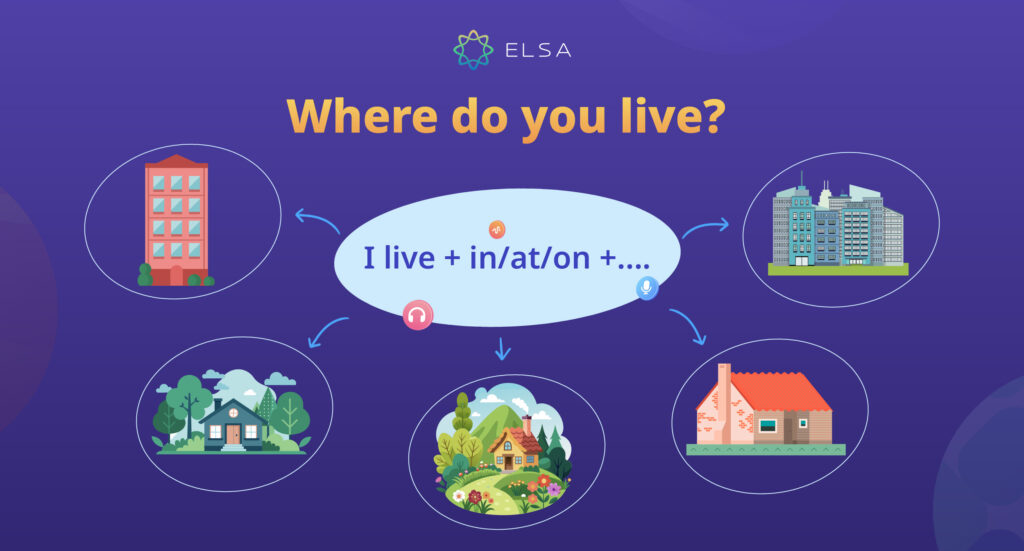
ตอบแบบละเอียดเกี่ยวกับที่อยู่อาศัย
โครงสร้างไวยากรณ์:
I live + in + ชื่อหมู่บ้าน/อำเภอ/จังหวัด/เมือง
ตัวอย่าง: I live in Nonthaburi City. (ฉันอาศัยอยู่ในเมืองนนทบุรี)
I live + at + ที่อยู่บ้านที่เฉพาะเจาะจง (เลขที่บ้าน/ชื่อถนน/ตำบล/อำเภอ/จังหวัด)
ตัวอย่าง: I live at 165/4 Village No.10, Wangban Sub-district, Lomkao District, Phetchabun Province. (ฉันอาศัยอยู่ที่ 165/4 หมู่บ้านที่ 10 ตำบลวังบาน อำเภอลมเก่า จังหวัดเพชรบูรณ์)
I live + on + ชื่อถนน
ตัวอย่าง: I live on Suthisarnvinijchai Road. (ฉันอาศัยอยู่บนถนนสุทธิสารวิจิตรชัย)
>>> Read more: บทความเกี่ยวกับการใช้ IN ON AT ช่วยให้คุณแยกแยะได้ง่าย
วิธีการตอบคำถาม where do you live IELTS
หัวข้อ “where do you live” มักปรากฏในการสอบ IELTS Speaking ด้านล่างนี้คือตัวอย่างคำถามและคำตอบที่เกี่ยวข้องกับหัวข้อนี้:
| คำถาม | คำอธิบาย | ตัวอย่างวิธีการตอบ |
| Where do you live? | คุณอาศัยอยู่ที่ไหน? | I currently live in [ชื่อเมืองหรือสถานที่]. It’s a [คำอธิบายเกี่ยวกับเมือง/สถานที่], and I’ve been here for [จำนวนปีหรือระยะเวลา] now. |
| Can you describe your neighborhood? | คุณสามารถอธิบายละแวกบ้านของคุณได้ไหม? | Certainly, my neighborhood is [คำอธิบายเกี่ยวกับพื้นที่ที่อาศัย]. It’s [tข้อมูลเกี่ยวกับสภาพแวดล้อม สิ่งอำนวยความสะดวกต่างๆ], which makes it a very convenient and pleasant place to live. |
| What do you like about your city/town? | คุณชอบอะไรเกี่ยวกับเมืองของคุณ? | There are several things I like about my city/town. Firstly, the [ลักษณะเด่นของเมือง/สถานที่]. Moreover, it’s a [การประเมินเชิงบวกเกี่ยวกับสภาพแวดล้อม วัฒนธรรม กิจกรรมต่างๆ]. |
| Do you prefer living in a city or a rural area? | คุณชอบอาศัยอยู่ในเมืองหรือในชนบท? | I personally prefer living in a [เมือง/บริเวณชานเมืองหรือชนบท]. Although cities offer [ข้อดีของการอยู่อาศัยในเมือง], I also appreciate the tranquility and simplicity of [ชนบท/บริเวณชานเมือง]. |
| What changes would you like to see in your area? | คุณต้องการเปลี่ยนแปลงอะไรในพื้นที่ของคุณ? | I believe there’s always room for improvement. In my area, I’d like to see [ข้อเสนอแนะเกี่ยวกับการปรับปรุงหรือการเปลี่ยนแปลง], as it would enhance the overall quality of life for residents. |
| How do you think your area will change in the future? | คุณคิดว่าพื้นที่ของคุณจะเปลี่ยนแปลงอย่างไรในอนาคต? | I think my area will undergo [การคาดการณ์เกี่ยวกับการเปลี่ยนแปลงในอนาคต]. With [ปัจจัยที่อาจมีผลกระทบ], I believe it will evolve in [ทิศทางการพัฒนาที่คาดหวัง] over time. |
| What are some advantages and disadvantages of living in your city/town? | ข้อดีและข้อเสียบางประการของการอาศัยอยู่ในเมือง/ชุมชนของคุณคืออะไร? | Living in my city/town has its pros and cons. On the one hand, [ข้อดีของการอยู่อาศัยที่นั่น]. On the other hand, [ข้อเสียเกี่ยวกับสภาพแวดล้อม การคมนาคม หรือแง่มุมอื่นๆ]. |
โปรดทราบว่าคำตอบควรนำเสนออย่างเป็นธรรมชาติและเป็นระบบ ใช้คำศัพท์และไวยากรณ์ที่เหมาะสมเพื่อแสดงความคิดเห็นของคุณอย่างชัดเจน
คำศัพท์หัวข้อ Where do you live?
สถานที่
| คำศัพท์ | การอ่าน | ความหมาย | ตัวอย่าง |
| Quarter | /ˈkwɔːrtər/ | ย่าน | As a student in Paris, she loved the Latin quarter. (ตอนเป็นนักเรียนในปารีส เธอชอบย่านละตินมาก) |
| Ward | /wɔːrd/ | เขต | He lives in the 12th ward of the city. (เขาอาศัยอยู่ในเขตที่ 12 ของเมือง) |
| Commune | /ˈkɑːmjuːn/ | ชุมชน | She lives in a commune. (เธออาศัยอยู่ในชุมชน) |
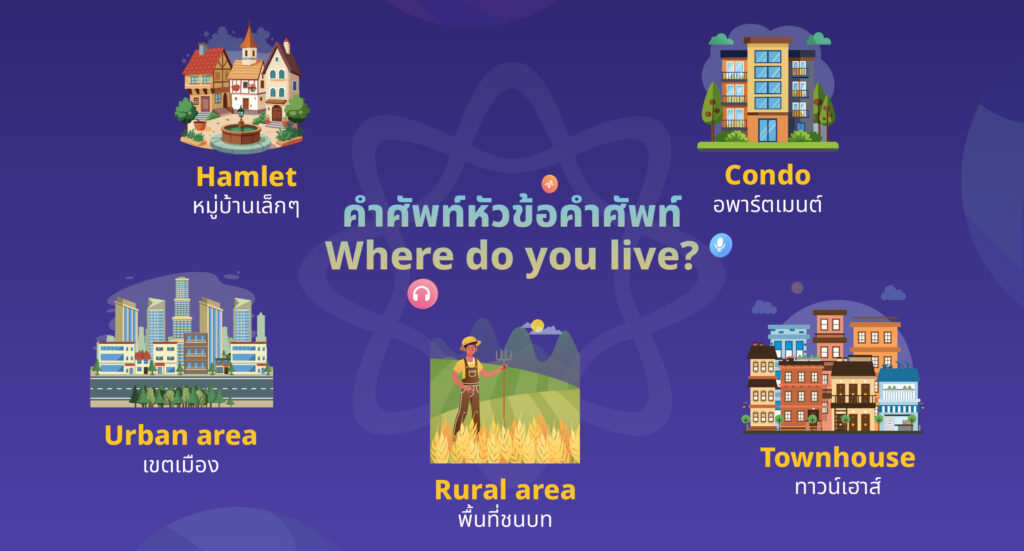
| Hamlet | /ˈhæmlət/ | หมู่บ้านเล็กๆ | We live in a little fishing hamlet. (พวกเราอาศัยอยู่ในหมู่บ้านชาวประมงเล็กๆ) |
| Town | /taʊn/ | เมือง | The nearest town is ten miles away. (เมืองที่ใกล้ที่สุดห่างออกไปสิบไมล์) |
| Province | /ˈprɑːvɪns/ | จังหวัด | A shy young man from the provinces. (ชายหนุ่มขี้อายจากต่างจังหวัด) |
| Apartment building | /əˈpɑːrtmənt ˈbɪldɪŋ/ | อาคารอพาร์ตเมนต์ | The old apartment building was recently renovated. (อาคารอพาร์ตเมนต์เก่าถูกปรับปรุงเมื่อเร็วๆนี้) |
| Condo (Condominium) | /ˈkɑːndəʊ/ | คอนโดมิเนียม | He bought an ocean-front condo in his native Florida. (เขาซื้อคอนโดมิเนียมติดทะเลในบ้านเกิดที่ฟลอริดา) |
| Townhouse | /ˈtaʊn.haʊs/ | ทาวน์เฮาส์ | We are looking for a townhouse with at least three bedrooms and two bathrooms. (เรากำลังมองหาทาวน์เฮาส์ที่มีอย่างน้อยสามห้องนอนและสองห้องน้ำ) |
| Suburb | /ˈsʌb.ɝːb/ | ชานเมือง | They live in the suburbs. (พวกเขาอาศัยอยู่ในชานเมือง) |
| Neighborhood | /ˈneɪ.bɚ.hʊd/ | ละแวก | We grew up in the same neighborhood. (พวกเราเติบโตมาในละแวกเดียวกัน) |
| Rural area | /ˈrʊr.əl ˈer.i.ə/ | พื้นที่ชนบท | I prefer living in a rural area to the hustle and bustle of the city. (ฉันชอบอยู่ในพื้นที่ชนบทมากกว่าพื้นที่ความวุ่นวายในเมือง) |
| Urban area | /ˈɝː.bən ˈer.i.ə/ | พื้นที่ในเมือง | The air quality in urban areas is often poor due to pollution. (คุณภาพอากาศในพื้นที่ในเมืองมักแย่เนื่องจากมลพิษ) |
| Residential area | /ˌrez.əˈden.ʃəl ˈer.i.ə/ | พื้นที่อยู่อาศัย | I live in a quiet residential area near the park. (ฉันอาศัยอยู่ในพื้นที่อยู่อาศัยที่เงียบสงบใกล้สวนสาธารณะ) |
| Housing project | /ˈhaʊ.zɪŋ ˈprɑː.dʒekt/ | โครงการที่อยู่อาศัย | The government is investing in a number of new housing projects to help address the affordable housing crisis. (รัฐบาลกำลังลงทุนในโครงการที่อยู่อาศัยใหม่ๆ หลายโครงการเพื่อช่วยแก้ไขปัญหาที่อยู่อาศัยราคาไม่แพง) |
| Gated community | /ˈɡeɪ.t̬əd kəˈmjuː.nə.t̬i/ | ชุมชนที่มีการรักษาความปลอดภัย | I live in a gated community in California. (ฉันอาศัยอยู่ในชุมชนที่มีการรักษาความปลอดภัยในแคลิฟอร์เนีย) |
| Downtown | /ˌdaʊnˈtaʊn/ | ใจกลางเมือง | The park is located downtown. (สวนสาธารณะตั้งอยู่ในใจกลางเมือง) |
ตำแหน่งที่ตั้ง
| คำศัพท์ | การอ่าน | ความหมาย | ตัวอย่าง |
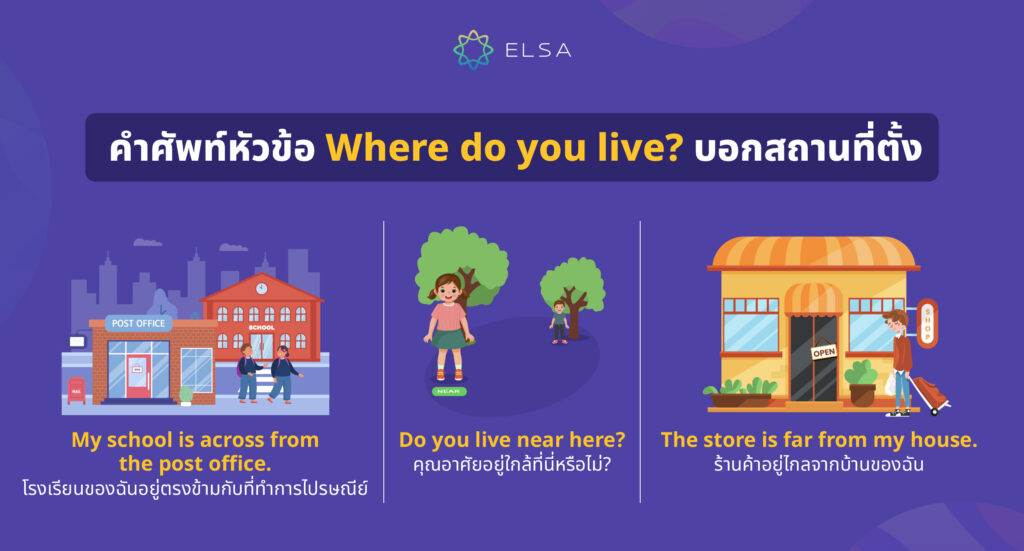
| Across from | /əˈkrɑːs frʌm/ | ตรงข้ามกับ | My school is across from the post office. (โรงเรียนของฉันอยู่ตรงข้ามกับที่ทำการไปรษณีย์) |
| Near | /nɪr/ | ใกล้ | Do you live near here? (คุณอาศัยอยู่ใกล้ที่นี่หรือไม่?) |
| Far from | /fɑːr frʌm/ | ไกลจาก | The store is far from my house. (ร้านค้าอยู่ไกลจากบ้านของฉัน) |
| On the outskirts | /ɑːn ðiː ˈaʊt.skɝːts/ | ในชานเมือง | The factory is located on the outskirts of Bangkok. (โรงงานตั้งอยู่ในชานเมืองของกรุงเทพฯ) |
| In the heart of | /ɪn ðiː hɑːrt ɑːv/ | ในใจกลางของ | The hotel is located in the heart of the city. (โรงแรมตั้งอยู่ใจกลางเมือง) |
คำกริยา
| คำศัพท์ | การอ่าน | ความหมาย | ตัวอย่าง |
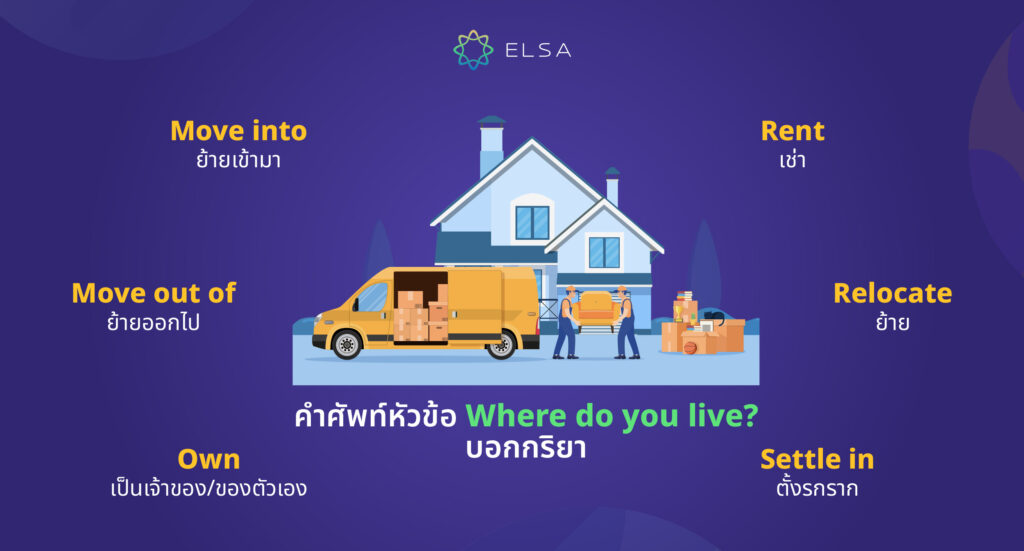
| Move into | /muːv ˈɪn.tuː/ | ย้ายเข้ามา | Our new neighbors moved in yesterday. (เพื่อนบ้านใหม่ของเราย้ายเข้ามาเมื่อวานนี้) |
| Move out of | /muːv aʊt ɑːv/ | ย้ายออกไป | She moved out of the house when she got married. (เธอย้ายออกจากบ้านเมื่อตอนเธอแต่งงาน) |
| Own | /əʊn/ | เป็นเจ้าของ/ของตัวเอง | It was her own house. (นั่นเป็นบ้านของเธอเอง) |
| Rent | /rent/ | เช่า | How much rent do you pay for this place? (คุณจ่ายค่าเช่าที่นี่เท่าไหร่?) |
| Relocate | /ˌriːˈləʊkeɪt/ | ย้าย | The firm may be forced to relocate from New York to Stanford. (บริษัทอาจถูกบังคับให้ย้ายจากนิวยอร์กไปสแตนฟอร์ด) |
| Settle in | /ˈset̬.əl ɪn/ | ตั้งรกราก/ลงหลักปักฐาน | After a few months of exploring the bustling streets of Bangkok, I finally started to settle in to my new life in Thailand. (หลังจากที่ได้สำรวจถนนที่พลุกพล่านในกรุงเทพฯ อยู่สองสามเดือน ในที่สุดฉันก็เริ่มตั้งรกรากในชีวิตใหม่ของฉันในประเทศไทย) |
>>> Read more:
- คำกริยา (Verb) คืออะไร? การจำแนกรูปแบบคำกริยาในภาษาอังกฤษ
- ตาราง Irregular Verbs ในภาษาอังกฤษที่ครบถ้วนและถูกต้องที่สุด
วลีที่คล้ายกันกับ Where do you live?
นอกเหนือจากการถามว่า “Where do you live?” เมื่ออยากรู้เกี่ยวกับที่อยู่อาศัยของใครสักคน ผู้เรียนสามารถใช้วลีอื่นๆ เหล่านี้เพื่อทำให้การสนทนายืดหยุ่นและน่าสนใจมากขึ้น
| คำถาม | คำอธิบาย | ตัวอย่างวิธีการตอบ |
| Where are you based? | “Where are you based?” (คุณอาศัยอยู่ที่ไหน?) ใช้ในบริบทสุภาพมากกว่า มักใช้ในการสนทนาอย่างเป็นทางการ “Where are you based?” ช่วยให้ทราบที่อยู่ปัจจุบันหรือสถานที่ทำงานของบุคคลเพื่อการวางแผนการเดินทางหรือเข้าร่วมกิจกรรม คำถามนี้เหมาะกับบริบทการทำงานที่เป็นทางการและมืออาชีพ | Q: The meeting will be held in San Francisco. Where are you based? That will help me determine if you’ll need to travel. (การประชุมจะจัดขึ้นที่ซานฟรานซิสโก คุณอาศัยอยู่ที่ไหน? เพื่อให้ผมทราบว่าคุณต้องเดินทางหรือไม่) A: I’m currently in San Jose, but I frequently travel for work. (ฉันอยู่ที่ซานโฮเซ แต่ฉันเดินทางเพื่อทำงานบ่อยครั้ง) |
| What’s your address? | “What’s your address?” (ที่อยู่ของคุณคืออะไร?) เป็นวิธีการพูดตรงไปตรงมามากที่สุด มีความแม่นยำและเป็นกลาง คำถามนี้มุ่งเน้นไปที่ที่อยู่เฉพาะของบุคคลเพื่อการส่งจดหมาย สินค้า การติดต่อโดยตรง หรือเพื่อวัตถุประสงค์ทางการ | Hey, long time no see! What’s your address? I’d like to send you a small gift. (เฮ้ ไม่ได้เจอกันนาน ที่อยู่ของคุณคืออะไร? ฉันอยากจะส่งของขวัญเล็กๆ ให้คุณ) |
| Where do you hang your hat? | คุณเคยได้ยินสำนวน “where do you hang your hat?” (คุณแขวนหมวกไว้ที่ไหน?) หรือไม่ สำนวนนี้หมายถึงสถานที่ที่คุณไว้วางใจ เช่น บ้านของคุณ ที่ที่คุณสามารถพักผ่อนและวางกังวลของคุณลง “Where do you hang your hat?” เป็นการพูดเชิงเปรียบเทียบและไม่เป็นทางการเพื่อถามเกี่ยวกับที่อยู่ของคุณ คำถามนี้ใช้ในสถานการณ์ปกติและไม่เป็นทางการ เช่น การสนทนากับเพื่อนหรือคนในครอบครัว หรือในเรื่องราวชีวิตประจำวัน | • After college, did you find a job and where do you hang your hat now? (หลังจากเรียนจบ คุณได้งานหรือยัง และตอนนี้คุณอาศัยอยู่ที่ไหน?) • I heard you’ve been traveling a lot. Where do you hang your hat these days? (ฉันได้ยินมาว่าคุณเดินทางเยอะมาก ช่วงนี้คุณอาศัยอยู่ที่ไหน?) |
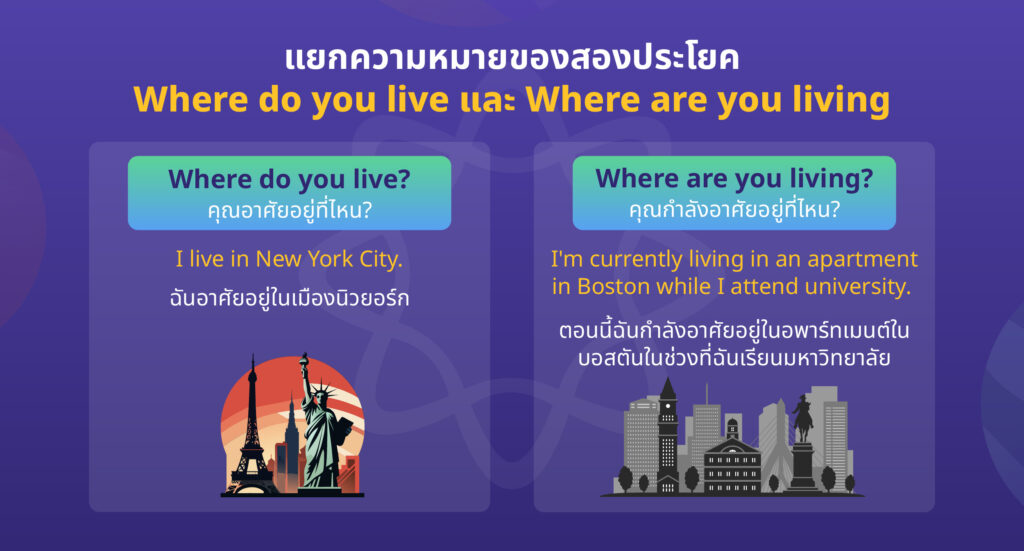
แยกความหมายของสองประโยค “Where do you live?” และ “Where are you living?”
คำถาม “Where do you live?” และ “Where are you living?” มีความหมายใกล้เคียงกันแต่มีความแตกต่างในวิธีการใช้และเวลาที่เหมาะสม
Where do you live? (คุณอาศัยอยู่ที่ไหน?)
- ประโยคนี้มักใช้ถามเกี่ยวกับที่อยู่ถาวรของคนหนึ่งหรือสถานที่ที่พวกเขาอยู่เป็นประจำ
- โดยปกติแล้วใช้กับข้อมูลที่คงที่ ไม่เปลี่ยนแปลงบ่อยๆ เช่น เมื่อต้องการทราบว่าคนรู้จักอาศัยอยู่ที่ไหนหรือซื้อบ้านที่ไหน
ตัวอย่าง:
Q: Where do you live? (คุณอาศัยอยู่ที่ไหน?)
A: I live in New York City. (ฉันอาศัยอยู่ในเมืองนิวยอร์ก)
Where are you living? (คุณกำลังอาศัยอยู่ที่ไหน?)
- ประโยคนี้มักใช้ถามเกี่ยวกับสถานที่กำลังอาศัยอยู่ในช่วงเวลาหนึ่ง โดยปกติแล้วจะเป็นสถานการณ์ปัจจุบันหรือเมื่อไม่นานมานี้
- มันอาจจะบ่งบอกว่าสถานะหรือสถานที่อาจจะเปลี่ยนแปลงในอนาคตหรือเปลี่ยนแปลงชั่วคราว ตัวอย่างเช่น ผู้เรียนสามารถใช้ประโยคนี้เมื่อถามเกี่ยวกับที่ที่ใครบางคนกำลังอาศัยอยู่ในช่วงเวลาที่พวกเขาทำงานในเมืองใหม่ หรือเมื่อพวกเขากำลังเช่าที่พักในสถานที่เฉพาะในช่วงเวลาสั้นๆ
ตัวอย่าง:
Q: Where are you living? (คุณกำลังอาศัยอยู่ที่ไหน?)
A: I’m currently living in an apartment in Boston while I attend university. (ตอนนี้ฉันกำลังอาศัยอยู่ในอพาร์ทเมนต์ในบอสตันในช่วงที่ฉันเรียนมหาวิทยาลัย)
บทสนทนาที่ใช้ Where do you live?
| ตัวอักษร | ภาษาอังกฤษ | ความหมาย |
| Joseph | Hi, it’s been a while! How have you been? | สวัสดีครับ ไม่ได้เจอกันนานเลย! ช่วงนี้คุณเป็นอย่างไรบ้าง? |
| Henry | Hey there! I’ve been good, thanks for asking. Just keeping busy with work and all. How about you? | เฮ้! ฉันสบายดี ขอบคุณที่ถาม แค่ยุ่งกับงานและทุกๆอย่าง แล้วคุณล่ะ? |
| Joseph | I hear you; work can be quite demanding. I’ve been managing too. By the way, I moved to a new apartment recently. | ฉันเข้าใจคุณ งานสามารถกดดันได้มากเหมือนกัน ฉันก็กำลังจัดการอยู่เหมือนกัน โดยวิธีนี้ ฉันเพิ่งย้ายไปอพาร์ตเมนต์ใหม่ |
| Henry | Oh, really? That’s exciting! Where do you live now? | โอ้ จริงเหรอ? น่าตื่นเต้นจัง! ตอนนี้คุณอาศัยอยู่ที่ไหน? |
| Joseph | I found a really nice place in the suburbs. It’s a bit quieter than the city, which I like. The neighborhood is lovely. | ฉันพบสถานที่ที่ดีมากในชานเมือง มันเงียบกว่าตัวเมืองนิดหน่อย ซึ่งฉันชอบมาก ละแวกใกล้เคียงก็น่ารักมาก |
| Henry | That sounds wonderful. How’s the commute to work from there? | ฟังดูดีมาก การเดินทางไปทำงานจากที่นั่นเป็นอย่างไรบ้าง? |
| Joseph | It’s not too bad. I take the train, and it’s about a 30-minute ride to the office. It’s much better than my previous hour-long commute. | ไม่เลวเลย ฉันขึ้นรถไฟและใช้เวลาประมาณ 30 นาที ในการไปสำนักงาน ดีกว่าการเดินทางหนึ่งชั่วโมงก่อนหน้านี้มาก |
| Henry | That’s a significant improvement, then. Tell me more about your new neighborhood. What’s it like? | นั่นคือการปรับปรุงที่สำคัญมาก บอกฉันเพิ่มเติมเกี่ยวกับละแวกใกล้เคียงใหม่ของคุณหน่อย มันเป็นอย่างไรบ้าง? |
| Joseph | Well, it’s a family-friendly area with a park nearby. The neighbors are really friendly, and there’s a great little café just down the street. | ก็เป็นพื้นที่ที่เหมาะกับครอบครัว มีสวนสาธารณะใกล้ๆ เพื่อนบ้านก็เป็นมิตรดี และมีคาเฟ่เล็กๆ ที่น่ารักอยู่ไม่ไกล |
| Henry | It sounds like you’ve found a gem of a neighborhood. I’ll have to visit sometime. | ฟังดูเหมือนคุณเจอที่พักที่ดีแล้วล่ะ ฉันต้องไปเยี่ยมสักครั้งให้ได้ |
| Joseph | You’re always welcome! Let’s plan a weekend get-together soon. | คุณได้ยินดีต้อนรับเสมอ! มาวางแผนพบกันสุดสัปดาห์เร็วๆ นี้กันเถอะ |
| Henry | Absolutely! I’m looking forward to it. | แน่นอน! ฉันรอคอยอยู่แล้ว |
คำถามที่พบบ่อย
Where do you live or stay?
คำว่า “live” ใช้กับการพำนักอาศัยในระยะยาว ส่วน “stay” มักใช้เมื่อหมายถึงการเยี่ยมเยือนในระยะสั้น หากคุณถามลูกค้าว่า “Where do you stay” ก็หมายความว่าคุณกำลังถามลูกค้าเกี่ยวกับโรงแรมที่พวกเขาพักอาศัย
How do you ask where you live in different ways?
หากคุณอยากรู้ คุณอาจถามในแบบที่กว้างกว่า เช่น “Where are you from?”, “What part of town do you live in?”
บทความนี้ได้แนะนำวิธีการตอบคำถาม “Where do you live?” โดยการวิเคราะห์ความหมาย แสดงโครงสร้างไวยากรณ์สำหรับการตอบคำถามในหลายกรณี และเสนอคำศัพท์ที่เกี่ยวข้องกับหัวข้อ Where do you live นอกจากนี้ ELSA Speak ยังเจาะลึกความแตกต่างระหว่างคำถาม Where do you live และ Where are you living เพื่อช่วยให้ผู้เรียนไม่สับสนเมื่อใช้งาน ขอให้เรียนรู้ได้ดี!
โครงสร้าง be going to มักใช้เพื่ออธิบายการกระทำหรือสิ่งที่กำลังจะเกิดขึ้นในอนาคตอันใกล้นี้ งั้น Be going to คืออะไรและ be going to ใช้ยังไง มาดูรายละเอียดการใช้ be going to กับ will ข้างล่างเลย
Be going to คือกาลอะไร?
ในภาษาอังกฤษ be going to หมายถึง ‘จะ’ มักใช้ในโครงสร้างที่แสดงอนาคตอันใกล้ เพื่ออธิบายเหตุการณ์ที่วางแผนไว้ การดำเนินการ และวัตถุประสงค์เฉพาะในอนาคต
ตัวอย่างประโยค Be going to:
- I‘m going to the park this afternoon. (ฉันจะไปสวนสาธารณะบ่ายนี้)
- She is going to buy a new car next month. (เธอจะซื้อรถคันใหม่เดือนหน้า)

เรียนรู้วิธีใช้ Future Simple Tense พูดถึงสิ่งที่จะเกิดขึ้นในอนาคตอย่างถูกต้องและจำง่ายกันเลย
สูตรกาลอนาคต (To be going to)
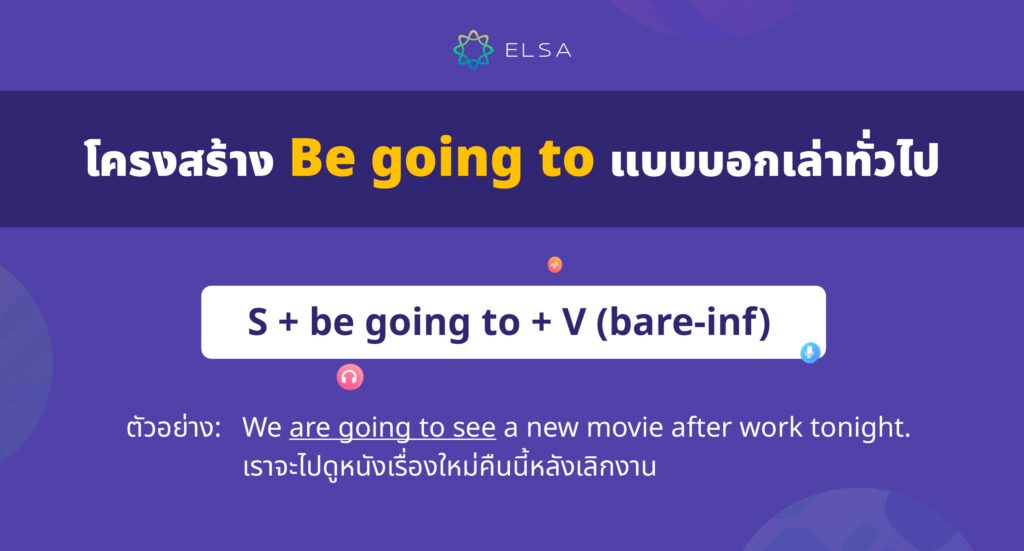
โครงสร้าง Be going to แบบบอกเล่าทั่วไป
Be going to โครงสร้างประโยค:
ตัวอย่างประโยคบอกเล่าทั่วไปกับ Be going to:
- We are going to see a new movie after work tonight. (เราจะไปดูหนังเรื่องใหม่คืนนี้หลังเลิกงาน)
- I am going to go on a business trip at the weekend. (ฉันจะเดินทางไปทําธุรกิจสุดสัปดาห์นี้)
- She is going to buy a car after winning the lottery. (เธอจะไปซื้อรถยนต์หลังจากที่ถูกหวย)
โครงสร้าง Be going to แบบปฏิเสธ
โครงสร้าง:
| S + to be + not + going to + V (bare-inf) |
Be going to ตัวอย่างประโยคปฏิเสธ :
- We are not going to see that new movie after work tonight. (หลังเลิกงานคืนนี้เราจะไม่ไปดูหนังเรื่องใหม่)
- I am not going to come home this weekend because of the final exam. (ฉันจะไม่กลับบ้านสุดสัปดาห์นี้เนื่องจากมีสอบปลายภาค)
- She is not going to go jogging tomorrow. Weather forecast says that tomorrow will be rainy. (พยากรณ์อากาศบอกว่าพรุ่งนี้จะมีฝนตก เธอจึงจะไม่ไปวิ่งจ็อกกิ้งพรุ่งนี้)
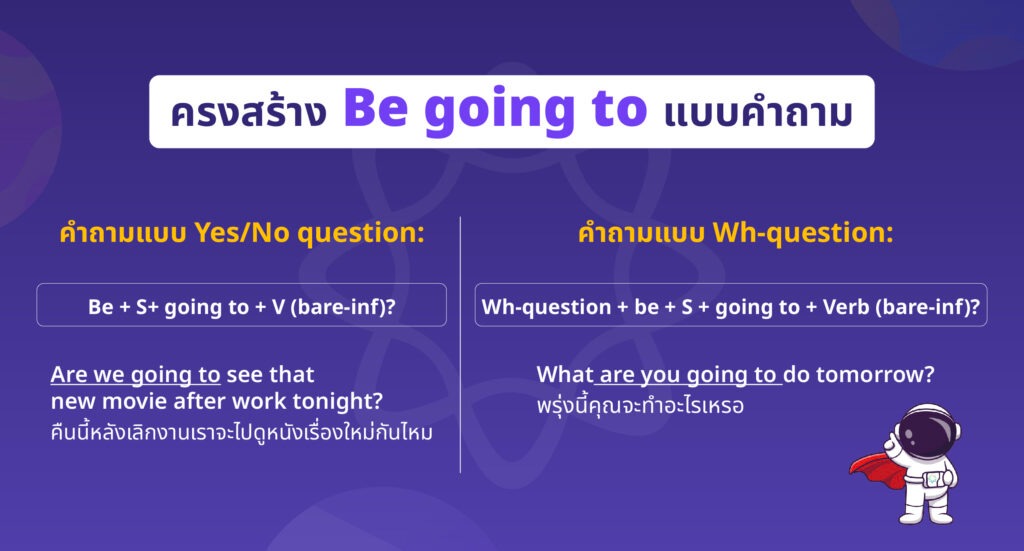
โครงสร้าง Be going to แบบคําถาม
คําถามแบบ Yes/No question:
โครงสร้าง:
| Be + S+ going to + V (bare-inf)? Yes, S + to be. No, S + to be not. |
ตัวอย่างคําถามกับ Be going to:
- Are we going to see that new movie after work tonight? (คืนนี้หลังเลิกงานเราจะไปดูหนังเรื่องใหม่กันไหม?)
→ No, We are not. (ไม่ เราไม่ไป)
- Are you going to go to the museum with me? (คุณจะไปพิพิธภัณฑ์กับฉันไหม?)
→ Yes, I am. (ไปดิ ฉันจะไป)
- Is she going to buy an apartment in the center city? (เธอจะซื้ออพาร์ทเมนท์ใจกลางเมืองเหรอ?)
→ Yes, She is. (ใช่)
คําถามแบบ Wh-question:
โครงสร้าง:
| WH-question + to be + S + going to + Verb (bare-inf)? -> S + be going to + V (bare-inf) |
Be going to ตัวอย่างประโยคคำถาม :
- What are you going to do tomorrow? (พรุ่งนี้คุณจะทําอะไรเหรอ?)
→ I’m going to relax and read a book tomorrow. (ฉันจะพักผ่อนและอ่านหนังสือพรุ่งนี้)
- How is she going to go to school? (เธอจะไปโรงเรียนยังไง?)
→ She is going to go to school by bus. (เธอจะไปโรงเรียนโดยรถบัส)
- When is he going to come home? (เมื่อไหร่เขาจะกลับบ้าน?)
→ He is going to come home after the meeting. (เขาจะกลับบ้านหลังจากประชุม)
สัญญาณของกาลอนาคตอันใกล้ (To be going to)
กาลอนาคตอันใกล้ (to be going to) มักจะสังเกตได้จากคำวิเศษณ์ที่บอกเวลาและบริบทที่แสดงถึงความตั้งใจ การคาดเดา หรือความคาดหวัง ต่อไปนี้คือสัญญาณที่พบบ่อย:
คำวิเศษณ์แสดงเวลาล่าสุด:
| คำวิเศษณ์ | ความหมาย | ตัวอย่าง (แปล) |
|---|---|---|
| Soon | เร็ว ๆ นี้ | I’m going to visit my parents soon. (ฉันจะไปเยี่ยมพ่อแม่ของฉันเร็ว ๆ นี้) |
| Tomorrow | พรุ่งนี้ | She’s going to meet her friend tomorrow. (เธอจะไปพบเพื่อนของเธอพรุ่งนี้) |
| Tonight / This evening | เย็นนี้ | We’re going to have dinner out tonight. (คืนนี้เราจะออกไปทานอาหารเย็นข้างนอก) |
| Next week / month / year | สัปดาห์ / เดือน / ปี | They’re going to move to a new house next month. (พวกเขาจะย้ายไปบ้านใหม่เดือนหน้า) |
| In a few minutes / hours / days | ในอีกไม่กี่นาที / ชั่วโมง / วัน | It’s going to rain in a few minutes. (อีกไม่กี่นาทีฝนจะตก) |
ประโยคที่แสดงความคิดเห็นหรือการคาดเดาที่มีมูลความจริง:
ตัวอย่าง: Look at those dark clouds! It’s going to rain. (ดูเมฆดำนั่นสิ! ฝนกําังจะตกแล้ว)
ประโยคที่แสดงคำสัญญาและความคาดหวัง:
ตัวอย่าง:
- I’m going to try my best to help you. (ฉันจะพยายามอย่างดีที่สุดเพื่อช่วยคุณ)
- We’re going to make it together! (เราจะทำมันไปด้วยกัน!)
- I’m going to see my favorite singer next week — I can’t wait! (ฉันจะไปดูนักร้องคนโปรดของฉันสัปดาห์หน้า — ฉันแทบจะรอไม่ไหวแล้ว!)
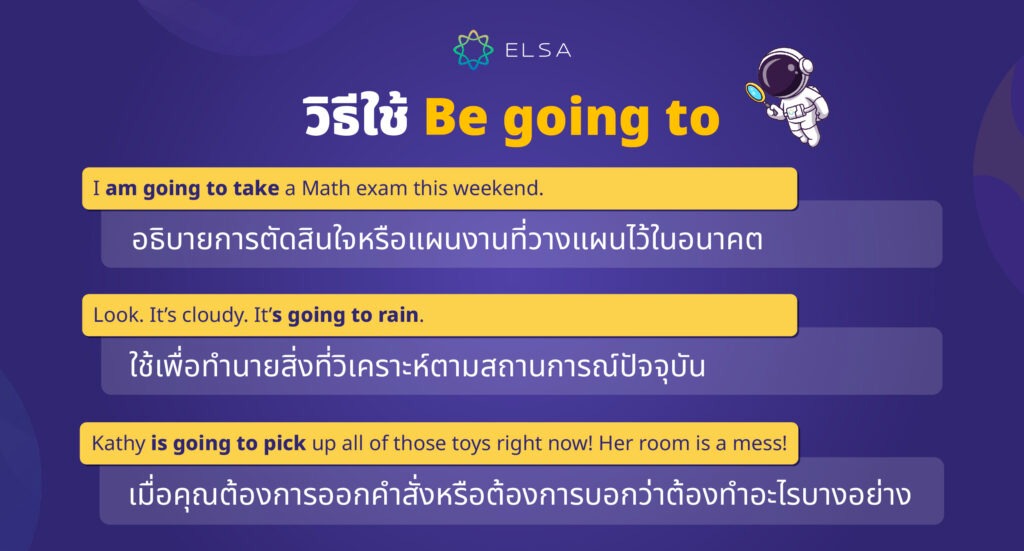
วิธีการใช้กาลอนาคตอันใกล้ (To be going to)
| วิธีใช้ | ตัวอย่าง |
|---|---|
| อธิบายการตัดสินใจหรือแผนงานที่วางแผนไว้ในอนาคต | I am going to take a Math exam this weekend. (สุดสัปดาห์นี้ฉันจะมีสอบวิชาคณิตศาสตร์) |
| ใช้เพื่อทำนายสิ่งที่วิเคราะห์ตามสถานการณ์ปัจจุบันซึ่งมีความเป็นไปได้สูงที่จะเกิดขึ้น | Look. It’s cloudy. It’s going to rain. (ดูเมฆนั่นสิ เต็มท้องฟ้าเลย ฝนกําลังจะตกแล้ว) |
| เล่าถึงแผนที่ทำไว้แต่ยังทำไม่สำเร็จ จากนั้น to be จะถูกผันคำกริยาในอดีตกาล | We were going to go for a picnic but there were some problems. (เรากำลังวางแผนที่จะไปปิกนิกแต่ก็มีปัญหาอยู่) |
| เมื่อคุณต้องการออกคำสั่งหรือต้องการบอกว่าต้องทําอะไรบางอย่าง | Kathy is going to pick up all of those toys right now! Her room is a mess! (เคธี่กำลังจะไปเก็บของเล่นทั้งหมดตอนนี้ เพราะห้องของเธอรกมาก!) |
แยกแยะระหว่าง Will กับ be going to
| เกณฑ์ | Be going to | Will |
|---|---|---|
| โครงสร้าง | S + be (am/is/are) + going to + V (bare-inf) Ex: Sara is going to take a Math exam this weekend. (ซาร่าจะสอบคณิตศาสตร์สุดสัปดาห์นี้) | S + Will + V (bare-inf) Ex: I will be on holiday in July. (ฉันจะไปหยุดพักร้อนในเดือนกรกฎาคม) |
| วิธีใช้ | • ใช้เพื่ออธิบายการดำเนินการที่วางแผนไว้และจัดเตรียมไว้ล่วงหน้า Ex: I go to the clothing store, I’m going to buy a glamorous dress. (ฉันจะไปร้านขายเสื้อผ้า ฉันจะซื้อชุดที่หรูหรา) • ขึ้นอยู่กับสถานการณ์และสถานที่ที่เกิดขึ้น เราใช้คำว่า “be going to” เพื่อคาดการณ์ผลลัพธ์ที่จะเกิดขึ้นในอนาคต Ex: Since John has been practicing hard every day, he is going to win the upcoming marathon. (เนื่องจากจอห์นฝึกซ้อมอย่างหนักทุกวัน เขามั่นใจว่าจะชนะการวิ่งมาราธอนครั้งหน้าได้) | • ใช้เพื่ออธิบายการกระทำหรือปัญหาที่ผู้พูดจะดำเนินการในขณะที่พูดหรือหลังจากพูด การดำเนินการนี้มักไม่ได้วางแผนไว้ล่วงหน้า Ex: What a glamorous dress! I will buy it. (ชุดสวยหรูหรามากค่ะ ฉันจะซื้อมันเลย) • ตามความคิดเห็นของผู้พูดหรือจากประสบการณ์ เราสามารถใช้ “will” เพื่อทำนายได้ Ex: When Sue grows up, she will become a good person. (เมื่อซูโตขึ้นเธอจะเป็นคนดี) • ให้สัญญาหรือยอมรับข้อเสนอในขณะที่พูด Ex: I will gladly help you with this project. (ฉันยินดีที่จะช่วยคุณทําโครงการนี้) |
| สัญญาข้อเสนอ | ไม่ใช้เพื่อคำสัญญาหรือข้อเสนอ | ใช้ในการสัญญา ข้อเสนอ และการตกลงช่วยเหลือทันทีเมื่อพูดคุย ตัวอย่าง: I will gladly help you with this project. (ฉันยินดีที่จะช่วยคุณกับโครงการนี้) |
| การกระทำที่หลีกเลี่ยงไม่ได้ | ใช้สำหรับเหตุการณ์ที่สามารถคาดการณ์ได้จากหลักฐานปัจจุบัน ตัวอย่าง: The car is going to break down. (รถจะพังแล้ว – เสียงเครื่องแปลกมาก) | ใช้สำหรับเหตุการณ์ที่จะเกิดขึ้นแน่นอนและไม่สามารถเปลี่ยนแปลงได้ ตัวอย่าง: The sun will rise tomorrow. (พรุ่งนี้ดวงอาทิตย์จะขึ้น) One day, everyone will have access to clean water. (สักวันหนึ่งทุกคนจะมีน้ำสะอาดใช้) |
ข้อผิดพลาดที่พบบ่อยเมื่อใช้กาลอนาคตอันใกล้ (To be going to)
ใช้โครงสร้างที่ไม่ถูกต้อง
ข้อผิดพลาด:
- ลืมช้ “will” ในอนาคตกาลธรรมดา
- สับสนระหว่าง “be going to” และปัจจุบันกาลต่อเนื่อง
| ประโยคที่ผิด | ประโยคที่ถูก | อธิบาย |
|---|---|---|
| I go to the party. | I will go to the party. | ขาดคำว่า “will” – ต้องใช้คำว่า “will” เพื่อแสดงถึงการกระทำในอนาคต |
| I am going to the party. (เมื่อไม่มีแผนการที่ชัดเจน) | I am going to go to the party. | “Be going to” จำเป็นต้องตามด้วย infinitive เพื่อแสดงแผนที่ได้กำหนดไว้ล่วงหน้า |
สับสนว่าควรใช้เมื่อไร
ข้อผิดพลาดที่พบบ่อย: ไม่มีการแยกความแตกต่างระหว่างการกระทำโดยธรรมชาติ (will) และมีแผน (be going to).
| ประโยคที่ผิด | ประโยคที่ถูกต้อง | อธิบาย |
|---|---|---|
| I am going to help you with your homework. (เพิ่งตัดสินใจที่จะช่วย) | I will help you with your homework. | “Will” ใช้สำหรับการตัดสินใจในขณะที่พูด |
| I will visit my grandmother this weekend. (วางแผนไว้แล้ว) | I am going to visit my grandmother this weekend. | “Be going to” ใช้เมื่อคุณมีแผนหรือความตั้งใจที่เฉพาะเจาะจง |
ไม่มีความแตกต่างทางความหมายระหว่างโครงสร้างทั้งสอง
| ประโยคที่ผิด | ประโยคที่ถูกต้อง | อธิบาย |
|---|---|---|
| I will meet my friend tomorrow. (มีนัดไว้แล้ว) | I am going to meet my friend tomorrow. | “Be going to” ใช้เมื่อมีการนัดหมายหรือวางแผนเรียบร้อยแล้ว |
ใช้คำวิเศษณ์บอกเวลาอย่างไม่ถูกต้อง
ข้อผิดพลาดที่พบบ่อย: การผสมคำวิเศษณ์กับโครงสร้างอนาคตไม่ถูกต้อง
| ประโยคที่ผิด | ประโยคที่ถูกต้อง | อธิบาย |
|---|---|---|
| I will go shopping yesterday. | I will go shopping tomorrow. | “Yesterday” คืออดีต → ไม่สามารถใช้ร่วมกับกาลอนาคตได้ |
ใช้โครงสร้างคำถามที่ไม่ถูกต้องและประโยคปฏิเสธ
| ประโยคที่ผิด | ประโยคที่ถูกต้อง | อธิบาย |
|---|---|---|
| Will you coming with us? | Will you come with us? | หลัง “will” จะต้องเป็น infinitive (V) |
| Are you going come with us? | Are you going to come with us? | “Be going to” มักจะใช้คู่กับ to + V (ต้นแบบ) |
แบบฝึกหัดกาลอนาคตอันใกล้ (To be going to)
แบบฝึกหัด
บทที่ 1: จงเต็มช่องกริยาของ be going to หรือ will ลงในช่องว่างให้ถูกต้อง
1. Lan……….. 10 next Wednesday. (be)
2. Next summer, I ……….. to Paris. My brother lives there and he bought me a plane ticket for my birthday. (travel)
3. It’s getting cold. I ……….. my coat! (take)
4. Are you going to the cinema? Wait for me. I……….. with you! (go)
5. Lan, those bags seem quite heavy. I……….. you carry them. (help)
6. Look at those black clouds. I think it ……….. . (rain)
7. Bye Bye Tien, I ……….. you when I arrive home! (phone)
8. What ……….. you ……….. (do) tomorrow? I……….. (visit) my grandparents.
9. What a beautiful girl! I ………. her out next Monday! (ask)
10. Those watermelons seem delicious. We……….. (buy)
บทที่ 2: จงแต่งประโยคใหม่ในกาลอนาคตอันใกล้
1. I/go on/diet
2. My brother/tidy/his bedroom
3. They/discuss/problem
4. He/explore/a new territory
5. My sister/get married/next year
บทที่ 3: จงเลือกคําตอบที่ถูกต้อง
1. I (have)___________ a good time tonight.
A. is going to have
B. are going to have
C. am going to have
D. have
2. Janet (help)___________ me.
A. is going to help
B. are going to help
C. am going to help
D. helps
3. (he/ drive)__________ the car?
A. Is he going to drive
B. Am he going to drive
C. Are he going to drive
D. Does he drive
4. We (stay)__________ at home tonight.
A. are going to stay
B. am going to stay
C. is going to stay
D. stay
5. (you/ play)__________ tennis with Jenny?
A. Am you going to play
B. Is you going to play
C. Are you going to play
D. Do you play
6. A: Are you busy this evening?
B: No, Not at all. I _______________ do anything.
A. am not going to
B. will
C. am going to
D. don’t
7. A: Are you _______________ go out of the town this weekend?
B: Yes, I am. I am going to visit my sister and my brother.
A. will
B. going to
C. like
D. don’t
8. A: _________ you going to watch the soccer match tomorrow.
B: No, I am not. I ______________ be out of town.
A. Do / am going to
B. Will / will
C. Are / don’t
D. Are / am going to
9. A: Would you like to come over tomorrow?
B: I’d like to, but I am going to ___________ for my English exam.
A. studying
B. studied
C. study
D. studies
10. A: I _______ have a party at my place on Tuesday. Would you like ______?
B: I’d like to. Thank you for inviting me.
A. am going to / to come
B. will / coming
C. am going to / coming
D. will / to come
11. A: Are you going to join Kevin’s birthday party?
B: __________________. I am going to visit my aunt and my uncle.
A. Yes, I can
B. No, I don’t
C. Yes, I will
D. No, I am not
12. Would you like to join my tea party? I am sure you ________ have big fun.
A. will going to
B. are going to
C. going to
D. go to
13. A: Our school is organizing a tennis competition on Friday afternoon. It is _________ in the Sports Center. Would you like to join?
B: It would be great.
A. will be
B. be
C. going to be
D. will going to be
14. We are _____ have a barbecue with friends on Saturday. Would you like to join us?
A. going to
B. will
C. don’t
D. not
15. A: What a nice day! Do you want to go for a walk with me?
B: Sorry, but ________________.
A. I will be there on time
B. I am not going to do
C. I will come with you
D. I am going to help my mother do the household chores

เฉลย
บทที่ 1:
| 1. Will be | 2. Am going to travel | 3. will take | 4. will go | 5. will help |
| 6. is going to rain | 7. will phone | 8. are you doing – am going to | 9. will ask | 10. will buy |
บทที่ 2:
1. I am going to go on a diet.
2. My brother is going to tidy his bedroom.
3. They are going to discuss the problem.
4. He is going to explore a new territory.
5. My sister is going to get married next year.
บทที่ 3:
| 1. C | 2. A | 3. A | 4. A | 5. C | 6. A | 7. B | 8. B |
| 9. C | 10. A | 11. D | 12. B | 13. C | 14. A | 15. D |
คําถามที่พบบ่อย
Be going to ใช้เมื่อไหร่?
ใช้ be going to เพื่อแสดงแผนการในอนาคต ความตั้งใจ หรือสิ่งที่กำลังจะเกิดขึ้นโดยอ้างอิงจากสัญญาณและหลักฐานในปัจจุบัน
วิธีการใช้กาลอนาคตอันใกล้?
ใช้โครงสร้าง S + be + going to + V-inf เพื่อพูดถึงความตั้งใจหรือการคาดการณ์ที่มีมูลความจริงในอนาคตอันใกล้นี้
กาลอนาคตอันใกล้ในภาษาอังกฤษแปลว่า?
กาลอนาคตอันใกล้ในภาษาอังกฤษแปลว่า Near Future Tense หรือมักเรีกว่าโครงสร้าง be going to.
ทำความเข้าใจ Present Continuous Tense การใช้ โครงสร้างอย่างง่าย พร้อมตัวอย่างที่เข้าใจง่าย
ข้างต้นนี้ทุกคนจะตอบได้ว่า be going to ใช้ยังไง และวิธีแยกแยะความแตกต่างระหว่าง Be going to กับ Will หวังว่าข้อมูลข้างต้นจะช่วยให้เพื่อน ๆ เข้าใจโครงสร้างนี้มากขึ้น อย่าลืมติดตาม ELSA Speak เพื่ออัปเดทความรู้ภาษาอังกฤษทุกวันนะ
IELTS ถือได้ว่าเป็นคะแนนเพื่อประเมินระดับภาษาอังกฤษของคุณและใช้เป็นคะแนนในการศึกษาต่อต่างประเทศ สมัครงาน หรือยื่นขอวีซ่า ในบทความนี้ ELSA Speak จะพาเพื่อน ๆ ไปทําความรู้จักกับการสอบ IELTS สถานที่ที่เหมาะสมในการสอบ IELTS และสิ่งที่คุณต้องรู้เกี่ยวกับการสอบนี้ ถ้าพร้อมแล้วไปดูกันเลย
การสอบ IELTS คืออะไร
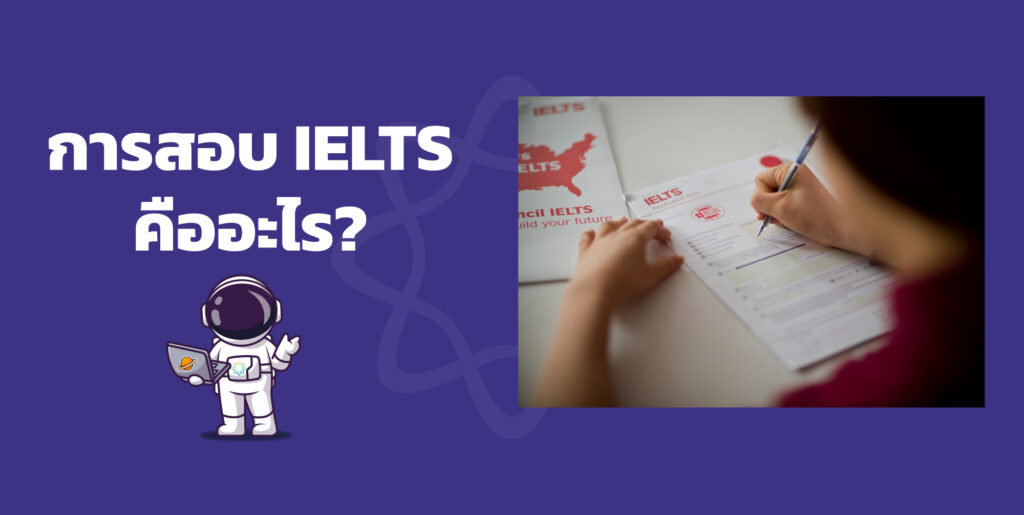
IELTS (คือคําย่อของคํา International English Language Testing System) เป็นการทดสอบเพื่อประเมินความสามารถทางภาษาอังกฤษตามมาตรฐานการศึกษานานาชาติ ผลสอบ IELTS ได้รับการยอมรับจากองค์กรการศึกษาชั้นนำทั้งในและต่างประเทศ
IELTS ทำหน้าที่เป็นหนังสือเดินทางเพื่อไปทำงานในองค์กรภาครัฐและเอกชนหลายแห่งทั่วโลก รวมถึงประเทศไทย ออสเตรเลีย แคนาดา นิวซีแลนด์ สหราชอาณาจักร และสหรัฐอเมริกา… ซึ่งการสอบ IELTS ยังดำเนินการโดยสํานักงานตรวจคนเข้าเมืองในหลายประเทศอีกด้วย
>>> Read more:
สอบ IELTS ที่ไหนดี ปี 2569
IELTS IDP Thailand
ศูนย์ IELTS IDP เป็นตัวแทนของออสเตรเลียในการจัดสอบ IELTS สามารถสมัครสอบกับ IDP ได้ 3 วิธี คือ สมัครโดยตรง สมัครออนไลน์ผ่านเว็บไซต์ และสมัครผ่านเจ้าหน้าที่ IDP ด้วยแบบฟอร์มสอบ IELTS ได้แก่ IELTS เชิงวิชาการ IELTS ทั่วไป และแบบคอมพิวเตอร์ IELTS UKVI Academic และ IELTS Life Skills
ศูนย์สอบ British Council
ศูนย์สอบ IELTS ของ British Council เป็นตัวแทนของสหราชอาณาจักรในการจัดสอบ IELTS
การสมัครสอบกับ British Council แบ่งออกเป็น 2 วิธี คือ การสมัครโดยตรง และการสมัครออนไลน์ รูปแบบการสอบของ British Council จะเหมือนกับศูนย์สอบ IELTS IDP
ทั้งศูนย์สอบ IELTS IDP และ British Council IELTS เป็นหน่วยงานทางการที่มีมาตรฐานองค์กรในการจัดสอบ ทั้งนี้ศูนย์สอบทั้งสองแห่งจะใช้ข้อสอบเดียวกันแต่จะมีเกณฑ์การให้คะแนนที่แตกต่างกัน
การสอบ IELTS ของ British Council และ IDP แตกต่างกันไหม
สอบ IELTS ราคาอย่างไร
| สอบ IELTS IDP | สอบ IELTS British Council |
| IELTS Regular (แบบกระดาษหรือแบบคอมพิวเตอร์): 7,350 บาท IELTS UKVI (แบบกระดาษหรือแบบคอมพิวเตอร์): 7,990 บาท IELTS Life Skills: 6,300 บาท | IELTS เชิงวิชาการ – (แบบกระดาษหรือแบบคอมพิวเตอร์): 7,350 บาท IELTS เชิงฝึกอบรมทั่วไป (แบบกระดาษหรือแบบคอมพิวเตอร์): 7,350 บาท IELTS for UKVI เชิงวิชาการ (แบบกระดาษหรือแบบคอมพิวเตอร์): 7,990 บาท IELTS for UKVI เชิงฝึกอบรมทั่วไป (แบบกระดาษหรือแบบคอมพิวเตอร์): 7,990 บาท IELTS Life Skills (A1 และ B1): 6,300 บาท |
ศูนย์สอบ IELTS
| IELTS IDP | British Council | |
| แบบกระดาษ | • ศูนย์ฝึกอบรม MCD (การสอบครั้งที่ 5 และ 7) โรงเรียน Newton Prep และโรงเรียนนานาชาติ Shrewsbury • พิษณุโลก: มหาวิทยาลัยนเรศวร • นครราชสีมา: โรงแรมเซ็นเตอร์พอยท์ เทอร์มินอล 21 โคราช • ขอนแก่น: โรงแรมพูลแมน ราชา ออคิด ขอนแก่นมหาสารคาม: • มหาวิทยาลัยมหาสารคาม • เชียงใหม่: โรงแรมแคนทารี ฮิลส์ • เชียงราย: โรงแรมแกรนด์ วิสต้า เชียงราย • ภูเก็ต: ศูนย์สอนภาษา ภูเก็ต • หาดใหญ่: ศูนย์การประชุมบุรีศรีภู หาดใหญ่ | • กรุงเทพฯ • สมุทรปราการ • ปทุมธานี • พิษณุโลก • นครราชสีมา • ขอนแก่น • เชียงใหม่ • ภูเก็ต |
| แบบคอมพิวเตอร์ | • กรุงเทพฯ: ศูนย์สอบ IDP IELTS Silom, InterPass Institute, Paradigm Language Center • ขอนแก่น: Greater Good Education • เชียงใหม่: I-Genius Language Institute | • กรุงเทพฯ • เชียงใหม่ |
สมัครสอบ IELTS
| IELTS IDP | British Council | |
| สมัครด้วยตัวเอง | สามารถสมัครสอบได้ที่สำนักงาน IDP คุณต้องเตรียมสำเนาหนังสือเดินทางหรือบัตรประจำตัวประชาชน มาสมัครสอบได้ที่ 3 จังหวัด ดังนี้ • IDP กรุงเทพฯ สีลม: ชั้น 4 ซีพี ทาวเวอร์ ถนน 313 สีลม บางรัก กรุงเทพฯ • IDP ขอนแก่น: ชั้น G โรงแรมพูลแมน ราชา ออคิด 9/9 ถนนประชาสำราญ อำเภอเมือง จังหวัดขอนแก่น • IDP เชียงใหม่: วันพลัส คลองชล ห้องเลขที่ 4 45/3 ถนนเลียบคลองชลประทาน ตำบลสุเทพ อำเภอเมือง จังหวัดเชียงใหม่ | สมัครสอบ IELTS ด้วยตัวเองที่อาคารจัตุรัสจามจุรี เปิดวันจันทร์ – ศุกร์ เวลา 09.00 – 20.00 น. และวันเสาร์ – อาทิตย์ เวลา 09.30 – 19.30 น. |
| สมัครออนไลน์ | คุณสามารถสมัครสอบผ่านทางเว็บไซต์ IDP ควรสมัครสอบผ่าน Chrome Web Browser ขั้นตอนการสมัครสอบมีดังนี้ • ขั้นตอนที่ 1: เข้าไปที่เว็บไซต์ https://my.ieltsessentials.com • ขั้นตอนที่ 2: เลือกประเภทการทดสอบ “สมัครสอบ IELTS” หรือ “สมัครสอบ IELTS UKVI” • ขั้นตอนที่ 3: เลือกประเทศ วันสอบและสถานที่สอบ • ขั้นตอนที่ 4: กรอกรายละเอียดการสมัครของคุณและอัปโหลดเอกสาร • ขั้นตอนที่ 5: ยืนยันวันสอบและรายละเอียดการสอบ • ขั้นตอนที่ 6: ชำระค่าสมัครสอบ • ขั้นตอนที่ 7: เมื่อการชำระเงินเสร็จสิ้น โปรดตรวจสอบอีเมลที่สมัครของคุณ เพื่อตรวจสอบข้อความยืนยันการสมัครสอบ • ขั้นตอนที่ 8: จะมีอีเมลแจ้งเตือนอีกฉบับภายใน 3 วันก่อนวันสอบ | การสมัครสอบ IELTS ออนไลน์สามารถทำได้ผ่านทางเว็บไซต์ของ British Council: https://learnenglish.britishcouncil.org/ |
| ส่งใบสมัครผ่านเจ้าหน้าที่ IDP | สมัครสอบโดยติดต่อ IDP ผ่านช่องทางดังนี้ • สายด่วน IELTS: 02-011-8688 • แฟนเพจ Facebook: IELTS IDP Education (TH) • สมัครนผ่านเคาน์เตอร์ InterPass: สาขา InterPass สยามสแควร์ ตั้งอยู่เลขที่ 430-430/1 สยามสแควร์ ซอย 10 ถนนพระราม 1 แขวงปทุมวัน เขตปทุมวัน กรุงเทพฯ เปิดวันอังคารถึงวันศุกร์ เวลา 10.00 น. – 19.00 น. และวันเสาร์-อาทิตย์ เวลา 09.00-18.00 น. คุณสามารถสมัครสอบ IELTS ได้ทั้งแบบกระดาษและแบบทดสอบแบบคอมพิวเตอร์ | British Council ไม่มีการสมัครรูปแบบนี้ |
ขอเลื่อนวันสอบ IELTS
| IDP | British Council |
| • ขอเลื่อน 5 สัปดาห์ก่อนวันสอบ – หักค่าธรรมเนียม 800 บาท • ขอเลื่อนน้อยกว่า 5 สัปดาห์ก่อนวันสอบ – ไม่สามารถเลื่อนสอบได้ ยกเว้นกรณีพิเศษ เช่น การเจ็บป่วยหรือการบาดเจ็บสาหัส การเสียชีวิตของสมาชิกในครอบครัว อุบัติเหตุ การรับราชการทหาร การจลาจล และภัยพิบัติทางธรรมชาติ | • ขอเลื่อน 5 สัปดาห์ก่อนวันสอบ – ไม่มีค่าธรรมเนียม • ขอเลื่อนน้อยกว่า 5 สัปดาห์ก่อนวันสอบ – จะมีการหักค่าธรรมเนียม 25% • ขอเลื่อนน้อยกว่า 3 วันก่อนวันสอบ – ไม่สามารถเลื่อนสอบได้ ยกเว้นกรณีพิเศษ เช่น การเจ็บป่วยร้ายแรงหรือการเสียชีวิตของสมาชิกในครอบครัว อุบัติเหตุ การรับราชการทหาร หรือเหตุการณ์ที่ทำให้ไม่สามารถสอบได้ เช่น น้ำท่วม ไฟไหม้ เป็นต้น |
| ทั้งนักเรียน British Council และ IDP ได้รับอนุญาตให้เลื่อนวันสอบได้เพียงครั้งเดียวเท่านั้น หลังจากนั้นจะไม่สามารถเลื่อนการสอบได้อีกและไม่สามารถขอคืนค่าธรรมเนียมการสอบได้ | |
การขอยกเลิกการสอบ IELTS
| IDP | British Council |
| ขอยกเลิก 5 สัปดาห์ก่อนวันสอบ – ได้เงินคืนและค่าธรรมเนียมการสอบ 75%ขอยกเลิกการสอบน้อยกว่า 5 สัปดาห์ก่อนวันสอบ – ไม่สามารถยกเลิกการสอบได้ ยกเว้นในกรณีพิเศษ เช่น การเจ็บป่วยร้ายแรงหรือการเสียชีวิตของสมาชิกในครอบครัวหรืออุบัติเหตุ การรับราชการทหารหรือมีเหตุการณ์ที่ทำให้ไม่สามารถสอบได้ เช่น น้ำท่วม ไฟไหม้ เป็นต้น | ขอยกเลิก 5 สัปดาห์ก่อนวันสอบ – หักค่าธรรมเนียม 2,000 บาทขอยกเลิกการสอบน้อยกว่า 5 สัปดาห์ก่อนวันสอบ – ไม่สามารถยกเลิกการสอบได้ ยกเว้นกรณีพิเศษ เช่น การเจ็บป่วยหรือการบาดเจ็บสาหัส การเสียชีวิตของสมาชิกในครอบครัว อุบัติเหตุ การรับราชการทหาร การจลาจล และภัยพิบัติทางธรรมชาติ |
ควรสมัครสอบ IELTS ที่ไหน
ถ้าถามว่าควรเลือก สอบไอเอล ที่ไหน คำตอบก็คือทั้ง IDP กับ British Council แทบจะไม่มีความแตกต่างกันเลย ดังนั้น ELSA Speak ขอแนะนำให้เพื่อนๆเลือกตามความสะดวก ซึ่งควรเลือกศูนย์สอบใกล้บ้านคุณที่สุดเพราะการเดินทางเป็นสิ่งที่สำคัญมาก
สิ่งที่ต้องเตรียมก่อนสมัครสอบ IELTS

- กรอกแบบฟอร์มใบสมัคร IELTS (แบบฟอร์มใบสมัคร IELTS) (ป้อนตัวพิมพ์ใหญ่ภาษาอังกฤษ)
- หนังสือเดินทางหรือบัตรประจำตัวประชาชนต้นฉบับและสำเนา
- รูปถ่ายขนาด 2 นิ้ว จำนวน 2 รูป พื้นหลังสีขาว ถ่ายไว้ไม่เกิน 6 เดือน
- ค่าสมัครสอบ IELTS ประมาณ 6,900 บาท
>>> Read more:
- [รวบรวม] 5,000 + คำศัพท์ IELTS ตามหัวข้อที่พบบ่อยที่สุด
- แนะนําตัวภาษาอังกฤษ – ตัวอย่าง IELTS Speaking Part 1
คําถามที่พบบ่อย
ความแตกต่างระหว่าง IELTS แบบคอมพิวเตอร์ กับ การสอบ IELTS แบบกระดาษคืออะไร

| การสอบ IELTS แบบคอมพิวเตอร์ | การสอบ IELTS แบบกระดาษ |
| การสอบ IELTS แบบคอมพิวเตอร์จะประกอบด้วย การสอบการฟัง การอ่าน และการเขียน แต่สำหรับแบบทดสอบการพูดนั้นยังคงมีแบบทดสอบ 1-1 เช่นเดียวกับแบบทดสอบแบบกระดาษเพื่อประเมินทักษะการพูด | การทดสอบ IELTS แบบกระดาษประกอบด้วยการฟัง การอ่าน และการเขียนบนกระดาษ ส่วนการพูดจะดำเนินการโดยครูที่ผ่านการฝึกอบรมมาแล้ว |
| การสอบ IELTS แบบคอมพิวเตอร์เหมาะสำหรับนักเรียน/นักศึกษาและผู้ที่ต้องการใช้ผลสอบ IELTS อย่างรวดเร็ว เพราะแบบทดสอบประเภทนี้จะให้ผลคะแนนเร็วกว่า คุณจะได้รับภายใน 3-5 วันนับจากวันสอบ ไม่รวมวันอาทิตย์หรือวันหยุดราชการ แต่คุณจะต้องจ่ายค่าธรรมเนียมการสอบที่สูงกว่าการสอบแบบกระดาษ และศูนย์สอบ IELTS แบบนี้ก็จะมีตัวเลือกน้อยกว่า | สำหรับผู้ที่มีทักษะการเขียนที่ดีกว่า สามารถเลือกทำแบบทดสอบนี้ได้ ค่าสอบจะถูกกว่า ที่สำคัญคือมีศูนย์สอบ IELTS ให้คุณเลือกอีกมากมาย แต่ข้อเสียคือต้องรอผลถึง 13 วันนับจากวันสอบ |
ผลสอบ IELTS มีอายุนานเท่าไหร่
2 ปีนับจากวันที่บันทึกไว้ในผลการทดสอบ
จะได้รับผลสอย IELTS ภายในกี่วัน
IELTS แบบกระดาษใช้เวลา 13 วัน การสอบ IELTS แบบคอมพิวเตอร์ใช้เวลาประมาณ 3-5 วัน
การสอบ IELTS Speaking จัดขึ้นวันเดียวกับทักษะอื่น ๆ ไหม
การทดสอบการพูดสามารถดำเนินการได้ในวันเดียวกับการทดสอบทักษะอื่นหรือวันอื่นก่อนหรือหลังการทดสอบการเขียน
สามารถใส่นาฬิกาหรือเครื่องประดับเข้าห้องสอบ IELTS ไหม
ไม่สามารถใส่นาฬิกา อนุญาตให้นําเพียงแค่บัตรประชาชนและขวดน้ำใสเข้าห้องสอบได้เท่านั้น
ศูนย์สอบ IELTS มีที่ฝากกระเป๋าไหม
ศูนย์สอบมีพื้นที่เก็บกระเป๋า แต่จะไม่รับผิดชอบในกรณีที่เกิดการสูญหาย ดังนั้นอย่านำสิ่งของมีค่าติดตัวไปด้วย
ข้างต้นเป็นคําตอบของคําถามที่ว่า “สอบ IELTS ที่ไหนดี” หวังว่าบทความข้างต้นจะช่วยให้เพื่อนๆเข้าใจมากขึ้นและเตรียมพร้อมสำหรับการสอบให้ได้ดีที่สุด อย่าลืมติดตามบทความของ ELSA Speak ในหัวข้อ IELTS ได้ในครั้งต่อไปกันนะ