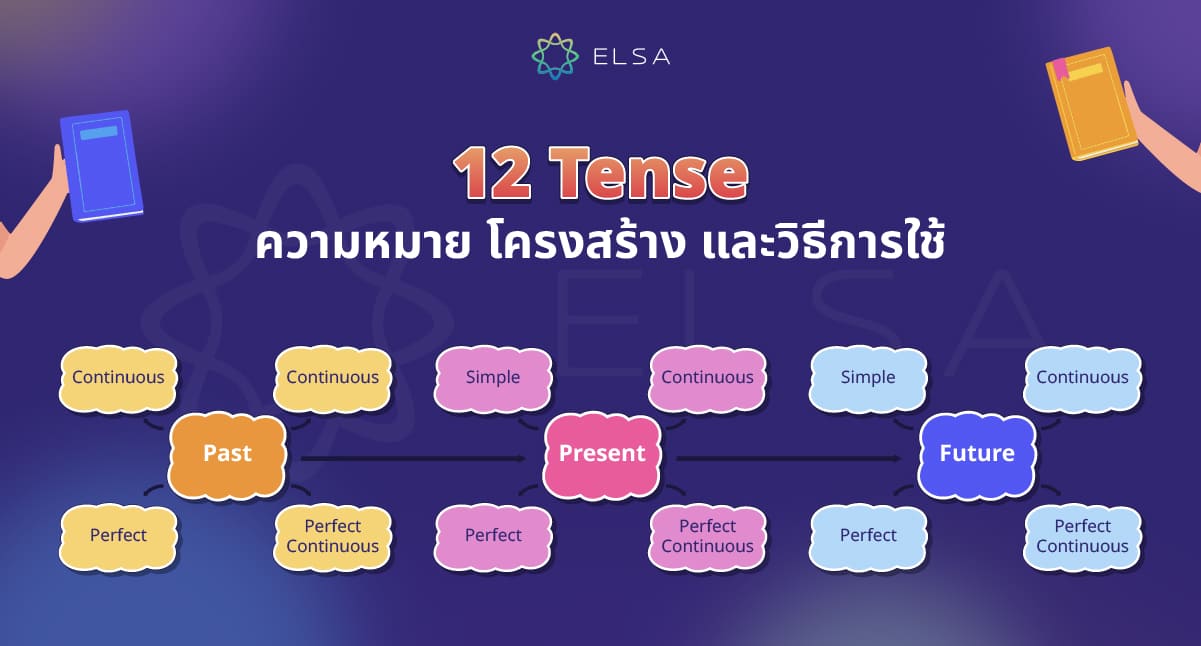


12 Tense ในภาษาอังกฤษ (Tense) เป็นพื้นฐานสำคัญที่จะช่วยให้คุณสื่อสารและเขียนได้อย่างถูกต้องตามหลักไวยากรณ์ การทำความเข้าใจความหมาย โครงสร้าง และวิธีการใช้ Tense แต่ละ Tense อย่างชำนาญไม่เพียงแต่ช่วยให้คุณสื่อสารได้อย่างถูกต้องเท่านั้น แต่ยังช่วยให้คุณมั่นใจมากขึ้นในทุกสถานการณ์การสื่อสาร บทความด้านล่างนี้จะสรุปกาลทั้ง 12 Tense พร้อมตัวอย่างที่เข้าใจง่าย ช่วยให้คุณจดจำได้อย่างรวดเร็วและนำไปใช้ได้อย่างมีประสิทธิภาพ
Tense คือ อะไร ในภาษาอังกฤษ?
กาลภาษาอังกฤษ (English Tense) คือวิธีที่ผู้พูดหรือผู้เขียนใช้รูปกริยาเพื่อแสดงเวลาของการกระทำหรือเหตุการณ์ (อาจเป็นปัจจุบัน อดีต หรืออนาคต) แต่ละ Tense มีความหมายของตัวเอง ช่วยให้ผู้เรียนระบุได้อย่างชัดเจนว่าการกระทำนั้นเกิดขึ้นเมื่อใดและนานเท่าไหร่
สอบก่อนเข้าฟรี

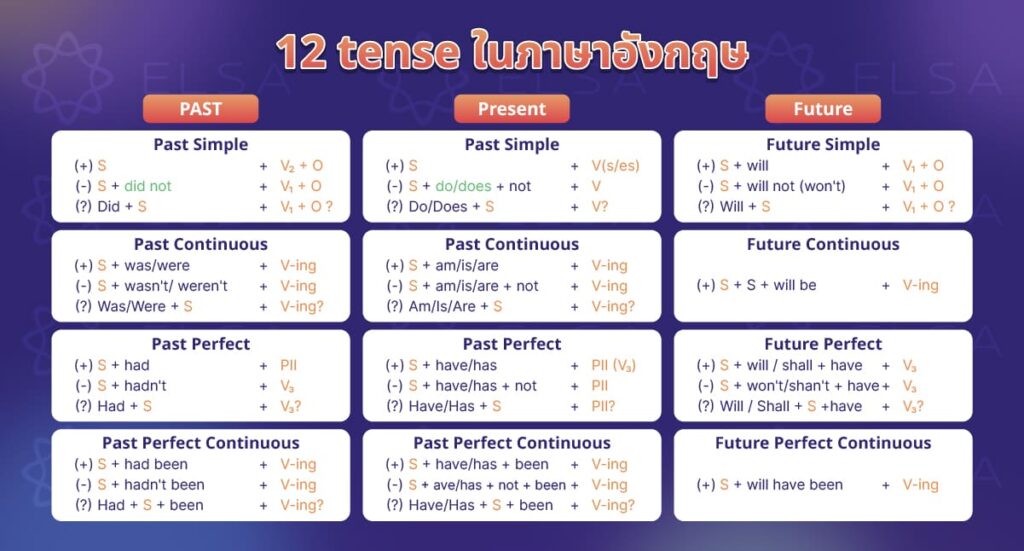
ในภาษาอังกฤษ มีทั้งหมด tense ทั้ง 12 กาล แบ่งออกเป็น 3 กลุ่มหลัก:
- กาลปัจจุบัน (Present Tense)
- กาลอดีต (Past Tense)
- กาลอนาคต (Future Tense)
แต่ละกลุ่มประกอบด้วย 4 รูปแบบ ประกอบกันเป็นระบบ Tense ในภาษาอังกฤษที่สมบูรณ์ทั้ง 12 tense
ลองอ่านออกเสียง 22 รายการนี้ดู แล้วดูคะแนนของคุณ
- Simple
- Continuous
- Perfect
- Perfect Continuous
การเข้าใจความหมายและโครงสร้างของแต่ละ Tense จะช่วยให้คุณแสดงความคิดได้อย่างถูกต้องและเป็นธรรมชาติมากขึ้นทั้งการพูดและการเขียน
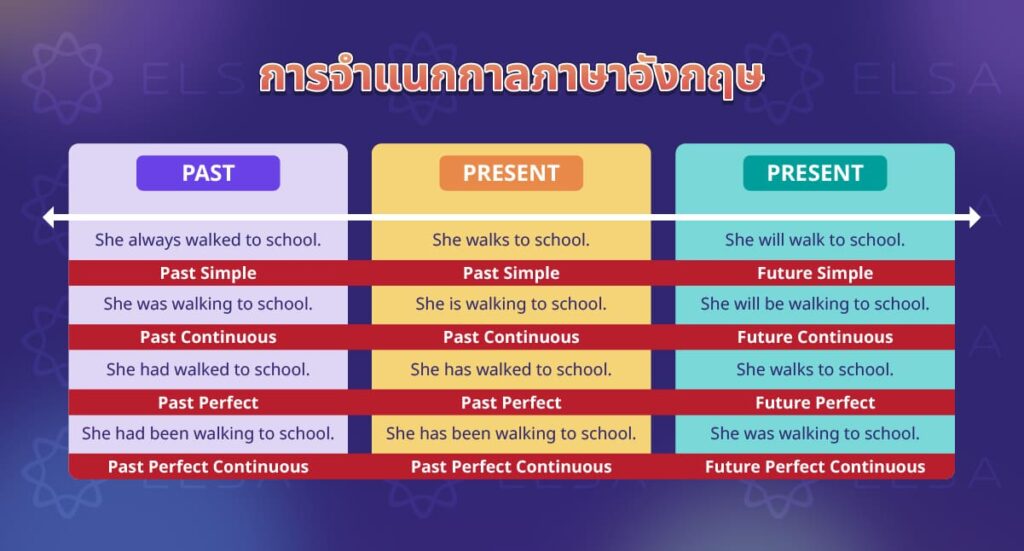
การจำแนก Tense ภาษาอังกฤษ
เพื่อความสะดวกในการเรียนรู้และจดจำ 12 tense ภาษาอังกฤษ (12 Tense) จะถูกแบ่งออกเป็น 3 กลุ่มหลักตามช่วงเวลา 3 ช่วงเวลา ได้แก่ ปัจจุบัน อดีต และอนาคต แต่ละกลุ่มประกอบด้วยกาล 4 ประเภท ได้แก่ Simple – Continuous – Perfect – Perfect Continuous
| กลุ่ม Tense | ข้อมูลโดยละเอียด (Tense Types) |
|---|---|
| Present (ปัจจุบัน) | Present Simple (ปัจจุบันกาลธรรมดา) Present Continuous (ปัจจุบันกาลต่อเนื่อง) Present Perfect (ปัจจุบันกาลสมบูรณ์) Present Perfect Continuous (ปัจจุบันกาลสมบูรณ์ต่อเนื่อง) |
| Past (อดีต) | Past Simple (อดีตกาลธรรมดา) Past Continuous (อดีตกาลต่อเนื่อง) Past Perfect (อดีตกาลสมบูรณ์) Past Perfect Continuous (อดีตกาลสมบูรณ์ต่อเนื่อง) |
| Future (อนาคต) | Future Simple (อนาคตกาลธรรมดา) Future Continuous (อนาคตกาลต่อเนื่อง) Future Perfect (อนาคตกาลสมบูรณ์) Future Perfect Continuous (อนาคตกาลสมบูรณ์ต่อเนื่อง) |
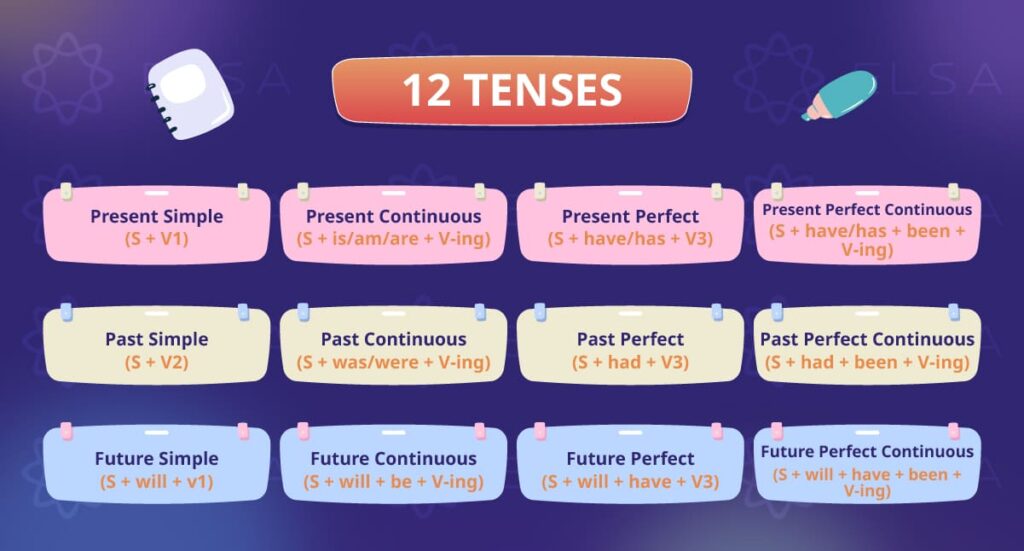
สรุป tense ทั้ง 12 พร้อมตัวอย่าง อย่างละเอียด ในภาษาอังกฤษ
นี่คือตาราง 12 tense สรุป ในภาษาอังกฤษ ที่คุณสามารถบันทึกภาพ (หรือถ่ายภาพหน้าจอ) แล้วตั้งเป็นวอลเปเปอร์ของคุณเพื่อท่องจำได้เลยนะ
Present Tense
Present simple
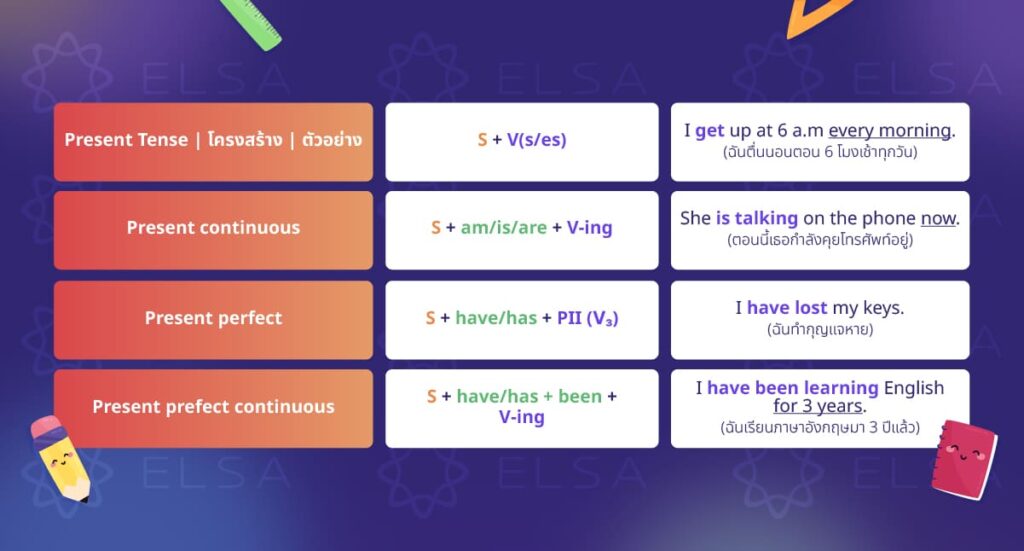
ปัจจุบันกาลธรรมดา (Present Simple) ใช้เพื่อแสดงนิสัย ความจริงที่เห็นได้ชัด หรือการกระทำซ้ำๆ ในปัจจุบันกาล ซึ่งกาลนี้เป็นกาลพื้นฐานและพบบ่อยที่สุดในภาษาอังกฤษ
| ประเภทของประโยค | โครงสร้าง |
|---|---|
| บอกเล่า | S + V(s/es) |
| ปฏิเสธ | S + do/does + not + V |
| คําถาม | Do/Does + S + V? |
| วิธีใช้ | ตัวอย่าง |
|---|---|
| แสดงนิสัย การกระทำซ้ำ ๆ | I get up at 6 a.m. every morning. (ฉันตื่นนอนตอน 6 โมงเช้าทุกวัน) |
| แสดงข้อเท็จจริงที่ชัดเจน กฎธรรมชาติ | The sun rises in the east. (พระอาทิตย์ขึ้นทางทิศตะวันออก) |
| แสดงตารางเวลาที่แน่นอน | The train leaves at 8 o’clock. (รถไฟออกเวลา 8 โมงเช้า) |
| แสดงความรู้สึก ความคิด สภาวะ | She likes classical music. (เธอชอบดนตรีคลาสสิก) |
Present continuous
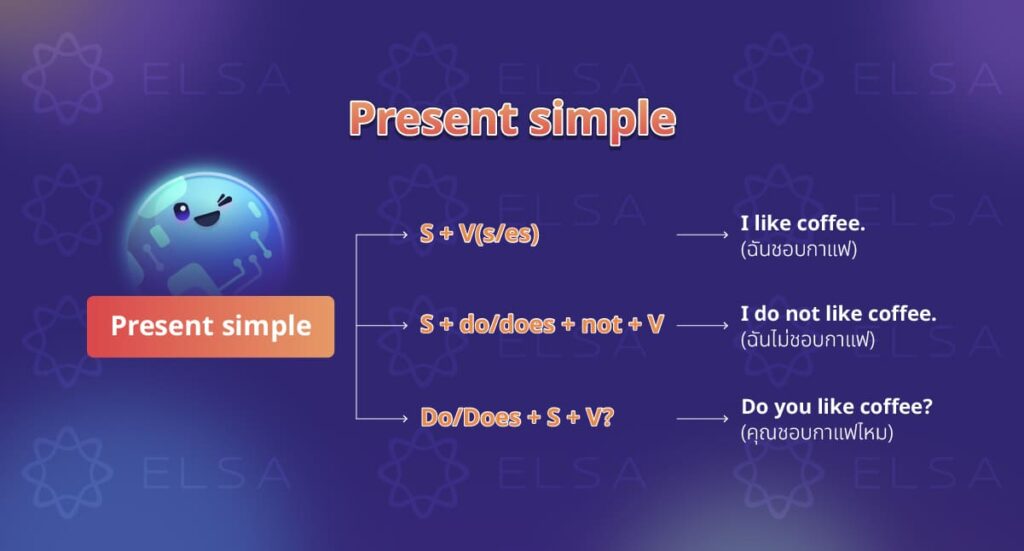
ปัจจุบันกาลต่อเนื่อง (Present Continuous) ใช้เพื่ออธิบายการกระทำที่กำลังเกิดขึ้นในขณะที่พูดหรือการกระทำที่กำลังเกิดขึ้นในปัจจุบัน
| ประเภทของประโยค | โครงสร้าง |
|---|---|
| บอกเล่า | S + am/is/are + V-ing |
| ปฏิเสธ | S + am/is/are + not + V-ing |
| คําถาม | Am/Is/Are + S + V-ing? |
| วิธีการใช้ | ตัวอย่าง |
|---|---|
| แสดงการกระทำที่กำลังเกิดขึ้นในขณะที่พูด | She is talking on the phone now. (ตอนนี้เธอกำลังคุยโทรศัพท์อยู่) |
| แสดงการกระทำที่กำลังเกิดขึ้นในปัจจุบัน (แต่ไม่จำเป็นต้องเป็นในขณะที่พูด) | I am learning English this month. (เดือนนี้ฉันกำลังเรียนภาษาอังกฤษ) |
| แสดงแผนการหรือความตั้งใจในอนาคตอันใกล้ | We are meeting our friends tomorrow. (พรุ่งนี้เราจะไปพบเพื่อน ๆ กัน) |
| แสดงการกระทำชั่วคราว (ไม่ใช่นิสัยระยะยาว) | He is living with his uncle for a few weeks. (เขาจะไปอยู่กับลุงของเขาสองสามสัปดาห์) |
Present perfect
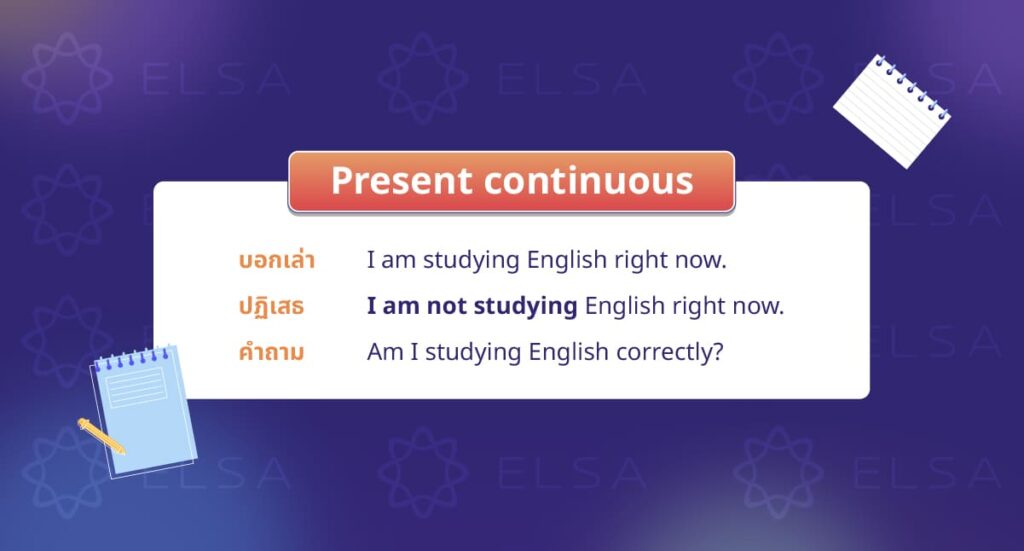
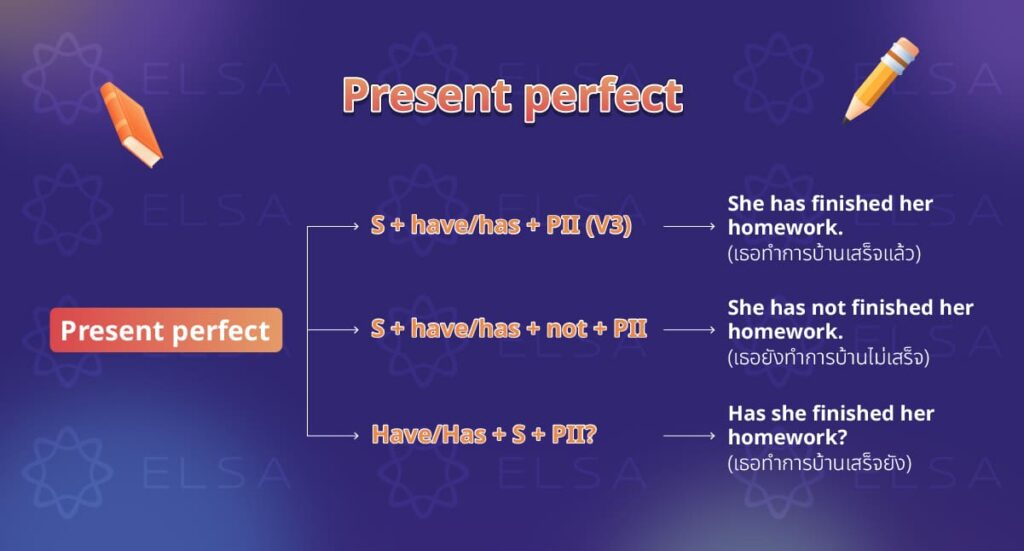
กาลปัจจุบันสมบูรณ์ (Present Perfect) ใช้เพื่ออธิบายการกระทำที่เกิดขึ้นในอดีตแต่ยังคงเกี่ยวข้องกับปัจจุบัน หรือประสบการณ์ ผลลัพธ์ และการเปลี่ยนแปลงที่เกิดขึ้นตามกาลเวลา
| ประเภทของประโยค | โครงสร้าง |
|---|---|
| บอกเล่า | S + have/has + PII (V3) |
| ปฏิเสธ | S + have/has + not + PII |
| คําถาม | Have/Has + S + PII? |
| วิธีการใช้ | ตัวอย่าง |
|---|---|
| อธิบายการกระทำที่เกิดขึ้นในอดีตแต่ยังคงเกี่ยวข้องกับปัจจุบัน | I have lost my keys (ฉันทำกุญแจหาย) |
| อธิบายประสบการณ์ที่ได้ทำบางสิ่งบางอย่างในชีวิต | She has visited Paris twice. (เธอเคยไปปารีสสองครั้ง) |
| อธิบายการกระทำที่เพิ่งเกิดขึ้น (มักใช้กับ just, recently) | He has just left the office. (เขาเพิ่งออกจากออฟฟิศ) |
| อธิบายการเปลี่ยนแปลงหรือผลลัพธ์ที่เกิดขึ้นในช่วงเวลาหนึ่ง | My English has improved a lot since I joined the course. (ภาษาอังกฤษของฉันดีขึ้นมากตั้งแต่เข้าเรียนหลักสูตรนี้) |
| อธิบายการกระทำที่เริ่มต้นในอดีตและดำเนินต่อไปจนถึงปัจจุบัน (มักใช้กับ for/since) | We have lived here for 10 years. (เราอยู่ที่นี่มา 10 ปีแล้ว) |
Present prefect continuous
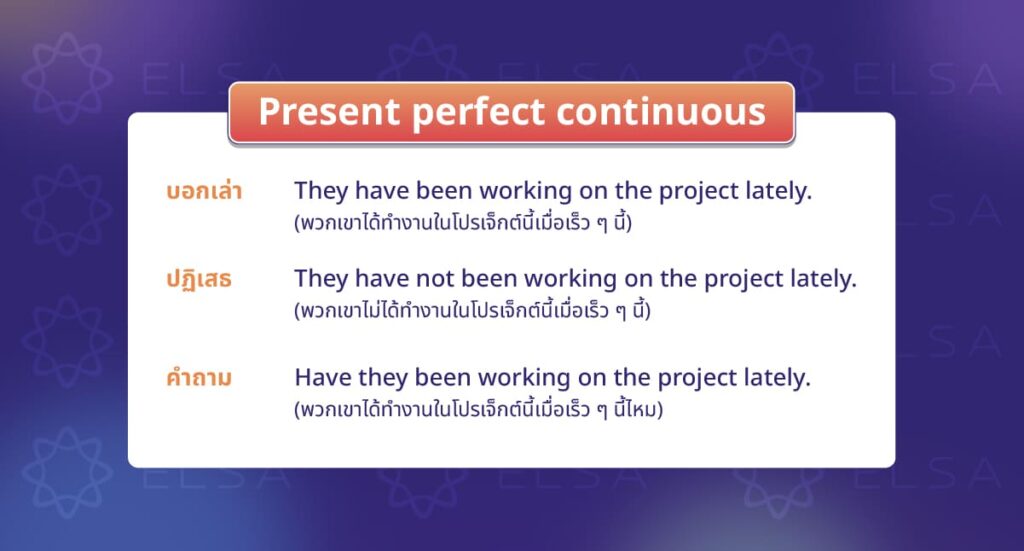
ปัจจุบันกาลสมบูรณ์ต่อเนื่อง (Present Perfect Continuous) ใช้เพื่ออธิบายการกระทำที่เริ่มในอดีต ยังคงดำเนินต่อไปในปัจจุบัน และอาจดำเนินต่อไปในอนาคต หรือการกระทำที่เพิ่งจบลงแต่มีผลลัพธ์ชัดเจน
| ประเภทของประโยค | โครงสร้าง |
|---|---|
| บอกเล่า | S + have/has + been + V-ing |
| ปฏิเสธ | S + have/has + not + been + V-ing |
| คําถาม | Have/Has + S + been + V-ing? |
| วิธีการใช้ | ตัวอย่าง |
|---|---|
| แสดงถึงการกระทำที่เริ่มต้นในอดีตและยังคงดำเนินต่อไป | I have been learning English for 3 years. (ฉันเรียนภาษาอังกฤษมา 3 ปีแล้ว) |
| แสดงถึงการกระทำที่เพิ่งจบลง โดยเน้นผลลัพธ์หรือสัญลักษณ์ที่ยังคงปรากฏอยู่ | She has been running, so she’s very tired. (เธอวิ่งเล่นจนเหนื่อย) |
| เน้นย้ำความต่อเนื่องของการกระทำที่เกิดขึ้นในช่วงระยะเวลาหนึ่ง | They have been talking all morning. (พวกเขาคุยกันทั้งเช้าเลย) |
Past Tense
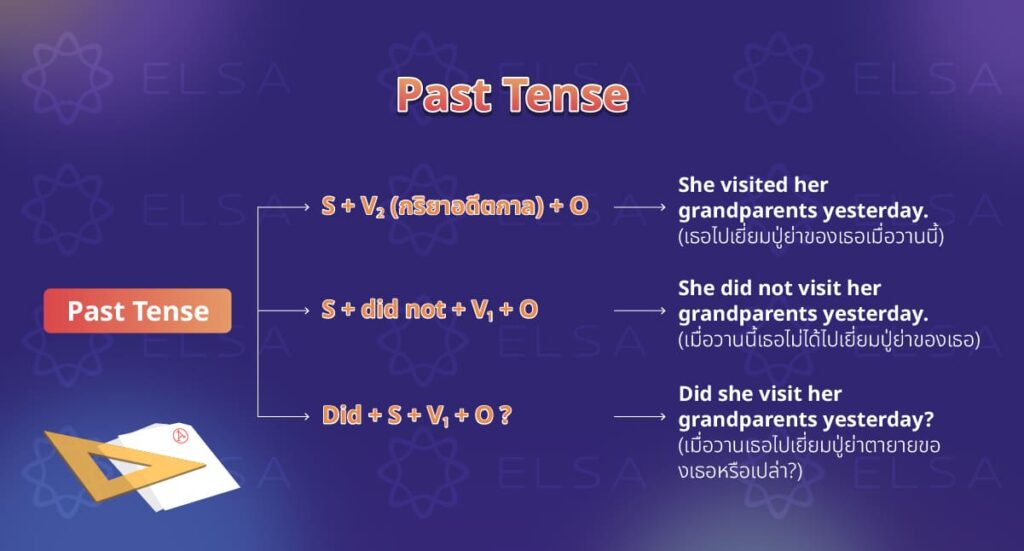
กาลอดีตใช้เพื่อบรรยายการกระทำและเหตุการณ์ที่เกิดขึ้นและสิ้นสุดลงในอดีต
| ประเภทของประโยค | โครงสร้างที่มีกริยาธรรมดา |
|---|---|
| บอกเล่า | S + V₂ (กริยาอดีตกาล) + O |
| ปฏิเสธ | S + did not + V₁ + O |
| คําถาม | Did + S + V₁ + O ? |
| เงื่อนไข | ตัวอย่าง |
|---|---|
| การกระทำที่เกิดขึ้นและจบลงในอดีต | I visited my grandma last weekend. (ฉันไปเยี่ยมคุณยายสุดสัปดาห์ที่แล้ว) |
| นิสัยในอดีต | She always walked to school when she was a child. (ตอนเด็ก ๆ เธอเดินไปโรงเรียนเสมอ) |
| ข้อเท็จจริงในอดีต | People believed the Earth was flat. (ผู้คนเชื่อว่าโลกแบน) |
Future Tense
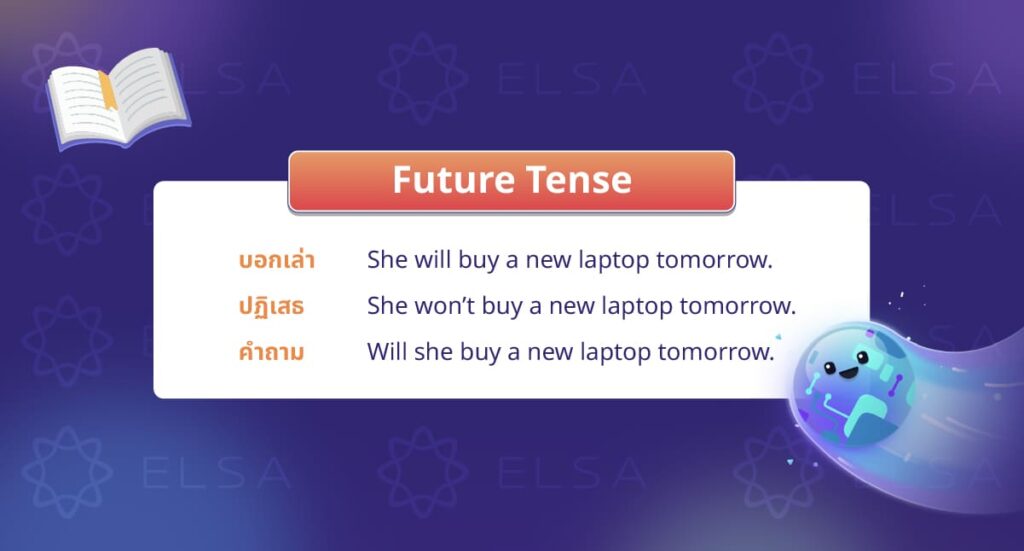
กาลอนาคตใช้เพื่อบรรยายการกระทำและเหตุการณ์ที่จะเกิดขึ้นในอนาคต
| ประเภทของประโยค | โครงสร้างที่มีกริยาธรรมดา |
|---|---|
| บอกเล่า | S + will + V₁ + O |
| ปฏิเสธ | S + will not (won’t) + V₁ + O |
| คําถาม | Will + S + V₁ + O ? |
| เงื่อนไข | ตัวอย่าง |
|---|---|
| การกระทำที่จะเกิดขึ้นในอนาคต | She will travel to Japan next month. (เดือนหน้าเธอจะไปเที่ยวญี่ปุ่น) |
| การคาดการณ์จากข้อมูลปัจจุบัน | Look at those clouds! It will rain soon. (ดูเมฆนั่นสิ! อีกไม่นานฝนจะตก) |
| คำสัญญา การตัดสินใจทันที | I will help you with your homework. (ฉันจะช่วยเธอทำการบ้านนะ) |
วิธีการเรียน 12 tense อย่างง่ายๆ
หากคุณเรียนภาษาผ่านชื่อและหลักการใช้ คุณจะรู้สึกเบื่อมาก และลืมสิ่งที่คุณเพิ่งเรียนรู้ไปอย่างรวดเร็ว แทนที่นั้น ให้ลองใช้แผนที่ความคิดสำหรับการเรียนรู้ภาษา โดยเฉพาะเมื่อเรียนรู้ 12 tense ในภาษาอังกฤษ คุณจะจัดระบบความรู้ได้อย่างง่ายดายด้วย 2 วิธี: การอ่านและการเขียน จากนั้นความรู้ที่ได้มาจะง่ายขึ้นและจดจำได้นานกว่าวิธีการเรียนรู้แบบเดิม
ฝึกทำแบบฝึกหัดอย่างสม่ำเสมอ
ในการเรียนรู้ภาษาโดยทั่วไป และโดยเฉพาะ tense ในภาษาอังกฤษ สิ่งที่สำคัญที่สุดคือ การนำสิ่งที่คุณได้เรียนรู้ไปใช้ในทางปฏิบัติหรือในแบบฝึกหัดอย่างสม่ำเสมอเสมอ การทำแบบฝึกหัดจำนวนมากจะช่วยให้คุณเข้าใจบริบทและใช้ tense ที่ถูกต้องในภาษาอังกฤษ ดังนั้นควรฝึกแบ่ง tense ให้คล่อง จะได้เข้าใจลึกซึ้งและจำ tense ทั้งหมดเป็นภาษาอังกฤษได้นานๆ แบบฝึกหัดตั้งแต่ระดับพื้นฐานไปจนถึงระดับสูงได้รับการรวบรวมโดยอาจารย์ของ ELSA Speak ในตอนที่ 5 คุณสามารถเลื่อนลงและลองทำดูได้หลังจากที่คุณได้ทบทวน tense ในภาษาอังกฤษแล้ว
เรียนที่ศูนย์การสอนภาษาอังกฤษที่มีชื่อเสียง
เพื่อปรับปรุงประสิทธิภาพของคุณเมื่อเรียนภาษาอังกฤษ การเรียนที่ศูนย์ภาษาอังกฤษที่มีชื่อเสียงเป็นสิ่งสำคัญอย่างยิ่ง นอกจากนี้การเรียนกับผู้เรียนคนอื่นๆ จะช่วยให้คุณไม่รู้สึกเบื่อและมีโอกาสฝึกฝนภาษาอังกฤษมากขึ้น
ปัจจัยสำคัญอีกประการหนึ่งเมื่อเริ่มเรียนภาษาอังกฤษคือ คุณต้องรู้ว่าจุดเริ่มต้นของคุณอยู่ที่ไหน ณ ตอนนี้มีศูนย์การสอนภาษาอังกฤษหลายแห่งที่จะช่วยให้คุณกำหนดระดับภาษาอังกฤษของคุณได้ฟรี ซึ่งคุณสามารถกำหนดเส้นทางการเรียนรู้เฉพาะสำหรับตัวคุณเองได้อย่างง่ายดาย
ในส่วนข้างต้น เราได้เรียนรู้เกี่ยวกับโครงสร้างและการผันคำกริยาของ 12 tense ในภาษาอังกฤษ
ต่อไปเรามาลองฝึกทำแบบฝึกหัดเล็กๆ น้อยๆ เพื่อทวนความจำกัน!
| Tense | โครงสร้าง | วิธีการใช้ |
|---|---|---|
| Present Simple | S + V(s/es) | แสดงนิสัย ข้อเท็จจริงที่ชัดเจน ตารางเวลาที่แน่นอน |
| Present Continuous | S + am/is/are + V-ing | แสดงการกระทำที่กำลังเกิดขึ้นในขณะที่พูดหรือใกล้ปัจจุบัน |
| Present Perfect | S + have/has + PII | แสดงการกระทำที่เสร็จสิ้นแล้วแต่ยังคงเชื่อมโยงกับปัจจุบัน |
| Present Perfect Continuous | S + have/has been + V-ing | แสดงการกระทำที่เริ่มต้นในอดีตและดำเนินต่อไปจนถึงปัจจุบัน |
| Past Simple | S + V2/ed | แสดงการกระทำที่เริ่มต้นและสิ้นสุดในอดีต |
| Past Continuous | S + was/were + V-ing | แสดงการกระทำที่กำลังดำเนินอยู่ ณ เวลาใดเวลาหนึ่งในอดีต |
| Past Perfect | S + had + PII | แสดงการกระทำที่เกิดขึ้นก่อนการกระทำอื่นในอดีต |
| Past Perfect Continuous | S + had been + V-ing | แสดงการกระทำที่กำลังดำเนินอยู่ก่อนเวลาหนึ่งในอดีต |
| Future Simple | S + will + V-inf | แสดงการกระทำที่จะเกิดขึ้นในอนาคต |
| Future Continuous | S + will be + V-ing | แสดงการกระทำที่จะเกิดขึ้น ณ เวลาใดเวลาหนึ่งในอนาคต |
| Future Perfect | S + will have + PII | แสดงการกระทำที่จะเสร็จสิ้นก่อนเวลาหนึ่งในอนาคต |
| Future Perfect Continuous | S + will have been + V-ing | แสดงการกระทำที่จะดำเนินต่อไปจนถึงเวลาหนึ่งในอนาคต |
>>> Read more: was were ใช้ยังไง – โครงสร้าง หลักการใช้ และข้อผิดพลาด
แบบฝึกหัดเกี่ยวกับ tense ภาษาอังกฤษ
แบบฝึกหัดที่ 1: แยก Present Simple Tense – Simple Past Tense – Simple Future Tense
จงผัน Present Simple Tense, Simple Past Tense หรือ Future Simple Tense ด้วยคำกริยาในวงเล็บด้านล่าง:
- I think she ………. (win) this competition.
- Ottawa ………. (be) the capital of Canada.
- Last year, he ………. (apply) for that job position and ………. (fail).
- My elder sister ………. (be) a kind and helpful person. She always ………. (help) others.
- When my mother was young, she ………. (play) lots of sports.
- Everyone thinks he ………. (get) promoted soon, though they don’t know how he works.
- Apple and Samsung ………. (be) two of the leading smartphone brands in the world.
- This morning, our parents ………. (go) shopping and ………. (buy) a lot of things for the party.
- Last week, we ………. (contact) that client several times, but he didn’t answer our calls.
- His aunt has a healthy lifestyle. She ………. (eat) vegan foods and ………. (meditate) every day.
คำตอบ:
| 1. will win | 2. is | 3. applied – failed | 4. is – helps | 5. played |
| 6. will get | 7. are | 8. went – bought | 9. contacted | 10. eats – meditates |
แบบฝึกหัดที่ 2: แยก Present Continuous – Past Continuous – Future Continuous
จงผัน Present Continuous Tense, Past Continuous Tense หรือ Future Continuous Tense ด้วยคำกริยาในวงเล็บด้านล่าง:
- Sorry! My wife can’t come to the phone right now. She ………. (water) the plants in the backyard.
- Yesterday, when our boss came, we ………. (chat) noisily.
- This time next year, I ………. (study)Japan.
- She ………. (have) lunch when I called.
- When the electricity went out, their boss ………. (give) a speech.
- This time next month, we ………. (work) in the new office.
- These days, I ………. (read) a very good book.
- This month, her elder sister ………. (practice) dancing.
- That employee always ………. (miss) deadlines.
- His dad ………. (smoke) indoors all the time.
คำตอบ:
| 1. is watering | 2. were chatting | 3. will be studying | 4. was having | 5. was giving |
| 6. will be working | 7. am reading | 8. is practicing | 9. is always missing | 10. is smoking |
แบบฝึกหัดที่ 3: แยก Present Perfect – Simple Past
จงผัน Present Perfect Tense หรือ Simple Past Tense ด้วยคำกริยาในวงเล็บด้านล่าง:
- I just ………. (buy) this phone. Do you think the design is cool?
- Their parents ………. (buy) that house 2 years ago.
- When I was young, my parents ………. (take) me to the zoo every weekend.
- We ………. (have) dinner yet. We’re so hungry.
- Yesterday, they ………. (decide) to sign a contract with that company.
- She ………. (sell) her car. I don’t know when.
- The man got out of the car, ………. (take) his hat off, ………. (put) his sunglasses on and ………. (walk) towards their door.
- My crush just ………. (ask) me to go to the cinema with her.
- They ………. (establish) this company in 1998.
- He ………. (work) for this company since 2014.
คำตอบ:
| 1. have just bought (คำวิเศษณ์ ‘just’- “เพิ่ง” อยู่ระหว่าง ‘have/ has’ และ V3/Ved) | 6. has sold |
| 2. bought | 7. took – put – walked |
| 3. took | 8. has just asked (คำวิเศษณ์ ‘just’- “เพิ่ง” อยู่ระหว่าง ‘have/ has’ และ V3/Ved) |
| 4. haven’t had | 9. established |
| 5. decided | 10. has worked |
แบบฝึกหัดที่ 4: แยก Simple Past – Past Perfect
จงผัน Simple Past Tense หรือ Past Perfect Tense ด้วยคำกริยาในวงเล็บด้านล่าง:
- The meeting ………. (finish) before we ………. (arrive) at the company.
- By the time I ………. (get) there, they ………. (eat) all the food.
- They ………. (sell) their apartment before they ………. (buy) this house.
- He ………. (get) home after we ………. (have) dinner.
- I ………. (not talk) to her until I ………. (meet) her at the party last night.
- Before I ………. (ask) for my mother’s advice, I ………. (worry) about this for a long time.
- That lazy member ………. (come) after we ………. (complete) all the tasks
- She ………. (not think) about moving to another city until I ………. (advise) her to.
- Her parents ………. (not use) an air conditioner before she ………. (buy) one for them.
- Our daughter ………. (fall) asleep when we ………. (get) home.
สามารถดูตาราง Irregular Verbs เพื่อค้นหารูปแบบกริยาในอดีตหรือกริยาช่องที่ 3 ที่ถูกต้อง
คำตอบ:
| 1. had finished – arrived | 6. asked – had worried |
| 2. got – had eaten | 7. came – had completed |
| 3. had sold – bought | 8. hadn’t thought – advised |
| 4. got home – had had | 9. hadn’t used – bought |
| 5. hadn’t talked – met | 10. had fallen – got |
แบบฝึกหัดที่ 5: แยก Present Simple – Future Perfect
จงผัน Present Simple Tense หรือ Future Perfect Tense ด้วยคำกริยาในวงเล็บ:
- My younger brother………. (spend) all of his salary on games by the end of this month.
- They ………. (buy) all the products by the time we ………. (get) there.
- By the end of this year, that group ………. (meet) their target.
- By the time we ………. (arrive) at the company, the meeting ………. (finish).
- They ………. (become) very successful before I ………. (graduate) from university.
- Before that irresponsible employee ………. (get) here, we ………. (complete) all the tasks.
- Her parents ………. (go) to bed when we ………. (call) them.
- Our son ………. (cook) dinner before we ………. (bring) these foods home.
- By the time I ………. (buy) my first house, they ………. (buy) several houses.
- We ………. (cancel) the meeting by the time that client ………. (arrive).
คำตอบ:
| 1. will have spent | 6. arrive – will have finished |
| 2. will have bought – get | 7. will have gone – call |
| 3. gets – will have completed | 8. will have cooked – bring |
| 4. will have met | 9. buy – will have bought |
| 5. will have become – graduate | 10. will have canceled – arrives |
แบบฝึกหัดที่ 6: แยก Present Perfect Continuous – Past Perfect Continuous – Future Perfect Continuous
ให้ผัน Tense สำหรับกริยาในวงเล็บให้ถูกต้อง:
- It ………. (rain) for 4 hours straight, and now, most of the streets are flooded.
- That afternoon, many streets were flooded as it ………. (rain) for 3 hours
- Our daughter ………. (study) for nearly 4 hours when we get home.
- Yesterday, she ………. (practice) since noon, then she felt exhausted.
- We ………. (walk) for nearly an hour, so now, we are very thirsty and tired.
- When we enter the meeting, they ………. (discuss) that problem for hours.
- Susan ………. (bake) lots of cookies by the time we get there to help her.
- Last month, they ………. (try) their best since the beginning of the month, so at the end of the month, they met all of their targets.
- By the time we get there, David ………. (sing) lots of songs.
- We feel so sleepy now because we ………. (work) on these documents since last night.
คำตอบ:
| 1. has been raining | 6. will have been discussing |
| 2. had been raining | 7. will have been baking |
| 3. will have been studying | 8. had been trying |
| 4. had been practicing | 9. will have been singing |
| 5. have been walking | 10. have been working |
ด้านบนคือโครงสร้าง หลักการใช้ และวิธีการเรียนรู้ 12 tense อย่างละเอียดในภาษาอังกฤษที่ ELSA Speak อยากส่งต่อให้กับคุณ แต่ว่า นอกจากความรู้ข้างต้นแล้ว ให้พยายามฝึกฝน จดจำ และใช้ tense ภาษาอังกฤษจากวิธีเสริมและทำแบบฝึกหัดอย่างสม่ำเสมอ
ขอบคุณที่ติดตามบทความของเรา แล้วพบกันใหม่บทความหน้านะ!

เยี่ยมชม ELSA Speak เป็นประจำเพื่อรับความรู้เพิ่มเติมเกี่ยวกับการเรียนด้วยตัวเองเพื่อการสื่อสารภาษาอังกฤษสำหรับคนทำงานและวัยเรียน!