

Past Participle (V3 ตัวอย่าง ประโยค) เป็นหนึ่งในรูปแบบกริยาที่สำคัญที่ผู้เรียนภาษาอังกฤษจำเป็นต้องเชี่ยวชาญ บทความนี้ ELSA Speak จะช่วยให้คุณเข้าใจ Past Participle V3, Past Participle โครงสร้าง และ Past Participle หลักการใช้ รวมถึงความแตกต่างจากกริยาช่องปัจจุบัน นอกจากนี้จะได้เรียนรู้ Past Participle ตัวอย่าง ประโยค เพื่อให้ง่ายต่อการนำไปใช้ในทางปฏิบัติ
Past Participle (กริยาช่อง 3) คืออะไร?
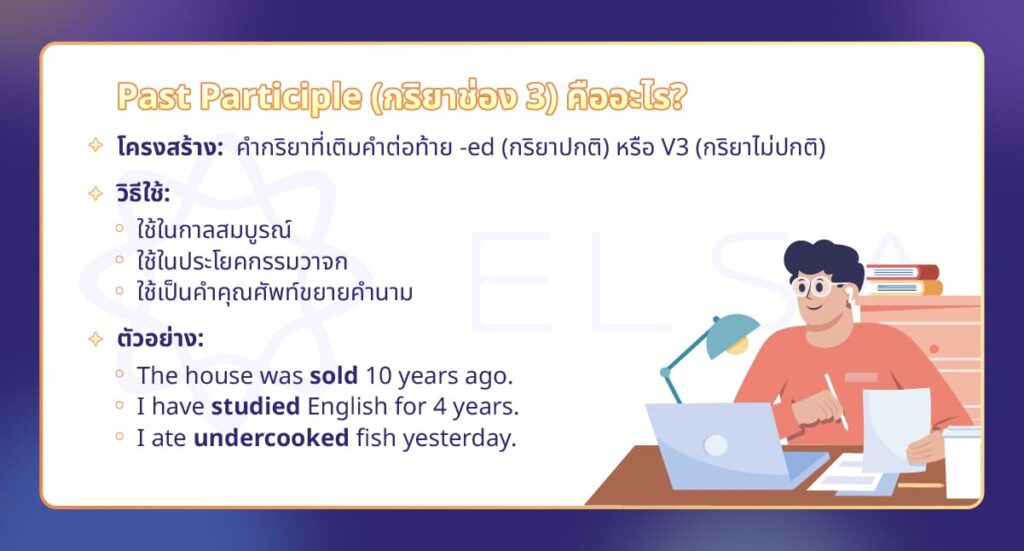
กริยาช่อง 3 (Past Participle) คือรูปแบบคำกริยาที่สร้างขึ้นโดยการเติมคำต่อท้าย -ed เข้ากับคำกริยาปกติ (regular verbs) แล้วแปลงรูปคำกริยานั้นในรูปแบบอื่น (สำหรับคำกริยาที่ไม่ปกติ)
สอบก่อนเข้าฟรี

โดยทั่วไปมักใช้ในรูปกาลสมบูรณ์ ประโยคที่ถูกกระทำหรือใช้เป็นคำคุณศัพท์ในสถานการณ์เฉพาะบางอย่าง
ในภาษาอังกฤษ คำกริยามีสามรูปแบบ:
ลองอ่านออกเสียง 50 รายการนี้ดู แล้วดูคะแนนของคุณ
- V1: กริยาช่อง 1 (infinitive)
- V2: อดีตกาลธรรมดา (past simple)
- V3: กริยาช่อง 3 (past participle)
งั้น Past Participle คือ V3 คือรูปแบบที่สามของคำกริยาในตารางคำกริยาไม่ปกติ
Past Participle ตัวอย่าง ประโยค:
- The house was sold 10 years ago. (บ้านหลังนั้นถูกขายไปเมื่อ 10 ปีที่แล้ว)
→ Past Participle sold คือรูปแบบ V3 (คำกริยาในคอลัมน์ที่ 3 ของตารางคำกริยาไม่ปกติ) ของคำว่า “sell” และใช้ในโครงสร้างประโยคที่ถูกกระทำของกาลอดีต
- I have studied English for 4 years. (ฉันเรียนภาษาอังกฤษมา 4 ปีแล้ว)
→ Past Participle studied อยู่ในรูปกริยา study โดยเติมคำต่อท้าย -ed และใช้ในโครงสร้างกาลปัจจุบันสมบูรณ์ (present perfect tense)
- I ate undercooked fish yesterday. (เมื่อวานฉันกินปลาที่ปรุงไม่สุก)
→ Past Participle undercooked จะเติมคำต่อท้าย -ed ต่อท้ายคำกริยาในรูปยังไม่ผัน undercook และใช้เป็นคำคุณศัพท์เพื่อบ่งบอกความหมายที่เน้นการถูกกระทำ คือ ยังไม่สุกเต็มที่
เริ่มต้นเข้าใจ 12 tense แบบง่าย ๆ ใช้ได้จริงในชีวิตประจำวัน
โครงสร้าง Past Participle (กริยาช่อง 3) ในภาษาอังกฤษ
เติม -ed ต่อท้ายคำกริยาปกติ
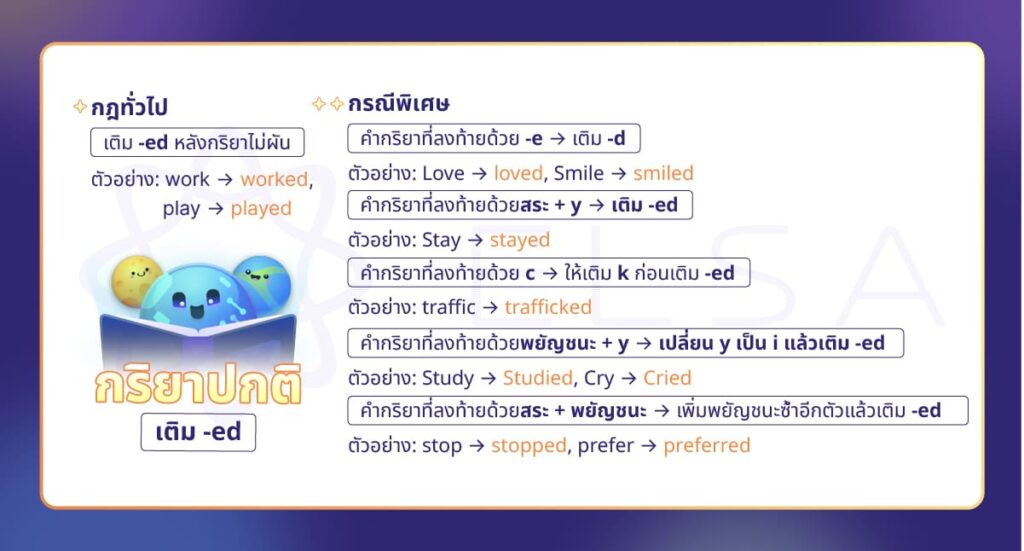
สำหรับคำกริยาปกติ past participle ถูกสร้างขึ้นโดยการเติม ed หลังคำกริยาไม่ผัน อย่างไรก็ตาม มีข้อควรระวังเกี่ยวกับการสะกดคำเมื่อเติม ed ดังนี้:
| กริยาปกติ | วิธีการแปลงเป็น Past participle | ตัวอย่าง |
|---|---|---|
| ลงท้ายด้วย “e” | เติมคำต่อท้าย “-d” | use → used smile → smiled |
| ลงท้ายด้วย “c” | เติม “k” ก่อนเติม “-ed” | traffic → trafficked |
| ลงท้ายด้วย “พยัญชนะ + y” | เปลี่ยน “y” เป็น “i” แล้วเติม “-ed” | cry → cried copy → copied |
| ลงท้ายด้วย “สระ + y” | เติม “-ed” | stay → stayed |
| คำพยางค์เดียวที่ลงท้ายด้วย “สระ + พยัญชนะ” | เติมตัวอักษรพยัญชนะซ้ำและเติม “-ed” | stop → stoppe drub → rubbed |
| คำหลายพยางค์ที่มีการเน้นเสียงที่พยางค์สุดท้ายและลงท้ายด้วย “สระ + พยัญชนะ” | เติมตัวอักษรพยัญชนะซ้ำและเติม “-ed” | prefer → preferred |
Past Participle ในตารางกริยาไม่ปกติ
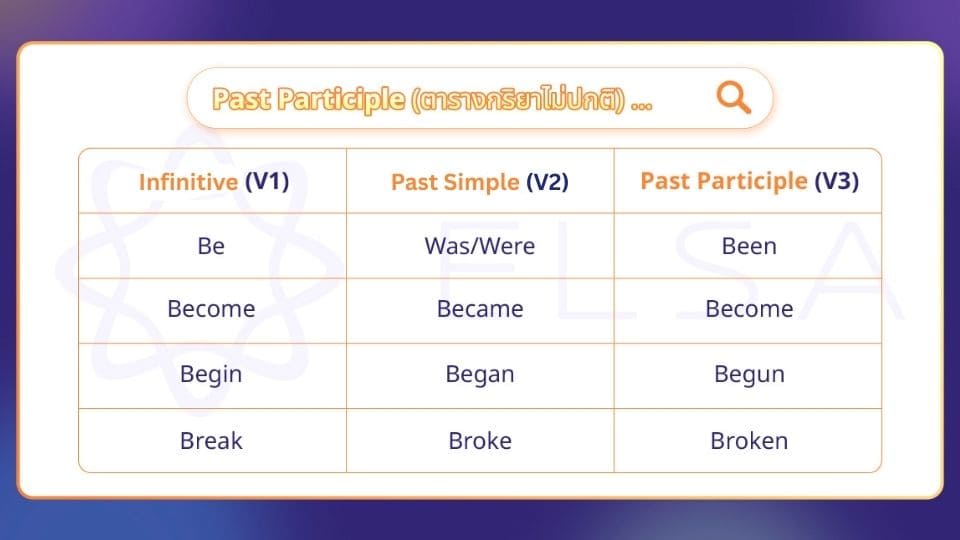
นอกจากคำกริยาปกติที่ระบุไว้ข้างต้นแล้ว คำกริยาช่อง 3 (past participle) ของคำกริยาไม่ปกติจะไม่เป็นไปตามกฎทั่วไปของคำกริยาปกติ (การเติม -ed ต่อท้ายคำกริยาไม่ผัน) จะมีรูปแบบพิเศษที่ต้องจำ ด้านล่างนี้คือตารางแสดงคำกริยาไม่ปกติที่พบบ่อย 50 คำในภาษาอังกฤษเพื่อเป็นข้อมูลอ้างอิงให้กับคุณ:
| Infinitive (V1) | Past Simple (V2) | Past Participle (V3) | ความหมาย |
|---|---|---|---|
| Be | Was/Were | Been | เป็น อยู่ คือ |
| Become | Became | Become | กลายเป็น |
| Begin | Began | Begun | เริ่มต้น |
| Break | Broke | Broken | ทําแตก |
| Bring | Brought | Brought | นํามา |
| Build | Built | Built | ก่อสร้าง |
| Buy | Bought | Bought | ซื้อ |
| Catch | Caught | Caught | จับ |
| Choose | Chose | Chosen | เลือก |
| Come | Came | Come | มา |
| Cut | Cut | Cut | ตัด |
| Do | Did | Done | ทำ |
| Drink | Drank | Drunk | ดื่ม |
| Drive | Drove | Driven | ขับรถ |
| Eat | Ate | Eaten | กิน |
| Fall | Fell | Fallen | ตก |
| Feel | Felt | Felt | รู้สึก |
| Find | Found | Found | หา |
| Fly | Flew | Flown | บิน |
| Forget | Forgot | Forgotten | ลืม |
| Get | Got | Gotten/Got | ได้รับ |
| Give | Gave | Given | ให้ |
| Go | Went | Gone | ไป |
| Grow | Grew | Grown | เติบโต |
| Have | Had | Had | มี |
| Hear | Heard | Heard | ได้ยิน |
| Hide | Hid | Hidden | ซ่อน |
| Hit | Hit | Hit | ตี ชน |
| Hold | Held | Held | ถือ |
| Keep | Kept | Kept | เก็บ |
| Know | Knew | Known | รู้ |
| Leave | Left | Left | ออกไป |
| Lose | Lost | Lost | สูญเสีย |
| Make | Made | Made | สร้าง |
| Meet | Met | Met | พบ |
| Pay | Paid | Paid | จ่าย |
| Put | Put | Put | วาง |
| Read | Read | Read | อ่าน |
| Ride | Rode | Ridden | ขี่ |
| Run | Ran | Run | วิ่ง |
| Say | Said | Said | พูด |
| See | Saw | Seen | เห็น |
| Sell | Sold | Sold | ขาย |
| Sing | Sang | Sung | ร้องเพลง |
| Sit | Sat | Sat | นั่ง |
| Sleep | Slept | Slept | นอน |
| Speak | Spoke | Spoken | พูด |
| Take | Took | Taken | เอาไป |
| Write | Wrote | Written | เขียน |
>>> อ่านเพิ่มเติม: was were ใช้ยังไง : โครงสร้าง หลักการใช้ และข้อผิดพลาด
Past Participle หลักการใช้ ในภาษาอังกฤษ
ใช้ในกาลสมบูรณ์
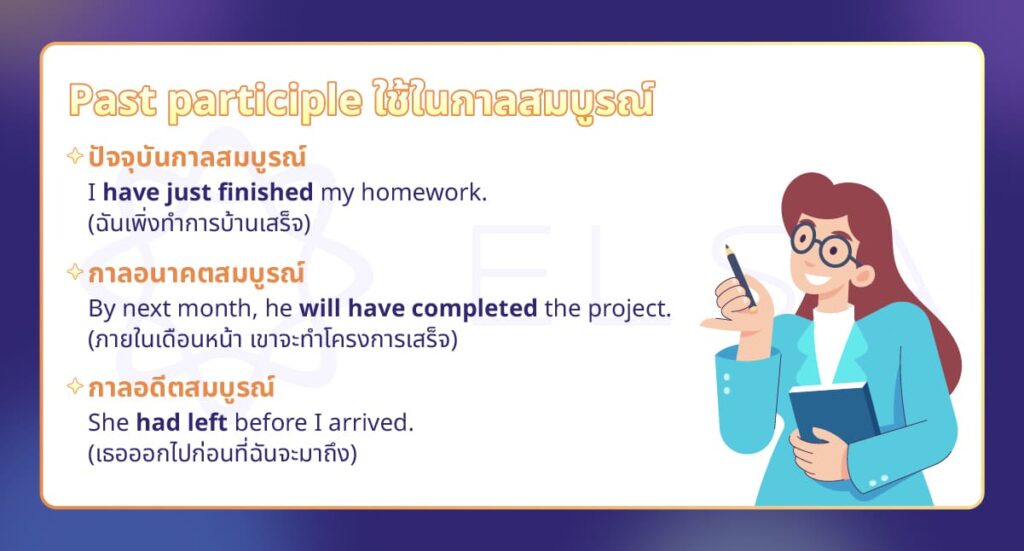
Past Participle (V3/ed) มีบทบาทสำคัญในกลุ่มกาลสมบูรณ์ในภาษาอังกฤษ ซึ่งใช้เพื่อบ่งบอกถึงการกระทำที่เสร็จสมบูรณ์แล้ว ณ เวลาใดเวลาหนึ่ง Past participle tense ในภาษาอังกฤษ ได้แก่:
| กาล | โครงสร้าง | ตัวอย่าง |
|---|---|---|
| ปัจจุบันกาลสมบูรณ์(Present Simple Tense) | S + have/has + V3/ed | I have just finished my homework. (ฉันเพิ่งทำการบ้านเสร็จ) |
| กาลอนาคตสมบูรณ์ (Future Perfect Tense) | S + will have + V3/ed | By next month, he will have completed the project. (ภายในเดือนหน้า เขาจะทำโครงการเสร็จ) |
| กาลอดีตสมบูรณ์ (Past Perfect) | S + had + V3/ed | She had left before I arrived. (เธอออกไปก่อนที่ฉันจะมาถึง) |
ใช้เป็นคำคุณศัพท์
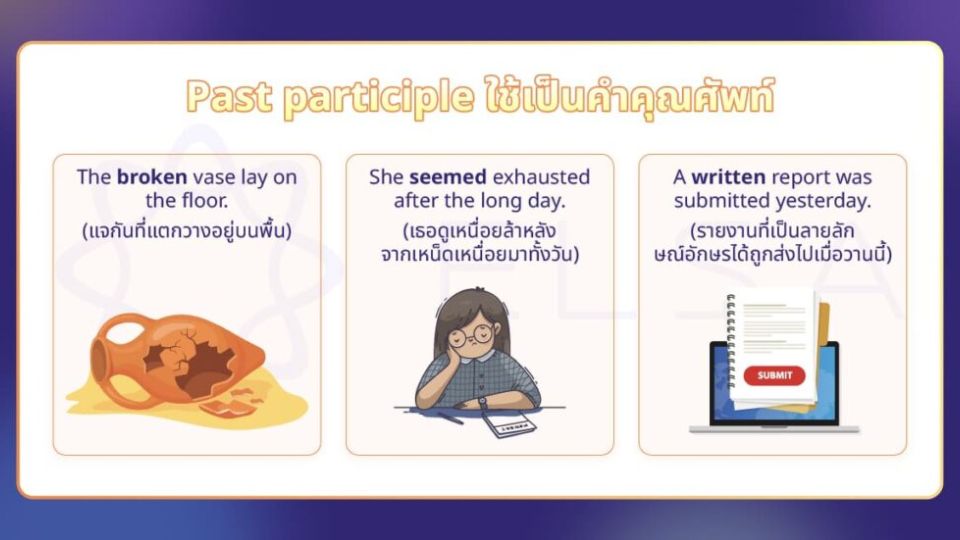
ในภาษาอังกฤษ คำกริยาช่องที่ 3 (past participle) ใช้เป็นคำคุณศัพท์ (Adjective) ในประโยคเพื่ออธิบายสถานะหรือลักษณะของคำนาม โดยปกติจะเป็นสถานะที่ได้รับผลกระทบหรือเป็นผลมาจากการกระทำที่เสร็จสมบูรณ์แล้ว
ตัวอย่าง:
- The broken vase lay on the floor. (แจกันที่แตกวางอยู่บนพื้น)
- She seemed exhausted after the long day. (เธอดูเหนื่อยล้าหลังจากเหน็ดเหนื่อยมาทั้งวัน)
- A written report was submitted yesterday. (รายงานที่เป็นลายลักษณ์อักษรได้ถูกส่งไปเมื่อวานนี้)
ใช้ในรูปประโยคที่เน้นผู้ถูกกระทำ
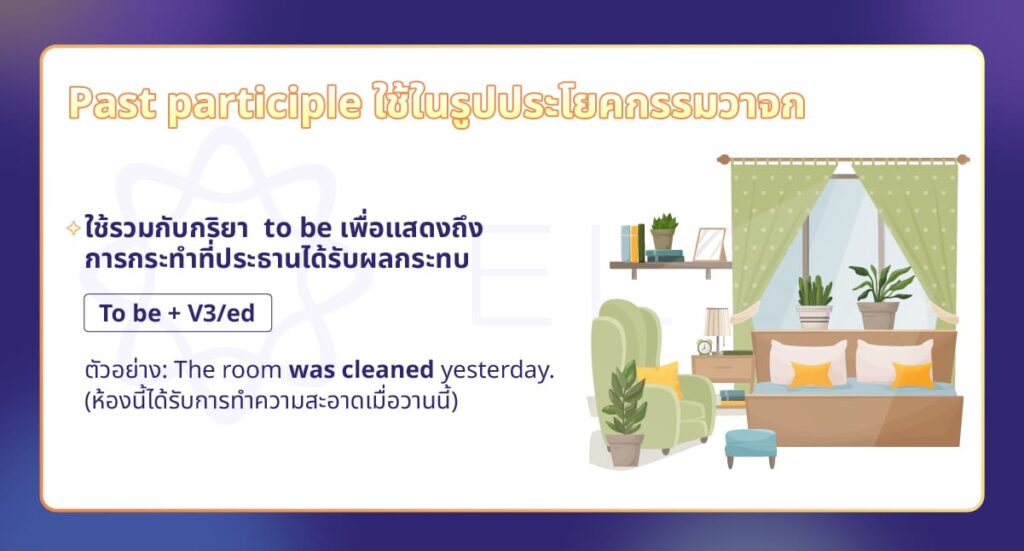
ในประโยคที่ถูกกระทำ (Passive Voice) past participle จะใช้รวมกับกริยา to be เพื่อแสดงถึงการกระทำที่ประธานได้รับผลกระทบ
| To be + V3/ed |
ตัวอย่าง:
- The room was cleaned yesterday. (ห้องนี้ได้รับการทำความสะอาดเมื่อวานนี้)
- The book is written by a famous author. (หนังสือเล่มนี้เขียนโดยนักเขียนชื่อดัง)
- The book has been read by millions of people. (หนังสือเล่มนี้มีผู้อ่านนับล้านคน)
ใช้ในอนุประโยคสัมพัทธ์แบบย่อ
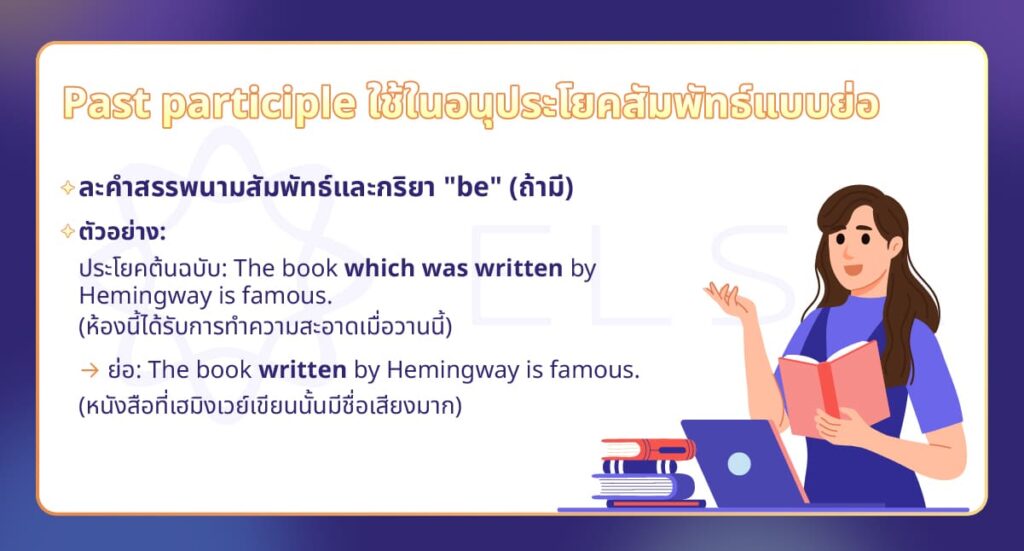
สามารถใช้ Past participle (V3) ในอนุประโยคสัมพัทธ์แบบย่อเพื่อแทนที่อนุประโยคสัมพัทธ์แบบเต็ม ทำให้ประโยคกระชับยิ่งขึ้น เมื่อใช้ past participle ในอนุประโยคสัมพัทธ์แบบย่อ มักจะละคำสรรพนามสัมพัทธ์และกริยา “be” (ถ้ามี) ออกไป
ตัวอย่าง:
- ประโยคต้นฉบับ: The book which was written by Hemingway is famous.
→ ย่อ: The book written by Hemingway is famous. (หนังสือที่ Hemingway เขียนนั้นมีชื่อเสียงมาก) - ประโยคต้นฉบับ: The house that was built last year is now for sale.
→ ย่อ: The house built last year is now for sale. (บ้านที่สร้างเสร็จเมื่อปีที่แล้วตอนนี้กำลังวางขาย) - ประโยคต้นฉบับ: The painting which was admired by everyone sold for millions.
→ ย่อ: The painting admired by everyone sold for millions. (ภาพวาดที่ทุกคนชื่นชมขายได้ในราคาหลายล้าน)
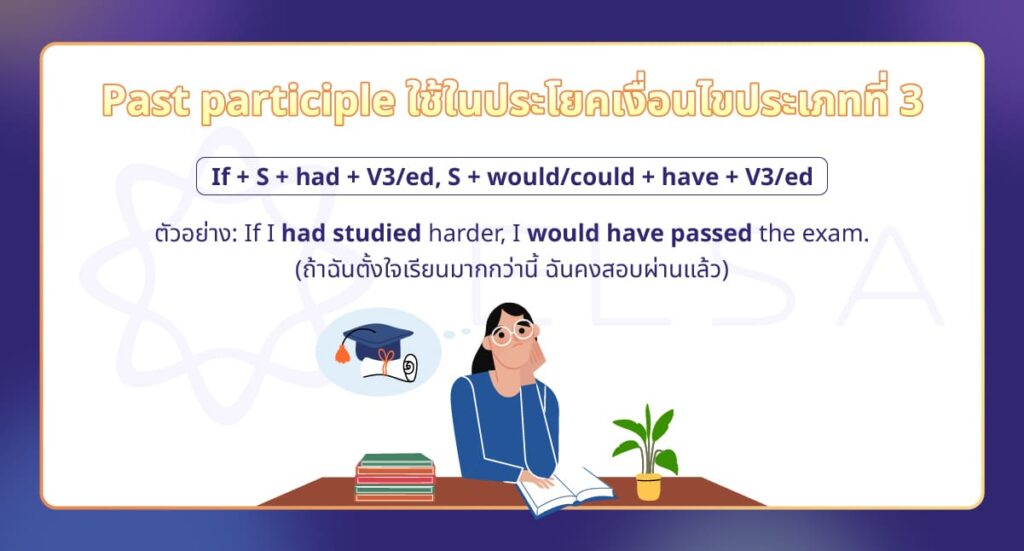
ใช้ในประโยคเงื่อนไขประเภทที่ 3
ประโยคเงื่อนไขประเภทที่ 3 ใช้ past participle ในประโยคเงื่อนไข if เพื่อพูดถึงสิ่งที่ไม่ได้เกิดขึ้นในอดีต
ตัวอย่าง:
- If I had studied harder, I would have passed the exam. (ถ้าฉันตั้งใจเรียนมากกว่านี้ ฉันคงสอบผ่านแล้ว)
- If she had known, she could have helped. (ถ้าเธอรู้ เธอคงช่วยฉันแล้ว)
- If the car had been repaired on time, we could have arrived safely. (ถ้าหากรถได้รับการซ่อมแซมทันเวลา เราคงไปถึงที่หมายอย่างปลอดภัยแล้ว)
>>> อ่านเพิ่มเติม:
- ตาราง Irregular Verbs (กริยาอปกติ) ภาษาอังกฤษ เรียง A–Z เรียนง่าย
- วิธีเติม ed ต่อท้ายคำกริยา (V-ed) วิธีออกเสียงและแบบฝึกหัด
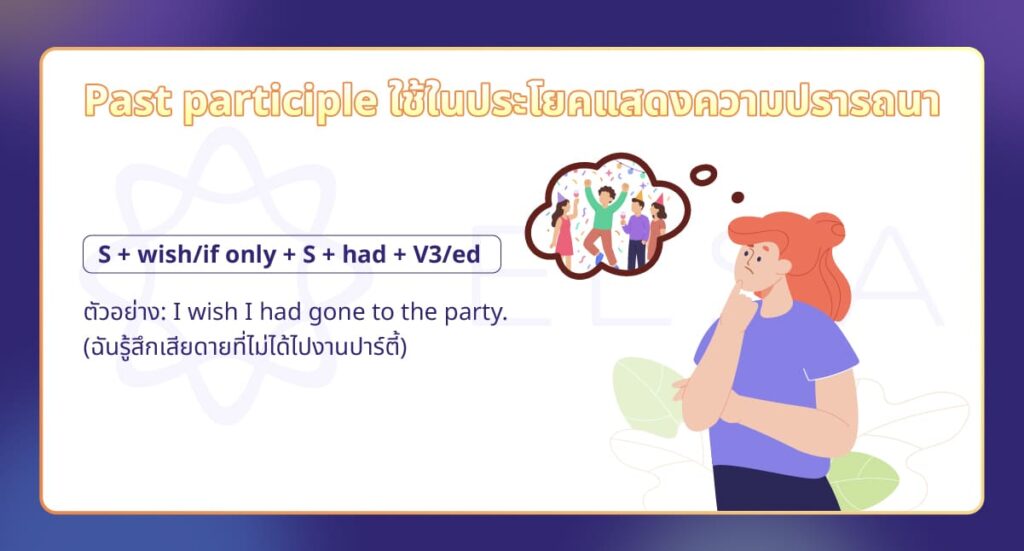
ใช้ในประโยคแสดงความปรารถนา
Past participle มักปรากฏในประโยคแสดงความปรารถนาที่ไม่เป็นจริงในอดีต โดยมักใช้ร่วมกับคำว่า wish หรือ if only
| S + wish/if only + S + had + V3/ed |
ตัวอย่าง:
- I wish I had gone to the party. (ฉันรู้สึกเสียดายที่ไม่ได้ไปงานปาร์ตี้)
- If only he had told me the truth. (ถ้าเขาบอกความจริงกับฉันตั้งแต่แรกก็คงดีกว่านี้)
- He wishes the car had been fixed before the trip. (เขาหวังว่ารถจะได้รับการซ่อมแซมก่อนการเดินทาง)
แยกความแตกต่างระหว่างกริยาปัจจุบันและกริยาอดีต
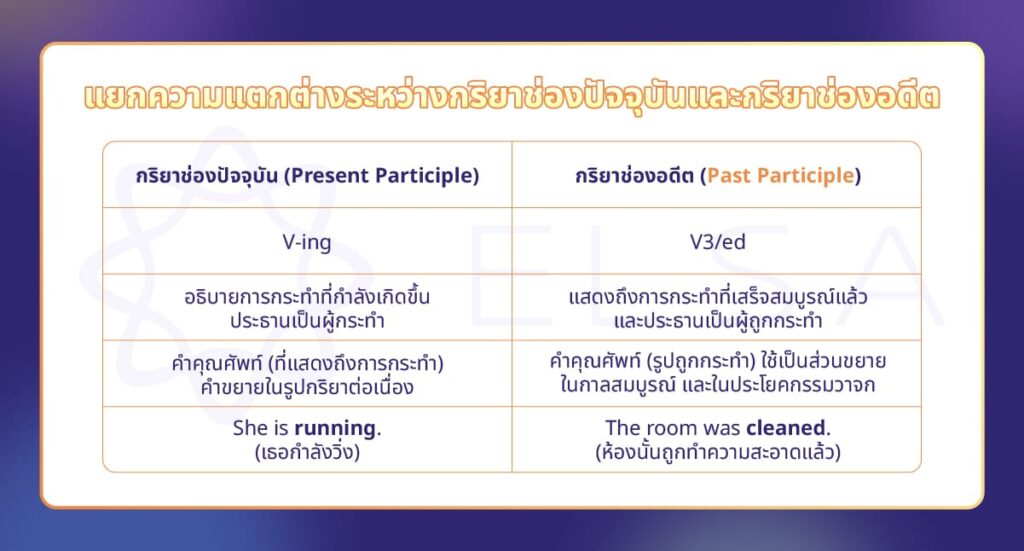
คำกริยาในรูปปัจจุบันกาลและคำกริยาในรูปอดีตกาลเป็นรูปแบบคำกริยาที่พบได้ทั่วไปในภาษาอังกฤษ อย่างไรก็ตาม แต่ละรูปแบบมีการใช้งานที่แตกต่างกัน มาสำรวจความแตกต่างเหล่านี้อย่างละเอียดกับ ELSA Speak ด้านล่างนี้กันนะ!
| เกณฑ์ | กริยาปัจจุบัน (Present Participle) | กริยาอดีต (Past Participle) |
|---|---|---|
| โครงสร้าง | V-ing | V3/ed |
| วิธีใช้ | อธิบายการกระทำที่กำลังเกิดขึ้น เป็นรูปกริยาที่กระทำอยู่ | แสดงถึงการกระทำที่เสร็จสมบูรณ์แล้วและประธานเป็นผู้ถูกกระทำ |
| บทบาท | คำคุณศัพท์ (ที่แสดงถึงการกระทำ) คำขยายในรูปกริยาต่อเนื่อง | คำคุณศัพท์ (รูปถูกกระทำ) ใช้เป็นส่วนขยายในกาลสมบูรณ์ และในประโยคที่ถูกกระทำ |
| ตัวอย่าง | A singing bird is beautiful. (เสียงนกร้องนั้นไพเราะเหลือเกิน)She is running. (เธอกำลังวิ่ง) | A sung song touched my heart. (บทเพลงนั้นทำให้ฉันประทับใจมาก)The room was cleaned. (ห้องนั้นถูกทำความสะอาดแล้ว) |
แบบฝึกหัดเกี่ยวกับกริยาช่อง 3 (Past participle)
แบบฝึกหัดที่ 1: จงเลือกใช้รูปกริยาที่ถูกต้อง (V-ed หรือ V3) เพื่อเติมเต็มประโยค:
- The book _______ (write) by J.K. Rowling became a bestseller.
- The cake _______ (bake) by my grandmother was delicious.
- The window _______ (break) by the storm needs to be repaired.
- The documents _______ (send) yesterday contained important information.
- The song _______ (play) at the wedding was beautiful.
- The old house _______ (build) in the 18th century is now a museum.
- The man _______ (injure) in the accident was taken to the hospital.
- The homework _______ (finish) by all students was collected by the teacher.
- The lost dog _______ (find) by a kind stranger was returned to its owner.
- The letter _______ (write) by my friend was full of good news.
เฉลย
| written | baked | broken | sent | played |
| built | injured | finished | found | written |
แบบฝึกหัดที่ 2: จงเขียนประโยคต่อไปนี้ใหม่โดยย่ออนุประโยคย่อยด้วยคำกริยาช่องที่ 3 (past participle)
- The book which was written by Shakespeare is very famous.
- The cake that was made by my mom tastes delicious.
- The bridge which was built in 1990 connects the two towns.
- The emails that were sent yesterday contained important documents.
- The paintings which were stolen from the museum have been recovered.
- The car that was parked outside belongs to my neighbor.
- The buildings which were damaged by the earthquake are being repaired.
- The movie that was directed by Christopher Nolan is amazing.
- The furniture that was bought last week is very expensive.
- The tests that were given to students were quite difficult.
เฉลย
- The book written by Shakespeare is very famous.
- The cake made by my mom tastes delicious.
- The bridge built in 1990 connects the two towns.
- The emails sent yesterday contained important documents.
- The paintings stolen from the museum have been recovered.
- The car parked outside belongs to my neighbor.
- The buildings damaged by the earthquake are being repaired.
- The movie directed by Christopher Nolan is amazing.
- The furniture bought last week is very expensive.
- The tests given to students were quite difficult.
แบบฝึกหัดที่ 3: จงเลือกคำตอบที่ถูกต้อง (A, B, C หรือ D) เพื่อเติมเต็มประโยคให้สมบูรณ์
- The package _______ by the delivery man was damaged.
A. deliver
B. delivered
C. delivering
D. delivers - The stolen phone was _______ in a park.
A. find
B. finds
C. finding
D. found - The documents _______ by the manager contain important information.
A. prepared
B. preparing
C. prepare
D. prepares - The bridge _______ last year is already showing signs of damage.
A. build
B. built
C. builds
D. building - The food _______ in this restaurant is delicious.
A. serve
B. serving
C. served
D. serves - The book _______ on the table belongs to my brother.
A. leave
B. leaves
C. leaving
D. left - The letters _______ yesterday have not been read yet.
A. send
B. sending
C. sent
D. sends - The broken window was finally _______ by the landlord.
A. repair
B. repaired
C. repairing
D. repairs - The movie _______ by Steven Spielberg was a huge success.
A. directed
B. directs
C. directing
D. direct - The cake _______ for the party was delicious.
A. make
B. making
C. made
D. makes
เฉลย
| 1. B | 2. D | 3. A | 4. B | 5. C |
| 6. D | 7. C | 8. B | 9. A | 10. C |
คําถามที่พบบ่อย
- Past Participle (รูป V3 พร้อมประโยคตัวอย่าง) หน้าตาเป็นอย่างไร?
Past Participle (V3) คือรูปกริยาช่อง 3 ซึ่งมักใช้ในรูปกาลสมบูรณ์ ประโยคที่ถูกกระทำและประโยคย่อ
คำกริยาปกติ: V + -ed. ตัวอย่าง เช่น work → worked
คำกริยาไม่ปกติ: มี V3 ของตัวเอง ตัวอย่าง เช่น go → gone, eat → eaten
- Past participle verbs คืออะไร?
Past participle verbs คือคำกริยาในรูปกริยาช่อง 3 (V3) เช่น: done, written, seen.
- ตาราง Past Participle
go → gone
do → done
eat → eaten
see → seen
write → written
take → taken

ELSA Premium 1 ปี
8,497 บาท ->1,999 บาท

ELSA Premium ตลอดชีพ
9,999 บาท ->4,699 บาท
การเรียนรู้การใช้ Past Participle (กริยาช่อง 3) อย่างเชี่ยวชาญจะช่วยให้คุณมั่นใจมากขึ้นในการแต่งประโยค และการใช้ไวยากรณ์ที่ถูกต้อง รวมถึงสามารถพัฒนาทักษะภาษาอังกฤษโดยรวมของคุณด้วย อย่าลืมฝึกฝนอย่างสม่ำเสมอด้วยตัวอย่างและแบบฝึกหัดที่นำมาให้เพื่อจดจำ Past Participle หลักการใช้ อย่างถูกต้อง และใช้ ELSA Speak เป็นประจำเพื่อเรียนรู้ไวยากรณ์ทั่วไปเพิ่มเติมนะ!