

อดีตกาลธรรมดา (Past Simple Tense) ใช้เพื่ออธิบายเหตุการณ์ที่เกิดขึ้นและจบลงอย่างสมบูรณ์ในอดีต วิธีที่มีประสิทธิภาพที่สุดในการทำความเข้าใจโครงสร้างไวยากรณ์นี้ให้แม่นยำคือการฝึกทำ แบบฝึกหัด past simple tense พร้อมคำเฉลย มาลองทำ แบบฝึกหัด past simple ด้านล่างนี้ ไปพร้อมกับ ELSA Speak เพื่อเสริมสร้างความรู้กัน
- แบบฝึกหัด past simple tense ช่วยให้ผู้เรียนเข้าใจและใช้งานการบอกเล่าเหตุการณ์ที่เกิดขึ้นและจบลงไปแล้วในอดีตได้อย่างคล่องแคล่ว
- โครงสร้างของ Simple Past Tense แบ่งออกเป็น 2 รูปแบบหลัก: กริยา To Be และกริยาทั่วไป (โดยใช้รูป V2/V-ed หรือใช้กริยาช่วย did/didn’t ในประโยคปฏิเสธและประโยคคำถาม)
- ฝึกฝนผ่านรูปแบบที่หลากหลาย เช่น แบบฝึกหัดผันคำกริยา คำถามแบบปรนัย และ ข้อสอบ past simple tense เพื่อให้จดจำคำระบุเวลาที่พบบ่อยได้แม่นยำยิ่งขึ้น (yesterday, ago, last week)
- ดาวน์โหลดชุด แบบฝึกหัด past simple พร้อมเฉลย pdf เพื่อทบทวนและตรวจสอบความเข้าใจอย่างละเอียด
สรุปทฤษฎีเกี่ยวกับอดีตกาลธรรมดา (Past Simple Tense)
อดีตกาลธรรมดาใช้เพื่อกล่าวถึงการกระทำหรือเหตุการณ์ที่เกิดขึ้นและสิ้นสุดลงอย่างสมบูรณ์ ณ ช่วงเวลาใดเวลาหนึ่งในอดีต ในทางไวยากรณ์ภาษาอังกฤษ โครงสร้างของกาลนี้แบ่งออกเป็น 2 ประเภทหลัก ได้แก่ การใช้กริยา to be และการใช้กริยาทั่วไป
สอบก่อนเข้าฟรี

ต่อไปนี้คือสรุปรายละเอียดเกี่ยวกับโครงสร้างและการใช้งานของแต่ละประเภท:
ลองอ่านออกเสียง 25 รายการนี้ดู แล้วดูคะแนนของคุณ
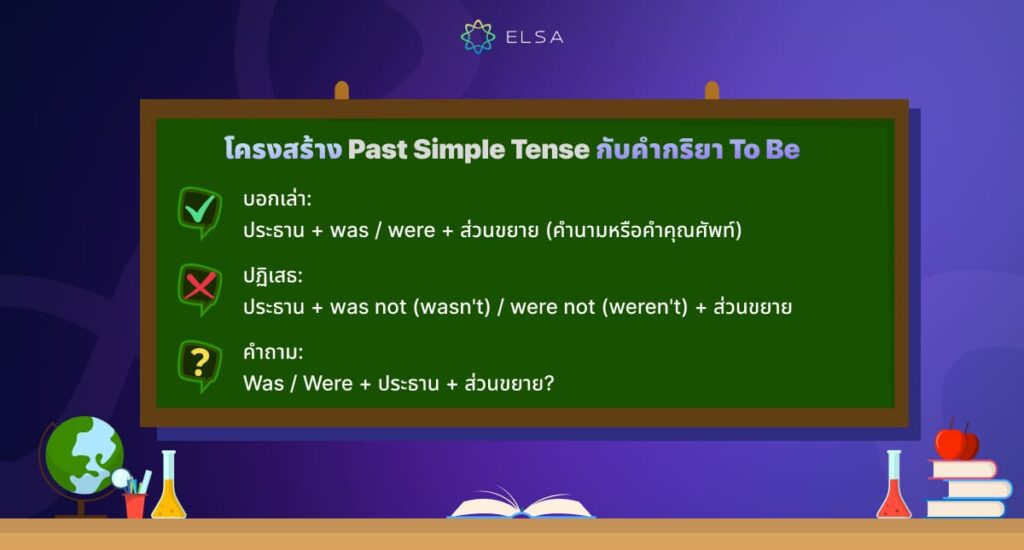
โครงสร้าง Past Simple Tense กับคำกริยา To Be
กริยา to be ในรูป Past Simple Tense มี 2 รูปแบบ คือ was (ใช้กับประธานเอกพจน์ ได้แก่ I, he, she, it) และ were (ใช้กับประธานพหูพจน์ ได้แก่ you, we, they และคำนามพหูพจน์)
โครงสร้างประโยคบอกเล่าสำหรับคำกริยา to be:
| ประธาน + was / were + ส่วนขยาย (คำนามหรือคำคุณศัพท์) |
ตัวอย่าง: She was at home yesterday. (เมื่อวานนี้เธออยู่ที่บ้าน)
โครงสร้างประโยคปฏิเสธสำหรับคำกริยา to be:
| ประธาน + was not (wasn’t) / were not (weren’t) + ส่วนขยาย |
ตัวอย่าง: They weren’t happy with the final result. (พวกเขาไม่พอใจกับผลลัพธ์สุดท้าย)
โครงสร้างประโยคคำถามสำหรับคำกริยา to be:
| Was / Were + ประธาน + ส่วนขยาย? |
ตัวอย่าง: Were you tired after the long flight? (คุณรู้สึกเหนื่อยหลังจากเที่ยวบินอันยาวนานหรือไม่?)
>>> ดูเพิ่มเติม:
- Verb to be คืออะไร? หลักการใช้ verb to be กับแต่ละ tense
- คำนามเอกพจน์คืออะไร คู่มือการใช้พร้อมกับแบบฝึกหัด
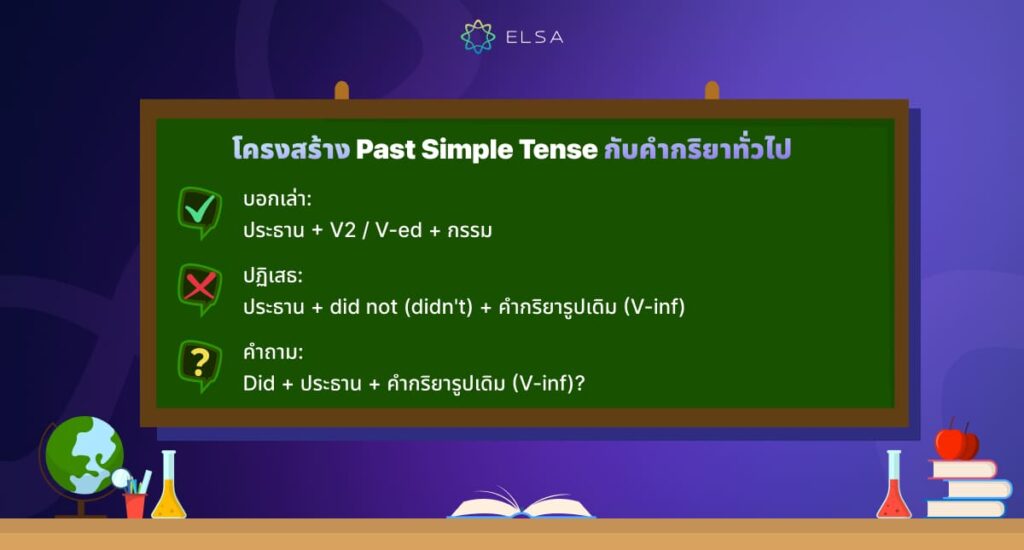
โครงสร้าง Past Simple Tense สำหรับคำกริยาทั่วไป
สำหรับการใช้คำกริยาทั่วไปในรูป Past Simple Tense คุณต้องเปลี่ยนรูปคำกริยาเป็นรูปอดีตโดยการเติม -ed (สำหรับคำกริยาปกติ) หรือดูช่องที่สองของตารางคำกริยาไม่ปกติ V2 (สำหรับคำกริยาไม่ปกติ)
โครงสร้างประโยคบอกเล่าสำหรับคำกริยาทั่วไป:
| ประธาน + V2 / V-ed + กรรม |
ตัวอย่าง: He bought a new car two days ago. (เขาซื้อรถคันใหม่เมื่อสองวันที่แล้ว)
โครงสร้างประโยคปฏิเสธสำหรับคำกริยาทั่วไป:
| ประธาน + did not (didn’t) + คำกริยารูปเดิม (V-inf) |
ตัวอย่าง: We didn’t go to school yesterday. (พวกเราไม่ได้ไปโรงเรียนเมื่อวานนี้)
โครงสร้างประโยคคำถามสำหรับคำกริยาทั่วไป:
| Did + ประธาน + คำกริยารูปเดิม (V-inf)? |
ตัวอย่าง: Did you finish the project on time? (คุณทำโครงการเสร็จทันเวลาหรือไม่?)
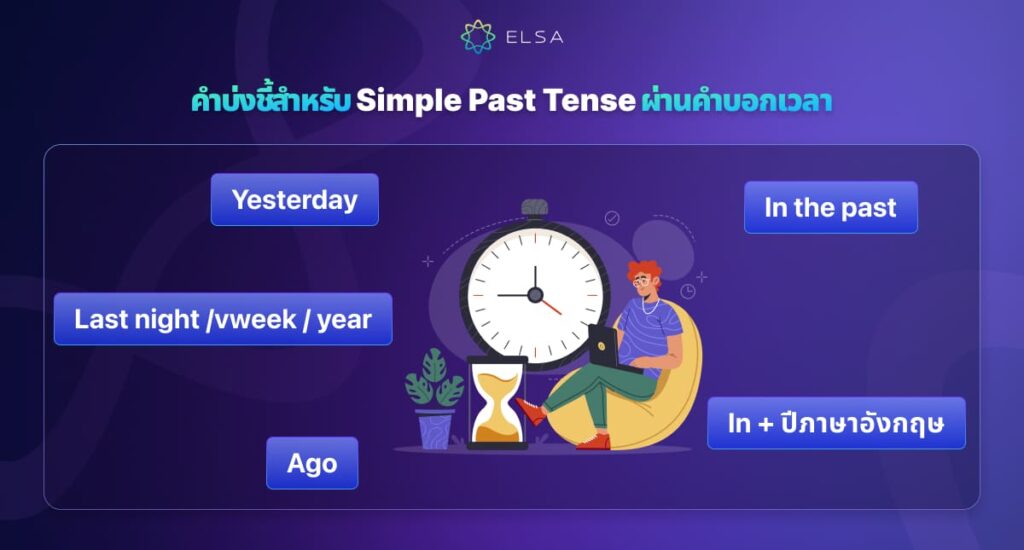
คำบ่งชี้สำหรับ Simple Past Tense
การระบุคำกริยาวิเศษณ์บอกเวลาในประโยคได้อย่างแม่นยำเป็นวิธีที่รวดเร็วที่สุดในการระบุ Past Simple Tense ใน ข้อสอบ past tense ได้อย่างถูกต้อง
| คำกริยาวิเศษณ์ | ความหมาย | ตัวอย่าง |
| Yesterday | เมื่อวานนี้ | I saw a movie yesterday. (ฉันดูภาพยนตร์เมื่อวานนี้) |
| Last night / week / year | เมื่อคืน / สัปดาห์ที่แล้ว / ปีที่แล้ว | She visited Paris last year. (เธอไปปารีสเมื่อปีที่แล้ว) |
| Ago | ก่อนหน้านี้ | He left two hours ago. (เขาออกไปเมื่อสองชั่วโมงที่แล้ว) |
| In the past | ในอดีต | People traveled on foot in the past. (ผู้คนเดินทางด้วยการเดินเท้าในอดีต) |
| In + ปีภาษาอังกฤษ | ในปีภาษาอังกฤษ | The bridge was built in 2010. (สะพานแห่งนี้สร้างขึ้นในปี ค.ศ. 2010) |
เคล็ดลับการทำข้อสอบpast simple tense อย่างมีประสิทธิภาพ
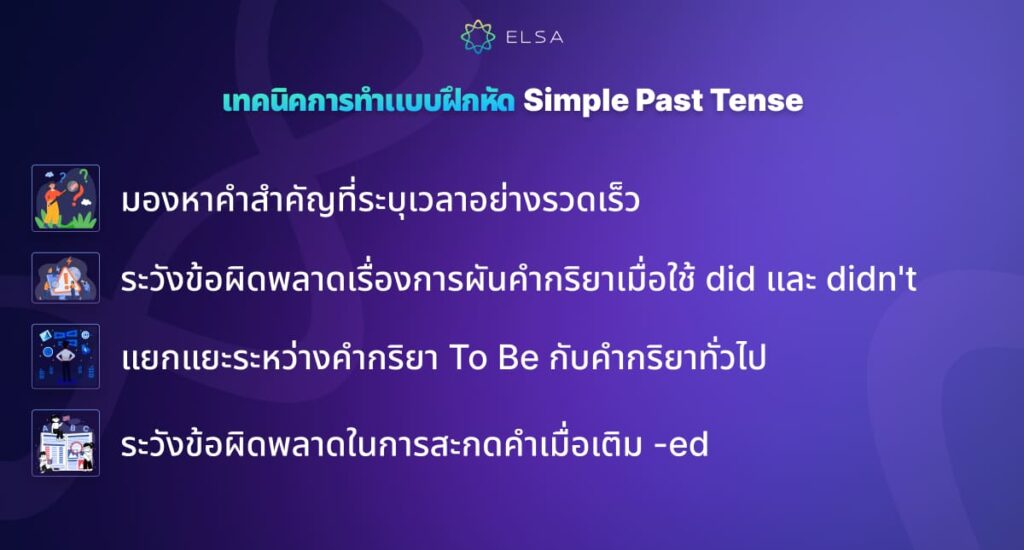
การเรียนรู้เคล็ดลับเพื่อสังเกตกับดักทางไวยากรณ์และทำความเข้าใจกฎการตอบคำถามจะช่วยให้คุณทำ ข้อสอบpast simple tense ได้อย่างรวดเร็วและได้คะแนนเต็ม มาดูเทคนิคที่รวดเร็วและแม่นยำในการทำ past simple แบบฝึกหัด ไปกับ ELSA Speak กัน
- มองหาคำสำคัญที่ระบุเวลาอย่างรวดเร็ว: ก่อนจะแปลทั้งประโยค ให้กวาดสายตาหาคำบ่งชี้เฉพาะ เช่น yesterday (เมื่อวาน), last week / month / year (สัปดาห์/เดือน/ปีที่แล้ว), ช่วงเวลา + ago (ที่ผ่านมา) หรือ in + ปีในอดีต (เช่น in 2010) เมื่อพบคำเหล่านี้ ให้ระบุทันทีว่าเป็นประโยค Simple Past Tense เพื่อเลือกคำตอบที่ถูกต้องได้อย่างรวดเร็ว
- ระวังข้อผิดพลาดเรื่องการผันคำกริยาเมื่อใช้ did และ didn’t: นี่เป็นข้อผิดพลาดที่พบบ่อยที่สุด นักเรียนมักเผลอผันคำกริยาเป็นรูปอดีตช่องที่ 2 ตลอดทั้งประโยคตามความเคยชิน เคล็ดลับจำง่ายๆ คือ เมื่อมีคำกริยาช่วยอย่าง did หรือ didn’t คำกริยาหลักที่ตามมาจะต้องคงรูปเดิม (ไม่ผันคำ) ไว้เสมอ
- ตัวอย่างที่ผิด:
Did you went?
I didn’t saw him. - ตัวอย่างที่ถูกต้อง:
Did you go? (คุณได้ไปไหม?)
I didn’t see him. (ฉันไม่เห็นเขา)
- ตัวอย่างที่ผิด:
- แยกแยะระหว่างคำกริยา To Be กับคำกริยาทั่วไป: ห้ามใช้กริยาช่วย did หากในประโยคนั้นมีคำกริยา to be อยู่แล้ว หากประโยคมีคำคุณศัพท์ (เช่น tired, happy) หรือวลีที่ระบุสถานที่ (เช่น at school, in Bangkok) ให้ใช้ was/wasn’t (สำหรับประธาน I, he, she, it) หรือ were/weren’t (สำหรับประธาน you, we, they)
- ตัวอย่างที่ผิด: Did you were at home?
- ตัวอย่างที่ถูกต้อง: Were you at home yesterday? (เมื่อวานคุณอยู่ที่บ้านหรือไม่?)
- ระวังข้อผิดพลาดในการสะกดคำเมื่อเติม -ed: ไม่ใช่คำกริยาทุกคำที่จะเติม -ed ต่อท้ายได้ทันที ให้จำกฎง่ายๆ 2 ข้อนี้
- คำกริยาที่ลงท้ายด้วยพยัญชนะตามด้วย y ให้เปลี่ยน y เป็น i ก่อนเติม -ed (ตัวอย่าง: study ให้เปลี่ยนเป็น studied)
- คำกริยาพยางค์เดียวที่มีโครงสร้างแบบมีสระอยู่ระหว่างพยัญชนะสองตัวให้ซ้อนพยัญชนะตัวสุดท้ายอีกหนึ่งตัวก่อนการเติม ed (ตัวอย่าง: stop ให้เปลี่ยนเป็น stopped, plan ให้เปลี่ยนเป็น planned)
>>> ดูเพิ่มเติม: 20 กรณีพิเศษในการออกเสียง ed ที่ต้องเชี่ยวชาญ
แบบฝึกหัด past simple tense ระดับพื้นฐาน
แบบทดสอบ past simple tense ระดับพื้นฐานจัดทำขึ้นเพื่อช่วยให้ผู้เรียนมีความเข้าใจที่แม่นยำยิ่งขึ้นเกี่ยวกับการผันคำกริยา to be คำกริยาปกติและคำกริยาไม่ปกติที่พบบ่อย ข้อสอบ past simple tense พร้อมเฉลย ด้านล่างนี้มีการเรียงลำดับตามระดับความยากง่าย เริ่มตั้งแต่การจดจำรูปแบบคำกริยาไปจนถึงการนำไปใช้ในสถานการณ์ชีวิตประจำวัน
แบบฝึกหัด past simple tense – การผันคำกริยา To Be
แบบฝึกหัดที่ 1: เติมคำในช่องว่างด้วยรูปคำกริยา to be (was, were, wasn’t, weren’t) ที่ถูกต้องเพื่อให้ประโยคสมบูรณ์
- I (be) ………………….. at home with my family yesterday evening.
- They (not be) ………………….. at the meeting yesterday afternoon.
- (be) ………………….. you tired after the long trip last weekend?
- The weather (be) ………………….. very nice and sunny last Sunday.
- She (not be) ………………….. happy with her test score two days ago.
- My parents (be) ………………….. in Chiang Mai for their vacation last month.
- He (be) ………………….. absent from school yesterday because of a fever.
- (be) ………………….. the film interesting last night?
- We (not be) ………………….. late for the class yesterday morning.
- Who (be) ………………….. that man standing next to you an hour ago?
- The students (be) ………………….. very excited about the school trip.
- This book (not be) ………………….. expensive when I bought it.
- Where (be) ………………….. your brother yesterday morning?
- My pet cat (be) ………………….. very playful when it was young.
- Those shoes (not be) ………………….. comfortable to wear.
เฉลยแบบฝึกหัดที่ 1:
| ข้อ | เฉลย | คำอธิบาย |
| 1 | was | ประธานคือ I เป็นบุรุษที่ 1 เอกพจน์ จึงใช้ was |
| 2 | weren’t | ประธานคือ They เป็นพหูพจน์ จึงใช้ were not (weren’t) ในประโยคปฏิเสธ |
| 3 | Were | ในประโยคคำถาม ให้วางคำกริยา were ไว้หน้าประธาน you |
| 4 | was | ประธานคือ The weather ซึ่งเป็นคำนามเอกพจน์ที่นับไม่ได้ จึงใช้ was |
| 5 | wasn’t | ประธานคือ She เป็นบุรุษที่ 3 เอกพจน์ จึงใช้ was not (wasn’t) ในประโยคปฏิเสธ |
| 6 | were | ประธานคือ My parents เป็นคำนามพหูพจน์ จึงใช้ were |
| 7 | was | ประธานคือ He เป็นบุรุษที่ 3 เอกพจน์ จึงใช้ to be was |
| 8 | Was | ประโยคคำถามที่มีประธานเอกพจน์คือ the film ให้ขึ้นต้นประโยคด้วย Was |
| 9 | weren’t | ประธานคือ We เป็นบุรุษที่ 1 พหูพจน์ จึงใช้ weren’t ในประโยคปฏิเสธ |
| 10 | was | คำถามที่ขึ้นต้นด้วย Who และมีประธานเอกพจน์คือ that man ต้องใช้ was |
| 11 | were | ประธานคือ The students เป็นคำนามพหูพจน์ จึงใช้ were |
| 12 | wasn’t | ประธานคือ This book เป็นคำนามเอกพจน์ จึงใช้ wasn’t ในประโยคปฏิเสธ |
| 13 | was | ประโยคคำถามที่มีคำว่า Where และประธานเอกพจน์คือ your brother ต้องใช้ was |
| 14 | was | ประธานเอกพจน์คือ My pet cat ใช้คู่กับ to be was |
| 15 | weren’t | ประธานคือ Those shoes เป็นคำนามพหูพจน์ จึงใช้ weren’t ในประโยคปฏิเสธ |
แบบฝึกหัดการผันคำกริยาปกติโดยการเติม -ed
แบบฝึกหัดที่ 2: ผันคำกริยาปกติในวงเล็บให้เป็นรูปอดีตกาล
- They (play) ………………….. tennis in the sports center yesterday.
- She (watch) ………………….. a romantic movie with her sister last night.
- I (listen) ………………….. to music before going to bed.
- My brother (study) ………………….. very hard for the final exam.
- The bus (stop) ………………….. suddenly at the red light.
- We (clean) ………………….. the entire house last Saturday morning.
- He (visit) ………………….. his grandparents three days ago.
- The train (arrive) ………………….. at the station on time yesterday.
- My mother (wash) ………………….. all the dirty clothes yesterday afternoon.
- She (cook) ………………….. a delicious dinner for the guests.
- The store (open) ………………….. at eight o’clock this morning.
- They (live) ………………….. in that small town ten years ago.
- He (help) ………………….. an old lady cross the street yesterday.
- It (rain) ………………….. heavily throughout the night.
- We (dance) ………………….. joyfully at the wedding party last week.
เฉลยแบบฝึกหัดที่ 2:
| ข้อ | เฉลย | คำอธิบาย |
| 1 | played | คำกริยา play ลงท้ายด้วย y ให้เติม -ed |
| 2 | watched | คำกริยา watch ให้เติม -ed เป็น watched |
| 3 | listened | คำกริยา listen ให้เติม -ed เป็น listened |
| 4 | studied | คำกริยา study ลงท้ายด้วยพยัญชนะ d ตามด้วย y ให้เปลี่ยน y เป็น i แล้วเติม -ed |
| 5 | stopped | คำกริยา stop เป็นคำพยางค์เดียวที่ลงท้ายด้วยพยัญชนะและมีสระนำหน้า ให้ซ้อนตัวสะกด p แล้วเติม -ed |
| 6 | cleaned | คำกริยา clean ให้เติม -ed เป็น cleaned |
| 7 | visited | คำกริยา visit ให้เติม -ed เป็น visited |
| 8 | arrived | คำกริยา arrive ลงท้ายด้วย e จึงเติมแค่ d ต่อท้าย |
| 9 | washed | คำกริยา wash ให้เติม -ed เป็น washed |
| 10 | cooked | คำกริยา cook ให้เติม -ed เป็น cooked |
| 11 | opened | คำกริยา open ให้เติม -ed เป็น opened |
| 12 | lived | คำกริยา live ลงท้ายด้วย e จึงเติมแค่ d ต่อท้าย |
| 13 | helped | คำกริยา help ให้เติม -ed เป็น helped |
| 14 | rained | คำกริยา rain ให้เติม -ed เป็น rained |
| 15 | danced | คำกริยา dance ลงท้ายด้วย e จึงเติมแค่ d ต่อท้าย |
แบบฝึกหัดการผันคำกริยาไม่ปกติที่พบบ่อย
แบบฝึกหัดที่ 3: ค้นหาและเติมคำกริยาไม่ปกติในวงเล็บให้อยู่ในรูปอดีตกาล
- Yesterday, my father (go) ………………….. to work by bus.
- I (see) ………………….. an old friend on the street two days ago.
- She (buy) ………………….. a very nice dress at the shopping mall.
- We (have) ………………….. a wonderful dinner together last night.
- He (make) ………………….. a big mistake in his presentation yesterday.
- The students (do) ………………….. all their homework before going out.
- I (take) ………………….. a lot of photos during my vacation last summer.
- They (eat) ………………….. seafood at a local restaurant yesterday.
- He (drink) ………………….. a glass of warm milk before sleeping.
- She (write) ………………….. a long letter to her pen pal last week.
- My teacher (give) ………………….. us a lot of useful advice this morning.
- We (find) ………………….. our lost keys under the sofa.
- The train (leave) ………………….. the station twenty minutes ago.
- I (meet) ………………….. my manager at the coffee shop yesterday afternoon.
- He (tell) ………………….. me an interesting story about his childhood.
เฉลยแบบฝึกหัดที่ 3:
| ข้อ | เฉลย | คำอธิบาย |
| 1 | went | รูปกริยาอปกติของ go ช่องที่สองคือ went |
| 2 | saw | รูปกริยาอปกติของ see ช่องที่สองคือ saw |
| 3 | bought | รูปกริยาอปกติของ buy ช่องที่สองคือ bought |
| 4 | had | รูปกริยาอปกติของ have ช่องที่สองคือ had |
| 5 | made | รูปกริยาอปกติของ make ช่องที่สองคือ made |
| 6 | did | รูปกริยาอปกติของ do ช่องที่สองคือ did |
| 7 | took | รูปกริยาอปกติของ take ช่องที่สองคือ took |
| 8 | ate | รูปกริยาอปกติของ eat ช่องที่สองคือ ate |
| 9 | drank | รูปกริยาอปกติของ drink ช่องที่สองคือ drank |
| 10 | wrote | รูปกริยาอปกติของ write ช่องที่สองคือ wrote |
| 11 | gave | รูปกริยาอปกติของ give ช่องที่สองคือ gave |
| 12 | found | รูปกริยาอปกติของ find ช่องที่สองคือ found |
| 13 | left | รูปกริยาอปกติของ leave ช่องที่สองคือ left |
| 14 | met | รูปกริยาอปกติของ meet ช่องที่สองคือ met |
| 15 | told | รูปกริยาอปกติของ tell ช่องที่สองคือ told |
แบบฝึกหัดการผันคำกริยาในรูปปฏิเสธและรูปคำถาม
แบบฝึกหัดที่ 4: เติมคำกริยาในวงเล็บให้ถูกต้อง โดยใช้รูปปฏิเสธ (ใช้ didn’t) หรือรูปคำถาม (ใช้ Did)
- She (not go) ………………….. to the cinema with us last night.
- (you / see) ………………….. the news on television yesterday?
- He (not eat) ………………….. anything because he was full.
- (he / come) ………………….. to your birthday party last Sunday?
- They (not buy) ………………….. that expensive house last year.
- (she / know) ………………….. the answer to the teacher’s question?
- I (not like) ………………….. the taste of that soup yesterday.
- (they / finish) ………………….. their project before the deadline?
- The baby (not sleep) ………………….. well last night.
- (you / meet) ………………….. our new director at the office this morning?
- We (not want) ………………….. to disturb you while you were busy.
- (he / play) ………………….. badminton with his friends yesterday afternoon?
- She (not call) ………………….. me back after the meeting.
- (she / tell) ………………….. you the truth about what happened?
- (you / hear) ………………….. the fire alarm ringing a few minutes ago?
เฉลยแบบฝึกหัดที่ 4:
| ข้อ | เฉลย | คำอธิบาย |
| 1 | didn’t go | รูปปฏิเสธจะใช้กริยาช่วย didn’t และคำกริยา go จะคงรูปเดิมไว้ |
| 2 | Did you see | รูปคำถามจะวางกริยาช่วย Did ไว้ที่ต้นประโยค และคำกริยา see จะคงรูปเดิมไว้ |
| 3 | didn’t eat | รูปปฏิเสธจะใช้กริยาช่วย didn’t และคำกริยา eat จะคงรูปเดิมไว้ |
| 4 | Did he come | ประโยคคำถามจะวางกริยาช่วย Did ไว้ที่ต้นประโยคและคำกริยา come จะคงรูปเดิมไว้ |
| 5 | didn’t buy | ประโยคปฏิเสธจะใช้กริยาช่วย didn’t และคำกริยา buy จะคงรูปเดิมไว้ |
| 6 | Did she know | ประโยคคำถามจะวางกริยาช่วย Did ไว้ที่ต้นประโยคและคำกริยา know จะคงรูปเดิมไว้ |
| 7 | didn’t like | ประโยคปฏิเสธจะใช้กริยาช่วย didn’t และคำกริยา like จะคงรูปเดิมไว้ |
| 8 | Did they finish | ประโยคคำถามจะวางกริยาช่วย Did ไว้ที่ต้นประโยคและคำกริยา finish จะคงรูปเดิมไว้ |
| 9 | didn’t sleep | ประโยคปฏิเสธจะใช้กริยาช่วย didn’t และคำกริยา sleep จะคงรูปเดิมไว้ |
| 10 | Did you meet | ประโยคคำถามจะวางกริยาช่วย Did ไว้ที่ต้นประโยคและคำกริยา meet จะคงรูปเดิมไว้ |
| 11 | didn’t want | ประโยคปฏิเสธจะใช้กริยาช่วย didn’t และคำกริยา want จะคงรูปเดิมไว้ |
| 12 | Did he play | ประโยคคำถามจะวางกริยาช่วย Did ไว้ที่ต้นประโยคและคำกริยา play จะคงรูปเดิมไว้ |
| 13 | didn’t call | ประโยคปฏิเสธจะใช้กริยาช่วย didn’t และคำกริยา call จะคงรูปเดิมไว้ |
| 14 | Did she tell | ประโยคคำถามจะวางกริยาช่วย Did ไว้ที่ต้นประโยคและคำกริยา tell จะคงรูปเดิมไว้ |
| 15 | Did you hear | ประโยคคำถามจะวางกริยาช่วย Did ไว้ที่ต้นประโยค และคำกริยา hear จะคงรูปเดิมไว้ |
แบบฝึกหัดปรนัยที่ครอบคลุม Simple Past Tense
แบบฝึกหัดที่ 5: เลือกคำตอบที่ถูกต้องที่สุด (A, B, C หรือ D) เพื่อเติมประโยคต่อไปนี้ให้สมบูรณ์
- My family ………………….. a trip to Phuket last summer.
A. takes
B. took
C. taking
D. taked - She ………………….. at the office yesterday because she was sick.
A. wasn’t
B. weren’t
C. didn’t
D. isn’t - What ………………….. you do yesterday evening?
A. was
B. were
C. did
D. do - They ………………….. their grandparents two weeks ago.
A. visit
B. visited
C. visiting
D. visits - I ………………….. my wallet on the bus this morning.
A. lose
B. lost
C. losed
D. was lose - ………………….. your brother at home when you arrived?
A. Was
B. Were
C. Did
D. Is - We ………………….. go to school yesterday because of the heavy storm.
A. wasn’t
B. weren’t
C. didn’t
D. don’t - Shakespeare ………………….. Romeo and Juliet centuries ago.
A. writes
B. wrote
C. writed
D. written - Why ………………….. you late for the interview yesterday morning?
A. did
B. was
C. were
D. are - He ………………….. the window with a baseball yesterday.
A. broke
B. breaked
C. breaks
D. broken - She ………………….. a letter to her friend yesterday afternoon.
A. send
B. sent
C. sended
D. sending - ………………….. they watch the football match on television last night?
A. Were
B. Did
C. Was
D. Do - The weather ………………….. very hot during our vacation in Thailand.
A. was
B. were
C. did
D. is - I ………………….. him an email three hours ago.
A. write
B. sent
C. sended
D. send - My mother ………………….. a delicious chocolate cake for my birthday last week.
A. make
B. maked
C. made
D. making
เฉลยแบบฝึกหัดที่ 5:
| ข้อ | เฉลย | คำอธิบาย |
| 1 | B. took | คำบ่งชี้เวลา last summer เป็นรูปอดีตกาล โดยรูปอดีตของคำกริยา take คือ took |
| 2 | A. wasn’t | ประธาน She เป็นเอกพจน์ และเมื่อใช้ร่วมกับคำกริยาวิเศษณ์บอกสถานที่ at the office ใช้ to be wasn’t |
| 3 | C. did | คำถามที่มีคำกริยา do จึงต้องใช้คำกริยาช่วย did |
| 4 | B. visited | คำบ่งชี้เวลา two weeks ago เป็นรูปอดีตกาล โดยรูปอดีตของคำกริยา visit ให้เพิ่ม -ed |
| 5 | B. lost | คำบ่งชี้เวลา this morning บ่งบอกถึงเหตุการณ์ในอดีต รูปอดีตกาลของ lose คือ lost |
| 6 | A. Was | ประโยคคำถามที่มีประธานเป็นเอกพจน์ your brother และมีวลีบุพบท at home จะใช้คำกริยา Was |
| 7 | C. didn’t | รูปปฏิเสธของคำกริยา go จะใช้คำกริยาช่วย didn’t |
| 8 | B. wrote | การกล่าวถึงเหตุการณ์ในอดีต รูปอดีตกาลของ write คือ wrote |
| 9 | C. were | ประโยคคำถามที่มีคำคุณศัพท์ late และประธาน you จะใช้คำกริยา were |
| 10 | A. broke | รูปอดีตของคำกริยา break คือ broke |
| 11 | B. sent | รูปอดีตของคำกริยา send คือ sent |
| 12 | B. Did | ประโยคคำถามที่มีคำกริยา watch จะใช้คำกริยาช่วย Did |
| 13 | A. was | ประธาน The weather เป็นคำนามเอกพจน์นับไม่ได้ จึงใช้ was |
| 14 | B. sent | คำบ่งชี้เวลา three hours ago ใช้รูปอดีตกาล โดยรูปอดีตของคำกริยา send คือ sent |
| 15 | C. made | คำบ่งชี้เวลา last week บ่งบอกถึงเหตุการณ์ในอดีต รูปอดีตของ make คือ made |
แบบฝึก past simple tense ระดับสูง
แบบฝึกหัดระดับสูงชุดนี้กำหนดให้ผู้เรียนต้องใช้ทักษะหลากหลายด้านร่วมกัน เช่น การเขียนประโยคใหม่ การระบุและแก้ไขข้อผิดพลาด การปรับเปลี่ยนรูปแบบประโยค และการแยกแยะการใช้กาลร่วมกันในบริบทที่ซับซ้อนต่างๆ ต่อไปนี้คือแบบฝึกหัดระดับสูง 5 ชุดที่เรียงลำดับจากง่ายไปยาก เพื่อช่วยให้คุณพัฒนาคะแนนขึ้นไปอีกขั้น
แบบฝึกหัดการแต่งประโยคจากคำที่กำหนดให้
แบบฝึกหัดที่ 6: ใช้คำที่กำหนดให้ด้านล่างนี้แต่งประโยคให้สมบูรณ์โดยใช้ Simple Past Tense
- I / go / swimming / with / my / classmates / yesterday.
- Manee / cook / traditional / soup / for / dinner / last night.
- They / not / attend / the / meeting / yesterday / morning.
- He / buy / a / luxury / apartment / in / Bangkok / last year?
- My sister / be / extremely / exhausted / after / the / long / shift.
- What / you / discuss / during / the / seminar / yesterday?
- We / not / have / any / online / classes / two / days / ago.
- The train / arrive / at / the / platform / fifteen / minutes / late.
- Why / she / leave / the / office / so / early / yesterday?
- It / snow / heavily / in / the / mountains / all / day / last / Friday.
เฉลยแบบฝึกหัดที่ 6:
| ข้อ | เฉลย | คำอธิบาย |
| 1 | I went swimming with my classmates yesterday. | เปลี่ยน go เป็น went สำหรับ Simple Past Tense และเติมคำนำหน้านามและคำบุพบทที่เหมาะสม |
| 2 | Manee cooked traditional soup for dinner last night. | เติม -ed ต่อท้ายคำกริยาปกติ cook เพื่อเปลี่ยนเป็น cooked |
| 3 | They didn’t attend the meeting yesterday morning. | รูปปฏิเสธให้ใช้คำกริยาช่วย didn’t และคงรูปคำกริยา attend ไว้ตามเดิม |
| 4 | Did he buy a luxury apartment in Bangkok last year? | รูปประโยคคำถามให้วางคำกริยาช่วย Did ไว้ต้นประโยคและคงรูปคำกริยา buy ไว้ตามเดิม |
| 5 | My sister was extremely exhausted after the long shift. | ประธานเอกพจน์ My sister ใช้คำกริยา was |
| 6 | What did you discuss during the seminar yesterday? | ประโยคคำถามแบบ Wh- ให้ใช้คำกริยาช่วย did นำหน้าประธาน you |
| 7 | We didn’t have any online classes two days ago. | รูปปฏิเสธใช้ didn’t have คู่กับคำระบุเวลา two days ago |
| 8 | The train arrived at the platform fifteen minutes late. | คำกริยาปกติ arrive ให้เติมเพียงแค่ d ต่อท้ายเพื่อเปลี่ยนเป็น arrived |
| 9 | Why did she leave the office so early yesterday? | ประโยคคำถามที่ขึ้นต้นด้วย Why ให้ใช้คำกริยาช่วย did และคงรูปคำกริยา leave ไว้ตามเดิม |
| 10 | It snowed heavily in the mountains all day last Friday. | เติม -ed ต่อท้ายคำกริยา snow เพื่อเปลี่ยนเป็น snowed |

แบบฝึกหัดการระบุและแก้ไขข้อผิดพลาด
แบบฝึกหัดที่ 7: ประโยคต่อไปนี้แต่ละประโยคมีข้อผิดพลาดทางไวยากรณ์เกี่ยวกับ Simple Past Tense ให้ระบุข้อผิดพลาดและแก้ไขให้ถูกต้อง
- She didn’t went to the international conference last night.
- Where was you yesterday morning when the manager called?
- My father play badminton with his colleagues two days ago.
- Did they arrived at the meeting room on time yesterday?
- I wasn’t see him at the annual party last weekend.
- She buyed a very expensive handbag last Sunday afternoon.
- We was very excited about the field trip to Phuket.
- How did you learned English so fluently in such a short time?
- The students doesn’t submit their assignments yesterday.
- Were he at the library when the fire alarm rang?
เฉลยแบบฝึกหัดที่ 7:
| ข้อ | ข้อผิดพลาดและการแก้ไข | คำอธิบาย |
| 1 | went → go | ต้องใช้คำกริยารูปเดิมตามหลังคำกริยาช่วยปฏิเสธ didn’t |
| 2 | was → were | รูปอดีตกาลของคำกริยา to be ที่ใช้กับประธาน you คือ were |
| 3 | play → played | คำระบุเวลา two days ago บ่งบอกถึงเหตุการณ์ในอดีตจึงต้องเติม -ed ท้ายคำกริยา play |
| 4 | arrived → arrive | ประโยคคำถามมีกริยาช่วย Did แล้วกริยาหลักจะต้องคงรูปเดิม |
| 5 | wasn’t see → didn’t see | ประโยคปฏิเสธของคำกริยาปกติ see จำเป็นต้องใช้กริยาช่วย didn’t |
| 6 | buyed → bought | รูปอดีตกาลของคำกริยาไม่ปกติ buy คือ bought ไม่เติม -ed |
| 7 | was → were | ประธานพหูพจน์ We ต้องใช้กริยา to be were |
| 8 | learned → learn | เมื่อมีกริยาช่วย did ในประโยคคำถาม กริยาหลัก learn จะต้องคงรูปเดิมไว้ |
| 9 | doesn’t → didn’t | คำระบุเวลา yesterday บ่งบอกถึงเหตุการณ์ในอดีต จึงต้องใช้กริยาช่วยในรูปอดีตกาลคือ didn’t |
| 10 | Were → Was | ประธาน he เป็นบุรุษที่ 3 เอกพจน์ กริยา to be จึงต้องใช้รูป Was |
แบบฝึกหัด past simple tense พร้อมเฉลย – การปรับเปลี่ยนประโยค
แบบฝึกหัดpast simple tense ที่ 8: เปลี่ยนประโยคบอกเล่าต่อไปนี้ให้เป็นประโยคปฏิเสธ (-) และประโยคคำถาม (?)
- She visited the national museum yesterday.
- They bought a new car two weeks ago.
- He was at the office yesterday morning.
- We watched that documentary last night.
- The teacher gave us homework this morning.
- My parents were happy with the news.
- I lost my wallet on the bus yesterday.
- She cleaned her bedroom last Saturday.
- They arrived in London three days ago.
- He drank a cup of black coffee before work.
เฉลย past simple tense แบบฝึกหัด ที่ 8:
| ข้อ | ประโยคปฏิเสธ (-) | ประโยคคำถาม (?) |
| 1 | She didn’t visit the national museum yesterday. | Did she visit the national museum yesterday? |
| 2 | They didn’t buy a new car two weeks ago. | Did they buy a new car two weeks ago? |
| 3 | He wasn’t at the office yesterday morning. | Was he at the office yesterday morning? |
| 4 | We didn’t watch that documentary last night. | Did you watch that documentary last night? |
| 5 | The teacher didn’t give us homework this morning. | Did the teacher give you homework this morning? |
| 6 | My parents weren’t happy with the news. | Were your parents happy with the news? |
| 7 | I didn’t lose my wallet on the bus yesterday. | Did you lose your wallet on the bus yesterday? |
| 8 | She didn’t clean her bedroom last Saturday. | Did she clean her bedroom last Saturday? |
| 9 | They didn’t arrive in London three days ago. | Did they arrive in London three days ago? |
| 10 | He didn’t drink a cup of black coffee before work. | Did he drink a cup of black coffee before work? |
แบบฝึกหัดแยกแยะความแตกต่างระหว่าง Past Simple Tense และ Past Continuous Tense
แบบฝึกหัดที่ 9: เปลี่ยนคำกริยาในวงเล็บให้เป็นรูปที่ถูกต้อง เพื่อเชื่อมโยงเหตุการณ์ที่กำลังดำเนินอยู่ (Past Continuous) เข้ากับเหตุการณ์ที่แทรกขึ้นมาอย่างกะทันหัน (Past Simple) อย่างถูกต้องแม่นยำ
- When I (walk) ………………….. into the hall, the director (deliver) ………………….. his speech.
- While my mother was cooking in the kitchen, the doorbell suddenly (ring) …………………..
- She (fall) ………………….. asleep while she (read) ………………….. a thick novel.
- What (you / do) ………………….. when the power outage occurred yesterday?
- The lights went out while we (have) ………………….. our family dinner.
- When the police arrived at the bank, the suspects (escape) …………………..
- I (notice) ………………….. an old friend while I (wait) ………………….. at the bus stop.
- It (start) ………………….. to rain heavily while the children were playing in the yard.
- He (injure) ………………….. his ankle while he was skiing in the mountains.
- While David was driving home from work, he (witness) ………………….. a collision.
เฉลยแบบฝึกหัดที่ 9:
| ข้อ | เฉลย | คำอธิบาย |
| 1 | walked/was delivering | การเดินเข้ามา (walked) ขัดจังหวะการกล่าวสุนทรพจน์ที่กำลังดำเนินอยู่ |
| 2 | rang | เสียงกริ่งประตูที่ดังขึ้นอย่างกะทันหัน (rang) ทำให้แม่ต้องชะงักขณะกำลังทำอาหารอยู่ |
| 3 | fell/was reading | การเผลอหลับไป (fell) ทำให้การอ่านหนังสือต้องหยุดชะงักลง |
| 4 | were you doing | การกล่าวถึงเหตุการณ์ที่กำลังดำเนินอยู่ ณ ช่วงเวลาที่เกิดไฟฟ้าดับกะทันหัน |
| 5 | were having | ไฟดับลงกะทันหันในขณะที่ครอบครัวกำลังรวมตัวกันรับประทานอาหารเย็น |
| 6 | escaped | การเล่าถึงลำดับเหตุการณ์ที่เกิดขึ้นในอดีต |
| 7 | noticed/was waiting | บังเอิญเห็นเพื่อน (noticed) ระหว่างที่กำลังรอรถเมล์อยู่ |
| 8 | started | ฝนเริ่มตกลงมา (started) ทำให้การเล่นของเด็กๆ ต้องหยุดชะงักลง |
| 9 | injured | การได้รับบาดเจ็บที่ข้อเท้า (injured) เกิดขึ้นโดยไม่คาดคิดระหว่างเล่นสกี |
| 10 | witnessed | เห็นเหตุการณ์รถชน (witnessed) ระหว่างขับรถกลับบ้าน |
แบบฝึกหัดการผันคำกริยาเพื่อเติมเต็มย่อหน้าเล่าเรื่อง
แบบฝึกหัดที่ 10: อ่านย่อหน้าด้านล่างเกี่ยวกับการไปตั้งแคมป์ แล้วผันคำกริยาในวงเล็บให้เป็นรูป Simple Past Tense เพื่อเติมเต็มเรื่องราวให้สมบูรณ์
Last summer, my family (1. decide) ………………….. to go on a road trip to the countryside. We (2. pack) ………………….. our bags early in the morning and (3. leave) ………………….. home at six o’clock. The weather (4. be) ………………….. pleasant, and the sun was shining brightly. On the way, my father (5. drive) ………………….. carefully while we (6. sing) ………………….. our favorite songs together.
When we (7. arrive) ………………….. at the campsite, we (8. set) ………………….. up our tent near a small river. My brother and I (9. catch) ………………….. a few small fish, and my mother cooked them for lunch. It (10. be) ………………….. one of the most memorable vacations of my life.
เฉลยแบบฝึกหัดที่ 10:
| ช่องว่าง | เฉลย | คำอธิบาย |
| 1 | decided | คำกริยาปกติ decide ลงท้ายด้วยตัว e ให้เติมแค่ตัว d ต่อท้าย |
| 2 | packed | คำกริยาปกติ pack เติม -ed ต่อท้ายเพื่อเปลี่ยนเป็น packed |
| 3 | left | คำกริยาไม่ปกติของ leave ในรูปอดีตกาลคือ left |
| 4 | was | ประธาน The weather เป็นคำนามนับไม่ได้และเป็นเอกพจน์ จึงใช้คำกริยา was |
| 5 | drove | คำกริยาไม่ปกติของ drive ในรูปอดีตกาลคือ drove |
| 6 | sang | คำกริยาไม่ปกติของ sing ในรูปอดีตกาลคือ sang |
| 7 | arrived | คำกริยาปกติ arrive ลงท้ายด้วยตัว e ให้เติมแค่ตัว d ต่อท้าย |
| 8 | set | คำกริยาไม่ปกติ set มีรูปคงเดิมในทั้งสามรูปแบบ (set – set – set) |
| 9 | caught | คำกริยาไม่ปกติของ catch ในรูปอดีตกาลคือ caught |
| 10 | was | ประธาน It เป็นสรรพนามเอกพจน์ที่ใช้คู่กับคำกริยา was |

ดาวน์โหลดชุด 100+ ใบงาน past simple tense พร้อมเฉลยแบบ PDF
เพื่อสะดวกในการเรียนรู้ด้วยตนเองหรือใช้เป็นสื่อการสอนสำหรับนักเรียนระดับมัธยมศึกษาตอนต้น (ม.1 – ม.3) คุณสามารถดาวน์โหลดเอกสารฉบับสมบูรณ์ที่มาพร้อมกับเฉลยคำตอบอย่างละเอียดได้ แบบฝึกหัด past simple พร้อมเฉลย pdf ที่ครบครันนี้ประกอบด้วย
- รวมแบบฝึกหัดกว่า 100 ข้อในรูปแบบที่หลากหลาย เช่น คำถามแบบปรนัย การเติมคำในช่องว่าง การเขียนประโยคใหม่ และแบบฝึกหัดการอ่านจับใจความที่เน้นเรื่องการผันคำกริยา
- ตารางเฉลยและคำอธิบายโดยละเอียดสำหรับแต่ละข้อช่วยให้ผู้เรียนสามารถตรวจคำตอบและประเมินความเข้าใจของตนเองได้ที่บ้าน
คำถามที่พบบ่อยเกี่ยวกับแบบฝึกหัด past tense
Did ใช้คู่กับคำกริยารูปเดิมหรือรูปอดีตกาล?
ในประโยคปฏิเสธและประโยคคำถามของรูปอดีตกาล เมื่อมีการใช้กริยาช่วยอย่าง did หรือ didn’t แล้ว คำกริยาหลักที่ตามมาจะต้องอยู่ในรูปปกติไม่มี to (V-inf) เสมอ ห้ามใช้รูปอดีตกาล (ช่องที่ 2) หรือเติม -ed ให้คำกริยาที่ตามหลัง did เด็ดขาด (ตัวอย่างการเขียนที่ถูกต้อง: Did you go home? ไม่เขียนว่า Did you went home?)
was were ใช้ยังไง เมื่อใดในรูปอดีตกาล?
การเลือกใช้ระหว่าง was หรือ were ขึ้นอยู่กับประธานของประโยคเป็นสำคัญ
- ใช้ was กับประธานบุรุษที่ 1 เอกพจน์ (I), บุรุษที่ 3 เอกพจน์ (he, she, it) และคำนามที่เป็นเอกพจน์หรือนามนับไม่ได้
- ใช้ were กับประธานบุรุษที่ 2 (you), บุรุษที่ 1 พหูพจน์ (we), บุรุษที่ 3 พหูพจน์ (they) และคำนามที่เป็นพหูพจน์
จะจดจำคำกริยาไม่ปกติอย่างไรสำหรับแบบทดสอบ past simple tense?
เพื่อหลีกเลี่ยงการท่องจำแบบนกแก้วนกขุนทอง ให้ลองจัดกลุ่มคำกริยาไม่ปกติโดยดูจากรูปแบบเสียงที่คล้องจองกันหรือลักษณะร่วมอื่นๆ (เช่น คำกริยาที่ไม่เปลี่ยนแปลงรูปเลยอย่าง cut – cut – cut หรือคำที่ลงท้ายด้วย ought/aught: buy – bought, teach – taught) จากนั้นให้ลองแต่งประโยคโดยใช้คำกริยาเหล่านี้และฝึกเขียนอย่างสม่ำเสมอ
การฝึกฝนทำ แบบฝึกหัด past simple tense อย่างต่อเนื่อง ไม่ว่าจะเป็นการผันคำกริยาหรือการฝึกเขียนประโยคใหม่ คือกุญแจสำคัญที่จะช่วยให้คุณเข้าใจไวยากรณ์ได้อย่างถ่องแท้และทำคะแนนสูงใน past simple tense ข้อสอบ เพื่อให้คุณออกเสียงคำที่ลงท้ายด้วย -ed ได้อย่างแม่นยำ พร้อมทั้งสร้างความคุ้นเคยในการสื่อสารที่เป็นธรรมชาติเหมือนเจ้าของภาษา อย่าลืมหมั่นฝึกฝนทุกวันและศึกษาบทเรียนไวยากรณ์ภาษาอังกฤษในแอป ELSA Speak กัน