

ประโยคอดีตกาลต่อเนื่อง – Past Continuous เป็นหนึ่งในกาลพื้นฐานในภาษาอังกฤษที่คุณจำเป็นต้องรู้เมื่อเรียนภาษาอังกฤษ บทความนี้จะให้ความรู้อย่างครบถ้วนเกี่ยวกับ Past Continuous Tense รวมถึงแนวคิด โครงสร้างประโยค สัญญาณการรับรู้ การใช้งาน และแบบฝึกหัดเพื่อให้ใช้โครงสร้างได้คล่องขึ้น มาดูกันเลย!
นิยาม
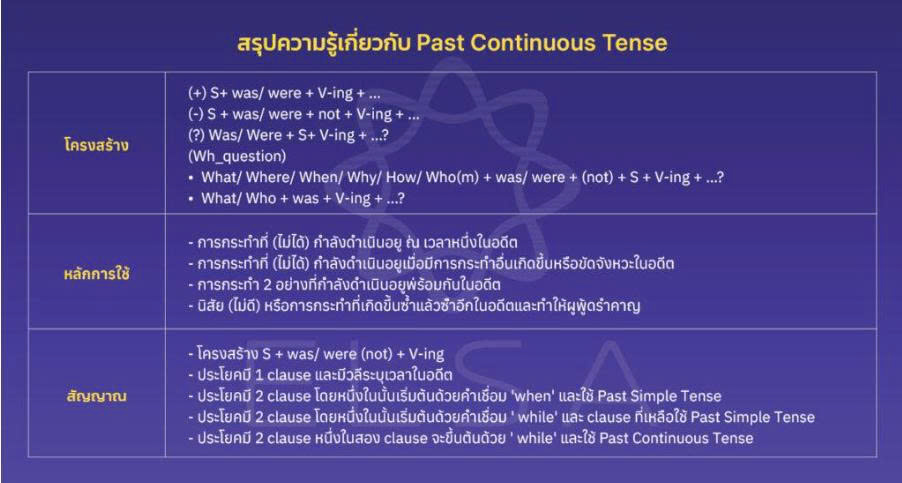
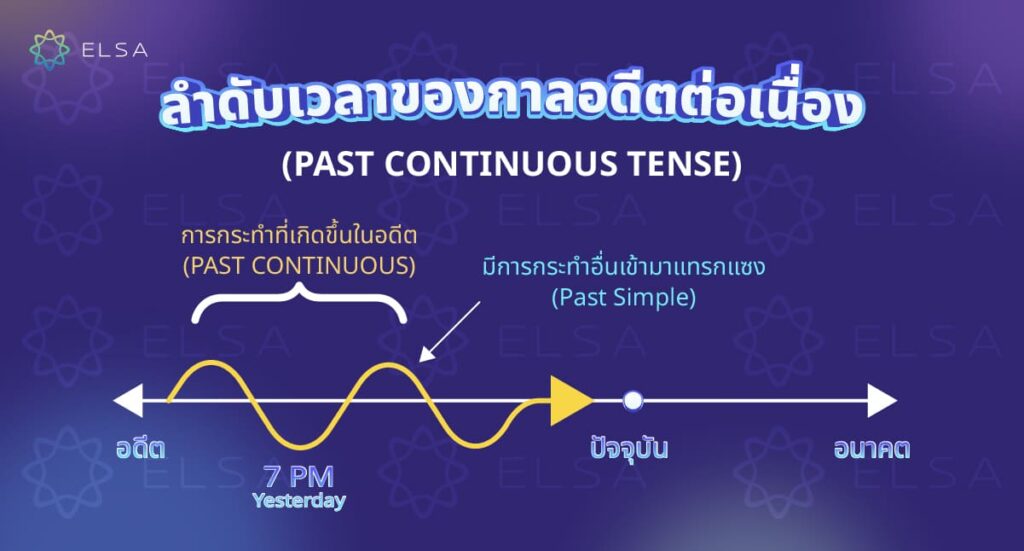
Past Continuous คือ Tense ที่อธิบายถึงการกระทำที่กำลังดำเนินอยู่ในช่วงเวลาหนึ่งในอดีต
สอบก่อนเข้าฟรี

Past Continuous Tense ตัวอย่างประโยค:
Yesterday at 7pm I was having dinner.
ลองอ่านออกเสียง 13 รายการนี้ดู แล้วดูคะแนนของคุณ
(เมื่อวานนี้ เวลา 1 ทุ่ม ฉันกำลังรับประทานอาหารเย็น)
>>> อ่านเพิ่มเติม:
โครงสร้าง Past Continuous Tense
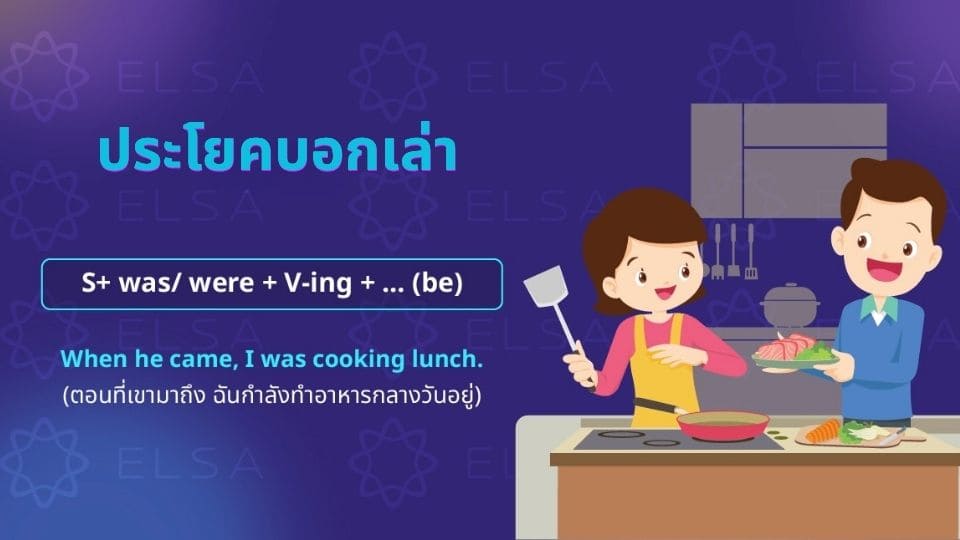
Past Continuous Tense โครงสร้างประโยคบอกเล่า
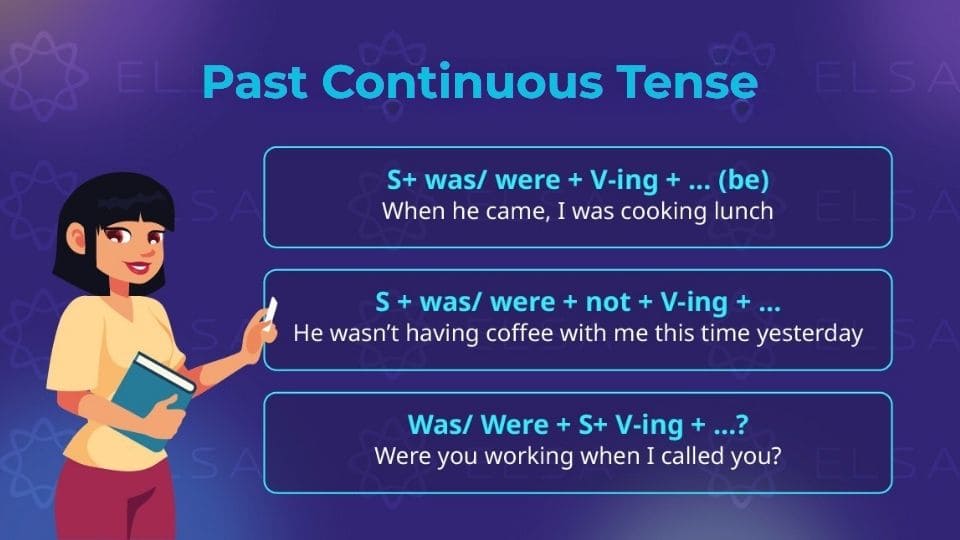
| S+ was/ were + V-ing + … (be) |
หมายเหตุ:
| Subject | be ที่สอดคล้องกัน |
|---|---|
| I/ He/ She/ It/ My mother/ His cat/… | was |
| We/ You/ They/ My parents/ Those employees | were |
เข้าใจและใช้ Future Tense ในการพูดถึงเหตุการณ์ในอนาคตได้อย่างถูกต้องและคล่องแคล่ว
Future Continuous Tense: โครงสร้างและหลักการใช้งาน
ประโยคอนาคตกาล ( Future Simple Tense ): โครงสร้างและแบบฝึกหัด
อนาคตกาลสมบูรณ์ต่อเนื่อง (Future Perfect Continuous Tense)
was were ใช้ยังไง และเคล็ดลับในการแยกแยะออกจาก Did
ตัวอย่าง:
- When he came, I was cooking lunch. (ตอนที่เขามาถึงฉันกำลังทำอาหารกลางวันอยู่)
- That customer called while we were discussing the new project. (ลูกค้าคนนั้นโทรมาตอนที่เรากำลังคุยเรื่องโครงการใหม่)
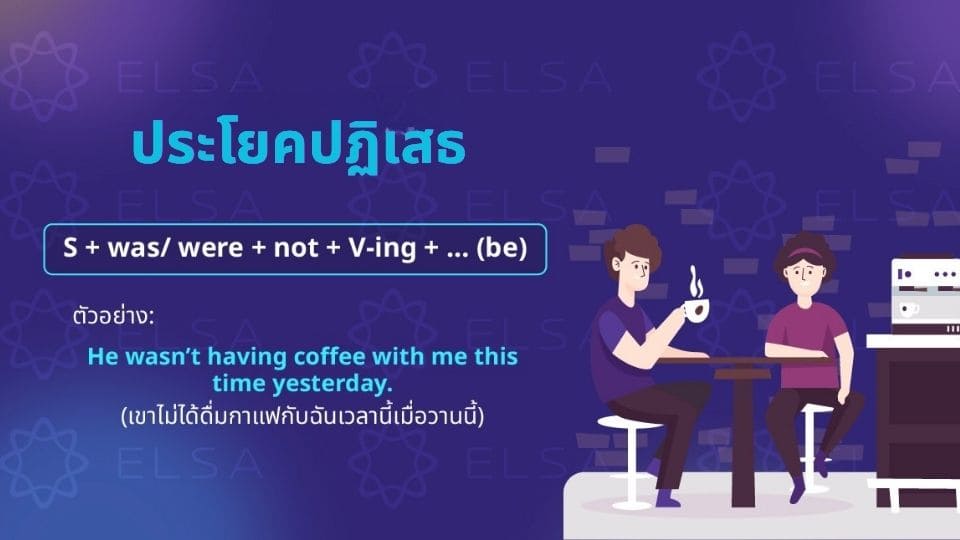
Past Continuous Tense โครงสร้างประโยคปฏิเสธ
| S + was/ were + not + V-ing + … (be) |
*หมายเหตุ:
- was not= wasn’t
- were not= weren’t
ตัวอย่าง:
- He wasn’t having coffee with me this time yesterday. (เมื่อวานนี้เขาไม่ได้ดื่มกาแฟกับฉันเวลานี้)
- When I got to the office, they weren’t talking about the new product. (เมื่อฉันไปถึงที่ทำงาน พวกเขาไม่ได้พูดถึงผลิตภัณฑ์ใหม่)
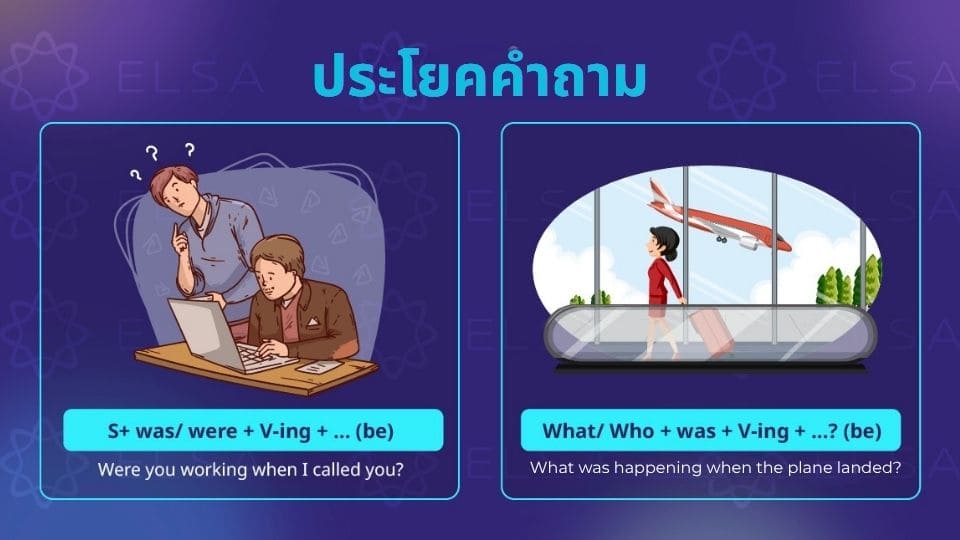
Past Continuous Tense โครงสร้างประโยคคำถาม
คำถาม Yes-No
| Was/ Were + S+ V-ing + …? (be) Yes, S + was/ were. No, S + wasn’t/ weren’t. |
ตัวอย่างประโยค Past Continuous Tense:
Was our daughter playing in the garden when you got home?
(เมื่อคุณกลับถึงบ้านลูกสาวของเราเล่นอยู่ในสวนหรือเปล่า?)
➥ Yes, she was (ใช่เธอเล่นอยู่)
Were you working when I called you?
(เมื่อฉันโทรหาคุณ คุณทำงานอยู่หรือเปล่า?)
➥ No, I wasn’t (ไม่นะ ฉันไม่ได้ทำ)
เข้าใจและใช้ Past Tense อย่างถูกต้องและเป็นธรรมชาติ
วิธีใช้ Past Perfect Tense (กาลอดีตก่อนหน้า) ที่เข้าใจง่ายที่สุด
คำถาม Wh-
❖ คำถามไม่ใช่ Subject
| What/ Where/ When/ Why/ How/ Who(m) + was/ were + (not) + S + V-ing + …? (be) |
ตัวอย่าง:
What were the employees doing when the boss came?
(เมื่อเจ้านายมาพนักงานกำลังทำอะไร?)
Where was she hiding while the bad guy was looking for her?
เธอซ่อนตัวอยู่ที่ไหนขณะที่คนร้ายกำลังตามหาเธอ?)
Why weren’t you doing homework when we got home?
(เมื่อเรากลับถึงบ้านทำไมลูกไม่ทำการบ้าน ?)
❖ คำถามคือ Subject
| What/ Who + was + V-ing + …? (be) |
ตัวอย่าง:
- What was happening when the plane landed? (เมื่อเครื่องบินลงจอดเกิดอะไรขึ้น?)
- Who was singing while we were sleeping last night? (เมื่อคืนนี้ใครร้องเพลงในขณะที่เรากำลังนอนหลับ?)
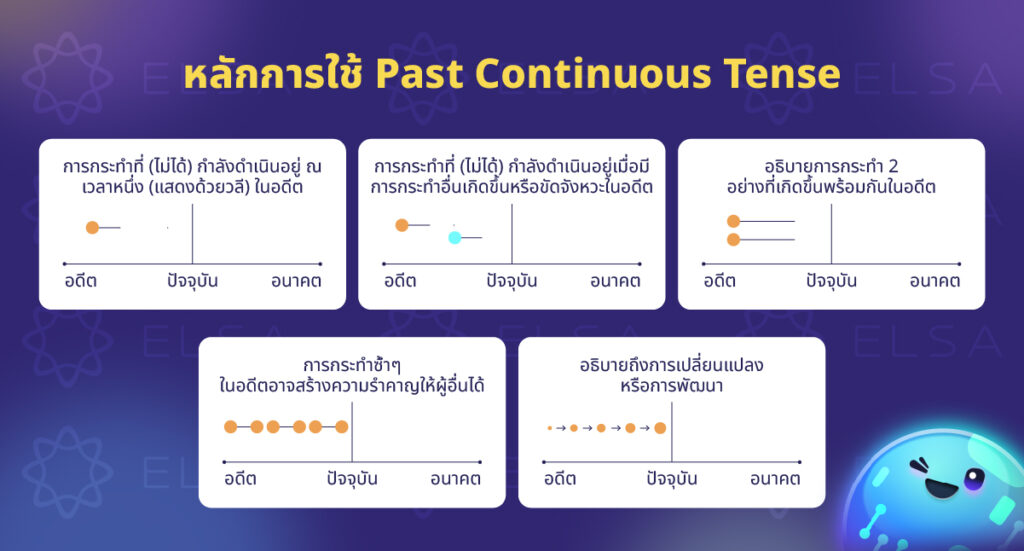
หลักการใช้ Past Continuous Tense
เหตุการณ์ที่กำลังเกิดขึ้น ณ ช่วงเวลาใดเวลาหนึ่งที่เฉพาะเจาะจงในอดีต
ใช้ในประโยคความเดียวเพื่อแสดงการกระทำที่ (ไม่ได้) กำลังดำเนินอยู่ ณ เวลาหนึ่ง (แสดงด้วยวลี) ในอดีต
ในกรณีนี้จะมีวลีในประโยคที่ระบุถึงช่วงเวลาในอดีตที่การกระทำ (ไม่ได้) ดำเนินไปไม่สิ้นสุด ตัวอย่าง: at 9am/ 7pm/… yesterday, this time yesterday, v.v.
ตัวอย่าง:
- This time last week, we were flying to Singapore.(เวลานี้เมื่อสัปดาห์ที่แล้ว เรากำลังบินไปสิงคโปร์)
- That employee wasn’t writing a report at 9:30 this morning. (เมื่อเช้านี้เวลา 9:30 น. พนักงานคนนั้นไม่ได้เขียนรายงาน)
>>> อ่านเพิ่มเติม: AM PM คือะไร? วิธีใช้ในภาษาอังกฤษ
เหตุการณ์ที่กำลังดำเนินอยู่ในอดีต แล้วมีอีกเหตุการณ์หนึ่งเข้ามาแทรก
ใช้ในประโยคความซ้อนที่ใช้ Past Simple เพื่ออธิบายการกระทำที่ (ไม่ได้) กำลังดำเนินอยู่เมื่อมีการกระทำอื่นเกิดขึ้นหรือขัดจังหวะในอดีต
ประโยคทั้งสองจะเชื่อมต่อกันตามสูตร 4 สูตรต่อไปนี้:
| When + Past Simple Clause + , + Past Continuous Clause | When the teacher came in, the students were talking noisily.(นักเรียนกำลังคุยกันเสียงดังเมื่ออาจารย์เข้ามา) |
| Past Continuous Clause + when + Past Simple Clause | The students were talking noisily when the teacher came in.(นักเรียนกำลังคุยกันเสียงดังเมื่อครูเข้ามา) |
| While + Past Continuous Clause + , + Past Simple Clause | While the students were talking noisily, the teacher came in.(ขณะที่นักเรียนคุยกันเสียงดัง ครูก็เข้ามา) |
| Past Simple Clause + while + Past Continuous Clause | The teacher came in while the students were talking noisily.(ครูเข้ามาในขณะที่นักเรียนกำลังคุยกันเสียงดัง) |
เหตุการณ์สองเหตุการณ์ที่เกิดขึ้นพร้อมกันในอดีต
ใช้อนุประโยคทั้งสองของประโยคความซ้อนเพื่ออธิบายการกระทำ 2 อย่างที่เกิดขึ้นพร้อมกันในอดีต
ประโยคทั้งสองจะเชื่อมต่อกันตาม 2 สูตรต่อไปนี้:
| While + Past Continuous Clause 1 + , + Past Continuous Clause 2. | While the children were playing, we were singing karaoke. → ขณะที่เด็กๆ เล่นกัน เราก็กำลังร้องเพลงคาราโอเกะ |
| Past Simple Clause + while + Past Continuous Clause | We were singing karaoke while the children were playing. → เรากำลังร้องเพลงคาราโอเกะในขณะที่เด็กๆ กำลังเล่นกัน |
เหตุการณ์ที่เกิดขึ้นซ้ำ ๆ ในอดีต ซึ่งทำให้ผู้อื่นรู้สึกรำคาญ
ใช้กับคำวิเศษณ์ (วลีวิเศษณ์) เพื่ออธิบายความถี่สูงเพื่อแสดงนิสัย (ไม่ดี) หรือการกระทำที่เกิดขึ้นซ้ำแล้วซ้ำอีกในอดีตและทำให้ผู้พูดรำคาญ
คำวิเศษณ์ (วลีวิเศษณ์) บอกความถี่สูงทั่วไปบางคำ ได้แก่: always (เสมอ), usually (บ่อย), constantly (ต่อเนื่อง/บ่อย), all the time (ตลอดเวลา) เป็นต้น
ตัวอย่าง:
- When he was a kid, he was talking in class all the time. (ตอนเด็กๆ เขามักพูดคุยในห้องเรียนตลอดเวลา)
- When they first moved to this company, they were constantly missing deadlines. (ตอนที่พวกเขาเพิ่งย้ายมาทำงานที่บริษัทนี้ พวกเขามักจะส่งงานไม่ทันกำหนดอยู่เสมอ)
การบรรยายถึงการเปลี่ยนแปลงหรือการพัฒนา
ใช้เพื่อบรรยายถึงการเปลี่ยนแปลง ความก้าวหน้า หรือการพัฒนาของบุคคล สิ่งของ หรือสถานการณ์ตามกาลเวลา มักใช้ร่วมกับคำกริยา เช่น change, develop, grow, improve, increase, decrease, become และคำระบุเวลา (over time, gradually, recently, in recent years…).
ตัวอย่าง:
- The company was gradually improving its products during that period. (ในช่วงเวลานั้น บริษัทได้ค่อยๆ ปรับปรุงผลิตภัณฑ์ของตนอย่างต่อเนื่อง)
- The city was growing rapidly while new industries were developing. (เมืองนี้กำลังเติบโตอย่างรวดเร็วควบคู่ไปกับการพัฒนาอุตสาหกรรมใหม่ๆ)
เข้าใจและใช้ Present Tense ในการสื่อสารประจำวันได้อย่างถูกต้องและมั่นใจ
Present Perfect Continuous Tense โครงสร้าง ตัวอย่าง และแบบฝึกหัดพร้อมคำตอบ
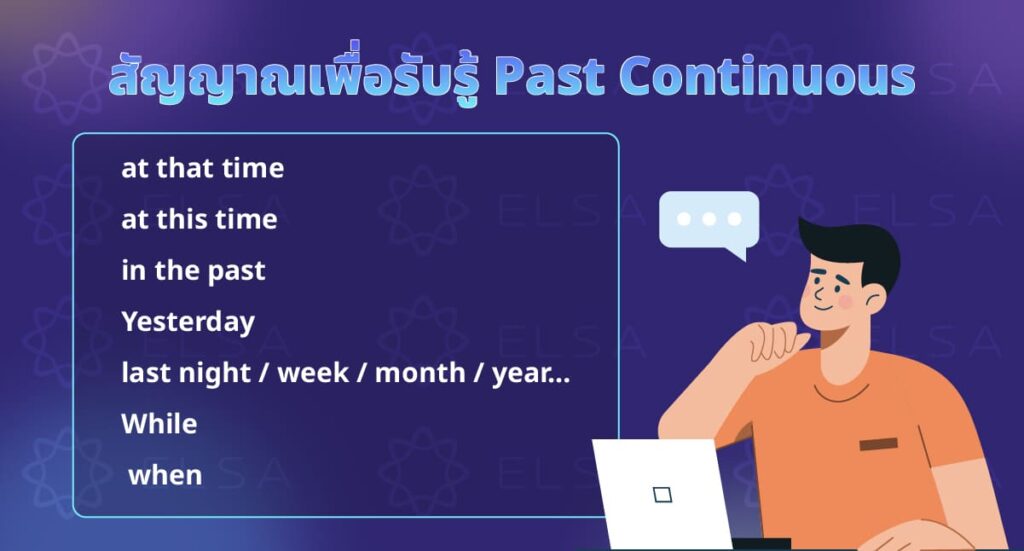
สัญญาณเพื่อรับรู้ Past Continuous
เพื่อระบุ Past Continuous Tense คุณสามารถสังเกตได้จากเครื่องหมายหรือคำสัญญาณ (Signal words) ดังต่อไปนี้:
- มีคำวิเศษณ์บอกเวลาในอดีตที่เน้นย้ำถึงจุดเวลาหรือช่วงเวลาที่แน่นอน เช่น: at that time, at this time, in the past, yesterday, last night / week / month / year…
- ปรากฏในประโยคที่มีคำสันธาน while และในบางกรณีใช้ร่วมกับ when เพื่อบรรยายถึงสองเหตุการณ์ที่เกิดขึ้นขนานกัน หรือเหตุการณ์หนึ่งกำลังดำเนินอยู่แล้วมีอีกเหตุการณ์หนึ่งเข้ามาแทรก
- มีคำกริยาช่วย “was / were” วางหน้าคำกริยาหลักที่เติม -ing (V-ing)
ตัวอย่าง:
- At this time last week, we were playing soccer on the beach. (ในเวลานี้ของสัปดาห์ที่แล้ว พวกเรากำลังเล่นฟุตบอลกันอยู่ที่ชายหาด)
- Sue was swimming at 10 a.m. yesterday morning. (เมื่อวานนี้ซูกำลังว่ายน้ำตอน 10 โมงเช้า)
- I wasn’t paying attention while I was writing the letter, so I made several mistakes.(ฉันไม่ได้ตั้งใจเขียนจดหมาย จึงทำผิดพลาดไปหลายจุด)
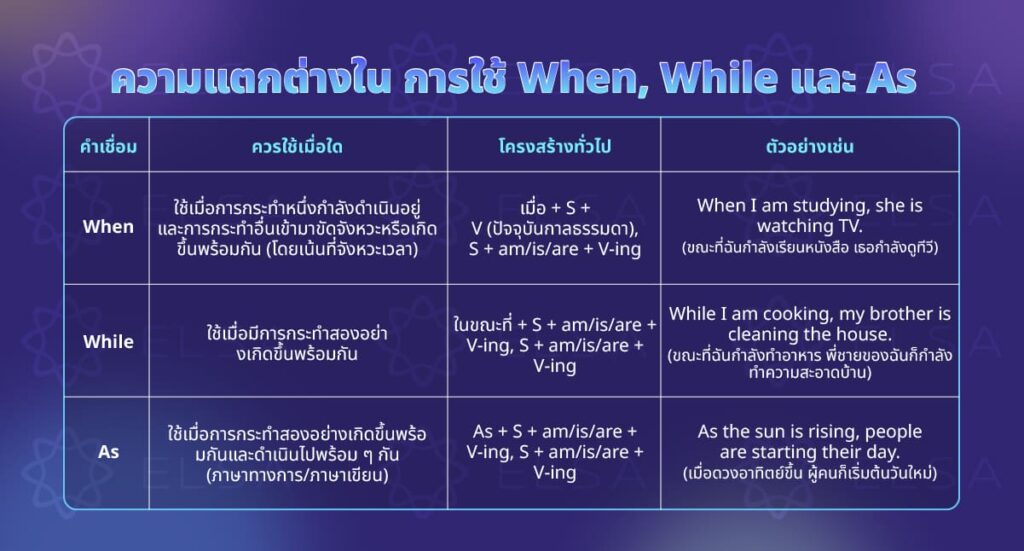
ความแตกต่างระหว่างการใช้ When, While, As
| คำเชื่อม | วิธีใช้ | โครงสร้างที่พบบ่อย | ตัวอย่าง |
|---|---|---|---|
| When | ใช้เมื่อมีเหตุการณ์หนึ่งกำลังดำเนินอยู่ในอดีต แล้วมีอีกเหตุการณ์หนึ่งเข้ามาแทรก หรือเกิดขึ้นในเวลาเดียวกัน (เน้นย้ำจุดเวลา) | When + S + was/were + V-ing, S + was/were + V-ing | When I was studying, she was watching TV.(ในขณะที่ฉันกำลังเรียนหนังสือ เธอก็กำลังดูทีวีอยู่) |
| While | ใช้เมื่อสองเหตุการณ์กำลังดำเนินไปพร้อม ๆ กัน หรือขนานกันในอดีต | While + S + was/were + V-ing, S + was/were + V-ing | While I was cooking, my brother was cleaning the house. (ในขณะที่ฉันกำลังทำอาหาร พี่ชายของฉันกำลังทำความสะอาดบ้าน) |
| As | ใช้เมื่อสองเหตุการณ์เกิดขึ้นพร้อมกันและดำเนินไปขนานกัน (มักใช้ในภาษาเขียนหรือระดับที่เป็นทางการ) ในอดีต | As + S + was/were + V-ing, S + was/were + V-ing | As the sun was rising, people were starting their day. (ในขณะที่ดวงอาทิตย์กำลังขึ้น ผู้คนก็กำลังเริ่มต้นวันใหม่) |
>>> อ่านเพิ่มเติม: Conjunction (คําเชื่อม ภาษาอังกฤษ) คืออะไร? กฎการใช้งานและตัวอย่าง
โครงสร้างประโยคถูกกระทำ (Passive Voice) ใน Past Continuous Tense
ประโยคถูกกระทำใน Past Continuous Tense ใช้เพื่อบรรยายถึงเหตุการณ์ที่กำลังดำเนินอยู่ในช่วงเวลาใดเวลาหนึ่งในอดีต โดยเน้นย้ำไปที่ “ผู้ถูกกระทำ” มากกว่า “ผู้กระทำ”
| รูปแบบประโยค | โครงสร้าง Passive Voice | ตัวอย่าง |
|---|---|---|
| บอกเล่า | S + was / were + being + V³/V-ed | The house was being built at that time.(บ้านหลังนั้นกำลังอยู่ในระหว่างการก่อสร้างในเวลานั้น) |
| ปฏิเสธ | S + was / were not + being + V³/V-ed | The report wasn’t being prepared when I arrived.(ตอนที่ผมมาถึงนั้น ยังไม่มีการจัดทำรายงานแต่อย่างใด) |
| คำถาม | Was / Were + S + being + V³/V-ed? | Was the road being repaired yesterday afternoon?(เมื่อบ่ายวานนี้มีการซ่อมแซมถนนอยู่หรือเปล่า?) |
กฎการเติม -ing และคำกริยาที่ไม่ใช้ในรูป Continuous
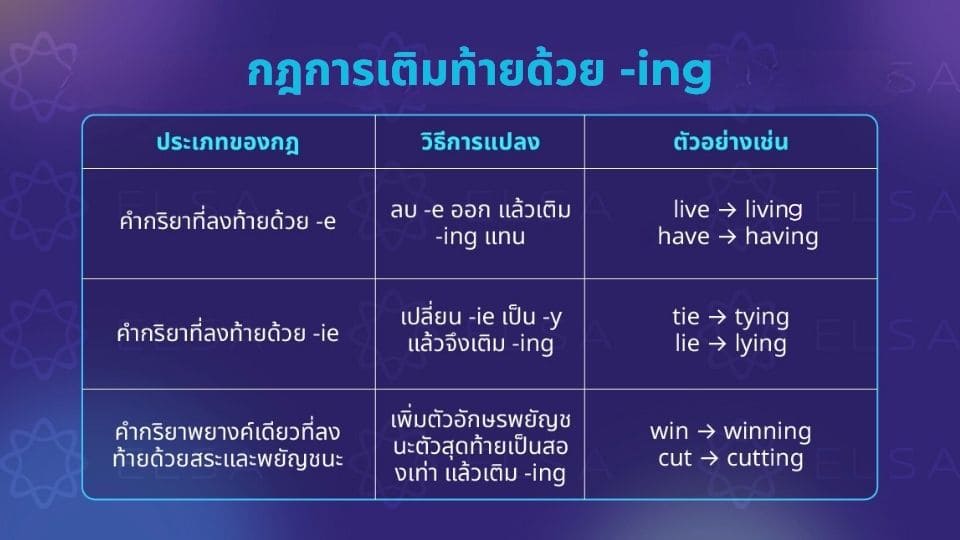
กฎการเติมท้ายด้วย -ing
เนื่องจากเป็นรูปแบบ “Continuous” คำกริยาจึงต้องผันในรูป V-ing ดังนี้:
| ประเภทกฎ | วิธีเปลี่ยน | ตัวอย่าง |
|---|---|---|
| คำกริยาที่ลงท้ายด้วย -e | ตัด -e ออกแล้วเติม -ing | live → living have → having |
| คำกริยาที่ลงท้ายด้วย -ie | เปลี่ยน -ie เป็น -y แล้วเติม -ing | tie → tying lie → lying |
| คำกริยา 1 พยางค์ ที่ลงท้ายด้วย สระ + พยัญชนะ | เพิ่มพยัญชนะตัวท้ายอีกหนึ่งตัวแล้วเติม -ing | win → winning cut → cutting |
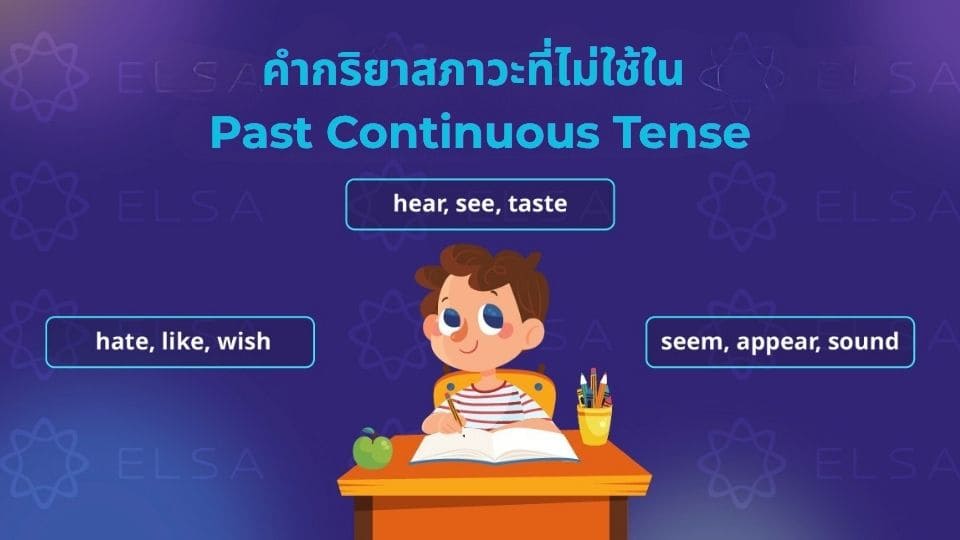
คำกริยาสภาวะ (Stative Verbs) ที่ไม่ใช้ใน Past Continuous Tense
ในภาษาอังกฤษโดยทั่วไป มีคำกริยาบางกลุ่มที่สามารถใช้ได้เฉพาะในรูปฐาน (Infinitive) เท่านั้น และไม่สามารถนำมาผันในรูป V-ing ได้ ลักษณะของคำกริยากลุ่มนี้ใช้เพื่อระบุถึง:
- การรับรู้ผ่านประสาทสัมผัส: hear, see, taste,…
- ความชอบหรือความรู้สึก: hate, like, wish,…
- สภาวะหรือลักษณะ: seem, appear, sound,…
- การรับรู้และความเข้าใจ: understand, believe, know,…
- ความเป็นเจ้าของ: belong, contain, posses,…
ตัวอย่างประโยค past continuous tense 20 ประโยค
1. ใช้เพื่อบรรยายถึงเหตุการณ์ที่กำลังเกิดขึ้น ณ ช่วงเวลาใดเวลาหนึ่งที่เฉพาะเจาะจงในอดีต
- At 8 p.m. last Friday, she was performing at the Big Theater. (เมื่อวันศุกร์ที่แล้วตอนเวลา 20.00 น. เธอกำลังทำการแสดงอยู่ที่โรงละคร Big)
- This time last week, my younger sister was preparing for her final exams. (ในช่วงเวลานี้ของสัปดาห์ที่แล้ว น้องสาวของฉันกำลังเตรียมตัวสำหรับการสอบปลายภาค)
- At 10 last night, they were singing at a karaoke bar. (เมื่อคืนนี้ตอน 4 ทุ่ม พวกเขากำลังร้องเพลงกันอยู่ที่ร้านคาราโอเกะ)
- At 6 a.m. yesterday, I was jogging in the park. (เมื่อวานนี้ตอน 6 โมงเช้า ฉันกำลังวิ่งจ็อกกิ้งอยู่ในสวนสาธารณะ)
2. เหตุการณ์ที่กำลังดำเนินอยู่ในอดีต แล้วมีอีกเหตุการณ์หนึ่งเข้ามาแทรก (When + Past Simple)
- The children were playing in the garden when it started raining. (พวกเด็ก ๆ กำลังเล่นอยู่ในสวน ตอนที่ฝนเริ่มตก)
- When our parents got home, we were cooking dinner. (ตอนที่พ่อแม่กลับมาถึงบ้าน พวกเรากำลังทำมื้อค่ำกันอยู่)
- She was watching TV when the phone rang. (เธอกำลังดูทีวีอยู่ ตอนที่โทรศัพท์ดังขึ้น)
- I was studying when my friend came over. (ฉันกำลังเรียนหนังสืออยู่ ตอนที่เพื่อนแวะมาหา)
3. เหตุการณ์สองเหตุการณ์ที่กำลังดำเนินไปขนานกันในอดีต (While + Past Continuous)
- We were sweeping the floor while our parents were moving the furniture. (พวกเรากำลังกวาดพื้น ในขณะที่พ่อแม่กำลังย้ายเฟอร์นิเจอร์)
- While my cat was sleeping by the window, my dog was playing with the ball. (ในขณะที่แมวของฉันกำลังนอนหลับอยู่ข้างหน้าต่าง สุนัขของฉันก็กำลังเล่นลูกบอลอยู่)
- She was reading while he was listening to music. (เธอกำลังอ่านหนังสือ ในขณะที่เขากำลังฟังเพลง)
- They were discussing plans while we were taking notes. (พวกเขากำลังหารือเกี่ยวกับแผนการ ในขณะที่พวกเรากำลังจดบันทึก)
4. เหตุการณ์ที่เกิดขึ้นซ้ำ ๆ ในอดีต ซึ่งทำให้ผู้อื่นรู้สึกรำคาญ
- He was always interrupting me while I was speaking. (เขามักจะขัดจังหวะฉันในขณะที่ฉันกำลังพูดเสมอ ซึ่งทำให้ฉันรู้สึกรำคาญมาก)
- She was constantly complaining about her job last year. (เธอเอาแต่บ่นเกี่ยวกับงานของเธอเมื่อปีที่แล้วอย่างต่อเนื่อง)
- They were forever making noise during the meeting. (พวกเขาส่งเสียงดังรบกวนตลอดเวลาในระหว่างการประชุม ทำให้คนอื่นรู้สึกไม่พอใจ)
5. การบรรยายถึงการเปลี่ยนแปลงหรือการพัฒนา
- The weather was getting colder as the night went on. (เมื่อเวลาผ่านไปในคืนนั้นอากาศกำลังค่อย ๆ หนาวลง)
- Her English was improving while she was studying abroad. (ขณะที่เธอศึกษาอยู่ต่างประเทศภาษาอังกฤษของเธอกำลังพัฒนาขึ้นใน)
- The company was expanding rapidly during that period. (ในช่วงเวลานั้นบริษัทกำลังขยายตัวอย่างรวดเร็ว)
- Traffic was becoming heavier as more people were leaving work. (การจราจรกำลังหนาแน่นขึ้นเนื่องจากมีคนเลิกงานมากขึ้น)
คุณรู้หรือยังว่า have has ใช้ยังไง ในแต่ละ tense? มาลองอ่านบทความนี้เพื่อเข้าใจโครงสร้างและวิธีใช้อย่างถูกต้องในแต่ละกรณี
การแยกแยะ Past Simple และ Past Continuous
ความคล้ายคลึงกัน: ใช้พูดถึงอดีต
ความแตกต่าง:
| Past Continuous | Past Simple | |
|---|---|---|
| ฟังก์ชั่น | อธิบายการกระทำที่กำลังดำเนินอยู่หรือนิสัยที่น่ารำคาญในอดีต | อธิบายการกระทำที่เสร็จสิ้นแล้วในอดีต |
| สัญญาณการสังเกต | มักใช้ร่วมกับ: at that time, this time yesterday/last week, while, when (ใช้บรรยายเหตุการณ์ที่กำลังดำเนินอยู่), โครงสร้าง was/were + V-ing | มักใช้ร่วมกับ: yesterday, last night/week/month, ago, in + ปีในอดีต, when (ใช้บรรยายเหตุการณ์สั้น ๆ ที่เข้ามาแทรก), กริยาช่อง 2 (V.2) |
| ตัวอย่าง | This time yesterday, I was buying some food at the supermarket.(เมื่อวานเวลานี้ ฉันกำลังซื้ออาหารที่ซุปเปอร์มาร์เก็ต)When he was young, he was always buying a lot after getting his salary.(ตอนเด็กเขามักจะซื้อของมากมายหลังจากได้รับเงินเดือน) | Last week, I bought a new phone. (อาทิตย์ที่แล้วฉันซื้อโทรศัพท์ใหม่) |
แบบฝึกหัด Past Continuous Tense
แบบฝึกหัดที่ 1. ใส่คำกริยาในวงเล็บลงใน Past Continuous
1. Andrew and I_____________ (watch) a movie at 10:15 last night.
2. Their mother_____________ (water) the flowers while they_____________ (collect) the leaves.
3. When that customer called, we_____________ (talk) about the problem.
4. We_____________ (buy) some food at the market when that accident happened.
5. Our manager_____________ (talk) to a new customer when I entered the store.
6. While our children were sweeping the floor, we_____________ (wash) the dishes.
7. This time last weekend, we_____________ (build) sand castles at the beach.
คำตอบ:
1. were watching
2. was watering- were collecting
3. were talking
4. were buying
5. was talking
6. were washing
7. were building
แบบฝึกหัดที่ 2. จัดเรียงคำ (วลี) ใหม่เพื่อสร้างประโยคที่ถูกต้อง
1. was/ at 6:30 this morning/ my younger brother/ doing exercise/ .
2. were/ you came/ , /when/ watching a movie/ we/ .
3. while/ her husband/ her daughter/ was playing with the doll/ was moving the furniture/ .
4. presenting their idea/ entered the meeting/ they/ I/ when/ were/ .
5. was flying / to Singapore / my aunt / this time last week / .
คำตอบ:
1. My younger brother was doing exercise at 6:30 this morning.
2. When you came, we were watching a movie.
3. Her husband was moving the furniture while her daughter was playing with the phone.
4. They were presenting their idea when I entered the meeting.
5. My aunt was flying to Singapore this time last week.
แบบฝึกหัดที่ 3. ค้นหาข้อผิดพลาด 1 ข้อในแต่ละประโยคด้านล่างและแก้ไขให้ถูกต้อง
1. Manny and I was skipping class all the time when we were young.
2. My sisters was walking to school when that accident happened.
3. The kid were playing soccer when it started to rain.
4. I was washing the clothes when my brother was sweeping the floor.
5. While she called, we were doing our homework.
คำตอบ:
1. was skipping → were skipping
2. was walking → were walking
3. were playing → was playing
4. when → while
5. While → When
แบบฝึกหัดที่ 4. ใส่กริยาในวงเล็บลงใน Past Continuous หรือ Past Simple
1. Last month, we_____________ (buy) a new TV.
2. This time yesterday, we_____________ (buy) a new TV at the mall.
3. When our teacher_____________ (enter) the classroom, we_____________ (play) a game.
4. They_____________ (not discuss) the problem when we_____________ (call).
5. Our mother_____________ (work) on his computer while our father_____________ (read) a book.
6. While Sarah_____________ (look) for her cat, she_____________ (find) a dog.
7. This time last year, we_____________ (study) in Australia.
คำตอบ:
1. bought
2. were buying
3. entered- were playing
4. weren’t discussing- called
5. was working- was reading
6. was looking- found
7. were studying
แบบฝึกหัดที่ 5. ตั้งคำถามสำหรับส่วนที่ขีดเส้นใต้
1. A stranger was standing in front of our door at 11 last night.
2. When you came, the boys were playing soccer in the backyard.
3. They were eating spaghetti when I brought them the food.
4. Our neighbor was singing noisily when we knocked on his door.
5. My mom was talking to my friend when I saw her on the street.
คำตอบ:
1. Who was standing in front of our/ your door at 11 last night.
2. Where were the boys playing soccer when I came?
3. What were they eating when you brought them the food?
4. How was your neighbor singing when you knocked on his door?
5. Who was your mom talking to when you saw her on the street?
แบบฝึกหัดที่ 6. ใส่คำกริยาในวงเล็บลงในรูปแบบ Past Continuous หรือ Past Simple เพื่อเติมข้อความด้านล่างให้สมบูรณ์
Yesterday (1)_____________ (be) a busy day. I (2)_____________ (have) to do housework and take care of my baby sister. While I (3)_____________ (sweep) the floor, my sister (4)_____________ (wake) up and (5)_____________ (cry). When she (6)_____________ (stop) crying, I (7)_____________ (continue) sweeping the floor. She (8)_____________ (play) with her own hands and feet while I (9)_____________ (wash) the dishes. Finally, our parents (10)_____________ (get) home while I (11)_____________ (feed) her.
คำตอบ:
| 1. was | 6. stopped |
| 2. had | 7. continued |
| 3. was sweeping | 8. was playing |
| 4. woke | 9. was washing |
| 5. cried | 10. got |
| 11. was feeding |
แบบฝึกหัดที่ 7. ตอบคำถามปลายเปิดด้านล่าง
1. Were you hanging out with friends at 6pm last Sunday?
2. Were you spending time with your family at 11am last Saturday?
3. What were you doing at 9:30 last night?
4. What were you doing at 2:30pm last Thursday?
5. What were you doing this time 2 days ago?
คำตอบ:
เนื่องจากคำถามนี้เป็นคำถามปลายเปิด คำตอบด้านล่างนี้จึงใช้สำหรับการอ้างอิงและช่วยให้คุณทบทวนโครงสร้างได้เท่านั้น คุณสามารถสร้างเนื้อหาอย่างสร้างสรรค์และอิสระได้ แต่อย่าลืมใช้ความรู้และโครงสร้างที่ถูกต้องนะ
1. Yes. I was eating out with my friends at 6pm last Sunday.
2. No. I was working in my room.
3. I was watching a movie with my younger sister.
4. I was writing a report at 2:30pm last Thursday.
5. I was feeding my dog this time 2 days ago.
กรอกโค้ด TH2026 เพื่อรับข้อเสนอพิเศษเลย

ELSA PREMIUM 1 ปี
ราคาเดิม: 8,497
2,458

ELSA PREMIUM ตลอดชีพ
ราคาเดิม : 7,999
7,999

ELSA PRO 1 ปี
ราคาเดิม: 2,499
1,830
ELSA Pro ตลอดชีพ
ราคาเดิม: 3,659
3,659