

ผู้เรียนหลายคนมักสงสัยว่า อาการนาม Gerund คือ อะไร? และจะใช้มันอย่างไรให้ถูกต้อง ในบทความนี้ คุณจะได้เรียนรู้อย่างถ่องแท้เกี่ยวกับแนวคิดของ อาการนาม หลักการพื้นฐาน การใช้ที่พบบ่อยที่สุด พร้อมแบบฝึกหัดปฏิบัติเพื่อฝึกฝนทักษะการใช้ Gerund ได้อย่างถูกต้องนะ!
อาการนาม (Gerund) คือ อะไร?
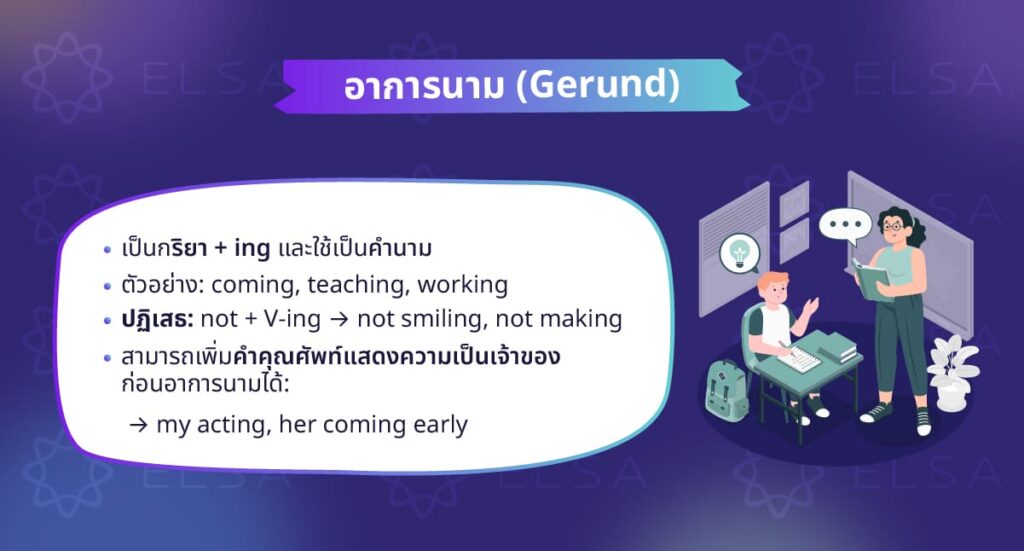
อาการนาม (Gerund) เป็นคำกริยาที่เติม -ing ต่อท้าย แต่ทำหน้าที่เป็นคำนามในประโยค สามารถทำหน้าที่เป็นประธาน กรรม หรือส่วนเติมเต็มได้ ใช้เพื่ออ้างถึงการกระทำหรือสถานะ ซึ่งเป็นแนวคิดทั่วไป
สอบก่อนเข้าฟรี

อาการนาม เกิดจากการเติม -ing ต่อท้ายกริยา
ตัวอย่าง:
- Come – Coming
- Teach – Teaching
- Work – Working
อาการนาม รูปแบบเชิงลบเกิดจากการเติม “not” ไว้หน้า V-ing
ตัวอย่าง:
- Smiling – Not smiling
- making – Not making
- Opening – Not opening
นอกจากนี้ คุณยังสามารถเพิ่มคำคุณศัพท์แสดงความเป็นเจ้าของก่อน อาการนาม เพื่อแสดงประธานที่กำลังกระทำได้ชัดเจนยิ่งขึ้น เช่น:
- My acting
- My turning off the air conditioner
- Her coming early
ตำแหน่งของ อาการนาม (Gerund) ในประโยคภาษาอังกฤษ
ในภาษาอังกฤษ อาการนาม สามารถอยู่หน้ากรรมเหมือนกริยา และสามารถอยู่ในตำแหน่งใดก็ได้ที่คำนามสามารถอยู่ได้ ตำแหน่งของอาการนามในประโยค:
- อาการนามจะอยู่ต้นประโยคเพื่อทำหน้าที่เป็นประธาน
- จะอยู่หลังกริยา to be เพื่อขยายประธาน
- อาการนามมักจะตามด้วยกรรม
- อาการนามอยู่หลังคำบุพบทและกริยาวลี (phrasal verb)
- อยู่หลังคำสันธานที่ใช้ระบุเวลา

วิธีการใช้ อาการนาม (Gerund) ในภาษาอังกฤษ
อาการนามสามารถทำหน้าที่ได้หลากหลาย เช่น ประธาน กรรม และส่วนขยายในประโยค จึงมักถูกใช้ในการสื่อสารภาษาอังกฤษ ต่อไปนี้คือวิธีการใช้อาการนามที่จำง่าย
อาการนาม เป็นประธานในประโยค
อาการนาม (Gerund) สามารถทำหน้าที่เป็นประธานของประโยคได้ นั่นคือ การกระทำที่กล่าวถึงนั้นเป็นประธานของประโยค
| Gerund / Gerund phrase + V + … |
ตัวอย่าง:
- Collecting books is his hobby. (การสะสมหนังสือคืองานอดิเรกของเขา)
- Working at this place is her choice. (การทำงานที่นี่เป็นทางเลือกของเธอ)
- Climbing is good for your health. (การปีนเขาดีต่อสุขภาพของคุณ)

อาการนาม เป็นกรรมของกริยา
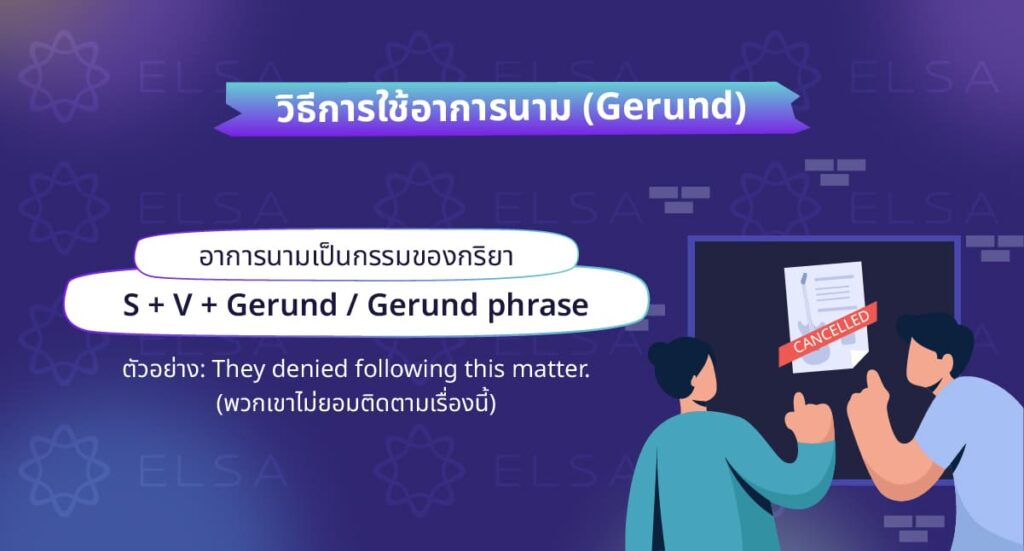
อาการนาม ใช้เป็นกรรมตรงของกริยาบางคำในประโยค
| S + V + Gerund / Gerund phrase |
ตัวอย่าง:
- They denied following this matter. (พวกเขาปฏิเสธว่าไม่ได้ติดตามเรื่องนี้)
- He avoids mentioning what they have said. (เขาเลี่ยงที่จะพูดถึงสิ่งที่พวกเขาพูด)
- She likes dancing. (เธอชอบเต้นรำ)
อาการนาม ทำหน้าที่ขยายคํากริยา
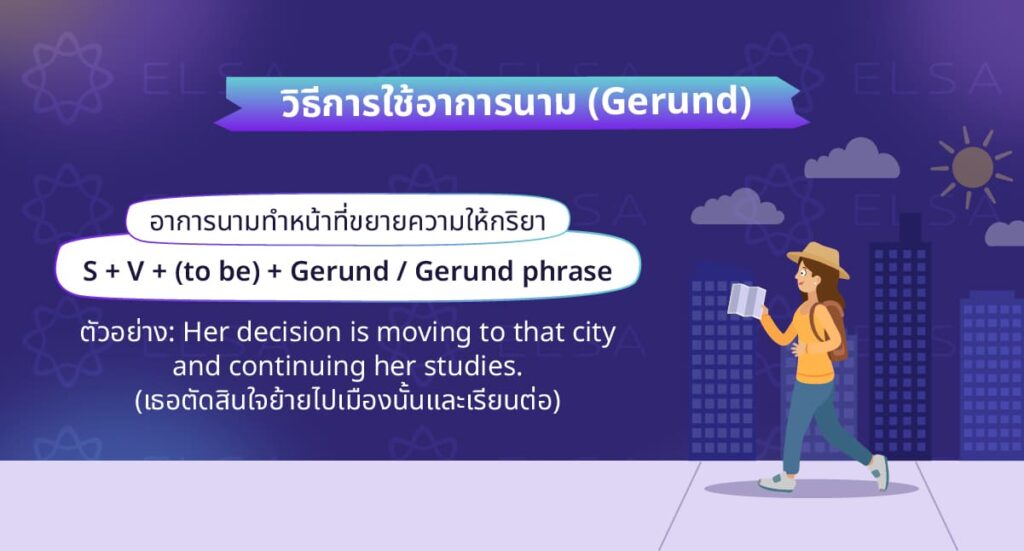
อาการนาม ใช้เป็นคำเสริมกริยาในประโยค ช่วยเพิ่มความหมายให้กับประธานหรือกริยาหลัก
| S + V + (to be) + Gerund / Gerund phrase |
ตัวอย่าง:
- Her decision is moving to that city and continuing her studies. (เธอตัดสินใจย้ายไปเมืองนั้นและเรียนต่อ)
- My mother’s choice is buying that T-shirt. (แม่ฉันเลือกซื้อเสื้อยืดตัวนั้น)
อาการนาม ใช้หลังคำบุพบทและคำสันธาน
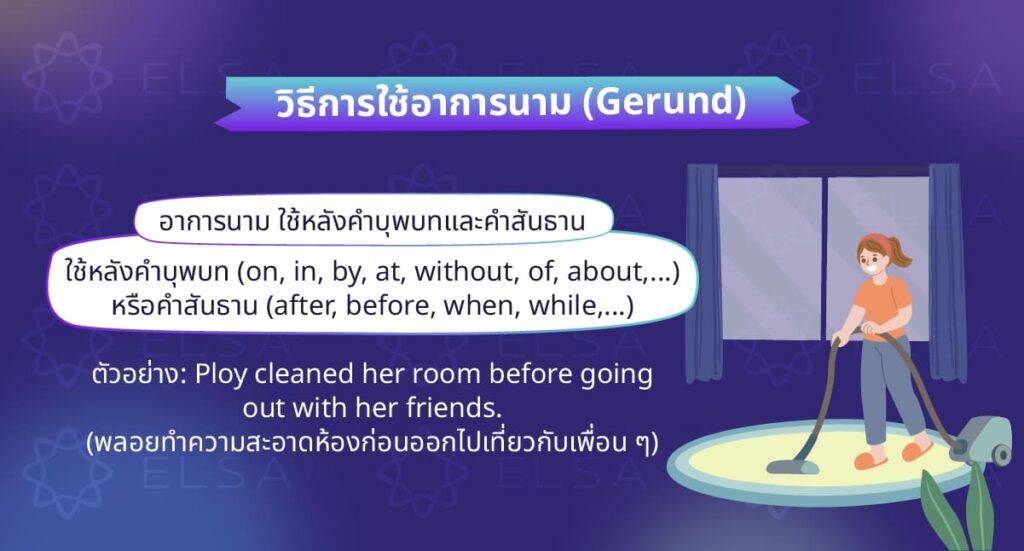
อาการนาม ใช้หลังคำบุพบท (on, in, by, at, without, of, about,…) หรือคําสันธาน (after, before, when, while,…)
ตัวอย่าง:
- Ploy cleaned her room before going out with her friends. (พลอยทำความสะอาดห้องก่อนออกไปเที่ยวกับเพื่อน ๆ)
- I have difficulty in finding a good job. (ฉันมีปัญหาในการหางานที่ดี)
- Win left home without saying a word. (วินออกจากบ้านไปโดยไม่พูดอะไรสักคำ)
>> อ่านเพิ่มเติม: แยกแยะ Part of Speech 9 ประเภทในภาษาอังกฤษ: หลักการใช้ ตัวอย่าง แบบฝึกหัดโดยละเอียด
กรณีที่ควรทราบเมื่อใช้อาการนาม (Gerund)
Verb ที่ตามด้วย gerund
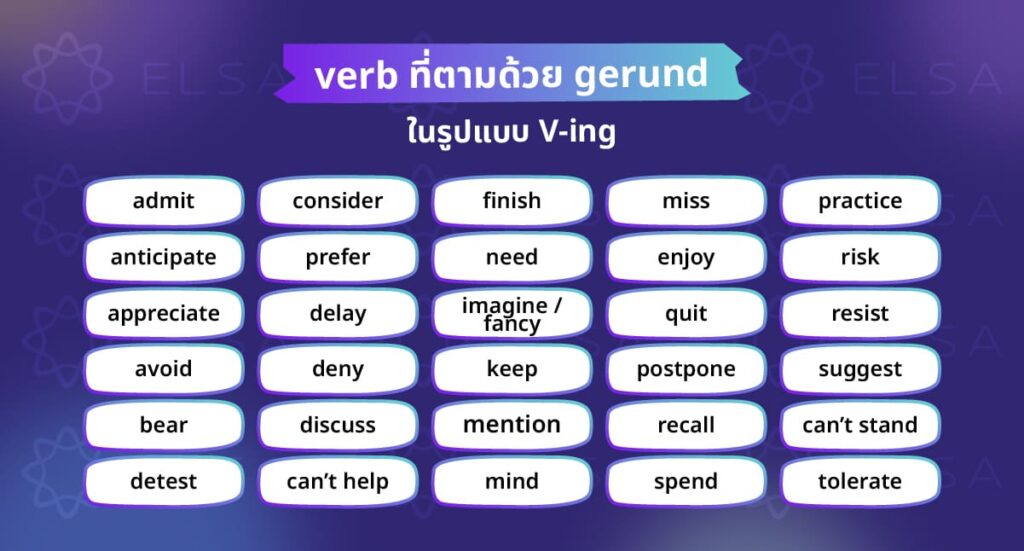
- verb ที่ตามด้วย gerund ในรูปแบบ V-ing
กริยาบางคำในภาษาอังกฤษมักจะตามด้วย gerund (-ing) การรู้จักกลุ่มกริยาเหล่านี้จะช่วยให้คุณใช้ประโยคได้อย่างถูกต้องและเป็นธรรมชาติมากขึ้น
| กริยา (Verb) | ความหมาย | ตัวอย่าง |
|---|---|---|
| admit | ยอมรับ | The boy admitted making a mistake. (เด็กชายยอมรับว่าทำผิด) |
| anticipate | คาดการณ์ | He anticipated traveling abroad next year. (เขาคาดหวังว่าจะได้ไปเที่ยวต่างประเทศปีหน้า) |
| appreciate | ชื่นชม | I don’t appreciate being interrupted. (ฉันไม่ชอบให้ใครมาขัดจังหวะ) |
| avoid | หลีกเลี่ยง | I avoided answering her question. (ฉันเลี่ยงที่จะตอบคำถามของเธอ) |
| bear | ทน | I can’t bear waiting for a long time. (ฉันทนรอนานไม่ได้) |
| detest | เกลียดชัง | She detests speaking in public. (เธอเกลียดการพูดในที่สาธารณะ) |
| consider | พิจารณา | I will consider going to the dentist. (ฉันจะพิจารณาเรื่องไปหาหมอฟัน) |
| prefer | ชอบมากกว่า | I preferred cycling to running. (ฉันชอบปั่นจักรยานมากกว่าวิ่ง) |
| delay | ล่าช้า | He delayed leaving for work. (เขาเลื่อนการออกไปทำงาน) |
| deny | ปฏิเสธ | He denied having taken part in the crime. (เขาปฏิเสธว่าไม่ได้มีส่วนร่วมในคดี) |
| discuss | อภิปราย | They discuss opening a new shop. (พวกเขาคุยกันเรื่องเปิดร้านใหม่) |
| can’t help | ไม่ได้ | I can’t help falling in love with you. (ฉันห้ามใจไม่ให้ตกหลุมรักคุณไม่ได้เลย) |
| finish | เสร็จ | I finished washing the dishes. (ฉันล้างจานเสร็จแล้ว) |
| need | ต้องการ | My car needs repairing. (รถฉันต้องซ่อมแล้ว) |
| imagine / fancy | จินตนาการ นึกภาพ | Can you imagine walking on the moon? (คุณนึกภาพการเดินบนดวงจันทร์ออกไหม) |
| keep | ต่อไป | You should keep practicing your English. (คุณควรฝึกภาษาอังกฤษต่อไป) |
| mention | พูดถึง | She mentioned going to the library. (เธอพูดถึงการไปห้องสมุด) |
| mind | เกร็งใจ | I don’t mind opening the window. (ฉันไม่รังเกียจที่จะเปิดหน้าต่างรถ) |
| miss | คิดถึง | I miss traveling with my family. (ฉันคิดถึงการไปเที่ยวกับครอบครัว) |
| enjoy | ชอบ | I enjoy working out with friends. (ฉันชอบออกกำลังกายกับเพื่อน ๆ) |
| quit | เลิก | I quit smoking three years ago. (ฉันเลิกสูบบุหรี่มาสามปีแล้ว) |
| postpone | เลื่อน | Let’s postpone skiing until tomorrow. (เลื่อนการเล่นสกีไปเป็นพรุ่งนี้ดีกว่า) |
| recall | นึกถึง ระลึก | I don’t recall coming here before. (ฉันจำไม่ได้ว่าเคยมาที่นี่มาก่อน) |
| spend | ใช้ (เวลา เงิน) | I will spend all night studying English. (ฉันจะใช้เวลาทั้งคืนเพื่อเรียนภาษาอังกฤษ) |
| practice | ฝึกฝน | These athletes practice running every day. (นักกีฬาเหล่านี้ฝึกซ้อมวิ่งทุกวัน) |
| risk | เสี่ยง | Don’t risk insulting your colleague. (อย่าเสี่ยงที่จะดูถูกเพื่อนร่วมงานของคุณ) |
| resist | ต่อต้าน อดใจไม่ไหว | I couldn’t resist eating ice cream. (ฉันอดใจไม่ไหวที่จะกินไอศกรีม) |
| suggest | แนะนำ เสนอ | We suggested raising the fees. (เราเสนอให้ขึ้นค่าธรรมเนียม) |
| can’t stand | ทนไม่ได้ | I can’t stand laughing at him. (ฉันทนหัวเราะเยาะเขาไม่ได้) |
| tolerate | อดทน | We will not tolerate bullying in any form. (เราจะไม่ยอมให้มีการกลั่นแกล้งทุกรูปแบบ) |
- กริยาตามไปสามารถใช้ Gerund หรือ to-Infinitive (ความหมายคล้ายกัน)
กริยาบางคำในภาษาอังกฤษสามารถมี gerund (V-ing) หรือ to-infinitive ประกอบได้โดยไม่ทำให้ความหมายของประโยคเปลี่ยนไป ช่วยให้ผู้เรียนมีการปรับใช้ในการแสดงออกมากขึ้น
| กริยา (Verb) | ความหมาย | ตัวอย่าง |
|---|---|---|
| begin | เริ่ม | It began raining. / It began to rain. (ฝนเริ่มตกแล้ว) |
| start | เริ่ม | She started crying. / She started to cry. (เธอเริ่มร้องไห้) |
| continue | ต่อไป | He continued working after a short break. / He continued to work after a short break. (เขาทำงานต่อหลังจากพักไปครู่หนึ่ง) |
| like | ชอบ | I like reading books. / I like to read books. (ฉันชอบอ่านหนังสือ) |
| love | ชื่นชอบ / รัก | She loves cooking. / She loves to cook. (เขาชอบทําอาหาร) |
| hate | เกลียด | I hate waiting in long lines. / I hate to wait in long lines. (ฉันเกลียดการรอคิวยาวๆ) |
| prefer | ชอมมากกว่า | I prefer walking to driving. / I prefer to walk rather than drive. (ฉันชอบเดินมากกว่าขับรถ) |
| can’t bear | ทนไม่ได้ | I can’t bear seeing animals suffer. / I can’t bear to see animals suffer. (ฉันทนเห็นสัตว์ทรมานไม่ได้) |
| intend | ตั้งใจ | He intends studying abroad. / He intends to study abroad. (เขาตั้งใจจะไปเรียนต่อต่างประเทศ) |
| propose | เสนอ | She proposed going out for dinner. / She proposed to go out for dinner. (เธอเสนอให้ออกไปทานอาหารเย็นข้างนอก) |

- กริยาที่ตามมาสามารถเป็น Gerund หรือ To-Infinitive ก็ได้ แต่ความหมายจะแตกต่างกัน
เมื่อพบคำกริยาต่อไปนี้ การเลือกใช้ V-ing หรือ to V ไม่เพียงแต่เป็นเรื่องของไวยากรณ์เท่านั้น แต่ยังส่งผลโดยตรงต่อความหมายของประโยคด้วย ดังนั้น คุณจำเป็นต้องเข้าใจความแตกต่างอย่างชัดเจนเพื่อนำไปใช้ได้อย่างถูกต้องในแต่ละสถานการณ์
| กริยา (Verb) | ความหมาย | ตัวอย่าง |
|---|---|---|
| stop | (Gerund) หยุดทำบางสิ่งบางอย่าง | Suddenly everyone stopped talking. (ทันใดนั้นทุกคนก็หยุดพูด) |
| (To-inf) หยุดทำบางอย่างเพื่อทําสิ่งอื่น | I stopped to fill in the form. (ฉันหยุดเพื่อกรอกแบบฟอร์ม) | |
| try | (Gerund) ลองทําอะไรบางอย่างดู | I try putting on this shirt. (ฉันลองใส่เสื้อตัวนี้) |
| (To-inf) พยายามทําอะไรบางอย่าง | I try to finish my homework. (ฉันพยายามทำการบ้านให้เสร็จ) | |
| remember | (Gerund) จำสิ่งที่คุณทำในอดีต | I remember seeing her on the bus. (ฉันจำได้ว่าเจอเธอบนรถบัส) |
| (To-inf) จำสิ่งที่คุณต้องทำในอนาคต | Remember to see him tomorrow. (อย่าลืมเจอเขาพรุ่งนี้นะ) | |
| regret | (Gerund) เสียใจกับสิ่งที่คุณทำในอดีต | I regret having been rude to him. (ฉันเสียใจที่พูดจาหยาบคายกับเขา) |
| (To-inf) เสียใจกับสิ่งที่คุณต้องทำในปัจจุบัน/อนาคต | I regret to say that you failed the test. (ฉันเสียใจที่ต้องบอกว่าเธอสอบตก) | |
| like / love / hate | (Gerund) งานอดิเรก/พูดถึงนิสัย | She likes reading books. (เธอชอบอ่านหนังสือ) |
| (To-inf) ชอบในกรณีเฉพาะ | She likes to read books in the garden. (เธอชอบอ่านหนังสือในสวน) | |
| forget | (Gerund) ลืมสิ่งที่คุณได้ทำ | I’ll never forget buying my first house. (ฉันจะไม่มีวันลืมตอนที่ซื้อบ้านหลังแรก) |
| (To-inf) ลืมสิ่งที่คุณต้องทำ | I forgot to buy coffee, so I had to drink tea instead. (ฉันลืมซื้อกาแฟ เลยต้องดื่มชาแทน) | |
| learn | (Gerund) เรียนรู้ในชั้นเรียน/ทฤษฎี | I learn swimming at school. (ฉันเรียนว่ายน้ำที่โรงเรียน) |
| (To-inf) เรียนรู้/ทำจากประสบการณ์ | I learn to stay calm under pressure. (ฉันเรียนรู้ที่จะสงบสติอารมณ์ภายใต้ความกดดัน) |

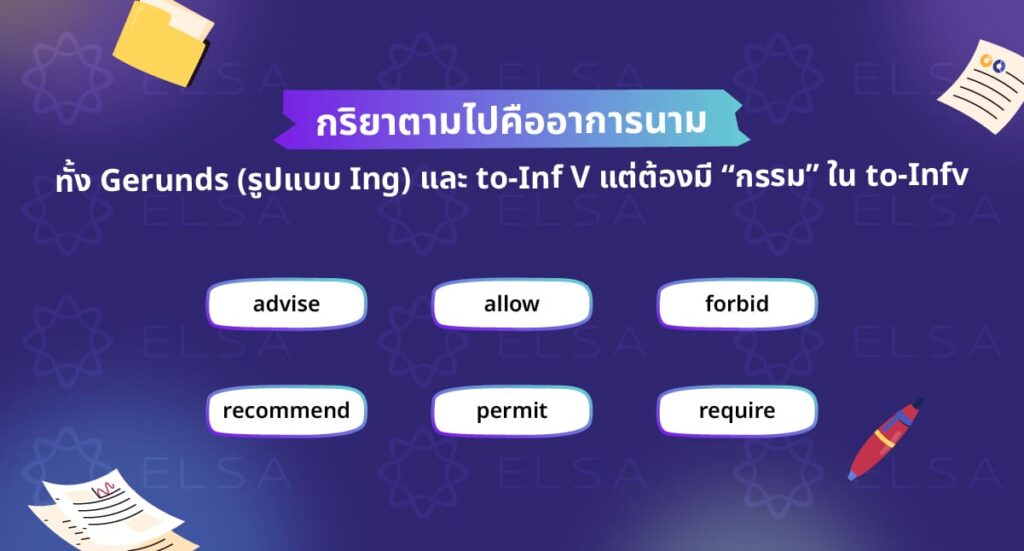
- กริยาสามารถตามด้วย Gerunds (รูปแบบ Ing) และ to-Inf V ได้ แต่ต้องมี “กรรม” ใน to-Infv
กริยาบางคำสามารถตามด้วย gerund (V-ing) และ to-infinitive แต่เมื่อใช้ to-infinitive จำเป็นต้องมีกรรมอยู่ตรงกลางเพื่อให้ประโยคมีความสมเหตุสมผล
| กริยา (Verb) | ความหมาย | ตัวอย่าง |
|---|---|---|
| advise | ให้คําแนะนํา/ปรึกษา | She advised checking the first option. (เธอแนะนำให้ตรวจสอบตัวเลือกแรก) She advised me to check the first option. (เธอแนะนำให้ฉันเลือกตัวเลือกแรก) |
| recommend | แนะนํา | The plumber recommended buying a new faucet. (ช่างประปาแนะนำให้ซื้อก๊อกน้ำใหม่) The plumber recommended me to buy a new faucet. (ช่างประปาแนะนำให้ฉันซื้อก๊อกน้ำใหม่) |
| allow | อนุญาต | They don’t allow smoking in public places. (เขาไม่อนุญาตให้สูบบุหรี่ในที่สาธารณะ) They don’t allow people to smoke in public places. (เขาไม่อนุญาตให้ทุกคนสูบบุหรี่ในที่สาธารณะ) |
| permit | อนุมัติ | He doesn’t permit keeping pets on the premises. (เขาไม่อนุญาตให้เลี้ยงสัตว์เลี้ยงในบริเวณนี้) He doesn’t permit tenants to keep pets on the premises. (เขาไม่อนุญาตให้ผู้เช่าเลี้ยงสัตว์เลี้ยงในบริเวณนี้) |
| forbid | ห้าม | The manager forbade entering the park. (ผู้จัดการห้ามเข้าสวนสาธารณะ) The manager forbade everyone to enter the park. (ผู้จัดการห้ามทุกคนเข้าสวนสาธารณะ) |
| require | ต้องการ | The project required working as a team. (โครงการนี้ต้องการให้เราทำงานเป็นทีม) The project required us to work as a team. (โครงการนี้ต้องการให้เราทำงานเป็นทีม) |
คำคุณศัพท์ตามด้วย อาการนาม
คำคุณศัพท์บางคำจะตามด้วย อาการนาม (V-ing) เช่น
- excited about: ตื่นเต้นกับ
- to be busy: ยุ่งอยู่กับ
- discouraged by: ท้อแท้กับ
- to be glad: ดีใจกับ
- disappointed with: ผิดหวังกับ
- addicted to: ติดอยู่กับ
- concerned/worried about: กังวลเกี่ยวกับ
- afraid/scared of: กลัว
- bored of: เบื่อกับ
- interested in: สนใจกับ
- proud of: ภูมิใจกับ
- known/famous for: ขึ้นชื่อด้วย
- responsible for: รับผิดชอบใน
ตัวอย่าง: I am interested in making video game. (ฉันสนใจกับการทำวิดีโอเกม)
→ interested in เป็นคำคุณศัพท์ ตามด้วยอาการนาม making video game

ใช้ อาการนาม หลังวลีกริยาและสำนวน
กริยาวลี / สำนวนที่ตามด้วยอาการนาม (V-ing) เช่น:
- It’s (not) worth: ไม่คุ้มค่า
- It’s no good: ไม่มีประโยชน์
- It’s no use: ไร้ประโยชน์
- Can’t help/can’t bear/can’t stand: ทนไม่ได้
- There’s no point in: ไม่มีเหตุผล
- Look forward to: ตั้งตารอ รอติดตาม
- A waste of money/time: เสียเงิน เสียเวลา
- Have difficulty (in): มีปัญหากับ
- Be busy (with): ยุ่งกับ
- Be (get) used to: คุ้นกับ ชินกับ
- Confess to: สารภาพ
- Object to: คัดค้าน
- Have a hard time: มีช่วงเวลาที่ยากลำบาก
- Have fun: สนุกกับ
- Have a good time: มีช่วงเวลาดี ๆ
- Spend one’s time: ใช้เวลา
- Have an easy time: มีช่วงเวลาที่ง่ายดาย
- Waste one’s time: เสียเวลา
- Insist on: ยืนกราน อย่างแน่นอน
- Have difficulty/trouble: มีปัญหา
- Have no difficulty/problem: ไม่มีปัญกา/อุปสรรค
ตัวอย่าง: She insisted on paying the bill. (เธอยืนกรานที่จะจ่ายบิล)
→ she เป็นประธานของประโยค และ insist on เป็นกริยาวลี และตามด้วย อาการนาม paying the bill

วิธีแยกแยะระหว่าง อาการนาม (gerund) กับคํานาม (noun)
ผู้เริ่มเรียนภาษาอังกฤษส่วนใหญ่มักสับสนระหว่างการใช้คำนามและอาการนาม ความแตกต่างระหว่างคำนามและอาการนามมีดังนี้:
- อาการนาม จะมีกรรมตามหลังเสมอ ในขณะที่คำนามไม่มี
ตัวอย่าง:
อาการนาม: Ploy should avoid eating too much meat.
→ พลอยควรหลีกเลี่ยงการทานเนื้อสัตว์มากเกินไป
คํานาม: Chai should avoid violent activities.
→ ชายควรหลีกเลี่ยงกิจกรรมรุนแรง
- สามารถให้คํานําหน้าคํานาม (a, an, the) อยู่หน้าคำนาม แต่ไม่สามารถนําหน้าอาการนามได้
ตัวอย่าง:
อาการนาม: Using smartphones is popular now.
→ การใช้สมาร์ทโฟนเป็นที่นิยมในปัจจุบัน
คํานาม: The popularity of smartphones increase nowadays.
→ สมาร์ทโฟนเริ่มดังมากขึ้นในปัจจุบัน
- เพื่อขยายความให้กับอาการนาม เราใช้คำวิเศษณ์ และเพื่อขยายความให้กับคำนาม เราใช้คำคุณศัพท์
ตัวอย่าง:
อาการนาม: Doing exercise regularly brings many benefits.
→ การออกกำลังกายสม่ำเสมอมีประโยชน์มากมาย
คํานาม: Marry drives her regular route to work.
→ แมรี่ขับรถไปทำงานตามเส้นทางปกติของเธอ

วิธีแยกแยะระหว่าง อาการนาม (gerund) กับกริยา (verb)
แม้ว่าอาการนามและกริยาจะมีรูปแบบของกริยาเหมือนกัน แต่หน้าที่ของพวกมันจะแตกต่างกัน จุดที่จะช่วยให้คุณแยกแยะระหว่างกริยากับอาการนามในภาษาอังกฤษ:
- อาการนามสามารถเป็นประธานในประโยคได้ แต่กริยาไม่สามารถเป็นได้
ตัวอย่าง:
อาการนาม: Cooking is very easy.
→ การทำอาหารง่ายมาก
คํากริยา: If I solve this exercise, I will get a high score.
→ ถ้าฉันทำแบบฝึกหัดนี้ได้สำเร็จ ฉันจะได้คะแนนสูง
- อาการนามไม่สามารถเป็นกริยาหลักในประโยคได้
อาการนาม: I enjoy studying English and Biology at school.
→ ฉันชอบเรียนภาษาอังกฤษและชีววิทยาที่โรงเรียน
คํากริยา: I study English and Biology at school.
→ ฉันเรียนภาษาอังกฤษและชีววิทยาที่โรงเรียน
- อาการนามไม่สามารถเป็นกรรมเพื่อแสดงถึงบุคคลได้
ตัวอย่าง:
สามารถพูดว่า: I want him to meet her at coffee shop.
→ ฉันอยากให้เขาเจอเธอที่ร้านกาแฟ
แต่ไม่สามารถพูดว่า: I want him meeting her at coffee shop.

แบบฝึกหัดเกี่ยวกับ อาการนาม
หลังจากที่ได้เรียนรู้เกี่ยวกับตำแหน่งและหน้าที่ของอาการนามในภาษาอังกฤษแล้ว โปรดทำแบบฝึกหัด เกี่ยวกับอาการนามด้านล่างนี้ให้เสร็จ
แบบฝึกหัดที่ 1: จงเลือกคำตอบที่ดีที่สุด
- My friends advise me….(choose/ choosing/ to choose) that university.
- They delay….(send/to send/ sending) this letter to their president.
- Last month, my sister came back home after…. (finish/to finish/finishing) her studies at university.
- We can’t help…(use/ to use/ using) this equipment for our work.
- I am sorry. I am so busy with…(work/ to work/working) that I don’t have time to call you back.
- My brother has difficulty in…(find/to find/finding) job in this city.
- We want them….(do/to do/doing) this for her.
- Nobody needs….(meet/to meet/meeting) her anymore.
- Thank you so much for….(accept/to accept/accepting) our proposal. We are looking forward to….(meet/to meet/meeting) you next month.
- Why don’t you object to…(choose/to choose/choosing) her as our new director?
- Don’t do it!….(Plant/To plant/Planting) cannabis is illegal.
- I have decided ….(buy/to buy/buying) those shoes at this shop.
- They offered us…. (arrange/ to arrange/arranging) room for us without surcharge fee.
- We don’t like…(meet/to meet/ meeting) this guy at her place.
- She promised…(come/to come/coming) back before I fly to Paris.
เฉลย
- My friends advise me to choose that university.
- They delay sending this letter to their president.
- Last month, my sister came back home after finishing her studies at university.
- We can’t help using this equipment for our work.
- I am sorry. I am so busy with work that I don’t have time to call you back.
- My brother has difficulty in finding job in this city.
- We want them to do this for her.
- Nobody needs to meet her anymore.
- Thank you so much for accepting our proposal. We are looking forward to meeting you next month.
- Why don’t you object to choosing her as our new director?
- Don’t do it! Planting cannabis is illegal.
- I have decided to buy those shoes at this shop.
- They offered us to arrange room for us without surcharge fee.
- We don’t like meeting this guy at her place.
- She promised to come back before I fly to Paris
แบบฝึกหัดที่ 2: จงเขียนประโยคใหม่โดยใช้อาการนาม (Gerund)
- It is important to protect the environment.
→ ………………………………………………………………… - She said that she would stop smoking, but she didn’t.
→ ………………………………………………………………… - It is difficult to learn a new language at this age.
→ ………………………………………………………………… - He admitted that he had stolen the money.
→ ………………………………………………………………… - I think you should avoid talking about politics at the meeting.
→ ………………………………………………………………… - To finish this report on time is impossible.
→ ………………………………………………………………… - The teacher suggested that we should review the lesson.
→ ………………………………………………………………… - I like to play the piano in the evening.
→ ………………………………………………………………… - It took me two hours to complete this project.
→ ………………………………………………………………… - She is surprised to hear the news.
→ …………………………………………………………………
เฉลย:
- Protecting the environment is important.
- She said she would stop smoking, but she didn’t.
- Learning a new language at this age is difficult.
- He admitted stealing the money.
- I think you should avoid talking about politics at the meeting.
- Finishing this report on time is impossible.
- The teacher suggested reviewing the lesson.
- I like playing the piano in the evening.
- Completing this project took me two hours.
- Hearing the news surprised her.
แบบฝึกหัดที่ 3: ประโยคแต่ละประโยคมีข้อผิดพลาดที่เกี่ยวข้องกับอาการนาม ลองค้นหาและแก้ไขให้ถูกต้อง
- He denied to cheat in the exam.
→ ………………………………………………………………… - She suggested to go to the beach this weekend.
→ ………………………………………………………………… - I look forward to see you again soon.
→ ………………………………………………………………… - They had difficulty to find accommodation in Tokyo.
→ ………………………………………………………………… - She spent two hours to clean the kitchen.
→ ………………………………………………………………… - The manager doesn’t mind to work late.
→ ………………………………………………………………… - He kept to interrupt me during the meeting.
→ ………………………………………………………………… - The businessman admitted to pay a bribe.
→ ………………………………………………………………… - My father is used to wake up early every day.
→ ………………………………………………………………… - The teacher prevented us to use our mobile phones in class.
→ …………………………………………………………………
เฉลย
- He denied cheating in the exam.
- She suggested going to the beach this weekend.
- I look forward to seeing you again soon.
- They had difficulty finding accommodation in Tokyo.
- She spent two hours cleaning the kitchen.
- The manager doesn’t mind working late.
- He kept interrupting me during the meeting.
- The businessman admitted paying a bribe.
- My father is used to waking up early every day.
- The teacher prevented us from using our mobile phones in class.
คําถามที่พบบ่อย
- Gerund and infinitive ใช้ต่างกันยังไง?
อาการนาม (Gerund) = V-ing, ใช้เป็นคำนาม; คํากริยา (To-infinitive) = to + V, มักระบุจุดประสงค์หรืออนาคต
- ควรใช้ Gerund ตอนไหน?
ใช้อาการนามเป็นประธาน กรรม ส่วนขยาย หรือหลังคำบุพบทและกริยาบางคำ
- Gerund ใช้อะไรขยาย?
อาการนามอาจขยายได้โดยใช้คำคุณศัพท์ คำวิเศษณ์ หรือวลีขยาย เช่น คำนาม
- Gerund กับ present participle ต่างกันอย่างไร?
อาการนาม = V-ing ใช้เหมือนคํานาม; กริยาปัจจุบันกาล = V-ing ใช้เป็นคำคุณศัพท์หรือเพื่อสร้างกาลที่เน้นความต่อเนื่อง

ELSA Premium 1 year
8,497 บาท ->2,685 บาท

ELSA Premium Lifetime
9,999 บาท ->6,100 บาท
บทความนี้จะช่วยให้คุณเข้าใจอาการนาม รวมถึงวิธีการรู้จักและใช้ Gerund ในภาษาอังกฤษแต่ละสถานการณ์ได้อย่างถ่องแท้ นี่คือความรู้พื้นฐานที่จะช่วยให้คุณเขียนประโยคได้สอดคล้อง เป็นธรรมชาติ และถูกต้องตามหลักไวยากรณ์มากขึ้น โปรดติดตามบทความต่อไปกับ ELSA Speak เพื่อเพิ่มความรู้ด้านไวยากรณ์ภาษาอังกฤษของคุณนะ!