Author: ngcamthuy@gmail.com
ตําแหน่งงาน ภาษาอังกฤษ: 140+ ตำแหน่งงานที่พบได้บ่อยที่สุดในทุกแผนกในปี 2026
เนื่องจาก 87% ของบริษัทในประเทศไทยต้องการใช้ภาษาอังกฤษในที่ทำงาน เราควรเชี่ยวชาญคำศัพท์เกี่ยวกับตำแหน่งงาน ในภาษาอังกฤษและบทความนี้จะรวบรวม 140+ ตำแหน่งงานที่พบบ่อยที่สุด พร้อมการออกเสียงตามหลัก IPA และประโยคตัวอย่างโดยละเอียดเพื่อช่วยให้คุณสื่อสารได้อย่างถูกต้องและมั่นใจมากขึ้นในที่ทำงาน
Job title คืออะไร? ความสำคัญของ job title
Job title (ตําแหน่งงาน) คือชื่อตำแหน่งอย่างเป็นทางการที่สะท้อนถึงบทบาท ตำแหน่ง และระดับความรับผิดชอบของบุคคลภายในบริษัท Job title มักปรากฏใน CV สัญญาจ้างงาน อีเมลงาน โปรไฟล์ LinkedIn และเอกสารการสื่อสารภายในและภายนอก และมีความสำคัญอย่างยิ่งในสภาพแวดล้อมระหว่างประเทศ
- การเจรจาต่อรองเงินเดือนอย่างมีประสิทธิภาพ: Job title ช่วยกำหนดระดับและช่วงเงินเดือนที่เหมาะสม หลีกเลี่ยงการประเมินค่าต่ำกว่าความสามารถที่แท้จริง
- Networking & การสื่อสารอย่างมืออาชีพ: ตำแหน่งงานที่ชัดเจนช่วยให้คู่ค้าและเพื่อนร่วมงานเข้าใจบทบาทของคุณได้อย่างถูกต้อง นำไปสู่การสื่อสารที่เหมาะสมกับบุคคลและระดับที่เกี่ยวข้อง
- Career planning (การวางแผนอาชีพ): Job title สะท้อนถึงแต่ละขั้นตอนของการพัฒนาอาชีพ ช่วยให้คุณกำหนดตำแหน่งต่อไปและทักษะที่จำเป็น
ในบริษัทข้ามชาติ job title จะถูกกำหนดมาตรฐานไว้ทั่วโลก และส่งผลโดยตรงต่อโอกาสในการเลื่อนตำแหน่ง การโยกย้ายภายใน และการทำงานในต่างประเทศ การเข้าใจและใช้ตำแหน่งงานในภาษาอังกฤษอย่างถูกต้อง จะช่วยให้คุณปรับตัวได้อย่างรวดเร็ว ทำงานได้อย่างมีประสิทธิภาพ และขยายโอกาสทางอาชีพของคุณได้
โครงสร้างบริษัท (Company Structure)
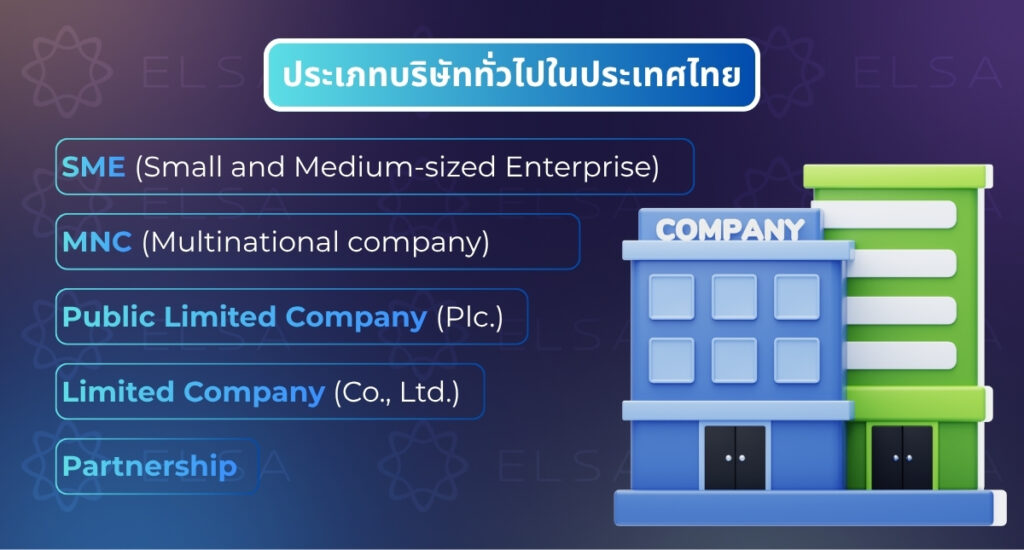
ประเภทบริษัททั่วไปในประเทศไทย
เรามาดูประเภทของบริษัทต่างๆ ที่พบได้ทั่วไปในสภาพแวดล้อมทางธุรกิจในปัจจุบัน ผ่านตารางด้านล่างนี้กัน:
| ประเภทบริษัท (English) | คำอ่าน (IPA) | ความหมาย |
|---|---|---|
| Company | /ˈkʌmpəni/ | บริษัท |
| Corporation | /ˌkɔːrpəˈreɪʃn/ | บริษัทจำกัด |
| Consortium | /kənˈsɔːrsiəm/ | กลุ่มบริษัท |
| Subsidiary | /səbˈsɪdiəri/ | บริษัทในเครือ |
| Private company | /ˈpraɪvət ˈkʌmpəni/ | บริษัทเอกชน |
| Limited liability company (LLC) | /ˈlɪmɪtɪd laɪəˈbɪləti ˈkʌmpəni/ | บริษัทจำกัดความรับผิด (LLC) |
| Joint stock company | /dʒɔɪnt ˈstɒk ˈkʌmpəni/ | บริษัทมหาชน |
| Affiliate | /əˈfɪlieɪt/ | บริษัทในเครือ |
| Headquarters | /ˈhedˌkwɔːrtərz/ | สำนักงานใหญ่ |
| Partnership company | /ˈpɑːrtnərʃɪp ˈkʌmpəni/ | บริษัทห้างหุ้นส่วน |
| Private enterprise | /ˈpraɪvət ˈentərpraɪz/ | ธุรกิจเอกชน |
| State-owned enterprise | /ˈsteɪt oʊnd ˈentərpraɪz/ | รัฐวิสาหกิจ |
| Branch office | /ˈbrɑːntʃ ˈɒfɪs/ | สาขา |
| Regional office | /ˈriːdʒənəl ˈɒfɪs/ | สำนักงานภูมิภาค |
| Representative office | /ˌreprɪˈzentətɪv ˈɒfɪs/ | สำนักงานผู้แทน |
| SME (Small and Medium-sized Enterprise) | /ˌsmɔːl ænd ˈmiːdiəm saɪzd ˈentərpraɪz/ | วิสาหกิจขนาดกลางและขนาดย่อม |
| MNC (Multinational company) | /ˌmʌltɪˈnæʃənəl ˈkʌmpəni/ | บริษัทข้ามชาติ |
| Limited Company (Co., Ltd.) | /ˈlɪmɪtɪd ˈkʌmpəni/ | บริษัทจำกัด |
| Public Limited Company (Plc.) | /ˈpʌblɪk ˈlɪmɪtɪd ˈkʌmpəni/ | บริษัทมหาชนจำกัด |
| Partnership | /ˈpɑːrtnərʃɪp/ | ห้างหุ้นส่วน / หุ้นส่วนธุรกิจ |
>>> อ่านเพิ่มเติม: 16 วิธีในการ แนะนําตัวภาษาอังกฤษ สัมภาษณ์งาน
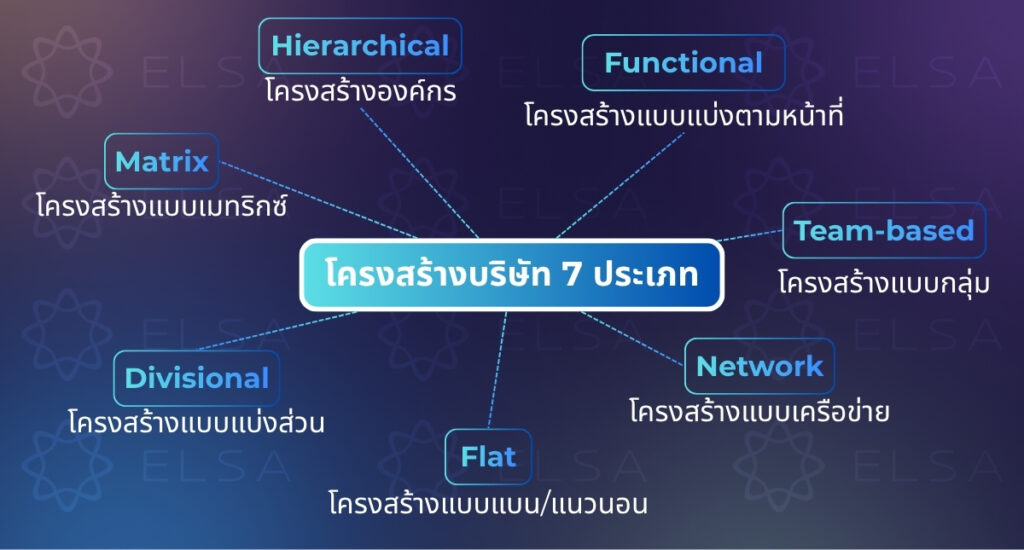
โครงสร้างบริษัท 7 ประเภท
แต่ละธุรกิจจะเลือกโครงสร้างองค์กรที่แตกต่างกันขึ้นอยู่กับขนาด อุตสาหกรรม และวัฒนธรรมการทำงาน การทำความเข้าใจโครงสร้างบริษัททั่วไปจะช่วยให้ธุรกิจจัดระเบียบการดำเนินงานได้อย่างมีประสิทธิภาพ ปรับปรุงการจัดการ และเพิ่มความสามารถในการปรับตัวให้เข้ากับตลาด
- โครงสร้างองค์กร (Hierarchical): องค์กรที่มีลำดับชั้นชัดเจน อำนาจกระจายจากบนลงล่าง
- โครงสร้างแบบแบ่งตามหน้าที่ (Functional): แผนกต่างๆ แบ่งตามหน้าที่ เช่น การตลาด การเงิน และทรัพยากรบุคคล
- โครงสร้างแบบเมทริกซ์ (Matrix): ผสมผสานลำดับชั้นและหน้าที่ ทำให้พนักงานสามารถรายงานต่อผู้จัดการหลายคนได้
- โครงสร้างแบบแบ่งส่วน (Divisional): แบ่งตามผลิตภัณฑ์ บริการ หรือภูมิภาค โดยแต่ละแผนกดำเนินงานอย่างค่อนข้างเป็นอิสระ
- โครงสร้างแบบเครือข่าย (Network): เชื่อมต่อหลายหน่วยงานและพันธมิตรภายนอกในระบบที่ยืดหยุ่น
- โครงสร้างแบบกลุ่ม (Team-based): เน้นกลุ่มขนาดเล็ก ให้ความสำคัญกับการทำงานร่วมกันและนวัตกรรม
- โครงสร้างแบบแบน/แนวนอน (Flat): ระดับการจัดการน้อยลง มีความเป็นอิสระมากขึ้น พบได้ทั่วไปในบริษัทสตาร์ทอัพ
5 ระดับของพนักงานในบริษัท
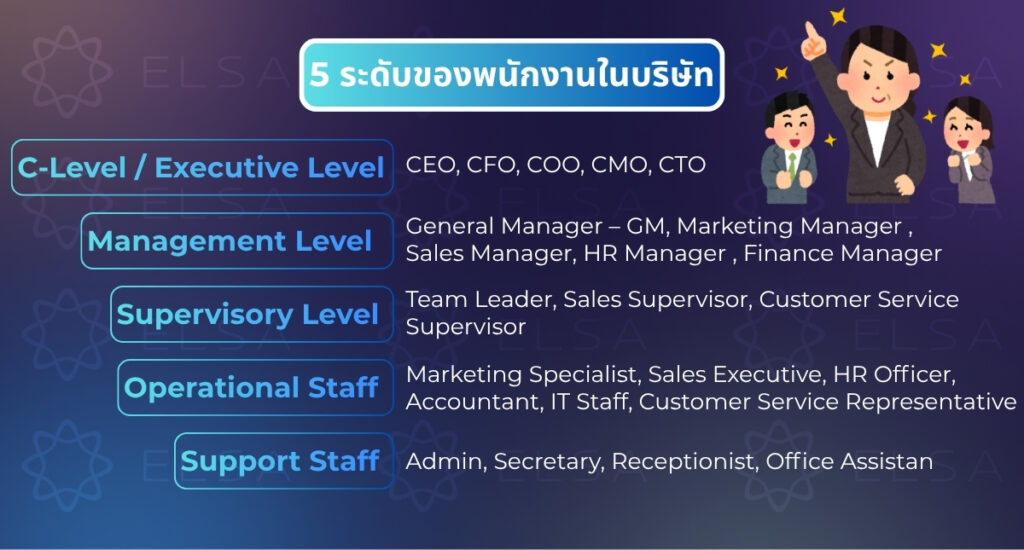
ในธุรกิจ บุคลากรโดยทั่วไปจะถูกแบ่งออกเป็นระดับต่างๆ ตามบทบาท อำนาจ และขอบเขตความรับผิดชอบ ลำดับชั้นที่ชัดเจนช่วยให้องค์กรดำเนินงานได้อย่างมีประสิทธิภาพ ทำให้การจัดการ การตัดสินใจ และการปฏิบัติงานเป็นไปอย่างราบรื่น
- ระดับผู้บริหาร (C-Level / Executive Level): นี่คือระดับสูงสุดในธุรกิจ รับผิดชอบทิศทางเชิงกลยุทธ์ การตัดสินใจที่สำคัญ และการจัดการองค์กรทั้งหมด
ตัวอย่าง: CEO (ประธานเจ้าหน้าที่บริหาร), CFO (ประธานเจ้าหน้าที่ฝ่ายการเงิน), COO (ประธานเจ้าหน้าที่ฝ่ายปฏิบัติการ), CMO (ประธานเจ้าหน้าที่ฝ่ายการตลาด), CTO (ประธานเจ้าหน้าที่ฝ่ายเทคโนโลยี)
- ระดับบริหาร (Management Level): รับผิดชอบในการบริหารจัดการแผนกและทีมงาน ดำเนินการตามกลยุทธ์จากคณะกรรมการบริหารลงมาถึงพนักงาน และตรวจสอบให้แน่ใจว่าบรรลุเป้าหมายอย่างมีประสิทธิภาพ
ตัวอย่าง: General Manager – GM (ผู้จัดการทั่วไป), Marketing Manager (ผู้จัดการฝ่ายการตลาด), Sales Manager (ผู้จัดการฝ่ายขาย), HR Manager (ผู้จัดการฝ่ายทรัพยากรบุคคล), Finance Manager (ผู้จัดการฝ่ายการเงิน)
- ระดับหัวหน้างาน (Supervisory Level): มีบทบาทในการกำกับดูแลงานประจำวัน มอบหมายงานให้พนักงาน และรายงานผลต่อผู้บริหาร
ตัวอย่าง: Team Leader (หัวหน้าทีม), Sales Supervisor (หัวหน้างานฝ่ายขาย), Customer Service Supervisor (หัวหน้างานฝ่ายบริการลูกค้า)
- ระดับพนักงานปฏิบัติการ (Operational Staff): กำลังหลักที่ปฏิบัติงานเฉพาะด้านโดยตรงเพื่อให้บรรลุเป้าหมายขององค์กร
ตัวอย่าง: Marketing Specialist (ผู้เชี่ยวชาญด้านการตลาด), Sales Executive (เจ้าหน้าที่บริหารงานขาย), HR Officer (เจ้าหน้าที่ฝ่ายทรัพยากรบุคคล), Accountant (นักบัญชี), IT Staff (เจ้าหน้าที่ฝ่ายไอที), Customer Service Representative (พนักงานฝ่ายบริการลูกค้า)
- พนักงานสนับสนุน (Support Staff): รับผิดชอบด้านการสนับสนุนด้านธุรการ การประสานงาน และการดำเนินงานด้านโลจิสติกส์ ช่วยให้แผนกอื่นๆ ดำเนินงานได้อย่างราบรื่น
ตัวอย่าง: Administrative Staff – Admin (พนักงานธุรการ), Secretary (เลขานุการ), Receptionist (พนักงานต้อนรับ), Office Assistant (ผู้ช่วยสำนักงาน)
คุณรู้วิธีตั้งชื่อกลุ่มภาษาอังกฤษในที่ทำงานหรือกิจกรรมการสร้างทีมสัมพันธ์แล้วหรือยัง? มาลองอ่านบทความนี้เพื่อหาไอเดียตั้งชื่อทีมของคุณกันเถอะ
ตำแหน่งงานเรียงตามลำดับ (Job Titles by Hierarchy)
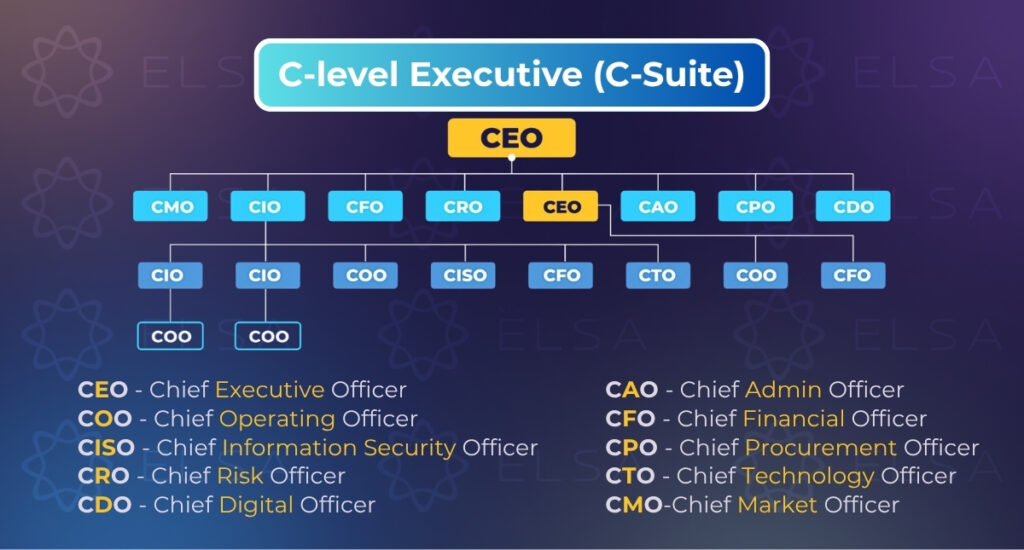
C-level Executive (C-Suite)
| ภาษาอังกฤษ (คำย่อ) | คำอ่าน (IPA) | ภาษาไทย | ตัวอย่าง |
|---|---|---|---|
| CEO (Chief Executive Officer) | /ˌsiː iː ˈoʊ/ | ประธานเจ้าหน้าที่บริหาร | The CEO sets the company’s overall strategy. |
| CFO (Chief Financial Officer) | /ˌsiː ɛf ˈoʊ/ | ประธานเจ้าหน้าที่การเงิน | The CFO manages budgets and financial planning. |
| COO (Chief Operating Officer) | /ˌsiː oʊ ˈoʊ/ | ประธานเจ้าหน้าที่ฝ่ายปฏิบัติการ | The COO oversees daily operations. |
| CHRO (Chief Human Resources Officer) | /ˌsiː eɪtʃ ɑːr ˈoʊ/ | ประธานเจ้าหน้าที่ฝ่ายทรัพยากรบุคคล | The CHRO develops HR strategy and culture. |
| CMO (Chief Marketing Officer) | /ˌsiː ɛm ˈoʊ/ | ประธานเจ้าหน้าที่ฝ่ายการตลาด | The CMO leads branding and marketing campaigns. |
| CTO (Chief Technology Officer) | /ˌsiː tiː ˈoʊ/ | ประธานเจ้าหน้าที่ฝ่ายเทคโนโลยี | The CTO drives technology and innovation. |
| CIO (Chief Information Officer) | /ˌsiː aɪ ˈoʊ/ | ประธานเจ้าหน้าที่ฝ่ายสารสนเทศ | The CIO manages IT systems and data. |
| CHO (Chief Human Officer) | /ˌsiː eɪtʃ ˈoʊ/ | ประธานเจ้าหน้าที่ฝ่ายบุคลากร | The CHO focuses on employee experience. |
| CLO (Chief Legal Officer) | /ˌsiː ɛl ˈoʊ/ | ประธานเจ้าหน้าที่ฝ่ายกฎหมาย | The CLO handles legal compliance and risks. |
| CSO (Chief Strategy Officer) | /ˌsiː ɛs ˈoʊ/ | ประธานเจ้าหน้าที่ฝ่ายกลยุทธ์ | The CSO plans long-term business strategy. |
| CRO (Chief Revenue Officer) | /ˌsiː ɑːr ˈoʊ/ | ประธานเจ้าหน้าที่ฝ่ายรายได้ | The CRO drives sales and revenue growth. |
| CPO (Chief People Officer) | /ˌsiː piː ˈoʊ/ | ประธานเจ้าหน้าที่ฝ่ายทรัพยากรบุคคล | The CPO oversees talent management and company culture. |
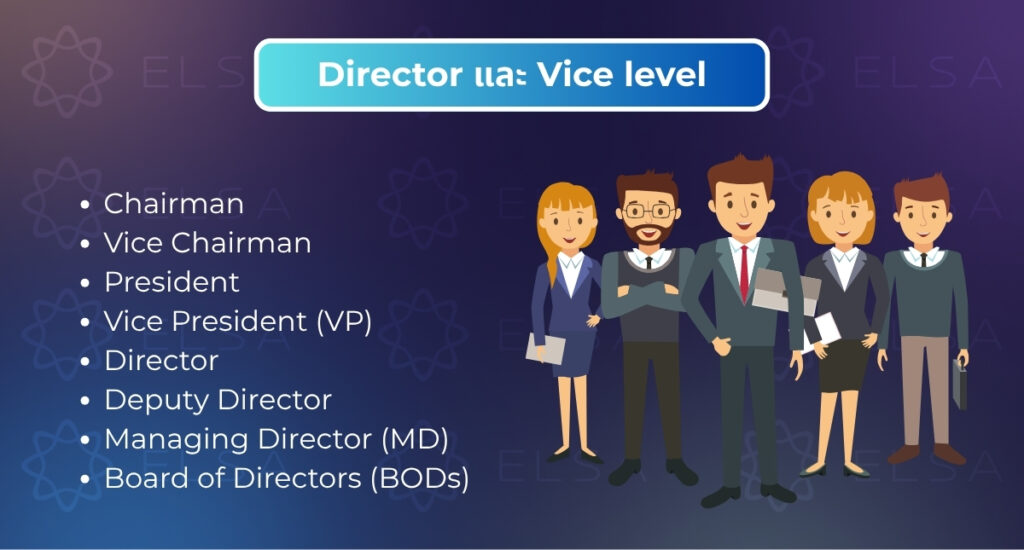
Director และ Vice level
| ภาษาอังกฤษ (คำย่อ) | คำอ่าน (IPA) | ภาษาไทย | ตัวอย่าง |
|---|---|---|---|
| Chairman | /ˈtʃeərmən/ | ประธานกรรมการ | The Chairman leads the board meetings. |
| Vice Chairman | /vaɪs ˈtʃeərmən/ | รองประธานกรรมการ | The Vice Chairman supports the Chairman. |
| President | /ˈprezɪdənt/ | ประธานบริษัท | The President oversees company performance. |
| Vice President (VP) | /vaɪs ˈprezɪdənt/ | รองประธานบริษัท | The VP manages a specific business division. |
| Director | /dəˈrektər/ | ผู้อำนวยการ | The Director sets departmental direction. |
| Deputy Director | /ˈdepjuti dəˈrektər/ | รองผู้อำนวยการ | The Deputy Director assists the Director. |
| Managing Director (MD) | /ˈmænɪdʒɪŋ dəˈrektər/ | กรรมการผู้จัดการ | The MD runs daily business operations. |
| Board of Directors (BODs) | /bɔːrd əv dəˈrektərz/ | คณะกรรมการบริษัท | The BODs make major strategic decisions. |
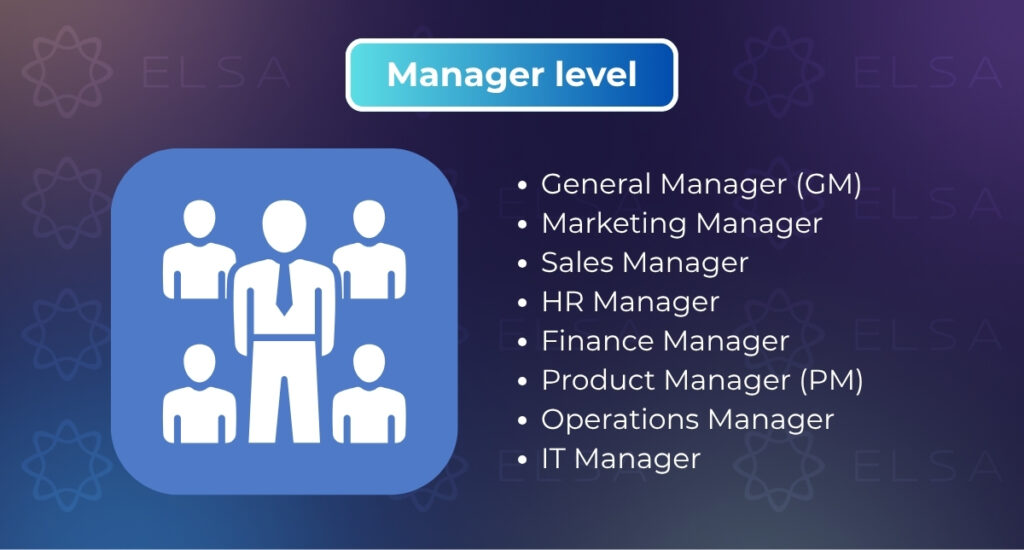
Manager level
| ภาษาอังกฤษ (คำย่อ) | คำอ่าน (IPA) | ภาษาไทย | ตัวอย่าง |
|---|---|---|---|
| Manager | /ˈmænɪdʒər/ | ผู้จัดการ | The manager leads the team and assigns tasks. |
| General Manager (GM) | /ˌdʒenrəl ˈmænɪdʒər/ | ผู้จัดการทั่วไป | The GM oversees overall business operations. |
| Marketing Manager | /ˈmɑːrkɪtɪŋ ˈmænɪdʒər/ | ผู้จัดการฝ่ายการตลาด | The Marketing Manager plans marketing strategies. |
| Sales Manager | /seɪlz ˈmænɪdʒər/ | ผู้จัดการฝ่ายขาย | The Sales Manager drives sales performance. |
| HR Manager | /ˌeɪtʃ ɑːr ˈmænɪdʒər/ | ผู้จัดการฝ่ายทรัพยากรบุคคล | The HR Manager manages recruitment and staff welfare. |
| Finance Manager | /ˈfaɪnæns ˈmænɪdʒər/ | ผู้จัดการฝ่ายการเงิน | The Finance Manager controls budgets and cash flow. |
| Product Manager (PM) | /ˈprɒdʌkt ˈmænɪdʒər/ | ผู้จัดการผลิตภัณฑ์ | The Product Manager develops product strategy. |
| Operations Manager | /ˌɒpəˈreɪʃənz ˈmænɪdʒər/ | ผู้จัดการฝ่ายปฏิบัติการ | The Operations Manager improves operational efficiency. |
| IT Manager | /ˌaɪ ˈtiː ˈmænɪdʒər/ | ผู้จัดการฝ่ายไอที | The IT Manager manages IT systems and security. |
| Accounting Manager | /əˈkaʊntɪŋ ˈmænɪdʒər/ | ผู้จัดการฝ่ายบัญชี | The Accounting Manager oversees financial records. |
| Purchasing Manager | /ˈpɜːrtʃəsɪŋ ˈmænɪdʒər/ | ผู้จัดการฝ่ายจัดซื้อ | The Purchasing Manager handles supplier sourcing. |
| R&D Manager | /ˌɑːr ən ˈdiː ˈmænɪdʒər/ | ผู้จัดการฝ่ายวิจัยและพัฒนา | The R&D Manager leads product research and innovation. |
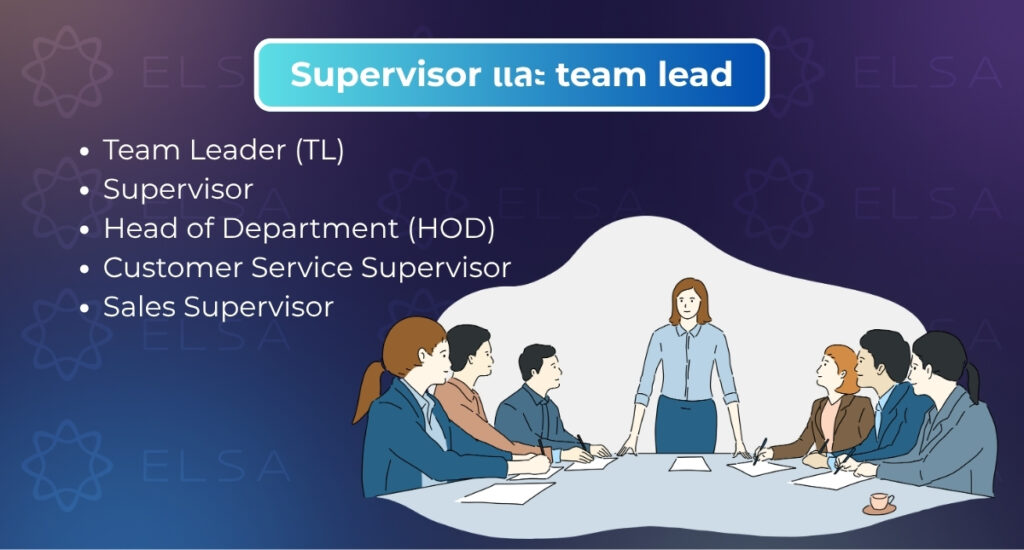
Supervisor และ team lead
| ภาษาอังกฤษ (คำย่อ) | คำอ่าน (IPA) | ภาษาไทย | ตัวอย่าง |
|---|---|---|---|
| Team Leader (TL) | /tiːm ˈliːdər/ | หัวหน้าทีม | The Team Leader assigns tasks to team members. |
| Supervisor | /ˈsuːpərvaɪzər/ | หัวหน้างาน | The Supervisor monitors daily work performance. |
| Head of Department (HOD) | /hed əv dɪˈpɑːrtmənt/ | หัวหน้าแผนก | The Head of Department manages the whole department. |
| Customer Service Supervisor | /ˈkʌstəmər ˈsɜːrvɪs ˈsuːpərvaɪzər/ | หัวหน้างานฝ่ายบริการลูกค้า | The CS Supervisor handles customer service quality. |
| Sales Supervisor | /seɪlz ˈsuːpərvaɪzər/ | หัวหน้างานฝ่ายขาย | The Sales Supervisor tracks sales team performance. |
>>> อ่านเพิ่มเติม:
- บทสนทนาภาษาอังกฤษเกี่ยวกับการทำงานที่ใช้บ่อยที่สุด
- วิธีแนะนำตัวสัมภาษณ์งานภาษาอังกฤษให้ประทับใจผู้ฟังที่สุด
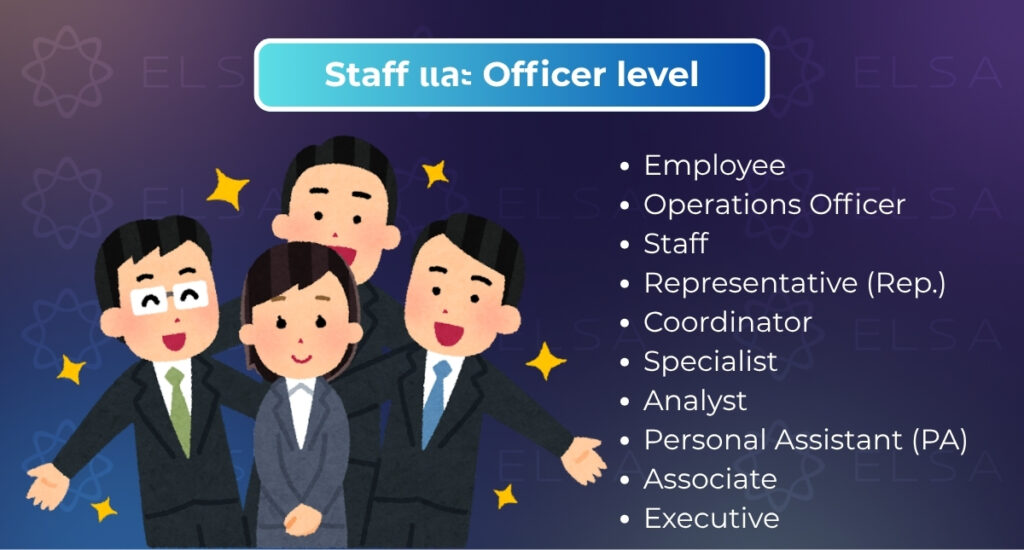
Staff และ Officer level
| ภาษาอังกฤษ (คำย่อ) | คำอ่าน (IPA) | ภาษาไทย | ตัวอย่าง |
|---|---|---|---|
| Employee | /ɪmˈplɔɪiː/ | พนักงาน | The employee follows company policies. |
| Operations Officer | /ˌɒpəˈreɪʃənz ˈɒfɪsər/ | เจ้าหน้าที่ฝ่ายปฏิบัติการ | The operations officer manages daily business operations. |
| Staff | /stæf/ | พนักงาน | The staff support daily operations. |
| Representative (Rep.) | /ˌreprɪˈzentətɪv/ | ตัวแทน | The representative communicates with clients. |
| Coordinator | /koʊˈɔːrdɪneɪtər/ | ผู้ประสานงาน | The coordinator schedules and tracks projects. |
| Specialist | /ˈspeʃəlɪst/ | ผู้เชี่ยวชาญเฉพาะด้าน | The specialist handles complex tasks. |
| Analyst | /ˈænəlɪst/ | นักวิเคราะห์ | The analyst analyzes data and reports insights. |
| Personal Assistant (PA) | /ˈpɜːrsənl əˈsɪstənt/ | ผู้ช่วยส่วนตัว | The personal assistant supports the executive with daily tasks. |
| Associate | /əˈsoʊsieɪt/ | เจ้าหน้าที่ระดับต้น | The associate works on assigned tasks. |
| Executive | /ɪɡˈzekjətɪv/ | เจ้าหน้าที่บริหาร / พนักงานระดับปฏิบัติการ | The executive executes business plans. |
| Consultant | /kənˈsʌltənt/ | ที่ปรึกษา | The consultant provides professional advice. |
| Expert | /ˈekspɜːrt/ | ผู้เชี่ยวชาญ | The expert solves technical problems. |
| Collaborator | /kəˈlæbəreɪtər/ | ผู้ร่วมงาน, ผู้ร่วมโครงการ | The collaborator works with cross-functional teams. |
Entry level และ Support
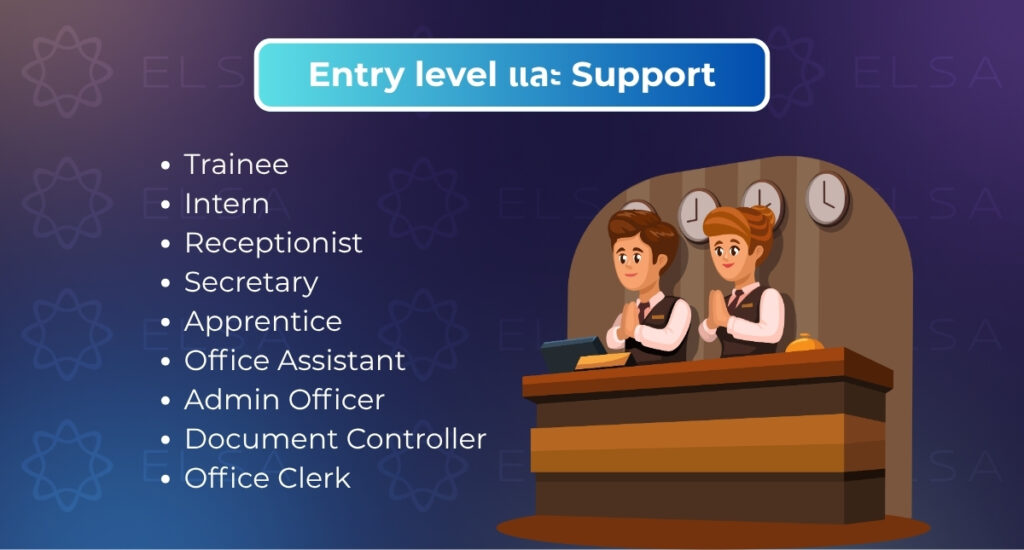
| ภาษาอังกฤษ (คำย่อ) | คำอ่าน (IPA) | ภาษาไทย | ตัวอย่าง |
|---|---|---|---|
| Trainee | /treɪˈniː/ | พนักงานฝึกหัด | The trainee learns job skills on the job. |
| Intern | /ˈɪntɜːrn/ | นักศึกษาฝึกงาน | The intern supports the team during training. |
| Receptionist | /rɪˈsepʃənɪst/ | พนักงานต้อนรับ | The receptionist greets visitors and answers calls. |
| Secretary | /ˈsekrəteri/ | เลขานุการ | The secretary manages schedules and documents. |
| Apprentice | /əˈprentɪs/ | เด็กฝึกงาน | The apprentice learns under senior staff. |
| Office Assistant | /ˈɒfɪs əˈsɪstənt/ | ผู้ช่วยสำนักงาน | The office assistant handles daily office tasks. |
| Admin Officer | /ˈædmɪn ˈɒfɪsər/ | เจ้าหน้าที่ธุรการ | The admin officer manages administrative work. |
| Document Controller | /ˈdɒkjument kənˈtroʊlər/ | เจ้าหน้าที่ควบคุมเอกสาร | The document controller organizes company files. |
| Office Clerk | /ˈɒfɪs klɜːrk/ | เสมียนสำนักงาน | The office clerk processes paperwork. |
| Messenger | /ˈmesɪndʒər/ | พนักงานส่งเอกสาร | The messenger delivers documents. |
| Driver | /ˈdraɪvər/ | พนักงานขับรถ | The driver transports staff safely. |
| Guard | /ɡɑːrd/ | ยาม / รปภ. | The guard ensures workplace security. |
| Housekeeper | /ˈhaʊskiːpər/ | แม่บ้าน | The housekeeper keeps the office clean. |
คำศัพท์เกี่ยวกับตำแหน่งงานตามแผนก (Job Titles by Department)
Marketing & Sales Department
| ภาษาอังกฤษ (คำย่อ) | คำอ่าน (IPA) | ภาษาไทย | ตัวอย่าง |
|---|---|---|---|
| Sales Representative | /seɪlz ˌreprɪˈzentətɪv/ | พนักงานขาย | The sales representative meets and advises customers. |
| Marketing Director | /ˈmɑːrkɪtɪŋ dəˈrektər/ | ผู้อำนวยการฝ่ายการตลาด | The Marketing Director sets marketing strategy. |
| Brand Manager | /brænd ˈmænɪdʒər/ | ผู้จัดการแบรนด์ | The Brand Manager builds brand identity. |
| Digital Marketing Specialist | /ˈdɪdʒɪtl ˈmɑːrkɪtɪŋ ˈspeʃəlɪst/ | ผู้เชี่ยวชาญการตลาดดิจิทัล | The specialist runs online marketing campaigns. |
| Sales Manager | /seɪlz ˈmænɪdʒər/ | ผู้จัดการฝ่ายขาย | The Sales Manager leads the sales team. |
| Sales Coordinator | /seɪlz koʊˈɔːrdɪneɪtər/ | ผู้ประสานงานฝ่ายขาย | The coordinator supports sales activities. |
| Sales Engineer | /seɪlz ˌendʒɪˈnɪr/ | วิศวกรฝ่ายขาย | The sales engineer explains technical solutions. |
| Customer Relationship Manager (CRM) | /ˈkʌstəmər rɪˈleɪʃənʃɪp ˈmænɪdʒər/ | ผู้จัดการฝ่ายบริหารความสัมพันธ์ลูกค้า | The CRM manager maintains customer relationships. |
| Business Development Manager | /ˈbɪznəs dɪˈveləpmənt ˈmænɪdʒər/ | ผู้จัดการพัฒนาธุรกิจ | The BDM identifies new business opportunities. |
| Sales Administrator | /seɪlz ədˈmɪnɪstreɪtər/ | เจ้าหน้าที่ธุรการฝ่ายขาย | The sales administrator manages sales documents. |
| Sales Assistant | /seɪlz əˈsɪstənt/ | ผู้ช่วยฝ่ายขาย | The sales assistant supports daily sales tasks. |

Finance & Accounting Department
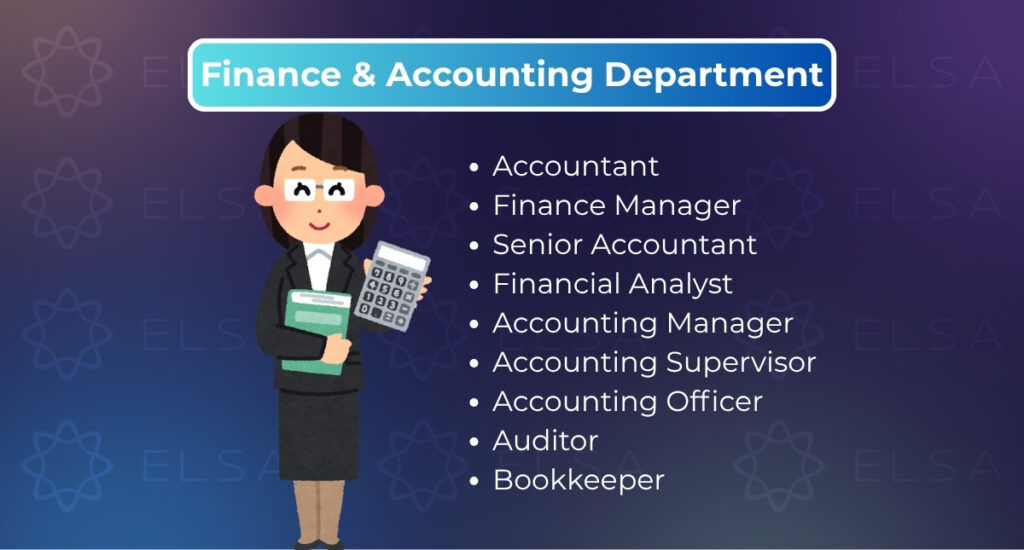
| ภาษาอังกฤษ (คำย่อ) | คำอ่าน (IPA) | ภาษาไทย | ตัวอย่าง |
|---|---|---|---|
| Accountant | /əˈkaʊntənt/ | นักบัญชี | The accountant prepares financial reports. |
| Finance Manager | /ˈfaɪnæns ˈmænɪdʒər/ | ผู้จัดการฝ่ายการเงิน | The Finance Manager controls financial planning. |
| Senior Accountant | /ˈsiːnjər əˈkaʊntənt/ | นักบัญชีอาวุโส | The senior accountant reviews financial statements. |
| Financial Analyst | /faɪˈnænʃl ˈænəlɪst/ | นักวิเคราะห์การเงิน | The financial analyst analyzes company performance. |
| Accounting Manager | /əˈkaʊntɪŋ ˈmænɪdʒər/ | ผู้จัดการฝ่ายบัญชี | The Accounting Manager oversees accounting operations. |
| Accounting Supervisor | /əˈkaʊntɪŋ ˈsuːpərvaɪzər/ | หัวหน้างานบัญชี | The Accounting Supervisor checks daily accounting work. |
| Accounting Officer | /əˈkaʊntɪŋ ˈɒfɪsər/ | เจ้าหน้าที่บัญชี | The Accounting Officer records transactions. |
| Auditor | /ˈɔːdɪtər/ | ผู้สอบบัญชี | The auditor audits financial records. |
| Bookkeeper | /ˈbʊkkiːpər/ | พนักงานทำบัญชี | The bookkeeper maintains accounting books. |
| Tax Officer | /tæks ˈɒfɪsər/ | เจ้าหน้าที่ภาษี | The tax officer handles tax filings. |
| Credit Controller | /ˈkredɪt kənˈtroʊlər/ | เจ้าหน้าที่ควบคุมเครดิต | The credit controller manages customer credit. |
| Billing Officer | /ˈbɪlɪŋ ˈɒfɪsər/ | เจ้าหน้าที่วางบิล | The billing officer issues invoices. |
| Costing Manager | /ˈkɒstɪŋ ˈmænɪdʒər/ | ผู้จัดการต้นทุน | The costing manager controls production costs. |
IT Department
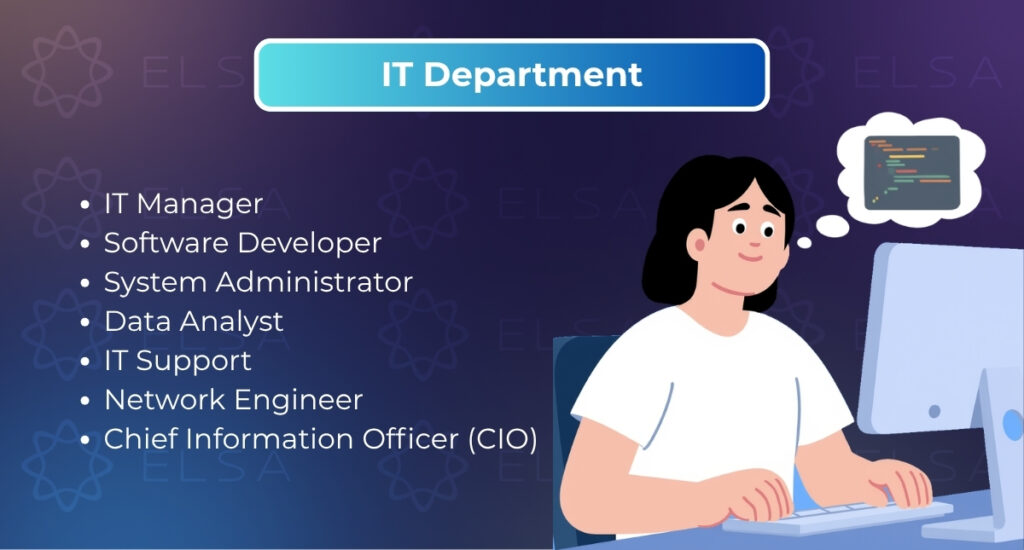
| ภาษาอังกฤษ (คำย่อ) | คำอ่าน (IPA) | ภาษาไทย | ตัวอย่าง |
|---|---|---|---|
| IT Manager | /ˌaɪ ˈtiː ˈmænɪdʒər/ | ผู้จัดการฝ่ายไอที | The IT Manager oversees IT systems and teams. |
| Software Developer | /ˈsɒftweər dɪˈveləpər/ | นักพัฒนาซอฟต์แวร์ | The software developer builds applications. |
| System Administrator | /ˈsɪstəm ədˈmɪnɪstreɪtər/ | ผู้ดูแลระบบ | The system administrator maintains servers. |
| Data Analyst | /ˈdeɪtə ˈænəlɪst/ | นักวิเคราะห์ข้อมูล | The data analyst analyzes business data. |
| IT Support | /ˌaɪ ˈtiː səˈpɔːrt/ | เจ้าหน้าที่สนับสนุนไอที | IT support fixes technical issues. |
| Network Engineer | /ˈnetwɜːrk ˌendʒɪˈnɪr/ | วิศวกรเครือข่าย | The network engineer manages network security. |
| Chief Information Officer (CIO) | /ˌsiː aɪ ˈoʊ/ | ประธานเจ้าหน้าที่สารสนเทศ | The CIO leads the company’s IT strategy. |
Operations & Supply Chain
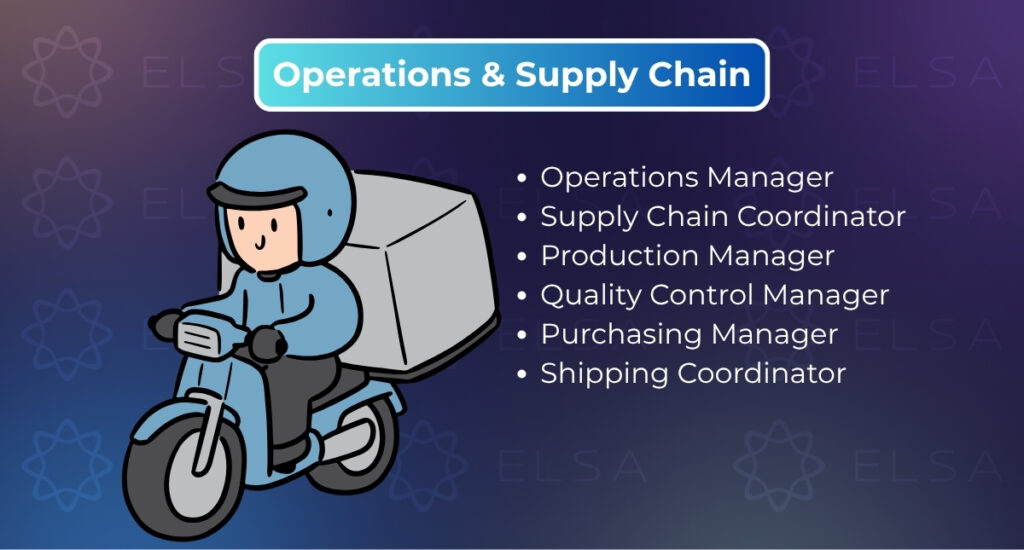
| ภาษาอังกฤษ (คำย่อ) | คำอ่าน (IPA) | ภาษาไทย | ตัวอย่าง |
|---|---|---|---|
| Operations Manager | /ˌɒpəˈreɪʃənz ˈmænɪdʒər/ | ผู้จัดการฝ่ายปฏิบัติการ | The Operations Manager oversees daily operations. |
| Supply Chain Coordinator | /səˈplaɪ tʃeɪn koʊˈɔːrdɪneɪtər/ | ผู้ประสานงานซัพพลายเชน | The coordinator manages supply chain processes. |
| Production Manager | /prəˈdʌkʃən ˈmænɪdʒər/ | ผู้จัดการฝ่ายการผลิต | The Production Manager controls production schedules. |
| Quality Control Manager | /ˈkwɒləti kənˈtroʊl ˈmænɪdʒər/ | ผู้จัดการควบคุมคุณภาพ | The QC Manager ensures product quality standards. |
| Purchasing Manager | /ˈpɜːrtʃəsɪŋ ˈmænɪdʒər/ | ผู้จัดการฝ่ายจัดซื้อ | The Purchasing Manager sources materials and suppliers. |
| Shipping Coordinator | /ˈʃɪpɪŋ koʊˈɔːrdɪneɪtər/ | ผู้ประสานงานการจัดส่ง | The shipping coordinator arranges product shipments. |
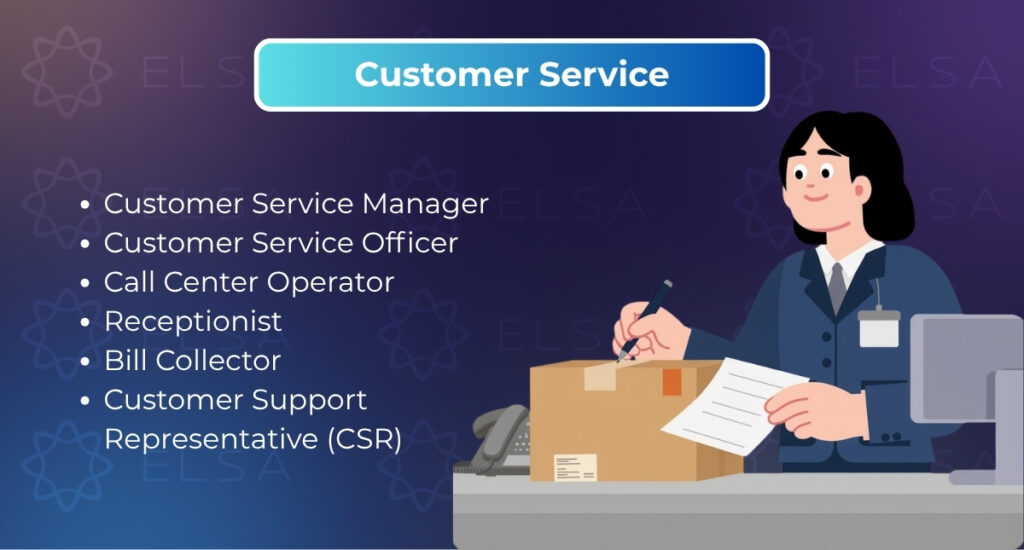
Customer Service
| ภาษาอังกฤษ (คำย่อ) | คำอ่าน (IPA) | ภาษาไทย | ตัวอย่าง |
|---|---|---|---|
| Customer Service Manager | /ˈkʌstəmər ˈsɜːrvɪs ˈmænɪdʒər/ | ผู้จัดการฝ่ายบริการลูกค้า | The manager oversees customer service operations. |
| Customer Support Representative (CSR) | /ˈkʌstəmər səˈpɔːrt ˌreprɪˈzentətɪv/ | เจ้าหน้าที่ดูแลลูกค้า | The CSR answers customer inquiries and complaints. |
| Customer Service Officer | /ˈkʌstəmər ˈsɜːrvɪs ˈɒfɪsər/ | เจ้าหน้าที่บริการลูกค้า | The officer assists customers with requests. |
| Call Center Operator | /kɔːl ˈsentər ˈɒpəreɪtər/ | พนักงานคอลเซ็นเตอร์ | The operator handles inbound and outbound calls. |
| Receptionist | /rɪˈsepʃənɪst/ | พนักงานต้อนรับ | The receptionist welcomes customers and visitors. |
| Bill Collector | /bɪl kəˈlektər/ | พนักงานติดตามหนี้ | The bill collector follows up on outstanding payments. |
>>> อ่านเพิ่มเติม: วิธีเขียนอีเมลภาษาอังกฤษแบบมืออาชีพและเหมาะสำหรับทุกสถานการณ์
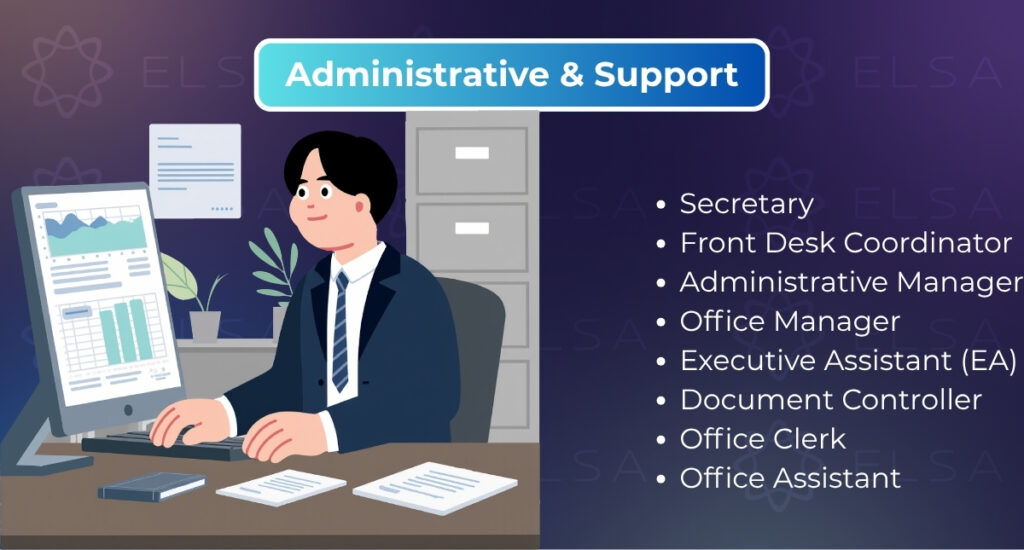
Administrative & Support
| ภาษาอังกฤษ (คำย่อ) | คำอ่าน (IPA) | ภาษาไทย | ตัวอย่าง |
|---|---|---|---|
| Secretary | /ˈsekrəteri/ | เลขานุการ | The secretary manages schedules and documents. |
| Front Desk Coordinator | /ˌfrʌnt desk koʊˈɔːrdɪneɪtər/ | เจ้าหน้าที่ประสานงานฝ่ายต้อนรับส่วนหน้า | The front desk coordinator welcomes visitors and handles inquiries. |
| Administrative Manager | /ədˈmɪnɪstrətɪv ˈmænɪdʒər/ | ผู้จัดการฝ่ายธุรการ | The administrative manager oversees office administration. |
| Office Manager | /ˈɒfɪs ˈmænɪdʒər/ | ผู้จัดการสำนักงาน | The office manager manages daily office operations. |
| Executive Assistant (EA) | /ɪɡˈzekjətɪv əˈsɪstənt/ | ผู้ช่วยผู้บริหาร | The EA supports senior executives. |
| Document Controller | /ˈdɒkjument kənˈtroʊlər/ | เจ้าหน้าที่ควบคุมเอกสาร | The document controller manages company documents. |
| Office Clerk | /ˈɒfɪs klɜːrk/ | เสมียนสำนักงาน | The office clerk handles paperwork. |
| Office Assistant | /ˈɒfɪs əˈsɪstənt/ | ผู้ช่วยสำนักงาน | The office assistant supports daily tasks. |
| Driver | /ˈdraɪvər/ | พนักงานขับรถ | The driver transports staff safely. |
| Guard | /ɡɑːrd/ | ยาม / รปภ. | The guard ensures office security. |
| Facility Staff | /fəˈsɪləti stæf/ | พนักงานฝ่ายอาคารสถานที่ | The facility staff maintain the office facilities and equipment. |
| Messenger | /ˈmesɪndʒər/ | พนักงานส่งเอกสาร | The messenger delivers documents. |
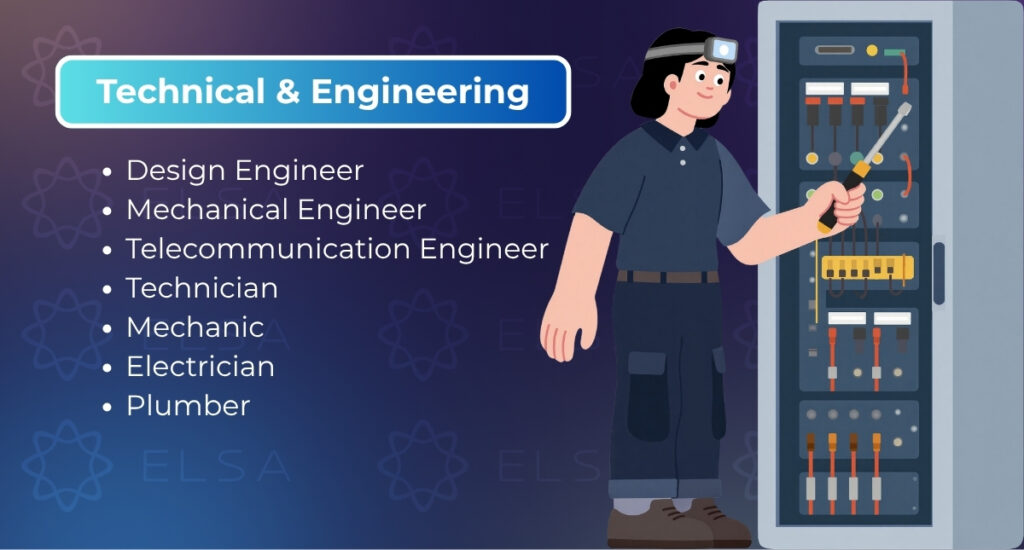
Technical & Engineering
| ภาษาอังกฤษ (คำย่อ) | คำอ่าน (IPA) | ภาษาไทย | ตัวอย่าง |
|---|---|---|---|
| Design Engineer | /dɪˈzaɪn ˌendʒɪˈnɪr/ | วิศวกรออกแบบ | The design engineer creates technical drawings. |
| Mechanical Engineer | /məˈkænɪkl ˌendʒɪˈnɪr/ | วิศวกรเครื่องกล | The mechanical engineer designs mechanical systems. |
| Electrical Engineer | /ɪˈlektrɪkl ˌendʒɪˈnɪr/ | วิศวกรไฟฟ้า | The electrical engineer manages electrical systems. |
| Software Engineer | /ˈsɒftweər ˌendʒɪˈnɪr/ | วิศวกรซอฟต์แวร์ | The software engineer develops software solutions. |
| Systems Engineer | /ˈsɪstəmz ˌendʒɪˈnɪr/ | วิศวกรระบบ | The systems engineer designs and maintains IT systems and infrastructure. |
| Telecommunication Engineer | /ˌtelɪkəˌmjuːnɪˈkeɪʃən ˌendʒɪˈnɪr/ | วิศวกรโทรคมนาคม | The telecom engineer manages communication networks. |
| Technician | /tekˈnɪʃn/ | ช่างเทคนิค | The technician fixes technical equipment. |
| Mechanic | /məˈkænɪk/ | ช่างเครื่อง | The mechanic repairs machinery. |
| Electrician | /ɪˌlekˈtrɪʃn/ | ช่างไฟฟ้า | The electrician installs electrical wiring. |
| Plumber | /ˈplʌmər/ | ช่างประปา | The plumber repairs water systems. |
| Maintenance & Repair Technician | /ˈmeɪntənəns ænd rɪˈpeər tekˈnɪʃn/ | ช่างซ่อมบำรุง | The technician maintains and repairs equipment. |
| Field Technician | /fiːld tekˈnɪʃn/ | ช่างภาคสนาม | The field technician works on-site to fix issues. |
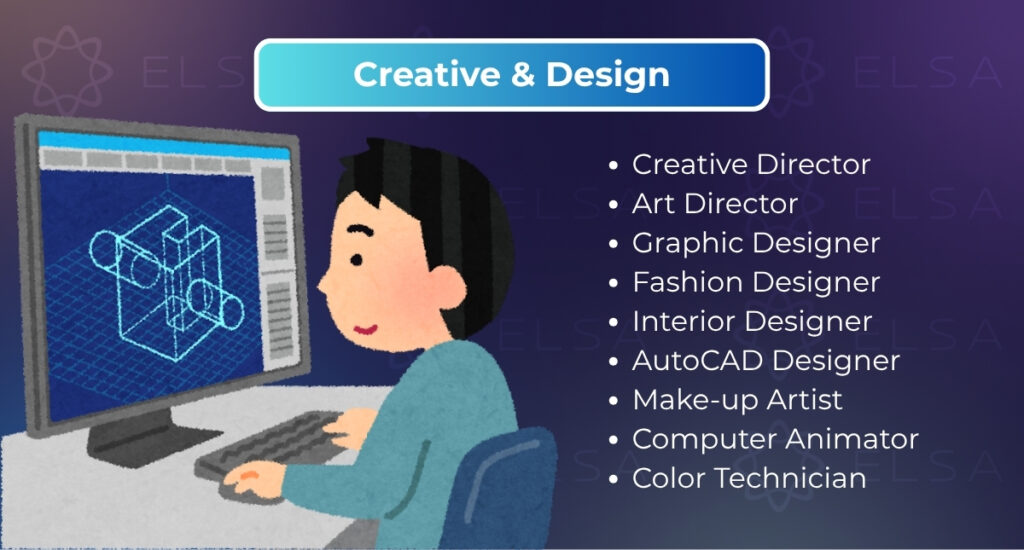
Creative & Design
| ภาษาอังกฤษ (คำย่อ) | คำอ่าน (IPA) | ภาษาไทย | ตัวอย่าง |
|---|---|---|---|
| Creative Director | /kriˈeɪtɪv dəˈrektər/ | ผู้อำนวยการฝ่ายสร้างสรรค์ | The Creative Director leads creative concepts. |
| Art Director | /ɑːrt dəˈrektər/ | ผู้อำนวยการฝ่ายศิลป์ | The Art Director controls visual style. |
| Graphic Designer | /ˈɡræfɪk dɪˈzaɪnər/ | นักออกแบบกราฟิก | The graphic designer creates visual designs. |
| Fashion Designer | /ˈfæʃn dɪˈzaɪnər/ | นักออกแบบแฟชั่น | The fashion designer designs clothing collections. |
| Interior Designer | /ɪnˈtɪriər dɪˈzaɪnər/ | นักออกแบบตกแต่งภายใน | The interior designer plans interior spaces. |
| AutoCAD Designer | /ˈɔːtoʊkæd dɪˈzaɪnər/ | นักออกแบบ AutoCAD | The AutoCAD designer creates technical drawings. |
| Make-up Artist | /ˈmeɪkʌp ˈɑːrtɪst/ | ช่างแต่งหน้า | The make-up artist styles clients’ makeup. |
| Computer Animator | /kəmˈpjuːtər ˈænɪmeɪtər/ | นักแอนิเมชันคอมพิวเตอร์ | The animator creates digital animations. |
| Color Technician | /ˈkʌlər tekˈnɪʃn/ | ช่างเทคนิคสี | The color technician adjusts color quality. |
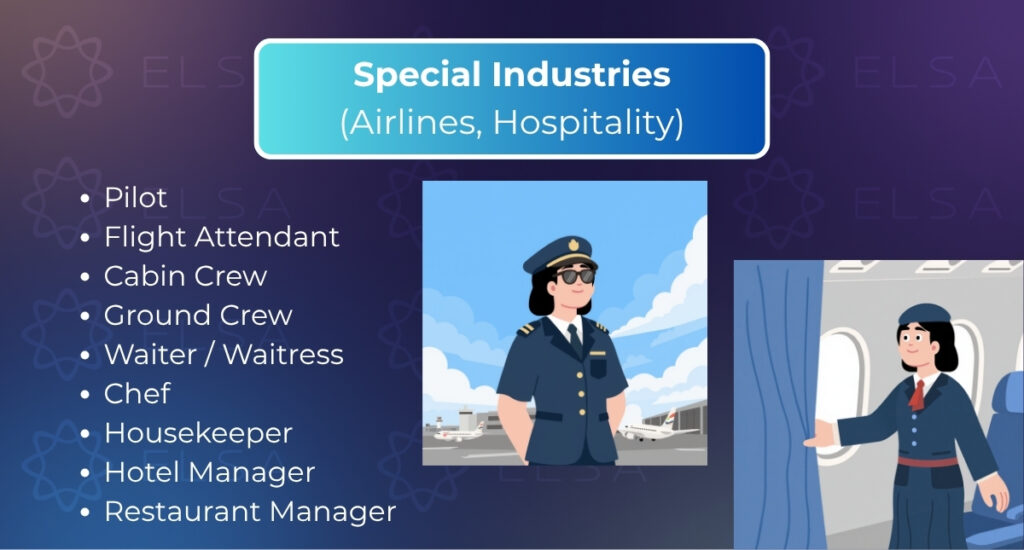
Special Industries (Airlines, Hospitality)
| ภาษาอังกฤษ (คำย่อ) | คำอ่าน (IPA) | ภาษาไทย | ตัวอย่าง |
|---|---|---|---|
| Pilot | /ˈpaɪlət/ | นักบิน | The pilot flies and controls the aircraft. |
| Flight Attendant | /flaɪt əˈtendənt/ | พนักงานต้อนรับบนเครื่องบิน | The flight attendant ensures passenger safety. |
| Cabin Crew | /ˈkæbɪn kruː/ | ลูกเรือหรือพนักงานต้อนรับบนเครื่องบิน | The cabin crew assists passengers during flights. |
| Ground Crew | /ɡraʊnd kruː/ | เจ้าหน้าที่ภาคพื้นดิน | The ground crew prepares aircraft on the ground. |
| Waiter / Waitress | /ˈweɪtər / ˈweɪtrəs/ | พนักงานเสิร์ฟ | The waiter serves food to customers. |
| Chef | /ʃef/ | พ่อครัว / แม่ครัว | The chef prepares and cooks meals. |
| Housekeeper | /ˈhaʊskiːpər/ | แม่บ้าน | The housekeeper cleans guest rooms. |
| Hotel Manager | /hoʊˈtel ˈmænɪdʒər/ | ผู้จัดการโรงแรม | The hotel manager oversees hotel operations. |
| Restaurant Manager | /ˈrestrɒnt ˈmænɪdʒər/ | ผู้จัดการร้านอาหาร | The restaurant manager manages daily restaurant operations. |
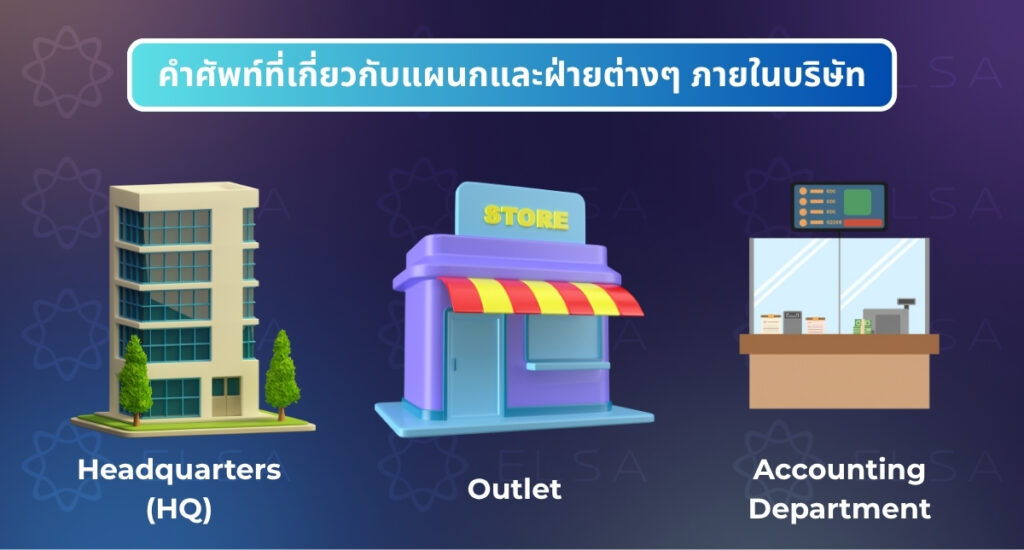
คำศัพท์ที่เกี่ยวกับแผนกและฝ่ายต่างๆ ภายในบริษัท
| ภาษาอังกฤษ (คำย่อ) | คำอ่าน (IPA) | ภาษาไทย | ตัวอย่าง |
|---|---|---|---|
| Headquarters (HQ) | /ˈhedˌkwɔːrtərz/ | สำนักงานใหญ่ | The headquarters manages company strategy. |
| Representative Office | /ˌreprɪˈzentətɪv ˈɒfɪs/ | สำนักงานตัวแทน | The representative office promotes the brand. |
| Branch Office | /ˈbrɑːntʃ ˈɒfɪs/ | สาขา | The branch office serves local customers. |
| Regional Office | /ˈriːdʒənəl ˈɒfɪs/ | สำนักงานภูมิภาค | The regional office oversees several branches. |
| Wholesaler | /ˈhoʊlˌseɪlər/ | ร้านขายส่ง | The wholesaler supplies goods in bulk. |
| Outlet | /ˈaʊtlet/ | ร้านค้าปลีก | The outlet sells products directly to customers. |
| Department | /dɪˈpɑːrtmənt/ | แผนก | Each department has specific responsibilities. |
| Accounting Department | /əˈkaʊntɪŋ dɪˈpɑːrtmənt/ | แผนกบัญชี | The accounting department handles financial records. |
| Administration Department | /ədˌmɪnɪˈstreɪʃn dɪˈpɑːrtmənt/ | ฝ่ายธุรการ | The administration department manages documents. |
| Financial Department | /faɪˈnænʃl dɪˈpɑːrtmənt/ | แผนกการเงิน | The financial department manages budgets. |
| Personnel / Human Resources (HR) | /ˌhjuːmən rɪˈsɔːrsɪz/ | ฝ่ายทรัพยากรบุคคล | HR recruits and manages employees. |
| Purchasing Department | /ˈpɜːrtʃəsɪŋ dɪˈpɑːrtmənt/ | แผนกจัดซื้อ | The purchasing department buys materials. |
| R&D Department | /ˌɑːr ən ˈdiː dɪˈpɑːrtmənt/ | ฝ่ายวิจัยและพัฒนา | R&D develops new products. |
| Sales Department | /seɪlz dɪˈpɑːrtmənt/ | ฝ่ายขาย | The sales department increases revenue. |
| Shipping Department | /ˈʃɪpɪŋ dɪˈpɑːrtmənt/ | แผนกจัดส่ง | The shipping department delivers orders. |
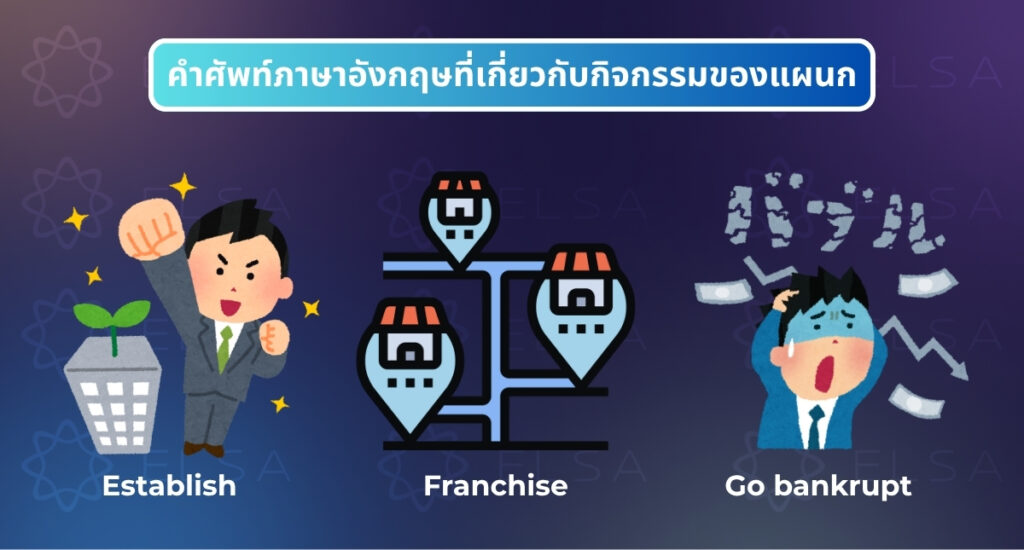
คำศัพท์ภาษาอังกฤษที่เกี่ยวกับกิจกรรมของแผนก
| ภาษาอังกฤษ | ภาษาไทย | ตัวอย่าง |
|---|---|---|
| establish (a company) | ก่อตั้ง (บริษัท) | They established a company in 2020. |
| go bankrupt | ล้มละลาย | The firm went bankrupt due to debt. |
| merge | ควบรวมกิจการ | Two companies decided to merge. |
| diversify | ลงทุนในรูปแบบต่าง ๆ | The company diversified its investments. |
| outsource | จ้างบริษัทหรือบุคคลภายนอก | They outsource IT services. |
| downsize | ลดขนาดองค์กร | The firm downsized to cut costs. |
| do business with | ทำธุรกิจกับ | We do business with overseas partners. |
| franchise | แฟรนไชส์ | The brand operates via franchise. |
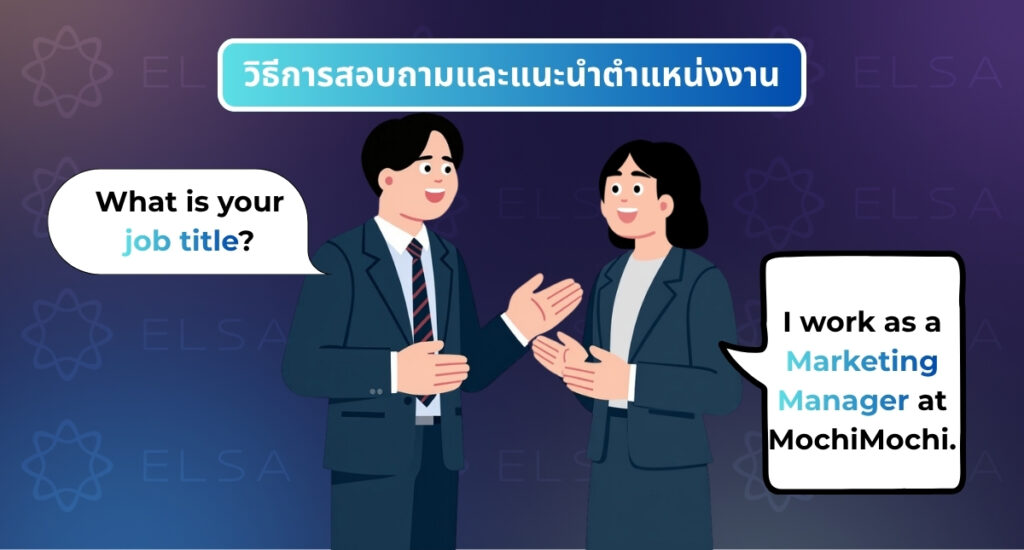
วิธีการสอบถามและแนะนำตำแหน่งงาน
คำถามทั่วไปเกี่ยวกับ job title ในด้านการสื่อสาร
- What is your job title?
- What do you do?
- What is your current position?
- Can you describe your role in the company?
- What position do you hold in the company?
โครงสร้างคำตอบเกี่ยวกับ job title
- I work as + job title + at + company
ตัวอย่าง: I work as a Marketing Manager at MochiMochi. - My job title is + job title
ตัวอย่าง: My job title is Sales Executive. - I’m currently holding the position of + job title
ตัวอย่าง: I’m currently holding the position of HR Officer.
ข้อสังเกต: ในสถานที่ทำงานของไทย การใช้คำนำหน้าชื่อตำแหน่งงานว่า คุณ มีความสำคัญมากในการสื่อสาร
คำถามสัมภาษณ์งานที่เกี่ยวข้องกับตำแหน่งงาน
- What is your current position?
- What are your main responsibilities?
- What does a typical working day look like for you?
- How does your role contribute to the company?
- What projects are you currently in charge of?
โครงสร้างสำหรับการแนะนำหน้าที่ของงาน (ระหว่างการสัมภาษณ์)
- I’m responsible for + V-ing / noun
ตัวอย่าง: I’m responsible for planning marketing campaigns. - My role involves + V-ing
ตัวอย่าง: My role involves managing the sales team. - I handle / take care of + noun
ตัวอย่าง: I handle customer relationships and follow-up.
ข้อมูลเกี่ยวกับตำแหน่งงานภาษาอังกฤษทั่วไปในประเทศต่าง ๆ
ในสหรัฐอเมริกา
ในองค์กรและบริษัทหลายแห่งในสหรัฐอเมริกา และประเทศอื่น ๆ บางประเทศ ตำแหน่งสูงสุด (top position) คือ Chairman หรือ President (ประธาน) รองลงมาจะเป็น Vice president ต่าง ๆ (รองประธาน) แล้วก็เป็น officer (หรือ director) ซึ่งเป็นเจ้าหน้าที่หรือผู้อำนวยการที่เป็นผู้ตัดสินใจสิ่งสำคัญต่าง ๆ ในบริษัท จากนั้นคือ general manager หรือ manager ซึ่งเป็นผู้จัดการที่รับผิดชอบงานเฉพาะด้าน
ในสหราชอาณาจักร
ในบริษัทของสหราชอาณาจักร ตำแหน่งสูงสุดคือ Chairman (ประธาน) ตามด้วย Chief Executive Director (ประธานเจ้าหน้าที่บริหาร) หรือ Chief Executive Director (กรรมการผู้จัดการ) โดยสองตำแหน่งนี้เทียบเท่ากัน แต่ Managing Director มักใช้กันมากกว่า
จากนั้นกรรมการต่าง ๆ เรียกว่า chief officer/director (ประธานเจ้าหน้าที่/ผู้อำนวยการ) รองลงมาเรียกว่า manager (ผู้จัดการ)
Board (คณะกรรมการ) เป็นคำที่ใช้สำหรับกรรมการทุกคน และพวกเขาประชุมกันในห้องที่เรียกว่า boardroom (ห้องประชุมคณะกรรมการ)
ในออสเตรเลียและสิงคโปร์
ตำแหน่งงานภาษาอังกฤษทั่วไปในออสเตรเลียและสิงคโปร์: Managing Director (กรรมการผู้จัดการ) เทียบเท่ากับ CEO และก็เทียบเท่ากับ director general หรือ general director (ผู้อำนวยการทั่วไป) ในประเทศของเรา อย่างไรก็ตาม ในฟิลิปปินส์ Managing Director (กรรมการผู้จัดการ) จะเรียกว่า President (ประธาน)
ในญี่ปุ่น
ตำแหน่งงานภาษาอังกฤษในบริษัทญี่ปุ่นค่อนข้างซับซ้อน ตัวอย่างเช่น Mitsui O.S.K. Lines ซึ่งเป็นองค์กรขนส่งทางทะเลที่ใหญ่ที่สุดในโลก ซึ่งมีกองเรือประมาณ 45.5 ล้าน DWT มีทั้ง Chairman และ President ซึ่ง Chairman ถือว่าใหญ่กว่า President (แม้ว่ามีคำแปลเดียวกันคือ “ประธาน”)
President Executive Director คือประธานบริษัท Senior Managing Executive Officer เป็นเจ้าหน้าที่บริหารอาวุโส (โดยมีทั้งหมด 3 คนดำรงตำแหน่งนี้) จากนั้นมีกรรมการผู้จัดการ 9 คน (Managing Executive Officer) รองลงมาคือกรรมการ 8 คน (Executive Officer) บุคคลข้างต้นแต่ละคนจะมีหน้าที่รับผิดชอบงานต่าง ๆ ที่มีระดับความสำคัญต่างกัน
หวังว่าบทสรุปนี้จะช่วยให้คุณมีมุมมองที่ครอบคลุมมากขึ้นเกี่ยวกับตำแหน่งงานภาษาอังกฤษ โดยเฉพาะอย่างยิ่งเมื่อดูนามบัตรของใครบางคน คุณจะรู้ว่าเขาดำรงตำแหน่งอะไรและมีฐานะสำคัญหรือไม่ เพื่อให้คุณสามารถสื่อสารได้อย่างเหมาะสม
คำถามที่พบบ่อย
ความแตกต่างระหว่าง Job title กับ description?
- Job title: ชื่อของตำแหน่งงาน (เช่น Marketing Executive, Sales Manager)
- Job description: อธิบายโดยละเอียดเกี่ยวกับหน้าที่ ความรับผิดชอบ และทักษะที่จำเป็นสำหรับตำแหน่งนั้น
วิธีเขียน Job Title ใน Resume อย่างถูกต้อง
- ใช้ตำแหน่งงานมาตรฐานที่ใช้กันทั่วไปในตลาด
- เขียนเป็นภาษาอังกฤษให้ถูกต้องตรงกับตำแหน่งและบทบาทที่แท้จริง
- หลีกเลี่ยงการใช้ชื่อตำแหน่งงานภายในที่ทำให้เกิดความสับสน
- อย่าตั้งชื่อตำแหน่งงานให้สูงเกินจริงโดยพลการ (เช่น เป็นระดับ Senior แต่เขียนว่า Manager) เพราะบริษัททั้งในประเทศไทยและต่างประเทศจะตรวจสอบประวัติการทำงาน (Reference check) อย่างละเอียด
ข้อผิดพลาดที่พบบ่อยในการเขียน Job title
- เขียนตำแหน่งงานไม่ตรงกับลักษณะงานจริง
- ใช้ชื่อตำแหน่งงานภายในองค์กรหรือชื่อที่กว้างเกินไป (Staff, Employee)
- เขียนยาวเกินไป หรือรวมรายละเอียดงานไว้ใน job title
- ใช้คำย่อที่ผู้สรรหาบุคลากรต่างประเทศเข้าใจยาก
ตําแหน่งงาน มีอะไรบ้าง?
คือชื่อตำแหน่งที่สะท้อนถึงบทบาท ตำแหน่ง และความรับผิดชอบของแต่ละบุคคลภายในองค์กร (ตัวอย่างเช่น Manager, Executive, Officer)
ตําแหน่งงานในบริษัท มีอะไรบ้าง?
รวมถึงบทบาทด้านการจัดการ ผู้เชี่ยวชาญ และงานสนับสนุน โดยแบ่งตามแผนกและระดับ
แผนก ภาษาอังกฤษ
Common departments: Management, Human Resources (HR), Finance & Accounting, Marketing, Sales, Information Technology (IT), Customer Service.
ตําแหน่งในบริษัท มีอะไรบ้าง?
คือบทบาทเฉพาะภายในแต่ละแผนก ตั้งแต่ฝ่ายบริหารไปจนถึงพนักงาน ซึ่งรับผิดชอบงานที่แตกต่างกัน
ตําแหน่งงาน ภาษาอังกฤษ ไม่เพียงแต่ช่วยให้คุณเข้าใจตำแหน่งและบทบาทของคุณภายในบริษัทเท่านั้น แต่ยังเป็นความรู้ที่สำคัญสำหรับการเรียน การทำงาน และการสื่อสารในสภาพแวดล้อมระหว่างประเทศ หวังว่า ELSA Speak จะให้ภาพรวมที่ครอบคลุมและเข้าใจง่ายเกี่ยวกับตำแหน่งงานในภาษาอังกฤษ ช่วยให้คุณสามารถนำไปใช้ได้อย่างมีประสิทธิภาพในการเรียนและการทำงาน
ไวยากรณ์ถือเป็นทักษะพื้นฐานที่จะช่วยผู้เรียนภาษาอังกฤษเรียนรู้ทักษะอื่น ๆ ได้ดีขึ้น รวมถึงทักษะการฟัง การพูด การอ่าน และการเขียน แต่ถ้าอยากเก่งไวยากรณ์ นอกจากจะเข้าใจทฤษฎีแล้ว เรายังต้องฝึกฝนให้บ่อย ๆ อีกด้วย และหนึ่งในวิธีการฝึกฝนที่หลายๆ คนใช้กันอยู่ก็คือการฝึกทำแบบฝึกหัดภาษาอังกฤษขั้นพื้นฐาน (English grammar exercises) ในแต่ละวัน
ข้อผิดพลาดทั่วไปเวลาเรียนไวยากรณ์ภาษาอังกฤษ
ตามรูปแบบการเรียนรู้แบบดั้งเดิม ผู้เรียนภาษาอังกฤษส่วนใหญ่จะเน้นการเรียนทฤษฎี โดยพวกเขาจะเขียนรายการโครงสร้างออกมา จากนั้นพยายามท่องจำและเรียนทบทวนหลายครั้งเพื่อจดจำ หรือไม่ก็ทำแบบฝึกหัดบางอย่างที่มีอยู่ในหนังสือเท่านั้น
แต่วิธีการเรียนรู้นี้ไม่ค่อยได้ผล มันจะทำให้คุณลืมทฤษฎีได้ง่าย จำหลักการพื้นฐานไม่ได้ ไม่สามารถได้คะแนนสอบไวยากรณ์สูง ส่งผลต่อการเรียนและผลการสอบภาษาอังกฤษ จากนั้นจะทำให้ตัวคุณเองรู้สึกหดหู่และผิดหวังกับการเรียนภาษาอังกฤษ
ดังนั้น หากคุณจำทฤษฎีได้แล้ว ต่อไปให้ใช้เวลาในการทำแบบฝึกหัดไวยากรณ์ภาษาอังกฤษขั้นพื้นฐาน (English grammar exercises) มันจะช่วยให้คุณรวบรวมความรู้และปรับปรุงการตอบสนองด้านการใช้ภาษาอังกฤษของคุณ คุณสามารถค้นหาแบบฝึกหัดไวยากรณ์มากมายในเอกสารต่างๆ หรือบนเว็บไซต์… หรือแบบทดสอบภาษาอังกฤษฟรีของ ELSA Speak
หมายเหตุบางประการเมื่อเรียนไวยากรณ์ภาษาอังกฤษ
หากต้องการทำแบบฝึกหัดภาษาอังกฤษด้านไวยากรณ์ให้ดีๆ คุณควรทราบบางประเด็นต่อไปนี้:
เข้าใจส่วนประกอบของประโยคได้ดี
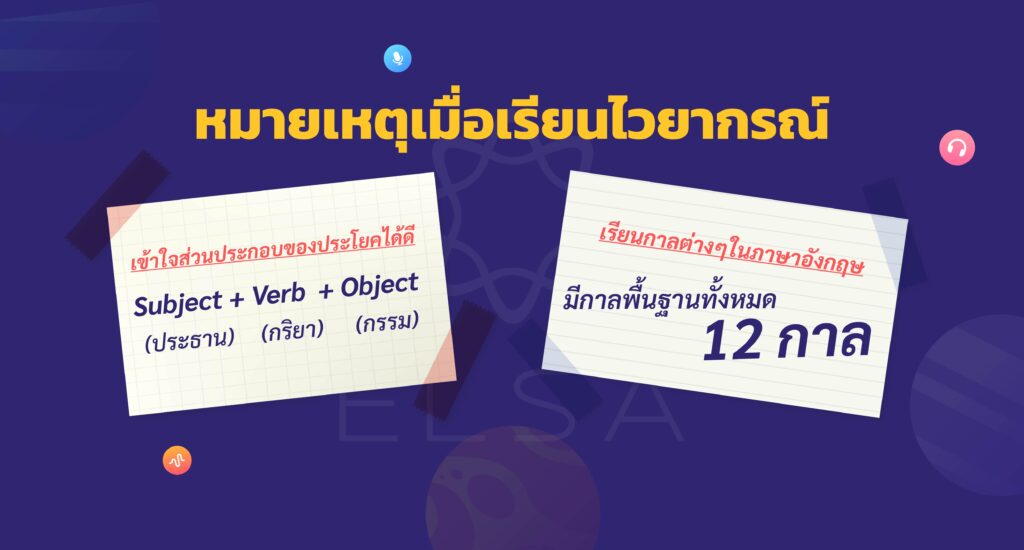
เมื่อฟังหรืออ่านประโยคภาษาอังกฤษใดประโยคหนึ่ง คุณต้องเข้าใจส่วนประกอบหลักของประโยคนั้น: Subject (ประธาน), Verb (กริยา), Object (กรรม) เมื่อคุณเข้าใจส่วนประกอบของประโยคแล้ว คุณจะเขียนประโยคได้อย่างถูกต้องและรู้วิธีใช้ประโยคในบริบทที่เหมาะสม
เรียนกาลต่าง ๆ ในภาษาอังกฤษ
มีกาลพื้นฐานทั้งหมด 12 กาลในภาษาอังกฤษ เพื่อให้จำกาลได้ง่าย คุณสามารถลองใช้วิธีต่อไปนี้:
- สำหรับกาลปัจจุบัน กริยา/กริยาช่วยจะเป็นรูปแบบกริยาช่อง 1 (Base Form) ของตารางกริยาที่ไม่ปกติ
- สำหรับอดีตกาล กริยา/กริยาช่วยจะเป็นรูปแบบกริยาช่อง 2 (Past Tense) ของตารางกริยาที่ไม่ปกติ
- สำหรับอนาคตกาล (Future Tense) ต้องมีคำว่า “will” “จะ” ในประโยค
- สำหรับกาลต่อเนื่อง (Continuous Tense) จะต้องมี “to be” และ verb-ing ในประโยค
- สำหรับกาลสมบูรณ์แบบ (Perfect Tense) จะต้องมีกริยาช่วย “have/has/had” และ V3/ed ในประโยค (กริยาช่อง 3 ในตารางกริยาที่ไม่ปกติ)
| คุณมักจะเห็นคำสองคำนี้ have has แต่ยังไม่เข้าใจ have has ใช้ยังไง ลองมาวิเคราะห์การใช้งาน แยกความแตกต่าง และทำแบบฝึกหัดกับ ELSA Speak กันเถอะ |
ไวยากรณ์ภาษาอังกฤษมีหลากหลายรูปแบบ ดังนั้นไม่สามารถอธิบายทั้งหมดในบทความเดียว โปรดจำว่าบทความนี้เพียงจัดเตรียมและแบ่งปันเฉพาะความรู้ที่สำคัญและจำเป็นบางอย่างเพื่อช่วยให้คุณทบทวนความรู้และพัฒนาทักษะด้านไวยากรณ์ภาษาอังกฤษเท่านั้น
หากคุณเข้าใจกฎง่ายๆ ข้างต้นแล้ว ให้ฝึกฝนทันทีด้วยแบบฝึกหัดภาษาอังกฤษด้านไวยากรณ์ขั้นพื้นฐาน (English grammar exercises) ต่อไปนี้เพื่อจดจำโครงสร้างได้เร็ว
แบบฝึกหัดภาษาอังกฤษ ด้านไวยากรณ์ขั้นพื้นฐาน
แบบฝึกหัดเกี่ยวกับกาลต่างๆในภาษาอังกฤษ
1/ I’ve got a computer ,but I ….. (not/use) it much.
2/ After Larry ….. (to see) the film on TV, he decided to buy the book.
3/ Have you got an umbrella? It ….. (start) to rain.
4/ We couldn’t afford to keep our car, so we ….. (sell) it.
5/ I … (meet) Tom and Jane at the airport a few weeks ago. They … (go) to Paris and I ….. (go) to Rome. We … (have) a chat while we … (wait) for our flights.
6/ I’d better have a shower. I (not/have)….. one since Thursday.
7/ Before you came, she….. (go) to school.
8/ For several years, his ambition……. (be) to be a pilot.
9/ Mike…… (phone) one hour ago.
10/ Our teacher usually…. (give) us many exercises.
| มาทบทวน irregular verbs ทั้ง 600 คำ (กริยาไม่ปกติ) และเรียนรู้เพิ่มเติมเกี่ยวกับกรณีการใช้งานและโครงสร้างของ Irregular Verbs กัน |
แบบฝึกหัดเกี่ยวกับประโยคเงื่อนไข
1/ If you (find) _________ a skeleton in the cellar, don’t mention it to anyone.
2/ If I __________ (have) the same problem you had as a child, I might not have succeeded in life as well as you have.
3/ I (not buy) _________________ things on the installment system if I were you.
4/ If he worked more slowly, he _____ (not make) so many mistakes.
5/ If the weather ___________________(not change), we will reach the top of the mountain.
แบบฝึกหัดเกี่ยวกับ Passive voice (กรรมวาจก)
1/ My father waters this flower every morning.
2 The manager didn’t phone the secretary this morning.
3/ He has broken his nose in a football match.
4/ Have you sent Christmas cards to your family?
5/ They find that the job is not suitable for a girl like her.

นอกจากการทำแบบทดสอบภาษาอังกฤษแล้ว คุณยังสามารถพัฒนาความสามารถด้านไวยากรณ์ภาษาอังกฤษของคุณได้ด้วยการอ่านหนังสือ หนังสือพิมพ์ นวนิยาย พูดคุยหรือสื่อสารภาษาอังกฤษกับเพื่อนๆ คุณครู หรือเจ้าของภาษาเป็นประจำ หรือไม่ก็ฝึกเขียนเรื่องสั้นๆ ไดอารี่ บล็อก อีเมล…เป็นภาษาอังกฤษ
โดยเฉพาะ เพื่อให้สามารถพัฒนาทักษะภาษาอังกฤษของคุณได้อย่างรวดเร็วและมีประสิทธิภาพ คุณสามารถลองศึกษา package เรียนภาษาอังกฤษต่างๆ ของ ELSA Speak ได้ ด้วยวิธีการเรียนรู้พิเศษที่ได้รับการพิสูจน์ในทั่วโลก คุณจะบรรลุเป้าหมายในการเรียนรู้ภาษาอังกฤษของคุณอย่างแน่นอน ค้นหาตอนนี้ได้ที่: https://th.elsaspeak.com/
คุณเคยรู้สึกน่าเบื่อเวลาสนทนาที่ขึ้นต้นด้วยวิธีทั่วไปที่ซ้ำซากหรือไม่ หรือบางครั้งคุณอาจติดอยู่ในการสนทนาและไม่รู้จะจบด้วยวิธีไหนให้ดูดี บทความด้านล่างนี้จะช่วยแนะนำบางประโยคที่ใช้บ่อยในการเริ่มและสิ้นสุด แชทภาษาอังกฤษ เพื่อให้เรื่องราวของคุณไม่ซ้ำซากจำเจอีกต่อไป
วิธีเริ่มการต้นการพูดคุยภาษาอังกฤษ
นอกจากคำทักทายทั่วไปเมื่อพบปะเพื่อนๆ หรือพบปะผู้คนใหม่ๆ เป็นครั้งแรก เช่น “Hi!”, “Hello!” คุณสามารถใช้ประโยคด้านล่างเพื่อทำให้การแชทภาษาอังกฤษ ของคุณน่าสนใจยิ่งขึ้น
- What is your name? – คุณชื่ออะไร
- What’s up? – ว่าไง
- How’s it going? – ช่วงนี้คุณเป็นยังไงบ้าง
- What have you been doing? – คุณทำอะไรเมื่อเร็ว ๆ นี้
- How have you been? – คุณเป็นอย่างไรบ้าง
- How’s everything ? – ตอนนี้ทุกๆอย่างดีไหม
- Hello, nice to see you again – สวัสดี ยินดีที่ได้พบคุณอีกครั้ง
- Hey, how is going? – สถานการณ์เป็นยังไงบ้าง
- I haven’t seen you for a long time – ฉันไม่ได้เจอคุณมานานแล้ว
- So we’ve met again, eh? – แล้วเราจะพบกันใหม่ใช่ไหม
>>> Read more: 65+ วิธีพูดสวัสดีภาษาอังกฤษที่พบบ่อยในการสื่อสาร
วิธีจบการแชทภาษาอังกฤษ
- Keep in touch: ติดต่อฉันนะ
- Well, it’s been nice talking to you: ดีใจที่ได้คุยกับคุณ
- Hope to see you again soon: หวังว่าจะได้พบคุณอีกครั้งในเร็ว ๆ นี้
- Well, talk to you later: ไว้คุยกันทีหลัง
- It’s been great seeing you again: ดีใจที่ได้พบคุณอีกครั้ง
- Well, it was nice meeting you. I really had a great time: ดีใจที่ได้พบคุณ ฉันได้มีช่วงเวลาที่ดีจริงๆ
- I had a nice time talking to you: ฉันได้มีช่วงเวลาที่ดีที่ได้พูดคุยกับคุณ
- Anyway, I’ve got to get back to work: I’m glad that we met: ฉันต้องกลับไปทำงานแล้ว ดีใจมากที่เราได้พบกัน
- So, listen, it’s been great talking to you…: ฟังนะ ดีใจที่ได้พูดคุยกับคุณ…
- Anyway, I’ll let you get back to your shopping: อย่างไรก็ตาม ฉันจะให้คุณกลับไปช้อปปิ้งต่อนะ
- Anyway, I don’t want to monopolize all your time: ฉันไม่อยากผูกขาดเวลาทั้งหมดของคุณ
- Well, I don’t want to keep you from your work: ฉันไม่อยากรบกวนงานของคุณ
- If you’ll excuse me, I just saw someone I’ve been meaning to catch up with: กรุณาขอโทษด้วย ฉันเพิ่งเห็นคนที่ฉันอยากจะคุยด้วย

- My friends just walked in. I want to say hi to them…: เพื่อนของฉันเพิ่งมาถึง ฉันอยากจะทักทายพวกเขา…
- Sorry I can’t talk longer. I’m actually on my way to meet a friend for coffee: ขอโทษนะ ฉันคุยได้นานกว่านี้ไม่ได้ จริงๆว่า ฉันกำลังเดินทางไปดื่มกาแฟกับเพื่อน
- Let’s talk more another time. I’ve got to find my friends: ไว้คุยกันใหม่อีกครั้ง ตอนนี้ฉันต้องไปหาเพื่อน
- I just have to head to the bathroom. I’ll run into you later maybe: ฉันต้องไปห้องน้ำ ฉันอาจจะได้พบคุณในภายหลัง
- I just got here. I’m going to look around a bit more: ฉันเพิ่งมาถึงที่นี่ ฉันจะไปรอบ ๆ ดูก่อน
- I’m going to go grab another drink: ฉันจะไปเอาขวด/ แก้วอีกขวด
- Well, I gotta go (but I’ll text later): ฉันต้องไปแล้ว (แต่ฉันจะส่งข้อความทีหลัง)
- Take care: ดูแลตัวเองนะ
- I’m afraid he is not available now: ฉันเกรงว่าเขาไม่ว่างตอนนี้
- May I leave the message? ฉันขอฝากข้อความไว้ได้ไหม
- I’m afraid he is on another line. Would you mind holding? ฉันเกรงว่าเขาจะรับสายอื่น กรุณารอสักครู่ได้ไหม
- Is there any possibility we can move the meeting to Monday? เราเลื่อนการประชุมเป็นวันจันทร์ได้ไหม
| วิธีจบการแชทภาษาอังกฤษด้วยคำทักทายแบบลาก่อนหรือ good night ฝันดีน่ารัก ๆ ใช้ได้ในทุกสถานการณ์ ทั้งเพื่อน คนในครอบครัว และเพื่อนร่วมงาน มาลองเรียนรู้กันเลย |
หมายเหตุ
เมื่อสื่อสารกับชาวต่างชาติ มีบางสิ่งที่เราควรหลีกเลี่ยงเพื่อให้การสนทนาเป็นธรรมชาติ ให้ลองดูหัวข้อด้านล่างนี้ที่ถือว่าละเอียดอ่อนเมื่อพูดคุยกับชาวต่างชาติ
Weight: น้ำหนัก
คำถามที่ถือว่าหยาบคาย:
– Hey, did you gain some weight since we met? (เฮ้ น้ำหนักขึ้นอีกแล้วตั้งแต่ครั้งสุดท้ายที่เราเจอกันใช่ไหม)
– You have put on some pounds, haven’t you? (น้ำหนักของคุณขึ้นใช่ไหม)
การขึ้นน้ำหนักไม่ใช่สิ่งที่คนส่วนใหญ่อยากจะพูดถึง ดังนั้น ควรหลีกเลี่ยงหัวข้อนี้
ในขณะเดียวกัน การลดน้ำหนักของใครบางคนอาจเป็นผลมาจากการออกกำลังกายหรือการรับประทานอาหาร แต่ก็อาจเกิดจากการเจ็บป่วย ความเหนื่อยล้า หรือเจอเหตุการณ์ที่ไม่มีความสุข ลองนึกภาพว่าคุณรู้สึกดีใจมากเมื่อไม่ได้เจอเพื่อนมานาน และคุณถามพวกเขาว่า “Hey, you lost weight, you looks great?” (น้ำหนักลดแล้วใช่ไหม คุณดูดีนะ) แล้วเพื่อนของคุณก็ตอบว่า “I am dying of cancer.” (ฉันเป็นมะเร็ง).
โดยเฉพาะ คำถามว่า “Are you pregnant?” (คุณกำลังตั้งครรภ์อยู่หรือ) สำหรับผู้หญิงถือเป็นคำถามต้องห้าม ถ้าเธอตั้งครรภ์ เธอคงจะประกาศข่าวดีนี้ให้ทุกคนทราบแล้ว ถ้าเธอตอบว่า “I am just fat” “ฉันแค่อ้วนขึ้น” คุณทั้งสองก็จะตกอยู่ในสถานการณ์ที่ไม่สบายใจ

Looks: รูปลักษณ์ หน้าตา
หากมีใครเปลี่ยนรูปลักษณ์ คุณก็ไม่ควรแสดงความคิดเห็นหรือพยายามถามให้ได้ คำถามต่อไปนี้ควรอยู่ใน “รายการที่ถูกจำกัด”:
– Oh my God, are you OK? (โอ้พระเจ้า คุณสบายดีไหม)
– Why do you look so ___ (tired, older)? (ทำไมคุณดูเหนื่อย/แก่กว่า)
– Didn’t you wear make-up? (คุณไม่แต่งหน้าหรือ)
Flaws: ข้อบกพร่อง
ความผิดปกติบนใบหน้าของอีกฝ่าย เช่น แผลเป็นใหม่ ตาคล้ำ… ก็เป็นสิ่งที่เราไม่ควรถาม คำถามที่ควรหลีกเลี่ยงในกรณีนี้คือ:
– What’s wong with your ___? (nose, eye, skin)? (จมูก ตา ผิวหนัง) (เกิดอะไรขึ้นกับ___ผิวหนัง/ตา/จมูกของคุณ…?)
ปัจจัยที่ละเอียดอ่อนอีกประการหนึ่งก็คือสิว เรียกว่า acne /ˈæk.ni/, zit /zɪt/ หรือ /ˈpɪm.pl̩/ ในภาษาอังกฤษ หากคุณเห็นสิวหรือผื่นบนใบหน้าของอีกฝ่าย คุณไม่ควรถามว่า:
– Ronnie, what’s that red thing on your nose? (รอนนี่ นั่นอะไรสีแดงบนจมูกคุณ?)
อย่างไรก็ตาม สำหรับคนใกล้ตัวคุณ การสังเกตเห็นการเปลี่ยนแปลงเล็กๆ น้อยๆ และการถามเกี่ยวกับสิ่งเหล่านั้นแสดงถึงความสนใจ ดังนั้น ข้อความที่ถือว่าไม่สุภาพหรือสุภาพจะขึ้นอยู่กับในบริบทที่ต่างกัน
หวังว่าคุณจะมีการสนทนาที่สนุกสนานและน่าสนใจกับเจ้าของภาษา!
>>> Read more
- ประโยคเงื่อนไข If Clause: โครงสร้าง วิธีใช้ แบบฝึกหัด และเคล็ดลับการท่องจำ
- บทกวีเกี่ยวกับการใช้ “IN” “ON” “AT” ช่วยให้คุณแยกแยะได้ง่าย
- Passive Voice: สูตร ตัวแปร และการใช้งานที่แม่นยำที่สุด (พร้อมแบบฝึกหัด)
“Happy Birthday to You, Happy Birthday to You, Happy Birthday, Happy Birthday. Happy Birthday to You…”. หากคุณกำลังอยากจะส่งคำ อวยพรวันเกิดภาษาอังกฤษ ที่น่าสนใจให้กับเพื่อนๆหรือเพื่อนร่วมงาน แต่ไม่รู้จะใช้คำใดนอกจากคำว่า “Happy Birthday” อย่ากังวลไปเลย บทความนี้จะช่วยคุณได้ วันเกิดเป็นโอกาสพิเศษ ดังนั้นมาร่วมกับ ELSA Speak ส่งคำอวยพรสุดพิเศษให้กับคนที่คุณรักนะ!
อวยพรวันเกิดภาษาอังกฤษ
คำอวยพรวันเกิดภาษาอังกฤษที่ไพเราะและน่าสนใจสามารถสร้างความประทับใจพิเศษได้ นำความสุขเล็กๆ น้อยๆ มาสู่คนที่คุณใส่ใจ โดยเฉพาะอย่างยิ่งถ้าคุณมีเพื่อนชาวต่างชาติ อวยพรวันเกิดภาษาอังกฤษ จะแสดงว่าคุณใส่ใจและให้ความสำคัญกับพวกเขามาก มาเรียนรู้คำอวยพรวันเกิดที่น่าสนใจ 25 คำที่เป็นภาษาอังกฤษสำหรับโอกาสพิเศษนี้นะ! และอย่าลืมบันทึกประโยคหรือโครงสร้างที่คุณรู้สึกประทับใจไว้ นี่ก็เป็นวิธีเรียนรู้การสื่อสารภาษาอังกฤษด้วยตนเองที่มีประสิทธิภาพมากเช่นกัน!
1. A wish for you on your birthday, whatever you ask you may receive, whatever you seek you may find, whatever you wish may be fulfilled on your birthday. Happy birthday to you!
ในวันเกิดของคุณ ฉันหวังว่าคุณจะบรรลุสิ่งที่คุณต้องการเสมอ พบเจอสิ่งที่คุณกำลังมองหา และความปรารถนาทุกอย่างของคุณจะเป็นจริง สุขสันต์วันเกิด!
2. I wish you full happiness and love. May all your dreams come true and may lady luck visit you everyday. Happy birthday to one of the greatest people I’ve ever known.
ขอให้คุณมีแต่ความสุขและความสนุกสนาน ความฝันทั้งหมดของคุณจะเป็นจริงและโชคลาภจะมาหาคุณทุกวัน สุขสันต์วันเกิดกับคนที่ยอดเยี่ยมที่สุดที่ฉันเคยรู้จัก
3. Your birthday is the first day of another 365-day journey. Be the shining thread in the beautiful tapestry of the world to make this year the best ever.
วันเกิดของคุณถือเป็นวันแรกของการเดินทาง 365 วันครั้งใหม่ จงเป็นดั่งเส้นใยที่ปักทอลงบนพรมที่ส่องแสงสวยงามให้โลกใบนี้ เพื่อให้ปีนี้เป็นปีที่ดีที่สุดตลอดกาล
4. Blowing out another candle on your cakes means that you have lived another year of joy, and that you have made this world a better place. I wish you a delightful birthday!
การเป่าเทียนแต่ละเล่มบนเค้กวันเกิดของคุณหมายถึงคุณได้ผ่านอีกหนึ่งปีที่เต็มไปด้วยความสุข และทำให้โลกใบนี้สวยงามยิ่งขึ้น ขออวยพรให้คุณมีวันเกิดที่น่าปลื้มใจ!
5. Here is my birthday wish for you: I hope you will never stop enjoying every small thing in life. Because that’s what makes life worth living. I hope that you take time to enjoy the present while working for a better future. I hope your year will be full of memories, happiness, and adventure.
คำอวยพรวันเกิดสำหรับคุณ: ฉันหวังว่าคุณจะไม่มีวันหยุดเพลิดเพลินกับสิ่งเล็กๆ น้อยๆ ในชีวิตนี้ เพราะนั่นคือสิ่งที่ทำให้ชีวิตมีคุณค่า ขอให้คุณสนุกกับปัจจุบันในขณะที่ทำงานเพื่ออนาคตที่ดีกว่า และขอให้ปีข้างหน้าของคุณจะเต็มไปด้วยความทรงจำ ความสุข และการผจญภัย
อวยพรวันเกิดภาษาอังกฤษ ให้กับเพื่อน
มิตรภาพเป็นหนึ่งในสิ่งที่สวยงามที่สุดในชีวิตของทุกคน มาดูคำอวยพรวันเกิดภาษาอังกฤษดีๆที่ใช้กับเพื่อนที่รักของคุณนะ!

6. People say that the heroes are one in many many thousands, but I say that a friend like you is always one in the lifetime. Happy Birthday to you!
ทุกคนมักบอกว่าฮีโร่มีเพียงหนึ่งคนในหลายพันคน แต่ฉันบอกว่าเพื่อนแบบคุณมีเพียงหนึ่งเดียวในชีวิต สุขสันต์วันเกิด!
7. Hey I just wanted you to know that whenever you have a crazy idea, my only question will be: “What time?”. And remember to have a great birthday!
นี่ ฉันแค่อยากจะบอกว่าเมื่อใดก็ตามที่คุณมีความคิดบ้าๆ คำถามเดียวของฉันก็คือ: “กี่โมง” และอย่าลืมมีวันเกิดที่แสนวิเศษนะ!
8. A friend is someone who understands your past, believes in your future, and accepts you just the way you are – even if you are getting older. Thank you for being that friend, and Happy Birthday.
เพื่อนคือคนที่เข้าใจอดีตของคุณ เชื่อในอนาคตของคุณ และยอมรับคุณในสิ่งที่คุณเป็น แม้ว่าคุณจะอายุมากขึ้นก็ตาม ขอบคุณที่เป็นเพื่อนกัน และสุขสันต์วันเกิดนะ
9. You understand me like nobody else. Thank you for always being there to listen, I have a sibling in you my friend. Happy birthday!
คุณเข้าใจฉันในแบบที่ไม่มีใครสามารถทำได้ ขอบคุณที่คอยอยู่เคียงข้างและรับฟังฉันเสมอมา คุณเป็นเหมือนพี่น้องของฉัน สุขสันต์วันเกิด!
10. Best friend: someone who you can be yourself with, someone who you can have pointless conversations with, someone who still likes you even when you are weird, someone who forgets to buy you a birthday gift…that’s why I came up with this card only. Happy birthday my best friend!
เพื่อนที่ดีที่สุด คือ คนที่คุณสามารถเป็นตัวของตัวเองได้ คนที่คุณสามารถคุยด้วยทั้งวันทั้งคืน คนที่สามารถยอมรับความบ้าของคุณ และคนที่จะลืมซื้อของขวัญวันเกิดให้คุณในวันเกิดของคุณ… นั่นคือเหตุผลที่ฉันนำการ์ดนี้มาให้คุณ สุขสันต์วันเกิดเพื่อนที่ดีที่สุดของฉัน!
11. My best friend is even sweeter than cakes, more colorful than confetti, and hotter than candles. And it’s her birthday today. Happy birthday!
เพื่อนที่ดีที่สุดของฉันหวานยิ่งกว่าเค้ก มีสีสันยิ่งกว่าดอกไม้ ร้อนยิ่งกว่าเทียน และวันนี้เป็นวันเกิดของเธอสุขสันต์วันเกิดนะ!
12. We’re different in a lot of ways, but that’s what makes us such good friends. Puzzle pieces need to be different to fit together! Happy birthday to my most favorite piece!
เรามีความแตกต่างมากมาย แต่นั่นคือสิ่งที่ทำให้เรากลายเป็นเพื่อนที่ดีที่สุดต่อกัน เหมือนชิ้นส่วนปริศนาที่ต้องแตกต่างกันจึงจะประกอบเข้าด้วยกันได้ สุขสันต์วันเกิดชิ้นส่วนที่ฉันชื่นชอบที่สุด!
เข้าใจแนวทางการใช้กาลต่างๆในภาษาอังกฤษอย่างมั่นคง:
- ประโยคอดีตกาลต่อเนื่อง (Past Continuous Tense): โครงสร้างและแบบฝึกหัด
- ประโยคอนาคตกาล ( Future Simple Tense ): โครงสร้างและแบบฝึกหัด
- Present Continuous Tense: โครงสร้าง หลักการใช้งาน
- Past Perfect Continuous Tense
- ประโยคปัจจุบันกาล (Present Simple Tense): โครงสร้าง การใช้งาน
- อนาคตกาลสมบูรณ์ต่อเนื่อง (Future Perfect Continuous Tense)
- Future Continuous Tense: โครงสร้างและหลักการใช้งาน
อวยพรวันเกิดภาษาอังกฤษ ให้กับเพื่อนร่วมงาน
โดยเฉลี่ยเราจะอยู่กับเพื่อนร่วมงานวันละ 8 ชั่วโมง คุณจะอยากพูดอะไรกับพวกเขาในวันพิเศษของเขาใช่ไหม การส่งอันอ่อนหวานและน่าประทับใจให้กับเพื่อนร่วมงานของคุณจะทำให้พวกเขารู้สึกประทับใจและใกล้ชิดกับคุณมากขึ้น
13. Hey it’s your birthday today and I just wanted to let you know that you’ll never have to face problems alone. I may not be able to solve every problem but I’ll always be there for you when you need me.
เฮ้ วันนี้เป็นวันเกิดของคุณ และฉันแค่อยากจะบอกให้คุณรู้ว่า คุณจะไม่มีวันต้องเผชิญกับปัญหาเพียงลำพัง ฉันอาจจะไม่สามารถแก้ปัญหาทุกอย่างได้ แต่ฉันจะอยู่เคียงข้างคุณเสมอเมื่อคุณต้องการฉัน
14. When I think back to all the things we’ve been through, I’m so thankful that I got to go through it with you by my side. Happy birthday to you, it has always been great to work with you.
เมื่อฉันคิดถึงสิ่งที่เราเคยผ่านมาด้วยกัน ฉันรู้สึกขอบคุณมากเมื่อมีคุณอยู่เคียงข้างฉัน สุขสันต์วันเกิด ยินดีที่ได้ร่วมงานกับคุณเสมอ
15. Very candle on your cake is another year I’ve been lucky to know you! Happy Birthday to the most wonderful colleague I’ve known!
เทียนแต่ละเล่มบนเค้กของคุณถือเป็นอีกหนึ่งปีที่ฉันโชคดีที่ได้รู้จักคุณ สุขสันต์วันเกิดเพื่อนร่วมงานที่ยอดเยี่ยมที่สุดของฉัน!
16. If your birthday is half as amazing as you are, it’s gonna be epic. Happy birthday to the best friend and colleague that a person could ask for!
หากวันเกิดของคุณวิเศษเท่ากับคุณเพียงครึ่งหนึ่ง มันคงจะยอดเยี่ยมอย่างมาก สุขสันต์วันเกิดให้กับเพื่อนที่ดีที่สุดและเพื่อนร่วมงานที่ใคร ๆ ก็อยากได้!
17. Hey, thanks for just being you. You are one of a kind and my best friend. Happy birthday and I hope we can have more chances to work together.
เฮ้ ขอบคุณที่เป็นตัวของคุณเอง คุณเป็นเพื่อนร่วมงานและเพื่อนที่ดีที่สุดของฉัน สุขสันต์วันเกิด และหวังว่าจะมีโอกาสได้ร่วมงานกันมากขึ้น
คำอวยพรวันเกิดภาษาอังกฤษอื่นๆที่ตลก
นอกจากคำอวยพรที่จริงใจและซาบซึ้งแล้ว ทำไมไม่ลองใช้คำอวยพรวันเกิดตลกๆ เป็นภาษาอังกฤษดูล่ะ
18. Dad, you have always been the coolest, like all those times you said “Yes” when mom said “No”. I wish you a happy birthday!
พ่อที่รัก ทุกครั้งที่พ่อพูดว่า “ใช่” ในเมื่อแม่พูดว่า “ไม่” พ่อจะดูเจ๋งที่สุดเลย สุขสันต์วันเกิดพ่อ!
19. Mom, no matter what life throws at you, at least you don’t have ugly children. They’ll always be by your side, happy birthday!
แม่ค่ะ ไม่ว่าคุณจะเจอปัญหาอะไรในชีวิต จงจำไว้เสมอว่าอย่างน้อยลูกของแม่ก็ไม่มีใครน่าเกลียดเลย และพวกเขาจะยืนเคียงข้างแม่อยู่เสมอ สุขสันต์วันเกิดแม่!

20. Best friends are just like farts. Some are quiet, some are loud. They embarrass you in public. They make you feel good. They make you laugh. For your birthday, I got you hugs, kisses, and birthday wishes! Plus, dinner is on me!
เพื่อนที่ดีที่สุดก็เหมือนเสียงผายลม บางทีก็เงียบ บางทีก็เสียงดังมาก พวกเขาทำให้เราอับอายในที่สาธารณะ พวกเขาทำให้เรารู้สึกสบายใจ พวกเขาทำให้เราหัวเราะ และในวันเกิดของคุณ ฉันจะกอดและจูบคุณ และ อวยพรวันเกิดให้คุณ ที่มากไปกว่านั้นคือ มื้อเย็นนี้ฉันเลี้ยงเอง!
21. The best gift is the gift of friendship. So, now I don’t know what I got you for your birthday! Don’t worry… I got you a real present too.
ของขวัญที่ดีที่สุดคือมิตรภาพ ดังนั้น ตอนนี้ฉันเลยยังไม่รู้ว่าจะให้อะไรในวันเกิดของคุณ แต่ไม่ต้องกังวลไป… ฉันก็มีของขวัญที่แท้จริงให้คุณเหมือนกัน
22. Today you’re older than you’ve ever been. But look on the bright side, you’re younger now than you will ever be!
แม้ว่าวันนี้คุณอายุมากขึ้น แต่มองในแง่ดีกันดีกว่า ตอนนี้คุณอายุน้อยกว่าทุกช่วงเวลาในอนาคตเลย
23. Forget about the past, you can not change it. Forget about the future, you can not predict it. Forget about the present, I did not get you one. Happy birthday!
ลืมอดีตไปเถอะ คุณไม่สามารถเปลี่ยนแปลงมันได้ และก็อย่ากังวลกับอนาคตเพราะคุณก็ไม่สามารถคาดเดาได้ แล้วลืมปัจจุบัน (ของขวัญ) ไปเลยเพราะฉันไม่มีอะไรจะให้คุณหรอก สุขสันต์วันเกิดนะ!
24. It’s your birthday today and I just want to send you something amazing but the postman told me to get out of the box. So, happy birthday!
วันนี้เป็นวันเกิดของคุณ ฉันอยากจะส่งของพิเศษไปให้คุณ แต่บุรุษไปรษณีย์บอกให้ฉันออกไปจากตู้ไปรษณีย์ ดังนั้น…สุขสันต์วันเกิด!
25. It’s your birthday today, so I hope all your wishes come true. But you already have me, what more could you wish for??
วันนี้เป็นวันเกิดของคุณ ฉันหวังว่าทุกความปรารถนาของคุณจะเป็นจริง แต่คุณก็มีฉันอยู่แล้ว จะขออะไรอีกล่ะ
ข้างต้นนี้ ELSA Speak ได้รวบรวมคำอวยพรวันเกิดภาษาอังกฤษที่ดีและมีความหมาย 25 คำให้คุณแล้ว หวังว่าคุณจะนำไปใช้อย่างดี และนอกจากคำอวยพรเหล่านี้แล้ว คุณยังสามารถเรียนรู้เพลงภาษาอังกฤษดีๆ สำหรับสุขสันต์วันเกิด ซึ่งจะนำเซอร์ไพรส์ที่น่ายินดีมาสู่เพื่อนและญาติของคุณอย่างแน่นอน! ขอให้ตั้งใจเรียนกันน๊าาา!
คำกริยา have, has, had เป็นคำกริยาที่พบได้บ่อยในภาษาอังกฤษ อย่างไรก็ตาม คำกริยา have, has, had มักทำให้ผู้เรียนสับสนได้ง่าย ตาม ELSA Speak มาเรียนรู้ว่า have has ใช้ยังไง had ใช้ยังไง ให้ถูกต้องตามหลักไวยากรณ์กันเถอะ
เมื่อไรควรใช้ have, has, had
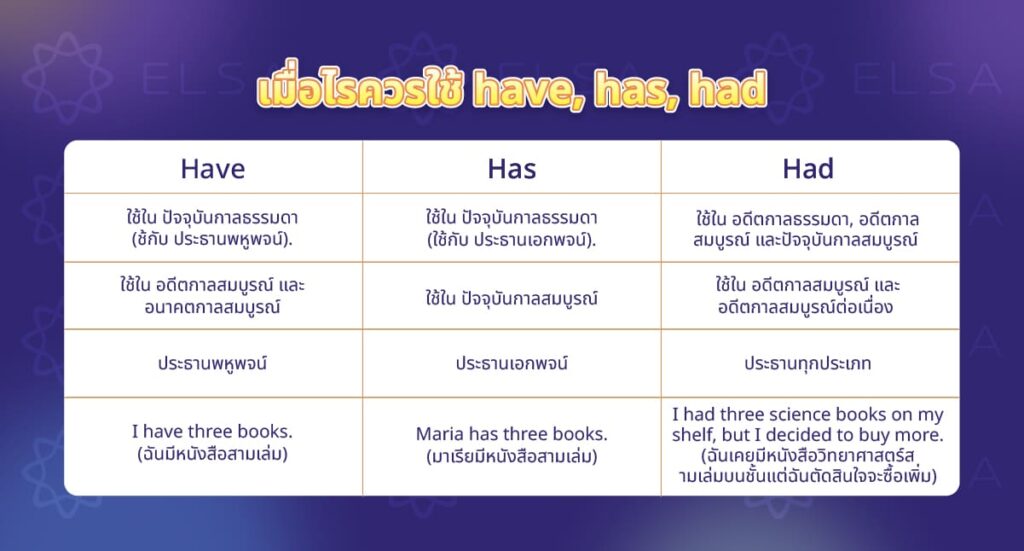
Verb to have มีรูปแบบคือ have, has และ had ซึ่งทั้งหมดมีความหมายว่า ‘มี’ แต่จะใช้แตกต่างกันตามประธานและช่วงเวลา การเข้าใจว่าเมื่อใดควรใช้ have เมื่อใดควรใช้ has และเมื่อใดต้องเปลี่ยนเป็น had จะช่วยให้คุณเขียนและพูดภาษาอังกฤษได้อย่างถูกต้องมากขึ้น ด้านล่างนี้คือวิธีแยกความแตกต่างอย่างรวดเร็วและสถานการณ์การใช้ของแต่ละรูปแบบ
| Have | Has | Had |
|---|---|---|
| ใช้ใน ปัจจุบันกาลธรรมดา (ใช้กับ ประธานพหูพจน์) | ใช้ใน ปัจจุบันกาลธรรมดา (ใช้กับ ประธานเอกพจน์). | ใช้ใน อดีตกาลธรรมดา, อดีตกาลสมบูรณ์ และ ปัจจุบันกาลสมบูรณ์ |
| ใช้ใน อดีตกาลสมบูรณ์ และ อนาคตกาลสมบูรณ์ | ใช้ใน ปัจจุบันกาลสมบูรณ์ | ใช้ใน อดีตกาลสมบูรณ์ และ อดีตกาลสมบูรณ์ต่อเนื่อง |
| ประธานพหูพจน์ | ประธานเอกพจน์ | ประธานทุกประเภท |
| I have three books. (ฉันมีหนังสือสามเล่ม) | Maria has three books. (มาเรียมีหนังสือสามเล่ม) | I had three science books on my shelf, but I decided to buy more. (ฉันเคยมีหนังสือวิทยาศาสตร์สามเล่มบนชั้น แต่ฉันตัดสินใจจะซื้อเพิ่ม) |
วิธีใช้ have, has, had
| โครงสร้างพิเศษ Have, Has, Had | หน้าที่ | ความหมายของ | ตัวอย่าง |
|---|---|---|---|
| (Have, Has,Had) someone V1 | กริยาทั่วไป | ขอให้ใครบางคนทำอะไรให้ | I have my sister prepare dinner. (ฉันให้ (หรือฝากให้) น้องสาวของฉันเตรียมอาหารเย็น) |
| (Have,Has,Had) + O + V-ing | กริยาทั่วไป | ทำให้ / บังคับให้ใครบางคนทำอะไร | He had us laughing during his talk show last night. (เขาทำให้พวกเราหัวเราะระหว่างการพูดคุยของเขาเมื่อคืนนี้) |
| Have, Has been to + place | กริยาช่วย | ได้ไปถึงสถานที่ใดสถานที่หนึ่งแล้ว | I have been to Paris before, in 2015. (ฉันเคยไปปารีสมาก่อนแล้ว เมื่อปี 2015) |
| Have,Has,Had + got | กริยาทั่วไป | มี / เป็นเจ้าของสิ่งใดสิ่งหนึ่ง | My sister has got a new phone. (พี่สาวของฉันมีโทรศัพท์เครื่องใหม่) |
| Have,Has,Had + to V1 | กริยาช่วย | ต้อง / มีหน้าที่ / จำเป็นต้องทำสิ่งใดสิ่งหนึ่ง | I have to do the homework after eating. (ฉันต้องทำการบ้านหลังจากกินข้าวเสร็จ) |
วิธีการใช้ Have
กริยาหลัก (Main Verb)
คำว่า “Have” ใช้เพื่อแสดงถึง การเป็นเจ้าของหรือความสัมพันธ์ โดยทั่วไปจะใช้กับ ประธานพหูพจน์ หรือ บุรุษที่สามพหูพจน์ เช่น I, You, We, They หรือ คำนามพหูพจน์.
| I/You/We/They/Noun พหูพจน์ + have + … |
ตัวอย่าง: They have a big house. (พวกเขามีบ้านหลังใหญ่)
กริยาช่วย (Auxiliary Verb)
คำว่า “Have” ทำหน้าที่เป็น กริยาช่วย ใน ปัจจุบันกาลสมบูรณ์ (Present Perfect Tense) หรือใน ปัจจุบันกาลสมบูรณ์ต่อเนื่อง (Present Perfect Continuous Tense)
| S + have,has + V3/ed S + have,has + been + V-ing |
ตัวอย่าง: We have been friends since childhood. (เราเป็นเพื่อนกันมาตั้งแต่เด็ก)
>>> อ่านเพิ่มเติม
- ตาราง Irregular Verbs (กริยาอปกติ) ภาษาอังกฤษ เรียง A–Z เรียนง่าย
- คำศัพท์เกี่ยวกับชื่อ วิชาภาษาอังกฤษ (subject) ที่พบบ่อย พร้อมวิธีอ่าน
ประโยคปฏิเสธและประโยคคำถาม
ในปัจจุบันกาลสมบูรณ์ คำว่า “have” ใช้ในการสร้าง ประโยคปฏิเสธ หรือ ประโยคคำถามโดยการเติมคำว่า not หรือ สลับตำแหน่งกริยาช่วย
| S + have,has + not + V3/ed Have,Has + S + V3/ed …? |
ตัวอย่าง:
- ประโยคปฏิเสธ: I haven’t finished my homework. (ฉันยังทำการบ้านไม่เสร็จ)
- ประโยคคำถาม: Have you seen this movie? (คุณดูหนังเรื่องนี้หรือยัง?)
วิธีการใช้ Has
กริยาหลัก (Main Verb)
“Has” ใช้เป็น กริยาหลัก เพื่อแสดง ความเป็นเจ้าของ โดยจะใช้กับ ประธานเอกพจน์ หรือ บุรุษที่สามเอกพจน์ เช่น he, she, it หรือ คำนามเอกพจน์
ตัวอย่าง:
- Maria has long black hair. (มาเรียมีผมยาวสีดำ)
- Anna has three best friends. (แอนนามีเพื่อนสนิทสามคน)
กริยาช่วย (Auxiliary Verb)
“Has” ยังทำหน้าที่เป็น กริยาช่วย ในปัจจุบันกาลสมบูรณ์ โดยใช้กับประธานบุรุษที่สามเอกพจน์.
ประโยคบอกเล่า:
| S + has + V3/ed + O |
ตัวอย่าง: Jennie has finished her work. (เจนนี่ทำงานเสร็จแล้ว)
ประโยคปฏิเสธ:
| S + has not (hasn’t) + V3/ed + O |
ตัวอย่าง: Robert hasn’t submitted the report yet. (โรเบิร์ตยังไม่ส่งรายงาน)
ประโยคคำถาม:
| Has + S + V3/ed + O? |
ตัวอย่าง: Has Lisa visited that place? (ลิซ่าไปถึงที่นั่นหรือยัง?)
Had ใช้ยังไง
กริยาหลัก (Main Verb)
“Had” ใช้เป็น กริยาหลัก ใน อดีตกาลธรรมดา, อดีตกาลสมบูรณ์และยังใช้ใน ปัจจุบันกาลสมบูรณ์ เพื่อแสดงถึงการเป็นเจ้าของ หรือ ประสบการณ์
ตัวอย่าง:
- When I was a child, I had a dog. (เมื่อฉันยังเป็นเด็ก ฉันเคยมีสุนัขหนึ่งตัว)
- She realized she had had too much to eat. (เธอรู้ตัวว่าเธอกินมากเกินไปแล้ว)
- I have had my car for five years. (ฉันมีรถคันนี้มาเป็นเวลา 5 ปีแล้ว)
กริยาช่วย (Auxiliary Verb)
“Had” ทำหน้าที่เป็น กริยาช่วย ในอดีตกาลสมบูรณ์และ อดีตกาลสมบูรณ์ต่อเนื่อง
อดีตกาลสมบูรณ์
| S + had + V3/ed + O |
ตัวอย่าง: Alex had submitted his paper before the deadline. (อเล็กซ์ส่งงานก่อนกำหนด)
อดีตกาลสมบูรณ์ต่อเนื่อง
| S + had + been + V-ing + O |
ตัวอย่าง: I had been working at that company for five years before moving abroad. (ฉันทำงานที่บริษัทนั้นมาเป็นเวลา 5 ปีก่อนจะไปต่างประเทศ)
ประโยคปฏิเสธและประโยคคำถาม
ประโยคปฏิเสธ: เพิ่ม not หลัง “had”.
ตัวอย่าง: They hadn’t left when I arrived. (พวกเขายังไม่ออกไปตอนที่ฉันมาถึง)
ประโยคคำถาม: นำคำว่า “had” ขึ้นต้นประโยค
ตัวอย่าง:
- Had the match started when you arrived? (การแข่งขันเริ่มไปแล้วหรือยังตอนที่คุณมาถึง?)
- Had they been working on that project for months? (พวกเขาทำโครงการนั้นมาหลายเดือนแล้วใช่ไหม?)
have has ใช้ยังไง ในฐานะกริยาหลัก
กฎการใช้ have และ has เมื่อทำหน้าที่เป็นกริยาหลักมีดังนี้:
- has ใช้กับ he / she / it และประธานเอกพจน์อื่น ๆ
- have ใช้ กับ I / you / we / they และประธานพหูพจน์อื่น ๆ
- had เป็นรูปอดีตของ have และ has สามารถใช้กับประธานทุกตัวได้
Have, Has ในปัจจุบันกาล
คำว่า “Have” ใช้เพื่อแสดงถึง การเป็นเจ้าของหรือความสัมพันธ์ โดยทั่วไปจะใช้กับ ประธานพหูพจน์ หรือ บุรุษที่สามพหูพจน์ เช่น I, You, We, They หรือ คำนามพหูพจน์.
| I/You/We/They/Noun พหูพจน์ + have + … |
ตัวอย่าง: They have a big house. (พวกเขามีบ้านหลังใหญ่)
เมื่อต้องการเปลี่ยนเป็นประโยคปฏิเสธ ต้องใช้ not หลังจากกริยาช่วย do/does และในกรณีนี้ have จะถูกใช้กับประธานทุกตัว
กฎการใช้ do และ does:
- do ใช้กับ I / we / you / they และคำนามพหูพจน์ (do not = don’t)
- does ใช้กับ he / she / it และคำนามเอกพจน์ (does not = doesn’t)
- did เป็นรูปอดีต ของ do/does ใช้ได้กับทุกประธาน
ตัวอย่าง:
- I don’t have a new job. (ฉันไม่มีงานใหม่)
- She doesn’t have dinner every night. (เธอไม่ได้กินข้าวเย็นทุกคืน)
Have, Has ในอดีต (Past Simple)
“Had” ใช้เป็น กริยาหลัก ใน อดีตกาลธรรมดา, อดีตกาลสมบูรณ์และยังใช้ใน ปัจจุบันกาลสมบูรณ์ เพื่อแสดงถึงการเป็นเจ้าของ หรือ ประสบการณ์
| I/You/We/They/Noun พหูพจน์ + had + … |
ตัวอย่าง:
- When I was a child, I had a dog. (เมื่อฉันยังเป็นเด็ก ฉันเคยมีสุนัขหนึ่งตัว)
- She realized she had had too much to eat. (เธอรู้ตัวว่าเธอกินมากเกินไปแล้ว)
- I have had my car for five years. (ฉันมีรถคันนี้มาเป็นเวลา 5 ปีแล้ว)
เมื่อทำเป็นประโยคปฏิเสธในอดีต ให้ใช้ did not (หรือ didn’t) ตามด้วย have ใช้ได้กับทุกประธานโดยไม่ต้องเปลี่ยนรูป
ตัวอย่าง: I didn’t have a cat when I was little. (ตอนเด็กฉันไม่มีแมวเลย)
Have, Has ในรูปต่อเนื่อง (Continuous Form)
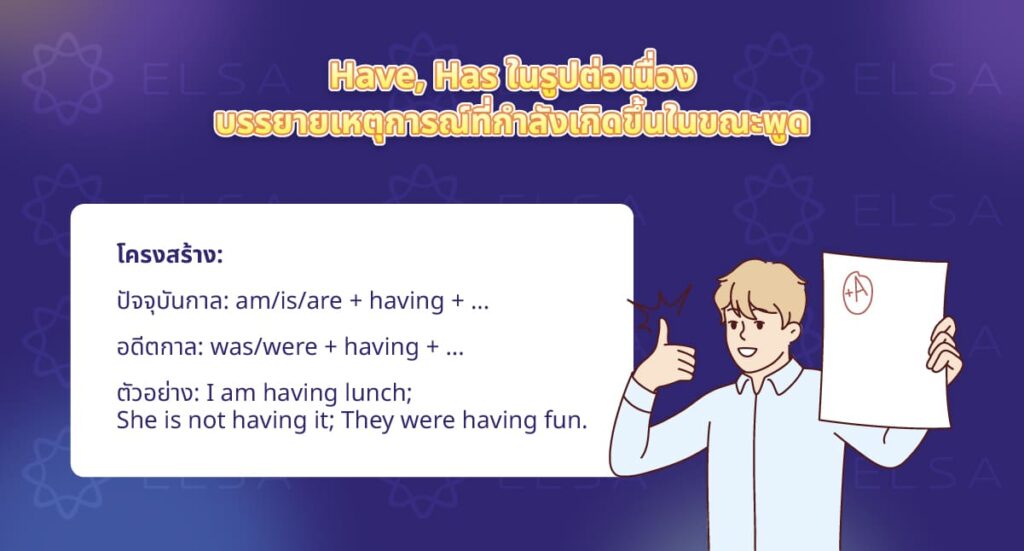
โครงสร้าง have / has ในรูปต่อเนื่องใช้เพื่อบรรยายเหตุการณ์ที่กำลังเกิดขึ้นในขณะพูด โดยสื่อว่าเป็นการกระทำที่กำลังดำเนินอยู่ ไม่ใช่เกิดขึ้นเพียงครั้งเดียว
สิ่งนี้ช่วยให้ผู้ฟังเข้าใจได้ว่าเหตุการณ์กำลังดำเนินอยู่ หรือยังคงเกิดขึ้นในช่วงเวลาปัจจุบัน
| ประธาน + am/is/are + having + … (ปัจจุบันต่อเนื่อง) ประธาน + was/were + having + … (อดีตต่อเนื่อง) |
ตัวอย่าง:
- I am having lunch with my colleagues right now. (ตอนนี้ฉันกำลังกินข้าวเที่ยงกับเพื่อนร่วมงาน)
- She is having a meeting at the moment. (ตอนนี้เธอกำลังประชุมอยู่)
- They were having fun at the park yesterday. (เมื่อวานพวกเขากำลังสนุกกันที่สวนสาธารณะ)
>>> อ่านเพิ่มเติม
- Present Continuous Tense: โครงสร้าง หลักการใช้งาน
- ประโยคอดีตกาลต่อเนื่อง (Past Continuous Tense): โครงสร้างและแบบฝึกหัด
- Future Continuous Tense: โครงสร้างและหลักการใช้งาน
รูปปฏิเสธ: เพียงเติม not หลัง to be
ตัวอย่าง:
- She is not having it. (เธอไม่ยอมรับเรื่องนั้น)
- They were not having any food during the strike. (พวกเขาไม่ได้กินอะไรเลยระหว่างการประท้วงอดอาหาร)
>>> อ่านเพิ่มเติม
- Past Perfect Continuous Tense
- Present Perfect Continuous Tense โครงสร้าง ตัวอย่าง และแบบฝึกหัดพร้อมคำตอบ
- อนาคตกาลสมบูรณ์ต่อเนื่อง (Future Perfect Continuous Tense)
Have has ใช้ยังไง ในฐานะกริยาช่วย
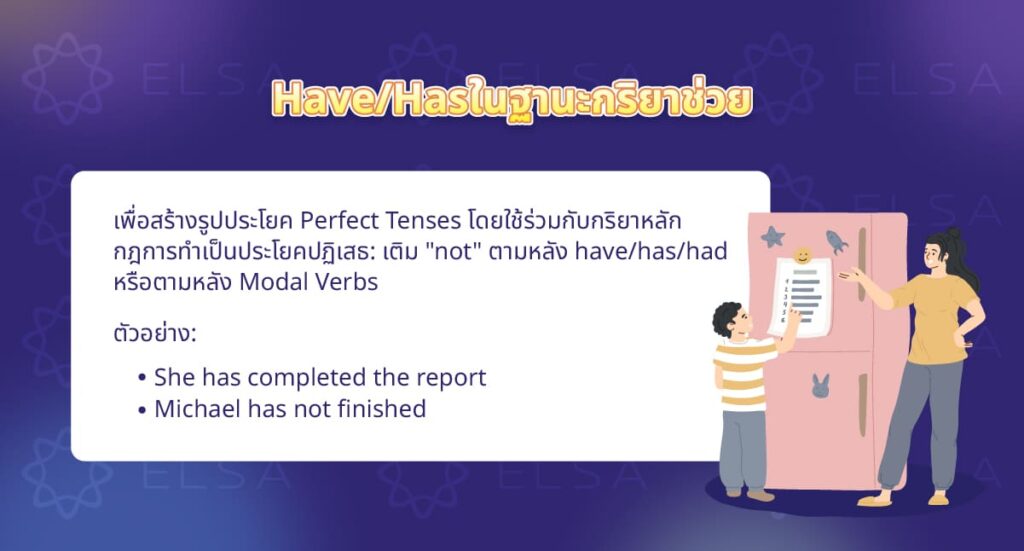
อีกจุดเด่นหนึ่งของ “to have” คือมันสามารถทำหน้าที่เป็น กริยาช่วย (auxiliary verb) เพื่อสร้าง กาลสมบูรณ์ (perfect tenses) โดยใช้ร่วมกับกริยาหลักอื่น ๆ ในกรณีนี้ “to have” จะไม่ทำหน้าที่เป็นกริยาหลัก แต่มีฐานะในการช่วยสร้างรูปกาลสมบูรณ์ให้กับประโยค
ตัวอย่าง:
- She has completed the report already.(เธอทำรายงานเสร็จเรียบร้อยแล้ว)
- We have known each other for five years. (พวกเรารู้จักกันมาเป็นเวลาห้าปีแล้ว)
- Tom had finished reading the book before dinner. (ทอมอ่านหนังสือเสร็จก่อนทานมื้อเย็น)
>>> อ่านเพิ่มเติม
- วิธีใช้ Past Perfect Tense (กาลอดีตก่อนหน้า) ที่เข้าใจง่ายที่สุด
- Present Perfect Tense
- Future Perfect Tense รวบรวมความรู้
ในการสร้าง ประโยคปฏิเสธ เมื่อ “to have” ทำหน้าที่เป็นกริยาช่วย เราเติม not หลัง have, has, had หรือหลังกริยาช่วยอื่น ๆ เช่น modal verbs
ตัวอย่าง:
- Michael has not finished his project yet. (ไมเคิลยังทำโปรเจกต์ของเขาไม่เสร็จ)
- I had not picked up my package when the courier called. (ฉันยังไม่ได้ไปรับพัสดุเมื่อพนักงานส่งของโทรมา)
- She will not have expected such a surprise to happen. (เธอคงไม่คาดคิดว่าจะมีเรื่องน่าประหลาดใจแบบนั้นเกิดขึ้น)
have has ใช้ยังไง ในประโยคคำถาม
ประโยคคำถามเมื่อ “have, has” เป็นกริยาหลัก
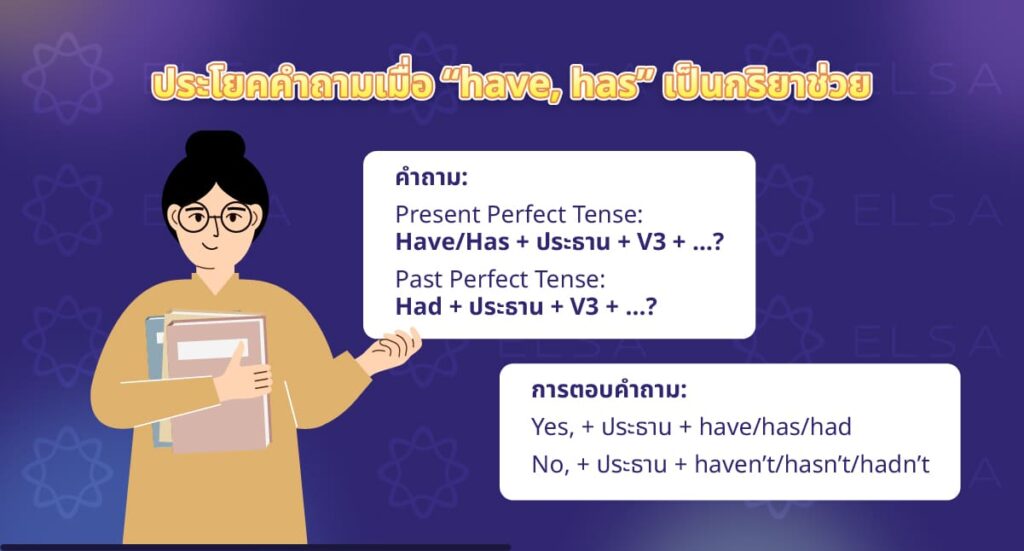
เมื่อ have, has ทำหน้าที่เป็นกริยาหลัก (แปลว่า “มี”) หากต้องการสร้างประโยคคำถามในปัจจุบัน เราต้องใช้กริยาช่วย do/does:
| Do/Does + ประธาน + have + … ? Did + ประธาน + have + … ? |
หมายเหตุ:
- Do ใช้กับ I / we / you / they และคำนามพหูพจน์
- Does ใช้กับ he / she / it และคำนามเอกพจน์
- Did ใช้ได้กับทุกประธาน (รูปอดีตของ do/does)
ตัวอย่าง:
- Do you have a car? (คุณมีรถยนต์ไหม)
- Does she have a pet dog? (เธอมีสุนัขเลี้ยงไหม)
- Did they have lunch at noon? (พวกเขาทานอาหารกลางวันตอนเที่ยงหรือเปล่า?)
ประโยคคำถามเมื่อ “have, has” เป็นกริยาช่วย
เมื่อ have และ has ทำหน้าที่เป็นกริยาช่วยในกาลสมบูรณ์:
| Have, Has + ประธาน + กริยาหลักในรูป V3 + … ? Had + ประธาน + V3 + … ? |
ตัวอย่าง:
- Have you finished your homework? (คุณทำการบ้านเสร็จแล้วหรือยัง)
- Had she left before you arrived? (เธอออกจากที่นั่นไปก่อนที่คุณจะมาถึงหรือยัง)
การตอบคำถาม:
- คำตอบยืนยัน: Yes, + ประธาน + have, has, had
- คำตอบปฏิเสธ: No, + ประธาน + haven’t, hasn’t, hadn’t
ตัวอย่าง:
- Have they completed the project? → Yes, they have. / No, they haven’t.
- Has she seen this movie before? → Yes, she has. / No, she hasn’t.
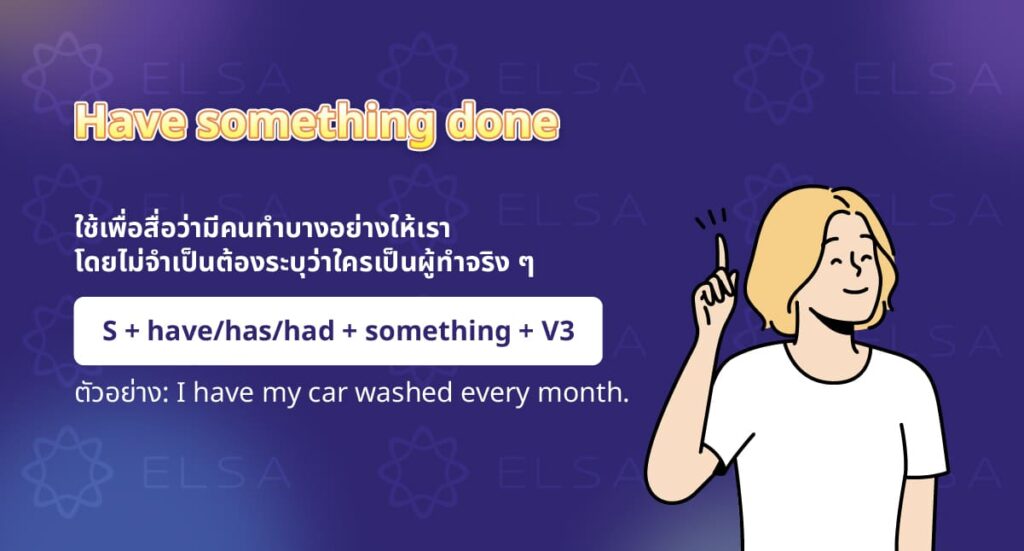
Have something done – การให้ผู้อื่นทำบางสิ่งให้ / การปล่อยให้ผู้อื่นทำ (โดยไม่ระบุผู้กระทำอย่างชัดเจน)
| S + have, has, had + something + V3 (past participle) |
โครงสร้างนี้ใช้เมื่อประธานไม่ได้ทำเอง แต่ขอให้ผู้อื่นทำให้ หรือจ้างคนอื่นทำแทน
โครงสร้างนี้มักใช้เพื่อสื่อว่ามีคนทำบางอย่างให้เรา โดยไม่จำเป็นต้องระบุว่าใครเป็นผู้ทำจริง ๆ
ตัวอย่าง:
- I have my car washed every month. (ฉันให้คนล้างรถให้ทุกเดือน) → หมายความว่าคนอื่นเป็นคนล้าง ไม่ใช่ตัวเองล้างเอง
- He had his TV fixed. (เขานำทีวีไปให้ช่างซ่อม) → ผู้ซ่อมคือช่าง ไม่ใช่เขาเอง
โครงสร้างพิเศษของ Have, Has, Had ที่พบบ่อย
นอกจากการใช้งานแล้ว โครงสร้างทั่วไปของ “have”, “has” หรือ “had” ก็มีความสำคัญเช่นกัน มาสำรวจกับ ELSA Speak กัน!
| โครงสร้าง การใช้ “HAVE”, “HAS” และ “HAD” | ตัวอย่างเช่น |
|---|---|
| Have someone do something (ขอ/ทำให้ใครทำอะไรบางอย่าง) | I had my roommate help me buy vegetables at the supermarket. (ฉันขอให้เพื่อนร่วมห้องช่วยฉันซื้อผักที่ซูเปอร์มาร์เก็ต) |
| Had it not been for …, clause(ประโยคเงื่อนไขแบบที่ 3) | Had it not been for her support, Tom wouldn’t have succeeded. (หากไม่มีการสนับสนุนจากเธอ ทอมคงไม่ประสบความสำเร็จ) |
| Have + something + V (past participle)(ขอให้ใครทำอะไรบางอย่าง) | She has my telephone repaired. (เธอช่วยฉันซ่อมโทรศัพท์) |
| Have + O + V-ing: ทำให้ใครบางคนทำอะไรบางอย่าง | Mr Bean had us laughing the whole episode. (นาย. บีนทำให้เราขำตลอดทั้งเรื่อง) |
| Have + got + O: คนเป็นเจ้าของบางสิ่ง(ไม่ใช้อธิบายการกระทำและใช้ใน Present Simple) | My father have got a new house in Bangkok (พ่อของฉันมีบ้านใหม่ในกรุงเทพฯ) |
| Have, has + been + V-ing: ใช้ใน Present Perfect Continuous เพื่อเน้นความต่อเนื่องของสิ่งที่เกิดขึ้นในอดีตและต่อเนื่องมาถึงปัจจุบันและอาจดำเนินต่อไปในอนาคต | The Japanese have been collecting garbage at the stadium after the match ended. (ชาวญี่ปุ่นเก็บขยะในสนามหลังจบการแข่งขัน) |
| Have, has + been to + place: ไปที่ไหนสักแห่ง | We have been to Bueng Boraphet for a club birthday celebration. (เราไปบึงบอระเพ็ดเพื่องานเลี้ยงวันเกิดของสโมสร) |
| Have + V (past participle): ใช้ใน Reduced relative clauses (ประโยคย่อย) เพื่อเน้นว่ากิจกรรมเสร็จสิ้นแล้ว | Jenny is the only student to have submitted the assignment within the allotted time. (เจนนี่เป็นนักเรียนคนเดียวที่ส่งงานภายในเวลาที่กำหนด) |
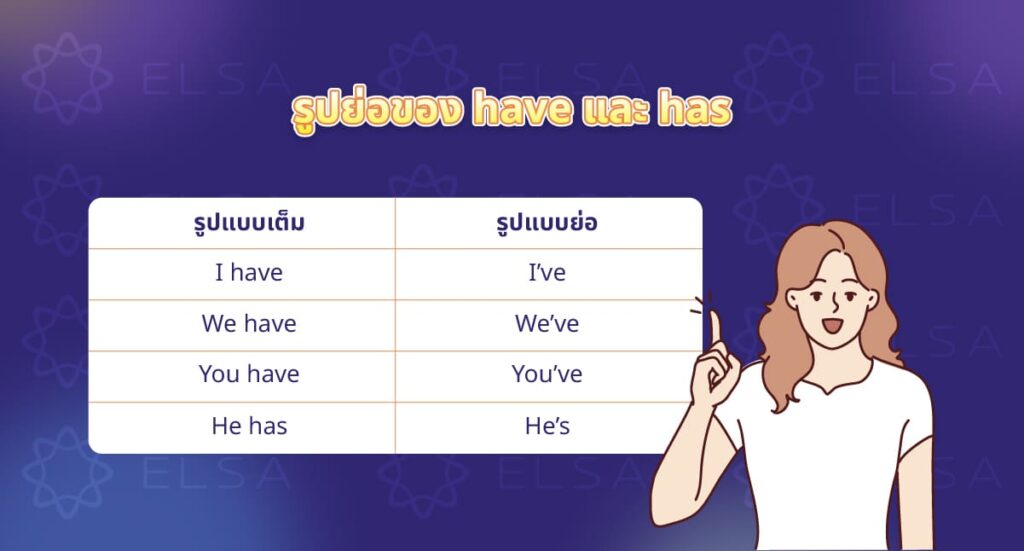
รูปย่อของ have และ has
เมื่อเรียนไวยากรณ์ภาษาอังกฤษ นอกจากการเข้าใจวิธีใช้ have, has แล้ว คุณยังควรให้ความสำคัญกับ รูปแบบย่อ ด้วย เพราะนี่เป็นรูปแบบที่ใช้กันอย่างแพร่หลายในชีวิตประจำวันรวมถึงในการสื่อสารทั่วไปหรือข้อความที่ไม่เป็นทางการ อย่างไรก็ตาม ในบริบทที่ต้องการความเป็นทางการเช่น เอกสารทางวิชาการ เอกสารทางธุรกิจ
หรือบทความที่เป็นทางการ มักจะไม่ใช้รูปย่อ
แต่จะใช้คำเต็มว่า “have” หรือ “has”
ตารางต่อไปนี้เป็นการสรุปรูปแบบย่อที่พบบ่อยของ have และ has:
| รูปแบบเต็ม | รูปแบบย่อ |
|---|---|
| I have | I’ve |
| We have | We’ve |
| You have | You’ve |
| He has | He’s |
| She has | She’s |
| It has | It’s |
| They have | They’ve |
| Has not | Hasn’t |
| Have not | Haven’t |
วลีที่ใช้ร่วมกับ have has had
ในภาษาอังกฤษ have, has, had สามารถใช้ร่วมกับคำอื่น ๆ เพื่อสร้างเป็น วลีกริยา (phrasal verbs) ที่มีความหมายเฉพาะได้
วลีที่พบบ่อยบางส่วน ได้แก่
| วลีกริยา | ความหมาย | ตัวอย่างประกอบ |
|---|---|---|
| Have breakfast/lunch/dinner | กินอาหารเช้า/กลางวัน/เย็น | I usually have breakfast at 7 a.m. (ฉันมักจะกินอาหารเช้าเวลา 7 โมงเช้า) |
| Have a shower/bath | อาบน้ำ | She has a shower every morning. (เธออาบน้ำทุกเช้า) |
| Have a rest/break | พักผ่อน | Let’s have a break before the next class. (มาพักสักหน่อยก่อนเข้าคาบต่อไปกันเถอะ) |
| Have a look | ดู / ลองดู / มองดู | Can I have a look at your notebook? (ฉันขอดูสมุดของเธอหน่อยได้ไหม?) |
| Have a good time | มีช่วงเวลาที่สนุกสนาน | They had a good time at the party. (พวกเขาสนุกมากในงานปาร์ตี้) |
| Have a problem/difficulty | เจอปัญหา / มีความยากลำบาก | He has difficulty understanding math. (เขาพบความยากลำบากในการเข้าใจคณิตศาสตร์) |
| Have an idea | มีความคิด / คิดออก | She had a great idea for the project. (เธอมีไอเดียดีเยี่ยมสำหรับโครงการนี้) |
| Have a meeting | เข้าร่วม / จัดการประชุม | We have a meeting this afternoon. (ตอนบ่ายวันนี้พวกเรามีการประชุม) |
| Have fun | สนุก / เพลิดเพลิน | Kids are having fun in the park. (เด็ก ๆ กำลังสนุกกันอยู่ในสวนสาธารณะ) |
| Have a chance/opportunity | มีโอกาส | I had a chance to meet her last week. (ฉันมีโอกาสได้พบเธอเมื่อสัปดาห์ที่แล้ว) |
เมื่อกริยา “have” ตามด้วยกริยาอีกตัวที่มี a/an นำหน้า กริยานั้นจะไม่ทำหน้าที่เป็นการกระทำอีกต่อไป แต่กลายเป็น คำนามกริยา (gerund noun)
สูตร:
| Have + a/an + (กริยา → คำนาม) |
โครงสร้างนี้ใช้เพื่อบรรยาย กิจกรรมประจำวัน ประสบการณ์ หรือกิจกรรมสั้น ๆ โดยมักจะแปลความหมายตามกริยาที่ตามหลัง
ตัวอย่าง:
| วลีกริยา | ความหมาย | ตัวอย่างประกอบ |
|---|---|---|
| Have breakfast/lunch/dinner | กินอาหารเช้า/กลางวัน/เย็น | I usually have breakfast at 7 a.m. (ฉันมักจะกินอาหารเช้าเวลา 7 โมงเช้า) |
| Have a shower/bath | อาบน้ำ | She has a shower every morning. (เธออาบน้ำทุกเช้า) |
| Have a rest/break | พักผ่อน | Let’s have a break before the next class. (มาพักสักหน่อยก่อนเข้าคาบต่อไปกันเถอะ) |
| Have a look | ดู / ลองดู / มองดู | Can I have a look at your notebook? (ฉันขอดูสมุดของเธอหน่อยได้ไหม?) |
| Have a good time | มีช่วงเวลาที่สนุกสนาน | They had a good time at the party. (ในงานปาร์ตี้พวกเขาสนุกมาก) |
| Have a problem/difficulty | เจอปัญหา / มีความยากลำบาก | He has difficulty understanding math. (เขาพบความยากลำบากในการเข้าใจคณิตศาสตร์) |
| Have an idea | มีความคิด / คิดออก | She had a great idea for the project. (เธอมีไอเดียดีเยี่ยมสำหรับโครงการนี้) |
| Have a meeting | เข้าร่วม / จัดการประชุม | We have a meeting this afternoon. (ตอนบ่ายวันนี้พวกเรามีการประชุม) |
| Have fun | สนุก / เพลิดเพลิน | Kids are having fun in the park. (เด็ก ๆ กำลังสนุกกันอยู่ในสวนสาธารณะ) |
| Have a chance/opportunity | มีโอกาส | I had a chance to meet her last week. (ฉันมีโอกาสได้พบเธอเมื่อสัปดาห์ที่แล้ว) |
| Have a rest. | แปลด้วยนะคะ | I want to have a rest. (ฉันอยากพักผ่อน) |
| Had a swim | ว่ายน้ำ | I and my friends had a swim in the pool yesterday. (เมื่อวานฉันกับเพื่อน ๆ ว่ายน้ำในสระ) |
| Has a walk | เดินเล่น | My mother has a walk every morning. (แม่ของฉันเดินเล่นทุกเช้า) |
แบบฝึกหัดเกี่ยวกับ Have, Has, Had
จงเติมประโยคต่อไปนี้โดยใช้รูปแบบของคำในวงเล็บให้ถูกต้อง
- Yesterday afternoon I had my car ______ (repair). I found a good mechanic in the area.
- Are they having their house ______ (clean) now? Let’s hang out then!
- Rosie has always wanted to have blue long hair. She is having her hair ______ (do).
- I am going to have the mechanic ______ (repair) my washing machine.
- My left leg really hurts, so I went to the hospital to have it ______ (examine).
- My children are going to garden ______ (water) my flowers.
- She had her younger brother ______ (check) this English exercise.
- I am going to have Tom ______ (look) at my old washing machine. Perhaps he can fix it.
เฉลย:
| 1. repaired | 5. examined |
| 2. cleaned | 6. watered |
| 3. done | 7. check |
| 4. repair | 8. look |
คำถามที่พบบ่อย
ความแตกต่างระหว่าง Have และ has
Have ใช้กับ ประธานพหูพจน์ และ สรรพนาม I / you / we / they Has ใช้กับ ประธานเอกพจน์ และ สรรพนาม he / she / it
Have has ใช้ยังไงและเมื่อไร?
ใช้ have, has เพื่อแสดง ความเป็นเจ้าของ พฤติกรรมหรือความเคยชิน หรือใช้เป็น กริยาช่วย ในปัจจุบันกาลสมบูรณ์
วิธีใช้โครงสร้าง Have + V3
Have + V3 (have, has + กริยาช่องที่ 3) ใช้ในปัจจุบันกาลสมบูรณ์เพื่อบอกถึงการกระทำที่ เกิดขึ้นแล้วในอดีต และยังมีความเกี่ยวข้องกับปัจจุบัน
วิธีใช้ Had + V3
Had + V3 ใช้ใน อดีตกาลสมบูรณ์เพื่อแสดงการกระทำที่ เกิดขึ้นก่อนอีกการกระทำหนึ่งในอดีต
Have has ใช้ยังไง ไม่ยากเหมือนเราคิดใช่ใหม ELSA Speak หวังว่าจะเป็นประโยชน์และช่วยให้คุณเรียนภาษาอังกฤษได้ดีขึ้น อย่าลืมฝึกฝนอย่างสม่ำเสมอเพื่อเสริมความรู้เกี่ยวกับ “have” นะ! ขอให้โชคดี!

ELSA Premium 1 year
8,497 บาท ->2,353 บาท
ELSA Pro 1 year
2,499 บาท ->1,830 บาท
ทักษะการอ่านภาษาอังกฤษของคุณยังมีข้อจำกัด? คุณไม่สามารถทำแบบฝึกหัดการอ่านได้ คุณอ่าน บทความภาษาอังกฤษ แต่ไม่เข้าใจเนื้อหา? วิธีแก้ปัญหาเหล่านี้คือต้องการอ่าน ในบทความต่อไปนี้ ELSA Speak จะแบ่งปันบทความภาษาอังกฤษดีๆ 10 อันดับแรกเพื่อช่วยคุณฝึกฝนทักษะการอ่านอย่างได้ผล
ภาพรวมของ บทความภาษาอังกฤษ
ก่อนอื่น มาเรียนรู้แนวคิดของ บทความภาษาอังกฤษ
กำหนด
บทความภาษาอังกฤษ เป็นบทความและย่อหน้าสั้นๆ ที่เขียนเป็นภาษาอังกฤษ ซึ่งช่วยให้ผู้เรียนภาษาอังกฤษได้ฝึกฝนและพัฒนาทักษะความเข้าใจในการอ่าน การอ่านภาษาอังกฤษมีหลากหลายประเภท เช่น เรื่องสั้น ข้อความสั้นๆ บทสนทนา นิทานภาษาอังกฤษ …
ประโยชน์ของการอ่าน บทความภาษาอังกฤษ
การอ่านบทความภาษาอังกฤษในแวบแรกดูเหมือน “เป็นคำศัพท์ล้วนๆ” และค่อนข้างน่าเบื่อ แต่ทำไมผู้เรียนภาษาอังกฤษถึงให้ความสำคัญกับการอ่านบทความภาษาอังกฤษมากขนาดนั้น? นั่นเป็นเพราะผลประโยชน์ที่สำคัญที่บทความเหล่านั้นนำมาให้เรา
- เพิ่มพูนคำศัพท์ภาษาอังกฤษ: คำศัพท์ภาษาอังกฤษสำคัญแค่ไหนในการเรียนภาษาอังกฤษ แน่นอนว่าใครๆก็รู้ดี ว่าคุณจะสื่อสารภาษาอังกฤษได้ดีหรือไม่ นั้นขึ้นอยู่กับความรู้ในด้านคำศัพท์ของคุณ การอ่านบทความภาษาอังกฤษหลายบทจะช่วยให้คุณได้สัมผัสกับคำศัพท์ภาษาอังกฤษมากขึ้น ซึ่งจะเป็นการได้รับคำศัพท์เพิ่มเติมสำหรับตัวคุณเอง
- การสะสมความรู้: บทความภาษาอังกฤษ มีรูปแบบและเนื้อหาที่หลากหลาย โดยมีหัวข้อต่างๆ มากมาย อาจเป็นเรื่องราว วัฒนธรรม ประวัติศาสตร์… ด้วยการฝึกอ่าน คุณสามารถ “เก็บ” ความรู้มากมายในหลากหลายสาขาได้ ซึ่งจะช่วยให้คุณใช้ภาษาอังกฤษได้ดีขึ้น คล่องขึ้น
- ทักษะการเขียนอย่างมืออาชีพ: กระบวนการอ่านบทความภาษาอังกฤษจะช่วยปรับปรุงเค้าโครงในการเขียนของคุณ ในขณะเดียวกัน ยังช่วยให้คุณใช้คำได้อย่างยืดหยุ่นมากขึ้นและหลีกเลี่ยงการใช้คำซ้ำในประโยค
- การพัฒนาความสามารถในการอ่าน: การอ่านเป็นหนึ่งในทักษะที่ยากที่สุดในสี่ทักษะ ในการพัฒนาทักษะการอ่าน สิ่งที่คุณต้องทำคือฝึกอ่านให้มากขึ้น และบทความภาษาอังกฤษจะเป็นผู้ช่วยที่ดีสำหรับคุณ
10 อันดับ บทความภาษาอังกฤษ สั้นๆ ที่ทุกคนสามารถฝึกได้ง่าย
อย่างที่พูด การอ่านบทความภาษาอังกฤษไม่มีที่สิ้นสุด คุณควรเลือกบทความที่มีเนื้อหาน่าสนใจและเข้าใจง่ายเพื่อให้ฝึกได้ง่ายขึ้น นี่คือบทความภาษาอังกฤษความหมายดีๆ ระดับพื้นฐาน 10 อันดับแรกที่จะช่วยคุณฝึกฝนทักษะการอ่านของคุณ:
1. Yoda – the cat with four ears
Chicago, Illinois, couple Valerie and Ted Rock took the cat in two years ago after they visited a local bar, where a group of drinkers were handing the animal around and making fun of him.
Since being adopted by the Rocks and after getting his picture posted on the Internet, the two-year-old feline has become an international media celebrity.
The Rocks have received calls from Good Morning America, Fox News and The Tyra Banks Show. The moggy’s mugshot has graced the pages of the London Guardian and British tabloids.
Despite his strange appearance, Yoda – named after the pointy-eared Star Wars character (pictured below) – is a perfectly normal and affectionate cat and a delight to have around.
His extra ears are thought to be the result of a genetic mutation.
But Yoda’s owners are keeping a close watch on their much-loved pet. They are concerned he could be catnapped because he is so different.
คำศัพท์ของบทความ
| คำศัพท์ | ความหมาย |
| mugshot | รูปถ่ายตอนถูกจับ (มักใช้ในคดี) |
| graced | ประดับประดา / ทำให้ดูดีขึ้น |
| tabloid | แท็บลอยด์ (หนังสือพิมพ์แนวซุบซิบ) |
| pointy-eared | หูแหลม |
| delight | ความยินดี / ความปลาบปลื้ม |
| a genetic mutation | การกลายพันธุ์ทางพันธุกรรม |
| concerned | กังวล / ห่วงใย |
ดูเพิ่มเติมที่ บทความภาษาอังกฤษ คำไวพจน์
2. Salt coffee – Last Part
After 40 years, he passed away, and left her a letter which said:
“My dearest, please forgive me, forgive my life’s lie.
This was the only lie I said to you – the salty coffee.
Remember the first time we dated?
At that time, I was so nervous, actually I wanted some sugar, but I said salt, it was hard for me to change so I just went ahead.
I never thought that would be the start of my biggest lie.
I tried to tell you the truth many times in my life, but I was too afraid to, as I had promised never to lie to you.
Now I’m dying, and afraid of nothing so I will tell you the truth: I don’t like salty coffee, what a strange bad taste!
But I have had salty coffee for my whole life.
Since I have known you, I have never felt sorry for anything I have done for you.
Having you with me is the biggest happiness of my life.
If I could live again, I would want to know you and have you for my whole life, even if I had to drink the salty coffee again.”
Her tears made the letter totally wet.
Some day, someone asked her: “How does salty coffee taste?” “It’s sweet,” she replied.
คำศัพท์ของบทความ
| คำศัพท์ | ความหมาย |
| passed away | เสียชีวิต |
| left her a letter | ทิ้งจดหมายไว้ให้เธอ |
| wet | เปียก |
3. Salt coffee
PART 1:
He met her at a party.
She was so outstanding, many guys were chasing after her, while he was so normal, nobody paid attention to him.
At the end of the party, he invited her to have coffee with him.
She was so surprised, but due to being polite, she promised.
They sat in a nice coffee shop, he was too nervous to say anything, she felt uncomfortable, and she thought, “Please, let me go home.”
Suddenly he asked the waiter:
“Would you please give me some salt? I’d like to put it in my coffee.”
Everybody stared at him, so strange!
His face turned red, but still, he put the salt in his coffee and drank it.
She asked him curiously:
“Why do you have this hobby?”
He replied:
“When I was a little boy I lived near the sea, I liked playing in the sea; I could feel the taste of the sea, just like the taste of this salty coffee.
Now every time I have salty coffee, I always think of my childhood, think of my hometown, I miss my hometown so much, I miss my parents who are still living there.”
คำศัพท์ของบทความ
| คำศัพท์ | ความหมาย |
| outstanding | โดดเด่น / ยอดเยี่ยม |
| chasing after | ไล่ตาม |
| paid attention | ให้ความสนใจ / ตั้งใจฟัง |
| put it in | ใส่มันเข้าไป |
| put the salt in | ใส่เกลือลงไป |
4. Dating
One day in the 1920’s, a young man asked if he could visit a woman at her home. When he arrived at her home, she was wearing a hat on her head.
Many people today may not understand what this story means. But any American in the 1920’s would understand. The hat said that the girl would like to go out with him.
In the past, men liked sitting in the girl’s house to talk, to meet her mother, to have something to eat and to listen to her play the piano. However women would like to go on a date, to go out somewhere interesting.
This new style of dating began to take the place of the old system of visiting in society in the early 20th century. Nowadays, it is very popular around the world.
คำศัพท์ของบทความ
| คำศัพท์ | ความหมาย |
| arrived at | มาถึง (สถานที่) |
| would like to go out with | อยากออกไปกับ… / อยากเดตกับ… |
5. Reasons of love
When choosing a partner for life what do people usually think of? A recent study has shown that these following factors are the most important things that one takes into consideration when choosing his/her partner. Firstly, beauty is an important factor.
Although many people say that the partner’s appearance is not important, research has shown that beauty has great effect. Secondly, money is also as important as appearance.
Rich people are easier to attract the opposite sex than the poor. Both men and women say that they think much on how much money their partners have before they decide to get married.
In addition, timing is important, if the partner comes in time, marriage is more possible. Do you see? If your partner comes when you are available or eager to love, he will be accepted easily.
คำศัพท์ของบทความ
| คำศัพท์ | ความหมาย |
| takes into consideration | พิจารณา / คำนึงถึง |
| get married | แต่งงาน |
| eager to | กระตือรือร้นที่จะ… / อยากจะ…มาก |
6. Attractiveness in American culture
In a test done in the 1970s, 1031 students at the University of Wyoming said what they considered attractive in their partners. Their answers were not new.
Men tended to prefer blondes, blue eyes and light skin color, while women liked darker men.
However, there were some surprises. Few men liked very large breasts or boyish women. Almost none of the women liked very muscular men. In fact, both men and women prefer the average.
Too short, too tall, too pale or too dark were not chosen. Averageness still wins. In a recent study, scientists chose 94 faces of American women and used the computer to make a picture of an average face.
Then they asked people which face they liked. Of the 94 real faces, only 4 faces were considered to be more attractive than the average face. Most people said that they preferred the average face.
คำศัพท์ของบทความ
| คำศัพท์ | ความหมาย |
| muscular men | ผู้ชายมีกล้าม / ผู้ชายที่มีกล้ามเนื้อ |
| Averageness still wins | ความธรรมดาก็ยังชนะอยู่ดี / ความปกติก็ยังชนะ |
7. Love Map
Why do we fall in love with this one but not that? Why Bill instead of Ray? Researcher John Money believes that everyone has something he calls a “love map”.
Long before you fall in love with someone, you have developed a map which shows with whom you will fall in love.
When children meet friends, family members and other people, they will collect certain things that they like in these people. Gradually their memories begin to form an ideal lover in their mind.
As they grow up, their love map becomes clearer. So long before you love someone, you already know some things about him. Then you will meet someone that has something similar to your ideal, and you fall in love with him.
Actually this one is far different from your ideal. However you can not see these differences. That’s why a famous saying goes: “Love is blind”
คำศัพท์ของบทความ
| คำศัพท์ | ความหมาย |
| love map | แผนที่ความรัก / ผังความรัก |
| Love is blind | ความรักทำให้คนตาบอด / ความรักทำให้มองข้ามเหตุผล |

8. This thing called love
A man and a woman are at a party. They are strangers. This is the first time they meet. The woman sees the man first. He is talking to some of his friends. “He has a nice smile”, she thinks.
She moves to be in his vision and sees if he has noticed her. Actually the man is also looking at her. Their eyes meet for the first time.
She begins talking to people near her, waiting for him to come to talk with her. And he does. They find a peaceful place to sit and talk to each other.
They talk so much. And they talk as if no one else is in the room. Each tries to tell the other everything. Both know that they have fallen in love.
คำศัพท์ของบทความ
| คำศัพท์ | ความหมาย |
| vision | วิสัยทัศน์ / การมองเห็น |
| strangers | คนแปลกหน้า |
| peaceful | สงบ / สันติ / มีความสงบสุข |
9. Independence Day
Before the end of the 1700s, the United States did not exist. It was only 13 colonies on the continent of North America which were under the control of King George III of Britain.
The colonies found that it was difficult to be under the control of a king who was too far away from them. They wanted to be free. They wanted to set up their own government.
A war started. After years of fighting, on July 2, 1776 the Declaration of Independence for the 13 colonies was written.
However Independence Day is now celebrated on July 4, because that is the day the Declaration of Independence was officially adopted.
The 13 colonies of North America were then free from the control of the British King. However the war did not end in 1776. It was still on till 1783. In 1783 Independence Day became an official holiday in the United States.
คำศัพท์ของบทความ
| คำศัพท์ | ความหมาย |
| Independence Day | วันประกาศอิสรภาพ / วันชาติ |
| colonies on | อาณานิคมบน… (ต้องมีชื่อสถานที่ต่อท้าย) |
| continent of | ทวีป… (ต้องมีชื่อทวีปต่อท้าย เช่น Asia) |
| adopt | รับเลี้ยง / นำมาใช้ / รับเอามาใช้ |
>>> Read more
- ประโยคเงื่อนไข If Clause: โครงสร้าง วิธีใช้ แบบฝึกหัด และเคล็ดลับการท่องจำ
- บทกวีเกี่ยวกับการใช้ “IN” “ON” “AT” ช่วยให้คุณแยกแยะได้ง่าย
- Passive Voice: สูตร ตัวแปร และการใช้งานที่แม่นยำที่สุด (พร้อมแบบฝึกหัด)
10. My dogs
Pets are domesticated animals that we keep for pleasure. Of all the pets I like dog the most. In my house we have two dogs. One is an Alsatian dog and the other is a bulldog.
The Alsatian was bought locally by my mother and the bulldog was given to us by a European family. We call the Alsatian ‘Jimmie’ and the bulldog ‘Jonnie’. The dogs respond well whenever I call them by their names.
The Alsatian is kept mainly for watching our house especially at night. It barks loudly whenever there is a noise around our house. My favorite is the bulldog Jonnie.
It is a funny looking breed and rare in the world. I feed him bones, meat and dog-biscuits.
I bath him everyday to keep him clean. It follows me wherever I go. It knows the time I usually return from school and will wait at the gate to welcome me home.
คำศัพท์ของบทความ
| คำศัพท์ | ความหมาย |
| bulldog | บูลด็อก (พันธุ์สุนัขหน้าสั้นตัวเตี้ย) |
| locally | ในท้องถิ่น / ภายในประเทศ |
| breed and rare | สายพันธุ์และหายาก (พันธุ์หายาก) |
| dog-biscuits | ขนมสุนัข / บิสกิตสำหรับสุนัข |
แนะนำเว็บไซต์ฝึกอ่านภาษาอังกฤษ
เว็บไซต์ด้านล่างนี้จะช่วยให้ผู้เรียนฝึกอ่านภาษาอังกฤษอย่างรวดเร็ว มาดูกันเลย
| เว็บไซต์ | อธิบาย | ลิงก์ |
| Bangkok Post Learning English | เรียนภาษาอังกฤษจากข่าวจริง มีคำแปล คำอธิบายคำศัพท์ เหมาะสำหรับผู้เรียนระดับกลางขึ้นไป | bangkokpost.com/learning |
| Oxford Reading Club | ห้องสมุดหนังสือภาษาอังกฤษดิจิทัล มีหนังสือหลากหลายระดับ พร้อมแบบฝึกหัดพัฒนาทักษะการอ่าน | oxfordreadingclub.com |
| BBC Learning English | เว็บไซต์จาก BBC รวมบทเรียน วิดีโอ คำศัพท์ และแกรมม่าสำหรับทุกระดับ เหมาะทั้งฝึกฟังและอ่าน | bbc.co.uk/learningenglish |
| British Council Learning English | มีบทเรียนภาษาอังกฤษทั้งแบบอ่าน ฟัง และแบบฝึกหัด พร้อมบทความและเกม | learnenglish.britishcouncil.org |
| English Online (AT) | เว็บไซต์รวมบทความภาษาอังกฤษตามหัวข้อต่าง ๆ เช่น วิทยาศาสตร์ เทคโนโลยี พร้อมคำถามท้ายบท | english-online.at |
| English Club | ชุมชนสำหรับเรียนภาษาอังกฤษ มีบทความ แกรมม่า คำศัพท์ เกม และแบบฝึกหัด | englishclub.com |
| BITS English Language Learning | แพลตฟอร์มการเรียนรู้ภาษาอังกฤษ มีบทเรียนแกรมม่า และเนื้อหาหลากหลาย เหมาะกับนักเรียนไทย | bitsenglish.com |
| Using English | เว็บไซต์รวมบทเรียน แกรมม่า แบบฝึกหัด และบทความภาษาอังกฤษสำหรับผู้เรียนระดับต่าง ๆ | usingenglish.com |
| ESL Reading (Rong-Chang) | รวมเรื่องสั้นภาษาอังกฤษสำหรับ ESL มีเสียงอ่านและแบบฝึกหัด ความยาวหลากหลายระดับ | rong-chang.com/reading.htm |
| Breaking News English | เว็บข่าวภาษาอังกฤษแบ่งตามระดับ พร้อมเสียงอ่าน คำศัพท์ และแบบฝึกหัดครบถ้วน | breakingnewsenglish.com |
หมายเหตุเมื่อเลือก บทความภาษาอังกฤษ ฝึกอ่าน
การอ่านภาษาอังกฤษมีประโยชน์มากมาย แต่จะใช้ได้ก็ต่อเมื่อเราอ่านได้อย่างถูกต้องเท่านั้น และไม่ใช่บทความภาษาอังกฤษใดๆก็เหมาะกับเรา ต่อไปนี้คือข้อสังเกตบางประการเมื่อเลือกบทความภาษาอังกฤษสำหรับคุณ:
- เลือกตามระดับ: บทความภาษาอังกฤษ แต่ละบทจะเหมาะสมกับแต่ละระดับภาษาอังกฤษ หากคุณเพิ่งเริ่มอ่านและพื้นฐานภาษาอังกฤษของคุณยังไม่แน่นอน การจัดการกับการอ่านแบบยาวๆ ด้วยไวยากรณ์ที่ซับซ้อนจะเป็นเรื่องยาก ดังนั้นให้ตรวจสอบระดับของคุณก่อนแล้วค่อยเลือกบทความสั้นๆภาษาอังกฤษที่จะอ่าน จงเริ่มด้วยบทความสั้นๆ โครงสร้างและคำศัพท์ที่เข้าใจง่ายหากคุณเป็นมือใหม่
- เลือกตามความสนใจ: สำหรับหัวข้อที่คุณชื่นชอบ มันจะทำให้คุณรู้สึกน่าสนใจกว่า คุณสามารถเลือกอ่านตามหัวข้อหรือผู้แต่งที่คุณสนใจเพื่อเพิ่มแรงจูงใจและทำให้คุณรู้สึกน่าเบื่อน้อยลง
เช่นนั้น ELSA Speak ได้แชร์บทความภาษาอังกฤษที่เข้าใจง่าย 10 อันดับแรกกับคุณ รวมถึงหมายเหตุเมื่อเลือก บทความภาษาอังกฤษ ในการอ่าน หวังว่าบทความนี้จะช่วยให้คุณฝึกความเข้าใจในการอ่านได้ดีขึ้น ขอให้คุณจะเชี่ยวชาญภาษาอังกฤษในไม่ช้า
ดูเพิ่มเติมที่ บทความภาษาอังกฤษ ออกเสียงอย่งไร