Author: Bao Ngan Nguyen
อาหารเป็นหนึ่งในสาขาที่หลายคนสนใจ การอธิบายหรือการยกย่องชมเชยอาหารกลายเป็นหัวข้อสำคัญทั้งในการพูดและการเขียนภาษาอังกฤษ ในบทความวันนี้ มาร่วมกับ ELSA Speak เพื่อเรียนรู้คำศัพท์ ตัวอย่างประโยค และวลีต่าง ๆ ในหัวข้อ รสชาติภาษาอังกฤษ!
ความหมายของคำว่า รสชาติในภาษาอังกฤษ
คำว่า “รสชาติ” ในภาษาอังกฤษแปลว่า “flavor” หรือ “taste” มักใช้เพื่ออธิบายลักษณะรสชาติของอาหาร เครื่องดื่ม “รสชาติ” ของอาหารเป็นการรวมของรสหลายแบบเช่น รสหวาน เปรี้ยว เค็ม ขม มีกลิ่นหอม เผ็ด เข้มข้น และรสชาติอื่น ๆ
ตัวอย่าง
- This dish has a rich and spicy flavor.(อาหารจานนี้มีรสชาติเข้มข้นและเผ็ด)
- I love the taste of fresh strawberries.(ฉันชอบรสชาติของสตรอเบอร์รี่สด)
- The wine has a subtle and complex flavor profile.(ไวน์มีรสชาติที่ละเอียดอ่อนและซับซ้อน)
- The chef carefully balances the flavors in his recipes.(พ่อครัวรักษาสมดุลของรสชาติในสูตรอาหารของเขาอย่างระมัดระวัง)
- The ice cream has a unique flavor combination of vanilla and lavender.(ไอศกรีมมีรสชาติที่เป็นเอกลักษณ์ของวานิลลาและลาเวนเดอร์)
คำพ้องความหรือความหมายคล้ายกับคำว่า “รสชาติ” (flavor/taste) ในภาษาอังกฤษ
• Savor: หมายถึง การลิ้มรส หรือเพลิดเพลินกับอาหารหรือเครื่องดื่มเพื่อสัมผัสรสชาติและความอร่อยของอาหาร
• Palate: หมายถึง รสชาติของผู้รับประทานอาหาร ความสามารถในการรับรู้และประเมินรสชาติของอาหารหรือเครื่องดื่ม
• Flavourful: หมายถึง รสชาติที่เข้มข้น น่ารับประทาน น่าลิ้มลอง น่าอร่อย
• Aroma: หมายถึง ความหอม กลิ่นหอมของอาหาร เครื่องดื่ม เกี่ยวกับสารประกอบที่มีกลิ่นหอม
• Taste sensation: หมายถึง การตรวจการรู้รส การรู้รส
• Distinctive taste: หมายถึง รสชาติที่โดดเด่น จดจำได้ง่าย
• Savory: หมายถึง รสอร่อย ทำให้พอใจ ทำให้ถูกใจ ดึงดูดใจ มักจะใช้เพื่ออธิบายอาหารมีรสชาติเค็มและอร่อย
>>> Read more: ผักภาษาอังกฤษมีอะไรบ้าง
คำศัพท์เกี่ยวกับรสชาติภาษาอังกฤษมีอะไรบ้าง
- Aromatic: หอม, มีกลิ่นหอม
The aromatic scent of freshly brewed coffee filled the air, enticing everyone in the room. (กลิ่นหอมของกาแฟสดอบอวลไปทั่วทั้งห้องทำให้ดึงดูดทุกคน)
- Tasty: รสชาติดี อร่อย
She cooked a tasty meal that was bursting with flavors and left everyone wanting more. (เธอทำอาหารอร่อยที่เต็มไปด้วยรสชาติและทำให้ทุกคนอยากกินมากขึ้น)
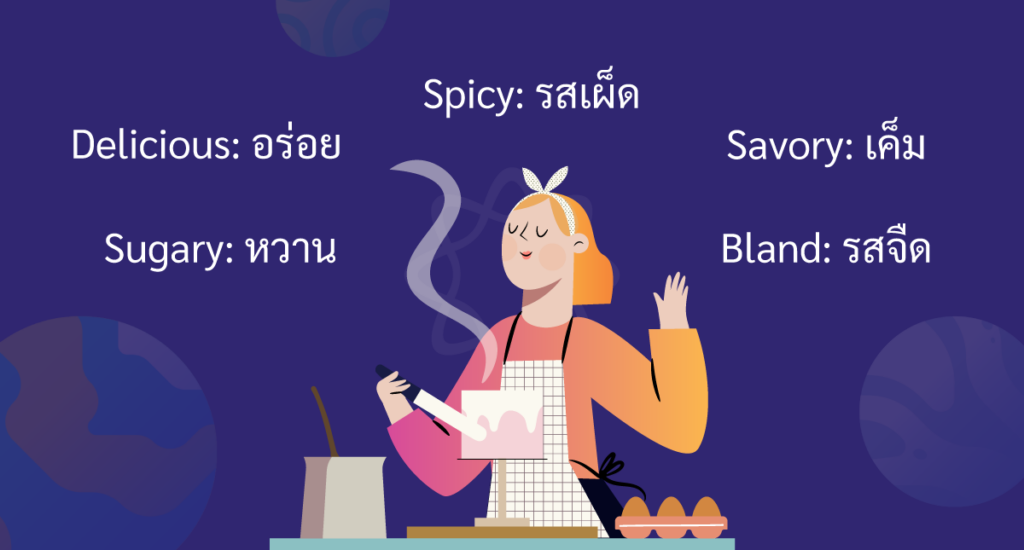
- Delicious: อร่อย
The delicious aroma of freshly baked bread wafted through the bakery, attracting customers from afar. (กลิ่นหอมจากขนมปังอบใหม่อร่อยกระจายไปทั่วร้านเบเกอรี่ดึงดูดลูกค้าจากที่อื่นมา)
- Mouth-watering: น่าอร่อย
The mouth-watering sight of a perfectly grilled steak made everyone’s mouths water in anticipation. (เนื้อย่างดูน่าอร่อยทำให้ทุกคนต้องน้ำลายสอ)
- Luscious: รสชาติหอมหวาน หวานฉ่ำ
She took a bite of the luscious chocolate cake and savored the rich, sweet taste melting in her mouth.(เธอกัดเค้กช็อคโกแลตมีรสชาติหอมหวานและลิ้มรสหวานที่เข้มข้นละลายในปาก)
- Bitter: รสขม
The bitter taste of black coffee lingered on her tongue.(รสขมของกาแฟดำยังคงอยู่บนลิ้นของเธอ)
- Bittersweet: หวานอมขม
The bittersweet memories of their time together brought both joy and sadness. (ความทรงจำหวานอมขมในช่วงเวลาที่พวกเขาอยู่ด้วยกันนำมาทั้งความสุขและความเศร้า)
- Spicy: รสเผ็ด
The spicy curry set her taste buds on fire. (รสเผ็ดของแกงกระหรี่กระตุ้นต่อรับรสของเธอ)
- Hot: เผ็ดร้อน ร้อน
Be careful, the soup is hot and spicy.(ระวังหน่อย น้ำซุปนี้ร้อนและเผ็ด)
- Garlicky: มีกลิ่นกระเทียม
The garlicky aroma of the stir-fry filled the kitchen.(กลิ่นกระเทียมของอาหารผัดอบอวลไปทั่วห้องครัว)
- Sweet: รสหวาน
She enjoyed the sweet taste of the ripe mango.(เธอชอบความหวานของมะม่วงสุก)
- Sugary: หวาน หวานเกินไป
The sugary donuts were a treat for her sweet tooth. (โดนัทที่มีรสหวานเป็นของขวัญถึงคนชอบกินหวาน)
- Honeyed sugary: รสหวานของน้ำผึ้ง
The honeyed sugary glaze gave the cake a delightful sweetness.(เคลือบน้ำตาลน้ำผึ้งทำให้เค้กมีความหวานที่น่าดึงดูด)
- Mild sweet: หวานน้อย หวานอ่อน
The mild sweet scent of flowers filled the garden.(กลิ่นหอมอ่อนๆ ของดอกไม้อบอวลไปทั่วสวน)
- Acrid: ฉุน
The acrid smell of burnt rubber filled the air after the car accident.
(กลิ่นฉุนของยางไหม้อบอวลไปทั่วหลังเกิดอุบัติเหตุทางรถยนต์)
- Acerbity: รสชาติเปรี้ยวๆ ฝาดๆ
The acerbity of the lemon juice made her pucker her lips. (รสเปรี้ยวของน้ำมะนาวทำให้เธอขมวดคิ้ว)
- Sour: รสปรี้ยว
The sour taste of the lemon made her mouth pucker.(รสเปรี้ยวของน้ำมะนาวทำให้เธอมีหน้าบูดบึ้ง)
>>> Read more:
- 120+ ผลไม้ภาษาอังกฤษ และสำนวนที่น่าสนใจที่คุณอาจไม่รู้
- 200+ คำศัพท์อังกฤษที่ต้องรู้ หมวด เมนูอาหารภาษาอังกฤษ
- Sweet-and-sour: เปรี้ยวอมหวาน
The sweet-and-sour sauce added a tangy flavor to the stir-fried chicken.(ซอสเปรี้ยวอมหวานทำให้ไก่ผัดจานนี้มีรสชาติผสม)
- Stinging: เปรี้ยวอมเผ็ด
The stinging sensation of chili peppers left a fiery sensation on her tongue. (ความเปรี้ยวอมเผ็ดของพริกทำให้เกิดความรู้สึกเร่าร้อนบนลิ้นของเธอ)
- Savory: เค็ม
The savory aroma of the roast beef filled the kitchen.(กลิ่นเค็มของเนื้อวัวย่างอบอวลไปทั่วห้องครัว)
- Salty: รสเค็ม
The soup was too salty for her taste.(แกงนี้เค็มเกินไปสำหรับรสนิยมของเธอ)
- Highly-seasoned: เต็มไปด้วยรสชาติที่หลากหลาย
The highly-seasoned steak was bursting with flavors.(เนื้อวัวชิ้นนี้เต็มไปด้วยรสชาติ)
- Bland: รสจืด
The bland rice lacked any distinct taste.(ข้าวจืดมากไม่มีรสชาติอะไรที่ชัดเจน)
- Insipid: รสจืดชืด
The insipid salad had no flavor and was quite dull.(สลัดจืดชืดไม่มีรสชาติและค่อนข้างน่าเบื่อ)
- Unseasoned: ไม่ใส่เครื่องชูรส
The unseasoned chicken needed some spices to enhance the taste. (ไก่ยังไม่ได้ใส่เครื่องชูรสและต้องใส่เครื่องชูรสเพื่อเพิ่มรสชาติ)
- Mild: รสอ่อน
The mild scent of lavender filled the room.(กลิ่นอ่อน ๆ ของลาเวนเดอร์อบอวลไปทั่วห้อง)
- Cheesy: รสเนย รสชีส
The cheesy pizza was oozing with melted cheese. (พิซซ่ารสชีสเติมด้วยชีสละลาย)
- Smoky: รสรมควัน
The smoky aroma of the barbecue grill made everyone’s mouth water.(กลิ่นรมควันของเตาบาร์บีคิวทำให้ทุกคนน้ำลายสอ)
- Harsh: รสฝาดของชา
The harsh taste of the strong black tea made her grimace. (รสฝาดของชาดำทำให้เธอมีหน้าตาบูดบึ้ง)
- Tangy: รสชาติผสม
The tangy dressing added a zesty flavor to the salad. (น้ำสลัดรสหวานอมเปรี้ยวทำให้สลัดมีรสชาติผสม)
- Sickly: กลิ่นคาว
The sickly smell of the rotten eggs filled the room.(กลิ่นคาวของไข่เน่าอบอวลไปทั่วห้อง)
- Yucky: ไม่อร่อย ไม่น่ากิน
She took a bite of the yucky sandwich and immediately regretted it. (เธอกินแซนด์วิชที่ไม่อร่อยเข้าไปคำนึงแล้วเสียใจทันที)
- Horrible: กลิ่นไม่พึงประสงค์
The horrible odor from the garbage can was unbearable.(กลิ่นอันไม่พึงประสงค์จากถังขยะนั้นทนไม่ได้)
- Poor: คุณภาพต่ำ
The poor quality of the ingredients affected the overall taste of the dish.(ส่วนประกอบของอาหารที่มีคุณภาพต่ำส่งผลต่อรสชาติโดยรวมของอาหาร)
คำศํพท์บอกลักษณะอาหารในภาษาอังกฤษมีอะไรบ้าง
- Cool: เย็น
The drink was cool and refreshing on a hot summer day.(เครื่องดื่มเย็นและสดชื่นในวันฤดูร้อน)
- Dry: แห้ง
Hang your wet clothes out to dry in the sun.(ตากเสื้อผ้าเปียกของคุณไว้กลางแดดให้แห้ง)
- Fresh: สด ใหม่
The market offers a wide selection of fresh fruits and vegetables.(ตลาดมีผักและผลไม้สดให้เลือกมากมาย)
- Rotten: เน่าเสีย
The smell of rotten eggs filled the room, indicating they were no longer edible. (กลิ่นไข่เน่าฟุ้งไปทั่วห้อง ไม่สามารถกินได้อีกต่อไป)
- Off: บูด
The milk has turned off, so it’s not safe to consume.(นมบูดแล้วจึงไม่ปลอดภัยในการบริโภค)
- Stale: ไม่สด เก่า ค้าง เหม็นหืน
The bread had gone stale and was no longer enjoyable to eat.(ขนมปังเหม็นหืนแล้วจนกินไม่ได้อีกต่อไป)
- Mouldy: อาหารขึ้นรา
The cheese had become mouldy and had to be thrown away.(ชีสขึ้นราแล้วและต้องทิ้งไป)
- Tainted: มีกลิ่นเหม็น
The fish had a tainted smell, suggesting it was no longer fresh.(ปลามีกลิ่นเหม็น แสดงว่ามันไม่สดแล้ว)
- Ripe: สุก
The peaches are ripe and ready to be eaten.( ลูกพีชสุกและพร้อมรับประทานแล้ว)
- Unripe: ยังไม่สุก
Be careful not to pick unripe fruit; they won’t taste good.(ระวังอย่าเลือกผลไม้ที่ยังไม่สุกนะ รสชาติจะไม่อร่อย)
- Juicy: ชุ่มฉ่ำ
The watermelon was juicy and sweet, perfect for a refreshing snack.(แตงโมชุ่มฉ่ำและหวาน เป็นของกินเล่นที่สดชื่น)
- Tender: นุ่ม
The steak was so tender, it practically melted in my mouth.(สเต็กนุ่มมากแทบจะละลายในปากของฉันเลย)
- Tough: เหนียว เคี้ยวยาก
The tough steak required a lot of chewing.(สเต็กเนื้อเหนียวต้องเคี้ยวมาก)
- Underdone: สุกๆ ดิบๆ ไม่ค่อยสุก
The chicken was underdone, so we had to cook it a bit longer.(ไก่ยังไม่ค่อยสุก เลยต้องต้มนานขึ้นอีกหน่อย)
- Over-done or over-cooked: สุกเกินไป
The vegetables were overdone and mushy, losing their texture and taste.(ทำผักสุกเกินไปและเละ ทำให้สูญเสียเนื้อสัมผัสและรสชาติของผัก)
>>> Read more:
ตัวอย่างประโยคใช้ภาษาอังกฤษเพื่ออธิบายรสชาติ
ประโยคแสดงว่าอาหารอร่อย
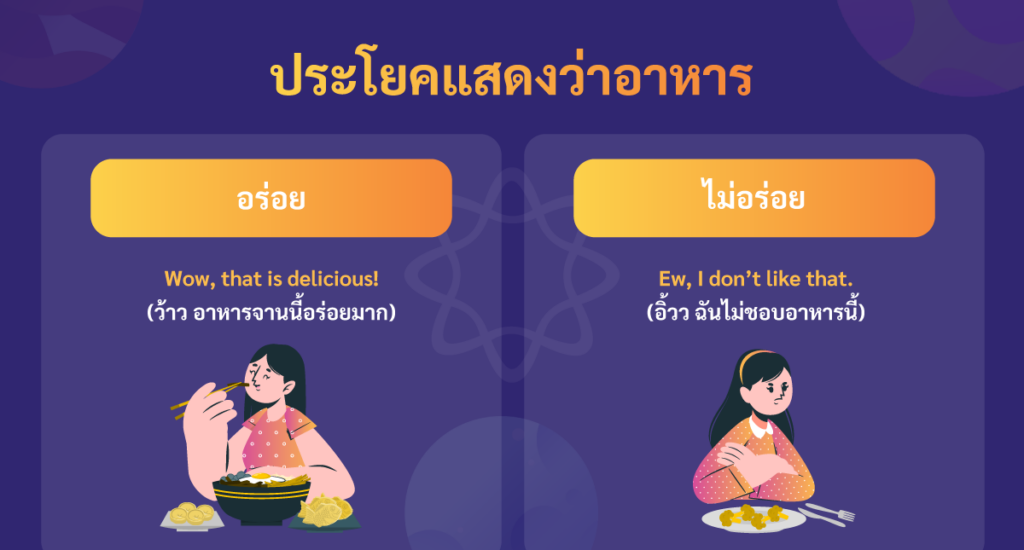
- “This is so delicious, wow!”( ว้าว อาหารจานนี้อร่อยจังเลย)
- “This dish is amazing!”( อาหารจานนี้รสชาติดีมาก)
- “Eating this feels like I’m in heaven.( กินจานนี้อร่อยจนอยากขึ้นสวรรค์เลย)
- “This is such an yummy dish, can I have the recipe, please?”(อาหารนี้
อร่อยมาก ฉันขอสูตรหน่อยได้ไหม)
- “This tastes so nice, I want to buy it, can you give me the address?”( รสชาติดีมาก ฉันอยากซื้อเพิ่ม คุณรู้ที่ไหนขายไหม)
- “This Italian restaurant’s food is out of this world!”( ร้านอาหารอิตาเลียนแห่งนี้ทำอาหารสุดยอดเลย)
- “Wow, that is delicious!” (ว้าว อาหารจานนี้อร่อยมาก)
- “That is amazing!” (มันน่าทึ่งมาก)
- “I’m in heaven.” (ฉันกำลังอยู่บนสวรรค์)
- “It’s so yummy, where did you get the recipe?” (อาหารนี้อร่อยมากเลย คุณได้สูตรมาจากไหน)
- “The tastes great, where did you buy it?” (รสชาติอร่อยมาก คุณซื้อจากที่ไหน)
- “The food at that Asian restaurant is out of this World.” (อาหารที่ร้านอาหารเอเชียนั้นอร่อยสุดจะพรรณนา)
- “This Pad Thai has a rich flavour.”(ผัดไทยชามนี้มีรสชาติเข้มข้นมาก)
ประโยคแสดงว่าอาหารไม่อร่อย
- “I’m sorry, the food’s disgusting.” (ขอโทษนะ อาหารจานนี้รสชาติแย่มาก)
- “I’m not a fan of this.” (นี้ไม่ใช่อาหารของโปรดของฉัน)
- “Ew, get that away from me.” (อิ้วว เอาอาหารนี้ไปไกล ๆ ฉันหน่อย)
- “That’s disgusting!” (อาหารนั้นรสชาติแย่มาก)
- “Ew, I don’t like that.” (อิ้วว ฉันไม่ชอบอาหารนี้)
- “I’m not crazy about this.” (ฉันไม่ค่อยชอบอาหารนี้)
- “Is it just me or this is kind of bland?”(ฉันเป็นคนเดียวที่รู้สึกว่าอาหารจานนี้ดูจืดชืดไปหน่อยหรือเปล่า)
- “This dish is so bland, I can’t taste anything at all.”(จานนี้จืดชืด ฉันชิมไม่ได้ว่ามีรสชาติอะไรเลย)
- “The macarons are too sugary sweet for me. (มาการองหวานเกินไปสำหรับฉัน)
- “This is super spicy.(อาหารนี้เผ็ดสุด ๆ เลย)
- “It tastes really salty.”(อาหารนี้เค็มเกินไป)
ประโยคอธิบายรสชาติตื่น ๆ
- Look at the fruits. They’re perfectly ripped ดูผลไม้นี้สิ เพิ่งสุกพอดีเลย
- This cake is the perfect combination of sweet and sour. เค้กนี้เป็นส่วนผสมที่ลงตัวระหว่างรสหวานและเปรี้ยว
- The fishes are so fresh. ปลาตัวนี้สดจัง
- Is it just me or this is kind of bland? ฉันเป็นคนเดียวที่รู้สึกว่าอาหารจานนี้ดูจืดชืดไปหน่อยหรือเปล่า
- This dish is so bland, I can’t taste anything at all. จานนี้จืดชืด ฉันชิมไม่ได้ว่ามีรสชาติอะไรเลย
- The macarons are too sugary sweet for me. มาการองหวานเกินไปสำหรับฉัน
- This is super spicy. อาหารนี้เผ็ดสุด ๆ เลย
- It tastes really salty. อาหารนี้เค็มเกินไป
สุภาษิต สำนวน วลีเกี่ยวกับรสชาติในภาษาอังกฤษ
| สุภาษิต/สำนวน/วลี | ความหมาย | ตัวอย่าง |
| Smell fishy = Something smells | น่าสงสัย | Hanna actions smell fishy, I don’t trust her. (การกระทำของฮันนาน่าสงสัยมาก ฉันไว้ใจเธอไม่ได้) |
| Leave a bad taste (in the mouth) | ทำให้เกิดความทรงจำแย่ๆ ที่ไม่เป็นที่น่าพอใจ | Sara failed the interview because she left a bad taste in the interviewer’s mouth. (ซาราตกการสัมภาษณ์เพราะเธอสร้างความประทับใจที่ไม่ดีให้กับผู้สัมภาษณ์) |
| A taste of one’s own medicine | นกหวีดนี้คืนสมอง | Harry thought he could get away with cheating on her. But Harry had a taste of his own medicine when she was the one being cheated on. (แฮร์รี่คิดว่าหลอกเธอคนนั้นได้แล้ว แต่ก็โดนนกหวีดนี้คืนสมองเมื่อเขาคือคนที่โดนหลอก) |
| Bad egg | คนเลวร้ายบุคคลที่มีนิสัยเสีย หรือไว้ใจไม่ได้ | Don’t come near Kathy, she’s rumored to be a bad egg. (อย่าเข้าใกล้เคที เพราะคนอื่นบอกว่าเขาเป็นคนเลวร้าย) |
| Take a grain of salt | ความเข้าใจผิดเป็นสิ่งใดสิ่งหนึ่ง | Sara really does believe the earth’s flat? Harry takes that with a grain of salt. (ซาร่าเชื่อว่าโลกแบนจริงหรือ แต่แฮร์รี่ไม่มีวันเชื่อเรื่องนั้น) |
| Sour grape | อิจฉา | Hanna don’t think that’s much of an achievement, and that’s not sour grape. (ไม่ใช่ว่าอิจฉาหรอก แต่ฮันนาไม่เห็นว่าสิ่งนั้นเป็นความสำเร็จที่ยิ่งใหญ่) |
| Have a sweet tooth | คนชอบอาหารหวาน | Hanna has a sweet tooth, she loves sweets and treats! (ฮันนาเป็นคนชอบอาหารหวาน เธอชอบขนมหวานและลูกอมหวานต่างๆ) |
>>> Read more: วิธีจดจำคำศัพท์ภาษาอังกฤษเกี่ยวกับอาหาร
ตัวอย่างบทความมีคำศัพท์เกี่ยวกับรสชาติในภาษาอังกฤษ
In recent years, the culinary industry has witnessed a surge in demand for dishes that offer a unique and tantalizing gastronomic experience. Food enthusiasts are constantly seeking out innovative flavors that titillate their taste buds and leave a lasting impression. Chefs are experimenting with aromatic herbs and spices to create dishes that are not only tasty but also packed with mouth- watering flavors. From savory and salty to sweet and tangy, the range of culinary delights available today is vast. The fusion of different ingredients and the skillful balance of flavors result in dishes that are both luscious and delectable. Whether it’s the subtle hint of garlic in a savory pasta dish or the burst of refreshing minty flavor in a dessert, these culinary creations cater to diverse palates and ignite a culinary revolution.
แปล
ในช่วงไม่กี่ปีที่ผ่านมา อุตสาหกรรมอาหารได้พบความต้องการอาหารมากขึ้น ซึ่งได้นำประสบการณ์การทำอาหารที่มีเอกลักษณ์และน่าดึงดูดใจมากขึ้น ผู้ชื่นชอบอาหารมักมองหารสชาติใหม่ ๆ อยู่เสมอที่จะช่วยกระตุ้นตุ่มรับรสและสร้างความประทับใจอย่างยาวนาน พ่อครัวหลายคนกำลังทดลองใช้สมุนไพรหอมและเครื่องเทศเพื่อสร้างอาหารใหม่ที่ไม่เพียงแค่อร่อย แต่ยังมีรสชาติที่มีลักษณะอีกด้วย ตั้งแต่รสเค็มและรสเค็มไปจนถึงรสหวานและหอม ปัจจุบันมีอาหารอร่อยๆ มากมาย การผสมส่วนประกอบของอาหารที่แตกต่างกันและความสมดุลรสชาติอย่างเชี่ยวชาญทำให้เกิดอาหารอร่อยหลายอย่าง ไม่ว่าจะเป็นกลิ่นกระเทียมในพาสต้าแสนอร่อย หรือกลิ่นหอมของมิ้นต์ที่สดชื่นในของหวาน การสร้างสรรค์อาหารเหล่านี้ตอบสนองรสนิยมที่หลากหลายของผู้รับประทานและเป็นจุดเริ่มต้นในการปฏิวัติด้านอาหาร
คำถามที่เจอบ่อย
จะใช้คำบรรยายรสชาติภาษาอังกฤษอย่างไร? รสชาติคือ “flavor” หรือ “taste” ในภาษาอังกฤษ มักใช้เพื่ออธิบายลักษณะรสชาติของอาหาร เครื่องดื่ม
การอธิบายรสชาติเป็นภาษาอังกฤษง่ายมาก เลยใช่มั้ยล่ะ! บทความข้างต้น ELSA Speak ได้รวบรวมคำศัพท์ ตัวอย่างประโยค และวลีทั่วไปเกี่ยวกับการบรรยายรสชาติในภาษาอังกฤษที่ควรรู้ อย่าลืมติดตาม ELSA Speak เพื่อเรียนรู้หัวข้อเพิ่มเติมในภาษาอังกฤษ!
ในการสื่อสารภาษาอังกฤษในชีวิตประจำวัน การพูด Of course ได้ใช้บ่อยมาก บทความนี้ ELSA Speak จะให้คำแนะนำโดยละเอียดเกี่ยวกับวิธีการพูด Of course อื่นๆ ในภาษาอังกฤษ มาดูกันเลย!
Of course คืออะไร?
- วิธีการออกเสียง: /əv kɔːrs/
- ประเภทคำ: สำนวน
- ความหมาย: ได้สิ แน่นอน
- วิธีใช้: Of course ใช้เพื่อตอบตกลงหรืออนุญาตให้ใครทำอะไรบางอย่าง แสดงสิ่งที่คุณพูดอย่างชัดเจน แน่นอนหรือแสดงให้เห็นว่าสถานการณ์หรือข้อมูลไม่น่าแปลกใจ
ตัวอย่าง อังกฤษ – ไทย
- The Second World War began, of course, in 1939. (แน่นอน สงครามโลกครั้งที่สองเริ่มต้นขึ้นในปี 1939)
- We arrived at the restaurant 35 minutes late so, of course, our reservation had been canceled. (เรามาถึงร้านอาหารช้าไป 35 นาที แน่นอนว่าที่นั่งที่จองไว้ของเราถูกยกเลิก)
- “Have you written an English essay that the teacher gave us last week yet?” “Of course, I finished it yesterday”. (“คุณได้เขียนเรียงความภาษาอังกฤษที่ครูมอบหมายให้เราเมื่อสัปดาห์ที่แล้วหรือยัง”-“แน่นอน ฉันทำเสร็จแล้วเมื่อวานนี้”)
- “Can you help me with this luggage?” “Of course. Why not?”. (“คุณช่วยฉันยกกระเป๋าเดินทางใบนี้ได้ไหม” – “ได้สิครับ ทำไมจะไม่ล่ะ”)
- “May I use your smartphone?” “Of course, go right ahead”. (“ฉันขอใช้สมาร์ทโฟนของคุณได้ไหม?” – “ได้สิ โปรดสบายใจเถิด”)
- “Do you love your mother?” “Of course, I do!”. (“คุณรักแม่ของคุณหรือไม่” “แน่นอน ฉันรักแม่”)
- “Can I have one of these colorful pens?” “Of course—help yourself.” (“ฉันขอปากกาหลากสีเหล่านี้สักอันได้ไหม” – “แน่นอน ตามสบาย”)
วลีบางคำที่มีความหมายเหมือนกัน “of course”
| คำวลี | ความหมาย | ตัวอย่าง | ความหมาย |
| naturally | แน่นอน (อย่างที่คุณคาดหวัง ด้วยวิธีปกติและง่ายๆ ) | Naturally, we should arrive early to get the best seats. | แน่นอนว่าเราควรมาถึงก่อนเวลาเพื่อให้ได้ที่นั่งที่ดีที่สุด |
| certainly | โดยแน่นอน แน่ใจ แน่ๆ (ใช้เพื่อตอบอย่างสมบูรณ์หรือเน้นบางสิ่งบางอย่าง และแสดงว่าไม่มีข้อสงสัยเกี่ยวกับเรื่องนี้) | Had you forgotten about our anniversary? Certainly not! I’ve reserved a table at Tiffany’s restaurant for this evening. | พี่ลืมวันครบรอบของเราเหรอ? ไม่แน่นอน พี่จองโต๊ะที่ Tiffany’s สำหรับคืนนี้แล้ว |
| obviously | ชัดเจนและมองเห็นได้ | Obviously, by competing in parliamentary elections, parties compete for office, but that does not mean that their goal is actually to attain office. | เห็นได้ชัดว่า โดยการแข่งขันในการเลือกตั้งรัฐสภา ฝ่ายต่าง ๆ แข่งขันกันเพื่อชิงตำแหน่ง แต่นั่นไม่ได้หมายความว่าเป้าหมายของพวกเขาคือการได้ตำแหน่งจริงๆ |
| by all means | ใช้สำหรับการอนุญาต | May I borrow your book? By all means. | ฉันขอยืมหนังสือของคุณได้ไหม แน่นอน |
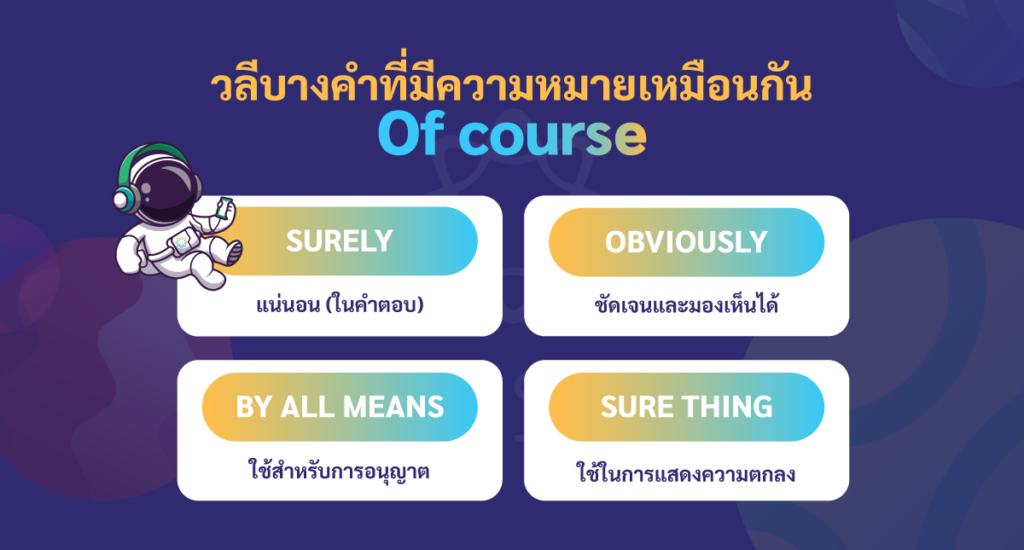
| surely | แน่นอน (ในคำตอบ) | Can I sit here? Surely. | ฉันนั่งตรงนี้ได้ไหม? แน่นอน |
| definitely | แน่นอน ไม่ต้องสงสัยอะไร | Have you definitely decided to go to New Zealand? | คุณตัดสินใจไป New Zealand อย่างแน่นอนหรือไม่ |
| clearly | ใช้เพื่อแสดงว่าคุณคิดว่าบางสิ่งบางอย่างชัดเจนหรือแน่นอน | Clearly, you must tell her the truth. | แน่นอนว่าคุณต้องบอกความจริงกับเธอ |
| undoubtedly | ใช้เพื่อเน้นว่าบางสิ่งเป็นความจริง | Undoubtedly, stress has contributed to his health problems. | ไม่ต้องสงสัยเลยว่าความเครียดส่งผลต่อปัญหาสุขภาพของเขา |
| sure thing | ใช้ในการแสดงความตกลง | Could you give me a ride home tonight, darling? Sure thing! | คืนนี้คุณช่วยพาฉันกลับบ้านหน่อยได้ไหมที่รัก แน่นอนครับ |
| Yes, Yeah, Yep, Yea | แน่นอนว่า การแสดงข้อตกลงย่อมให้ความรู้สึกเป็นมิตรแบบวัยรุ่น | Are you going to Jane’s party tonight? Yep. | คุณจะไปงานปาร์ตี้ของ Jane คืนนี้ไหม แน่นอน |
| Right | มี ใช่ ถูกต้อง เพื่อใช้ในการแสดงข้อตกลง | She’s so nice and generous. That’s right! | เธอใจดีและใจกว้างมาก ใช่ |
| Yes, of course | แน่นอนใช้ในสถานการณ์ที่เป็นทางการ | Could you give me a hand? Yes, of course. | กรุณาช่วยฉันด้วย แน่นอน |
>>> Read more:
- วิธีพูด ไม่เป็นไร ภาษาอังกฤษ ที่เรียบง่ายและจดจำได้ง่าย
- ตัวอย่างประโยคปฏิเสธอย่างสุภาพในภาษาอังกฤษ
- 60+ วิธีบอกว่าใช่ภาษาอังกฤษ นอกจาก Yes No เรียนง่าย จำง่าย จำไม่ลืม
วลีที่เกี่ยวข้องบางส่วน
| คำวลี | ความหมาย | ตัวอย่าง | ความหมาย |
| of course not | ใช้ในการเน้นว่า คุณไม่เห็นด้วย หรือว่า สิ่งที่ไม่เป็นความจริง | Where did you get that money? Did you steal them? Of course not. I borrowed it from Charlotte. | คุณได้เงินนั้นมาจากไหน? คุณขโมยเหรอ ไม่แน่นอน ฉันยืมมันมาจาก Charlotte (ชาร์ลอตต์) |
| as a matter of course | ถ้ามีอะไรทำเป็นเรื่องแน่นอน มันเป็นเรื่องปกติของวิธีการทำสิ่งต่างๆ และไม่มีอะไรพิเศษ | Safety precautions were observed as a matter of course. | ข้อควรระวังด้านความปลอดภัยเป็นเรื่องที่ทราบกันดีอยู่แล้ว |
| in the course of time | หลังจากช่วงระยะเวลาหนึ่ง | My mother assumes they plan to have children in the course of time. | แม่ของฉันคิดว่าพวกเขาวางแผนที่จะมีลูกเมื่อเวลาผ่านไป |
| in/with the course of time | ค่อยๆ ช้าๆ | With the course of time, he’s learned to live with his disability. | เมื่อเวลาผ่านไป เขาเรียนรู้ที่จะอยู่กับความพิการของเขา |
| pervert the course of justice | กระทำการผิดกฎหมายเพื่อหลีกเลี่ยงการลงโทษหรือถูกลงโทษจากคนผิดหรือถูกลงโทษผิดคน | The three police officers were charged with perverting the course of justice by fabricating evidence in the trial. | เจ้าหน้าที่ตำรวจทั้งสามนายถูกตั้งข้อหาบิดเบือนกระบวนการยุติธรรมโดยสร้างพยานหลักฐานในระหว่างการพิจารณาคดี |

คำถามที่พบบ่อย
Of course เขียนย่ออย่างไร?
Of course ได้เขียนย่อว่า Ofc
Ofcourse หรือ of course Ofcourse หรือ of course?
ใช้ Of course เป็นการใช้ที่ถูกต้องที่สุด
Of course not คืออะไร?
Of course not หมายความว่าไม่แน่นอน
Of course ออกเสียงอย่างไร?
วิธีออกเสียง: /əv kɔːrs/
>>> อ่านเพิ่มเติม: 100+ Happy Anniversary สุขสันต์วันครบรอบภาษาอังกฤษสุดโรแมนติก
ข้างต้นคือความรู้ทั้งหมดเกี่ยวกับว่า Of Course คืออะไร และโครงสร้างของวลี Of Course ในประโยคภาษาอังกฤษที่ ELSA Speak ได้เรียนรู้และสังเคราะห์มาให้ทุกคน ขอให้ทุกคนประสบความสำเร็จในเส้นทางการเรียนรู้และรักภาษาอังกฤษอยู่เสมอ
ประโยคย้อนกลับในภาษาอังกฤษ (Inversion) ใช้เพื่อเน้นความหมายของการกระทำและเพิ่มความแสดงออกของประโยค ประโยคย้อนกลับประกฏบ่อยมากแต่ไม่ใช่ผู้เรียนทุกคนก็รู้วิธีใช้อย่างถูกต้องและได้คะแนนในการทดสอบ มาเรียนรู้ประโยคย้อนกลับกับ ELSA Speak นะ
Inversion คืออะไร
โครงสร้างประโยคย้อนกลับ (Inversion) เป็นโครงสร้างที่คำวิเศษณ์หรือกริยาช่วยไม่อยู่ในตำแหน่งปกติ แต่จะได้นำไว้หน้าประโยคเพื่อเน้นการกระทำของประธาน
แม้ว่าโครงสร้างประโยคทั่วไปในภาษาอังกฤษมีรูปแบบเป็น
Subject (ประธาน) + Verb (กริยา)
แต่โครงสร้างของประโยคย้อนกลับจะตรงกันข้าม:
Verb (คำกริยา) + Subject (ประธาน)
เพราะฉะนั้น เมื่อเรียนโครงสร้างประโยคย้อนกลับ หลายคนมักรู้สึกว่ามันสับสนและยากที่จะเข้าใจได้
ประโยคย้อนกลับมีบทบาทอยังไง
ที่จริงแล้ว เมื่อเริ่มเรียน Tense ในภาษาอังกฤษ ผู้เรียนจะรู้จักรูปแบบของประโยคย้อนกลับแล้ว ซึ่งเป็นโครงสร้างคำถามของ Tense ต่อไปนี้เป็นตัวอย่างของการสลับในคำถาม
ตัวอย่าง: Is everyone alright?
ตัวอย่างข้างต้นเป็นรูปแบบคำถามหนึ่งของ present simple tense และสามารถเห็นได้ว่าประธานของประโยคนี้คือ “everyone” ถูกวางไว้หลังกริยา “is” เพื่อสร้างโครงสร้างคำถามจากเมื่อก่อนถึงตอนนี้ ผู้เรียนก็ยังใช้อยู่บ่อยๆ
นอกจากหน้าที่ที่สร้างคำถามภาษาอังกฤษแล้ว ไวยากรณ์ของประโยคย้อนกลับนี้ยังได้ใช้เพื่อเน้นข้อมูลที่ได้ถ่ายทอดในประโยค อย่างไรก็ตาม ผู้เรียนต้องจำว่า การสลับใช่เฉพราะในบางกรณีในภาษาอังกฤษเท่านั้น ดังนั้นถ้าอยากใช้ภาษาอังกฤษได้อย่างเป็นธรรมชาติ ผู้เรียนไม่ควรใช้ไวยากรณ์นี้ในทุกประโยคเมื่อพูดหรือเขียน
โครงสร้างประโยคย้อนกลับในภาษาอังกฤษ
มีโครงสร้างประโยคย้อนกลับหลายอย่างที่แตกต่างกันในไวยากรณ์ภาษาอังกฤษ ELSA Speak ขอแนะนำโครงสร้างประโยคย้อนกลับ (inversion) ที่ใช้บ่อยที่สุด ตั้งแต่แบบง่ายจนถึงแบบซับซ้อน ดังนี้
ประโยคย้อนกลับด้วยกริยาวิเศษณ์บอกความถี่
โดยปกติแล้ว โครงสร้างประโยคย้อนกลับด้วยกริยาวิเศษณ์บอกความถี่มักไปพร้อมกับกริยาวิเศษณ์เชิงลบ
โครงสร้างประโยคย้อนกลับด้วยกริยาวิเศษณ์บอกความถี่
Never/ Rarely/ Hardly/ Seldom/ Little/ Ever + กริยาช่วย + S + V
ตัวอย่าง
• She never goes out with strangers = Never does she go out with strangers.
(เธอไม่เคยออกไปกับคนแปลกหน้า)
• I hardly study English at night = Hardly do I study English at night.
(ฉันไม่ค่อยเรียนภาษาอังกฤษตอนกลางคืน)

ประโยคย้อนกลับด้วย “No” และ “Not any”
โครงสร้างประโยคย้อนกลับ (inversion):
No/Not any + N + กริยาช่วย + S + V
ตัวอย่าง
• No sneakers shall I buy for you = Not any sneakers shall I buy for you.
(ฉันจะไม่ซื้อรองเท้าผ้าให้คุณอีก)
• Not any chances will we work together in the future.
(เราจะไม่มีโอกาสที่ร่วมงานกันอีกในอนาคต)
>>> Read more: วิธีใช้ Some และ Any พร้อมแบบฝึกหัดและเฉลยที่เข้าใจง่ายที่สุด
ประโยคย้อนกลับด้วยวลีเชิงลบ “No”
ถ้าต้องการประยุกต์ใช้โครงสร้างประโยคย้อนกลับในกรณีนี้ คุณต้องจำวลีคำศัพศ์ภาษาอังกฤษที่มีความหมายเชิงลบด้วยคำว่า “No” เช่น
• At no time: ไม่เคย
• In no way: ไม่มีทางอื่น
• On no condition: ไม่อย่างเด็ดขาด
• On no account = For no reasons: ไม่มีเหตุผล
• Under/In no circumstances: ไม่ว่าในกรณีใดก็ตาม
• No longer: Không còn nữa. ไม่…อีกต่อไป
• No where: ไม่มีที่ไหน
โครงสร้างประโยคย้อนกลับ (inversion) ด้วยวลีเชิงลบ “No”
วลีที่มีความหมายเชิงลบ + กริยาช่วย + S + V
• We can’t go to the bus stop in time = In no way can we go to the bus stop in time.
(ไม่มีทางอื่นที่ไปถึงป้ายรถเมล์ตรงเวลาได้)
• She didn’t have to do like that = On no account did you do like that.
( ไม่มีเหตุผลใดที่คุณต้องทำแบบนี้)
• Leaving home is always a bad idea = In no circumstances should you leave home.
(ไม่ควรออกจากบ้านไม่ว่าในกรณีใดก็ตาม)
• She never goes out with strangers = At no time does she go out with strangers.
(เธอไม่เคยออกไปกับคนแปลกหน้า)
• This village grows the best corns = No where can you grow corns as good as in this village.
( ไม่มีที่ไหนจะปลูกข้าวโพดได้ดีเท่าในหมู่บ้านนี้ได้)
| คุณเคยสงสัยไหมว่า have has ใช้ยังไง? ลองอ่านบทความเกี่ยวกับ have และ has เพื่อเข้าใจโครงสร้างและวิธีใช้อย่างถูกต้องในแต่ละกรณี |
โครงสร้างประโยคย้อนกลับ “No sooner … than”
โครงสร้างประโยคย้อนกลับด้วยโครงสร้าง “No sooner…than”
No sooner + กริยาช่วย + S + V + than + S + V (ทันทีที่…ก็…)
ตัวอย่าง
• No sooner did I meet her than she started eating dinner with him.
(ทันที่ที่ฉันพบเธอ เธอก็เริ่มทานอาหารเย็นกับเขา)
• No sooner did we leave home than the letter was delivered.
(ทันที่ที่เราออกจากบ้าน จดหมายก็มาถึง)
ประโยคย้อนกลับด้วย “Such” และ “So…that”
โครงสร้างประโยคย้อนกลับ (inversion) ด้วย “Such” และ “So…that”:
Such + คำวิเศษณ์ + N + that + S + V
So + คำวิเศษณ์/ คำกริยาวิเศษณ์ + กริยาช่วย + N + that + S + V
ตัวอย่าง
Such a beautiful song that I have listened many times = So beautiful is this song that I have listened many times. (เพลงนี้ไฟเราะมาก ฉันฟังมันหลายรอบแล้ว)
>>> Read more: การใช้ Correlative Conjunctions: Either… or, Neither… nor, Such…that,…
| Inversion คือโครงสร้างประโยคย้อนกลับที่ใช้เพื่อเน้นความหมาย และช่วยให้ผู้เรียนพิจารณา whether ควรเลือกใช้รูปประโยคใดให้เหมาะสมกับบริบทในการสื่อสาร |
โครงสร้างประโยคย้อนกลับด้วย “Not only … but also”
โครงสร้างประโยคย้อนกลับด้วย “Not only … but also”:
Not only + กริยาช่วย + S + V but S also V (ไม่เพียงแต่…แต่ยัง)
ตัวอย่าง
• Not only is she beautiful but also intelligent.
(เธอไม่เพียงแต่สวยงามเท่านั้น แต่ยังฉลาดอีกด้วย)
• Not only is he nice but he also plays football well.
(เขาไม่เพียงแต่เป็นคนใจดีเท่านั้น แต่ยังเล่นฟุตบอลได้ดีอีกด้วย)
โครงสร้างประโยคย้อนกลับด้วย “until/ till”
โครงสร้างประโยคย้อนกลับ (inversion) ด้วยคำบุพบทบอกเวลา until
Not until/ till + (S+V) time + กริยาช่วย + S + V ( จนกระทั่ง )
ตัวอย่าง
• Not until 12pm did I finish my homework.
(จนกระทั่ง 12.00 น ฉันทำการบ้านเสร็จ)
• Not until I helped could she carry the heavy bags.
(จนกระทั่งฉันช่วยเธอจึงถือกระเป๋าหนักๆ นั้น)
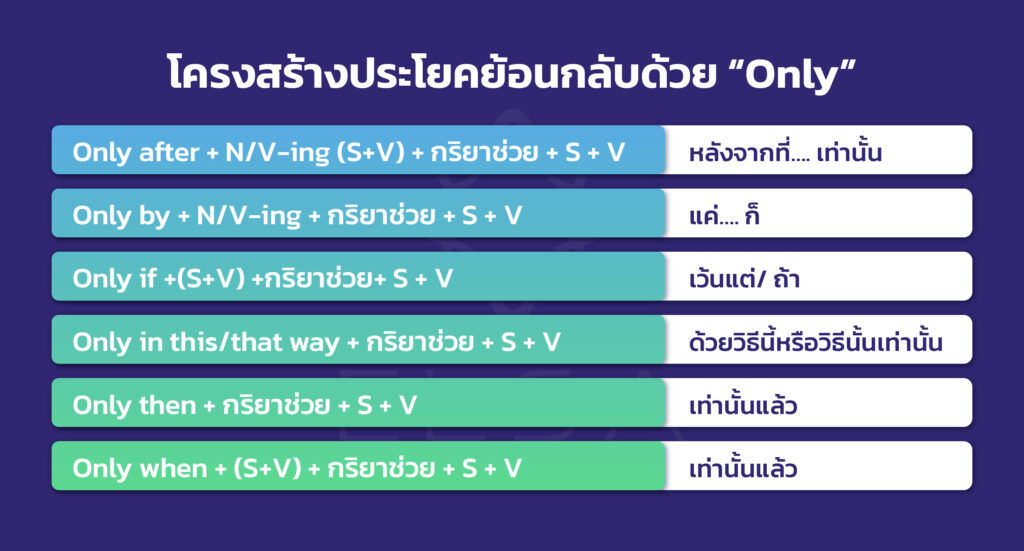
โครงสร้างประโยคย้อนกลับด้วย “Only”
| ประโยคย้อนกลับ | โครงสร้าง | ตัวอย่าง |
| Only after | Only after + N/V-ing (S+V) + กริยาช่วย + S + V (หลังจากที่…. เท่านั้น) | Only after lunch can we watch TV together. (หลังอาหารกลางวันเท่านั้นที่เราจะดูทีวีด้วยกันได้) Only after eating dinner does he go shopping with his friends.(หลังจากที่กินข้าวเย็นเสร็จเท่านั้นที่เขาจะไปชอปปิ้งกับเพื่อน) |
| Only by | Only by + N/V-ing + กริยาช่วย + S + V (แค่…. ก็) | Only by studying English well can you have a good job. (แค่เรียนภาษาอังกฤษเก่งเท่านั้น คุณก็จะมีงานที่ดีได้) Only by production can a nation satisfy demands. (แค่โดยการผลิตเท่านั้น ประเทศก็สามารถตอบสนองความต้องการได้) |
| Only if | Only if +(S+V) +กริยาช่วย+ S + V (เว้นแต่/ ถ้า) | Only if he agrees would she go with me = She would go with me if he agrees. (ถ้าเขาตกลง เธอจะไปกับฉัน) Only if it isn’t cold can we eat out.(เว้นแต่อากาศไม่หนาว เราก็จะออกไปกินข้าวนอกบ้าน) |
| Only in this/ that way | Only in this/that way + กริยาช่วย + S + V (ด้วยวิธีนี้หรือวิธีนั้นเท่านั้น) | Only in this way can I study English. (ด้วยวิธีนี้เท่านั้นฉันสามารถเรียนภาษาอังกฤษได้) Only in that way will he pass the exam. (ด้วยวิธีนั้นเท่านั้นเขาจะสอบผ่านได้) |
| Only then | Only then + กริยาช่วย + S + V (เท่านั้นแล้ว) | Only then did she receive my money. (เท่านั้นแล้วเธอก็ได้รับเงินของฉัน) |
| Only when | Only when + (S+V) + กริยาช่วย + S + V (เฉพาะเมื่อ) | Only when I met him did he recognize me. (เฉพาะเมื่อฉันเจอเขาเท่านั้นที่เขาจำฉันได้) Only when you study foreign languages will many opportunities happen. (เฉพาะเมื่อคุณเรียนภาษาต่างประเทศเท่านั้นที่จะมีโอกาสมากมายเกิดขึ้น) |
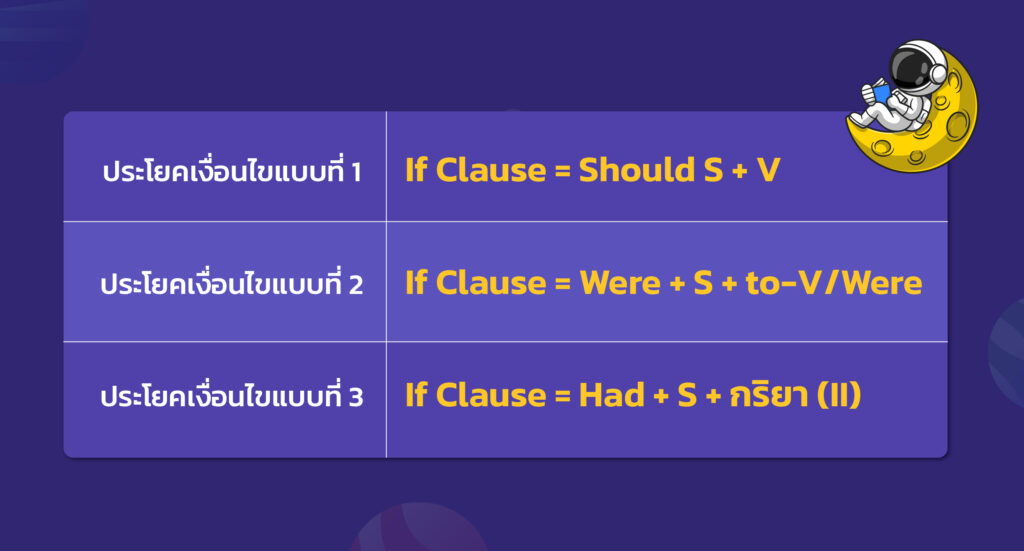
โครงสร้างประโยคย้อนกลับในประโยคเงื่อนไข (if clause inversion)
คุณสามารถประยุกต์ใช้โครงสร้างประโยคย้อนกลับ (inversion) ในประโยคเงื่อนไขแบบที่ 1 2 และ 3 ได้
ประโยคเงื่อนไขแบบที่ 1
If Clause = Should S + V
ตัวอย่าง
• If I leave, I won’t meet her again = Should I leave, I won’t meet her again. (ถ้าฉันจากไป ฉันจะไม่พบเธออีก)
• If he has a lot of money, he will help the poor = Should he have a lot of money, he will help the poor. (ถ้าเขามีเงินเยอะ เขาจะช่วยเหลือคนที่ยากจน)
ประโยคเงื่อนไขแบบที่ 2
If Clause = Were + S + to-V/Were
ตัวอย่าง
• If I were you, I would help poor people = Were I you, I would help poor people. (ถ้าฉันเป็นคุณ ฉันจะช่วยเหลือคนที่ยากจน)
• If I earned more money, I would buy that dress = Were I to earn more money, I would by that dress. (ถ้าฉันหาเงินได้มากขึ้น ฉันจะซื้อชุดนั้น)
ประโยคเงื่อนไขแบบที่ 3
If Clause = Had + S + กริยา (II)
ตัวอย่าง
If Helen had played volleyball yesterday, she would have won = Had Helen played volleyball yesterday, she would have won. (ถ้าเฮเลนเล่นวอลเลย์บอลเมื่อวาน เธอคงชนะไปแล้ว)
>>> Read more: ประโยคปัจจุบันกาล (Present Simple Tense)
แบบฝึกหัด
จงใช้โครงสร้างประโยคย้อนกลับ (inversion) เพื่อเขียนประโยคต่อไปนี้ใหม่
1. You come to realize the significance of the murder only in the last few pages of the book.
Only in the last __________________________________________________
2. The demands of her job are such that she is rarely able to take a holiday.
Such _________________________________________________________
3. The matter could be explained in no other way.
In _____________________________________________________________
4. I have seldom heard such beautiful singing.
Seldom _________________________________________________________
5. Peter didn’t realize that he had lost his keys until he got home.
Not ____________________________________________________________
6. If Mr Chan had been kinder to his employees, his business would not have collapsed.
________________________________________________________________
7. There are no circumstances where audience members may consume alcohol.
Under no circumstances ____________________________________________
8. They started to argue soon after they had got married.
No sooner _______________________________________________________
9. You can’t use my new car at any time.
At no time ______________________________________________________
10. The gang didn’t know that the police had them under surveillance.
Little __________________________________________________________
11. We won’t consider you for the basketball team until you grow up.
Not until _________________________________________________________
12. Nobody has won so many matches for his team since 1994.
Not since ________________________________________________________
13. You will not be allowed to enter the auditorium under any circumstances once the play has started.
Under no circumstances ____________________________________________
14. He would never play in front of a live audience again.
Never ___________________________________________________________
15. Amy had not enjoyed herself so much since she went to the circus as a child.
Not since ________________________________________________________
16. I have never seen such a terrible performance of Hamlet before.
q. Never before ___________________________________________________
17. They only realized the painting had been hung upside down when someone complained at reception.
Only when _______________________________________________________
18. I had been in the room for a few minutes when I realized that everyone was staring at me.
Only after _______________________________________________________
คำตอบแบบฝึกหัดโครงสร้างประโยคย้อนกลับ
1. Only in the last few pages of the book do you come to realise the significance of the murder.
2. Such are the demands of her job that she is rarely able to take a holiday
3. In no other way could the matter be explained.
4. Seldom have I heard such beautiful singing.
5. Not until he got home did Peter realize that he had lost his keys.
6. Had Mr Chan been kinder to his employees, his business would not have collapsed.
7. Under no circumstances may audience members consume alcohol
8. No sooner had they got married than they started to argue.
9. At no time can you use my new car.
10. Little did the gang know that the police had them under surveillance.
11. Not until you grow up will we consider you for the basketball team.
12. Not since 1994 has anybody won so many matches for his team.
13. Under no circumstances will you be allowed to enter the auditorium once the play has started.
14. Never would he play in front of a live audience again. Never again would he play in front of a live audience.
15. Not since she went to the circus as a child had Amy enjoyed herself so much.
16. Never before have I seen such a terrible performance of Hamlet.
17. Only when someone complained at reception did they realize the painting had been hung upside down.
18. Only after I had been in the room for a few minutes did I realize that everyone was staring at me.
ข้อมูลข้างต้นเป็นความรู้ทั้งหมดเกี่ยวกับ Inversion grammar ในภาษาอังกฤษพร้อมแบบฝึกหัดให้คุณฝึกฝน ภาษาอังกฤษจะไม่ใช่อุปสรรคใหญ่อีกต่อไปถ้าเรารู้วิธีใช้และฝึกฝนทุกวัน ติดตาม ELSA Speak เพื่อเรียนไวยากรณ์ภาษาอังกฤษที่มีประสิทธิภาพและพัฒนาทักษะภาษาอังกฤษของคุณให้ดีขึ้นนะ