

If clause type 3 (Third Conditional) ถือเป็นโครงสร้างสำคัญอย่างยิ่ง เพราะช่วยให้ผู้เรียนสามารถแสดงความรู้สึกเสียดาย วิเคราะห์สาเหตุ หรือกล่าวถึงเหตุการณ์สมมติที่เกี่ยวข้องกับอดีตได้ มาร่วมเรียนรู้เกี่ยวกับโครงสร้าง การใช้งาน และ if clause type 3 ตัวอย่างประโยค รวมถึงลองทำแบบฝึกหัดเพื่อเสริมสร้างความเข้าใจของคุณให้ดียิ่งขึ้นกับ ELSA Speak กัน
- ประโยค if clause type 3 ใช้เพื่อแสดงสถานการณ์สมมติในอดีตและผลลัพธ์ที่ตรงกันข้ามกับสิ่งที่เกิดขึ้นจริง
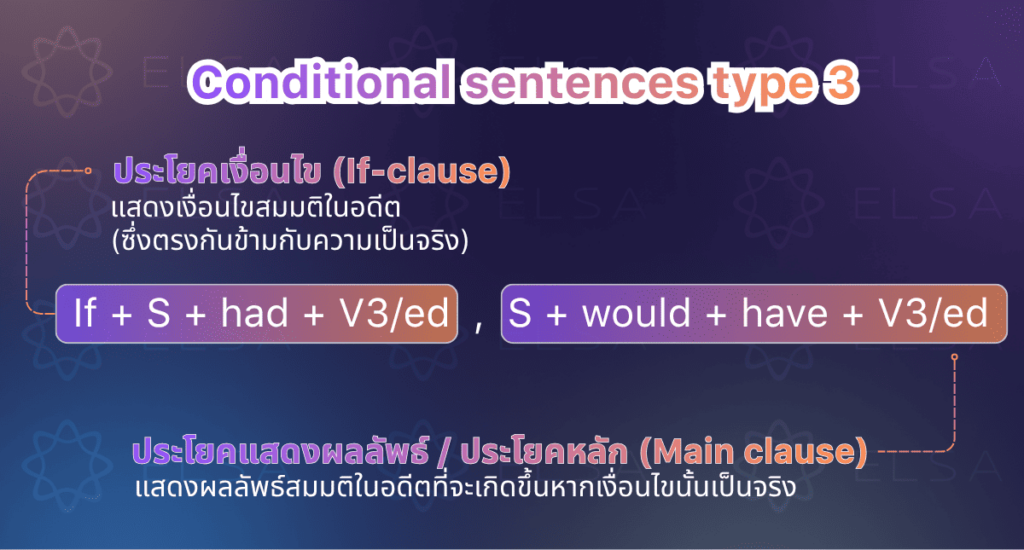
- If + S + had + V3/ed, S + would + have + V3/ed
- ประโยคหลักของประโยค if clause type 3 สามารถใช้ would have (แสดงความมั่นใจ/ผลที่แน่นอน), could have (แสดงความเป็นไปได้) หรือ might have (แสดงการคาดเดา)
- การสลับตำแหน่งคำโดยใช้ “Had”: Had + S + (not) + V3/ed, S + would have + V3/ed (หมายเหตุ: ห้ามใช้รูปย่อ Hadn’t ขึ้นต้นประโยค)
- โครงสร้างอื่นที่มีความหมายเดียวกัน: ใช้ Without / But for / Had it not been for + Noun phrase/V-ing เพื่อใช้แทนประโยค If
ภาพรวมเกี่ยวกับ conditional type 3
ต่อไปนี้คือข้อมูลพื้นฐานที่จะช่วยให้คุณเข้าใจลักษณะและวิธีใช้เครื่องหมายจุลภาคระหว่างอนุประโยคของ conditional type 3:
สอบก่อนเข้าฟรี

Conditional sentences type 3 คืออะไร?
Conditional sentences type 3 ใช้เพื่อกล่าวถึงสถานการณ์หรือการกระทำสมมติที่ไม่ได้เกิดขึ้นจริงในอดีต และเพื่อระบุผลลัพธ์สมมติที่ตรงกันข้ามกับความเป็นจริงที่เกิดขึ้นไปแล้วอย่างสิ้นเชิง
ลองอ่านออกเสียง 24 รายการนี้ดู แล้วดูคะแนนของคุณ
โครงสร้างประกอบด้วยส่วนสำคัญสองส่วนที่เชื่อมโยงกันอย่างใกล้ชิด:
- ประโยคเงื่อนไข (If-clause): แสดงเงื่อนไขสมมติในอดีต (ซึ่งตรงกันข้ามกับความเป็นจริง)
- ประโยคแสดงผลลัพธ์ / ประโยคหลัก (Main clause): แสดงผลลัพธ์สมมติในอดีตที่จะเกิดขึ้นหากเงื่อนไขนั้นเป็นจริง
ตำแหน่งอนุประโยคและการใช้เครื่องหมายจุลภาค
อนุประโยคทั้งสองส่วนในประโยคสามารถสลับตำแหน่งกันได้อย่างยืดหยุ่นตามหลักไวยากรณ์มาตรฐาน ดังนี้:
- อนุประโยค If อยู่ต้นประโยค: ต้องใช้เครื่องหมายจุลภาค (,) คั่นระหว่างอนุประโยคนั้นกับประโยคหลัก
- อนุประโยค If อยู่หลังประโยคหลัก: ไม่ต้องใช้เครื่องหมายจุลภาคคั่นระหว่างอนุประโยคทั้งสอง
โครงสร้างของ conditional sentences type 3 อย่างละเอียด
การจดจำ if clause type 3 โครงสร้าง ได้อย่างแม่นยำจะช่วยให้ผู้เรียนหลีกเลี่ยงข้อผิดพลาดในการผันคำกริยาระหว่างอดีตกาลสมบูรณ์ (Past Perfect) กับประโยคเงื่อนไขสมมติในอดีต (Perfect Conditional)
| ประเภทประโยค | โครงสร้างมาตรฐาน | ตัวอย่าง |
| ประโยคบอกเล่า | If + S + had + V3/ed, S + would + have + V3/ed | If we had booked the tickets earlier, we would have attended the seminar. |
| ประโยคปฏิเสธ | If + S + hadn’t + V3/ed, S + wouldn’t + have + V3/ed | If she hadn’t forgotten the report, the meeting wouldn’t have been delayed. |
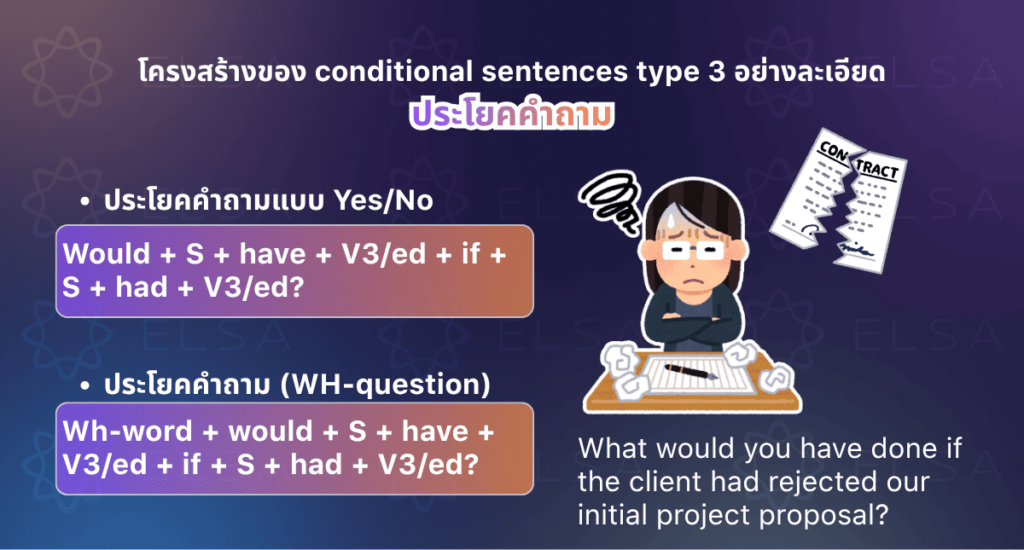
| ประโยคคำถาม (Yes/No) | Would + S + have + V3/ed + if + S + had + V3/ed? | Would you have accepted the job offer if they had offered a higher salary? |
| ประโยคคำถาม (WH-) | Wh-word + would + S + have + V3/ed + if + S + had + V3/ed? | What would you have done if you had missed the morning flight? |
ประโยคบอกเล่า
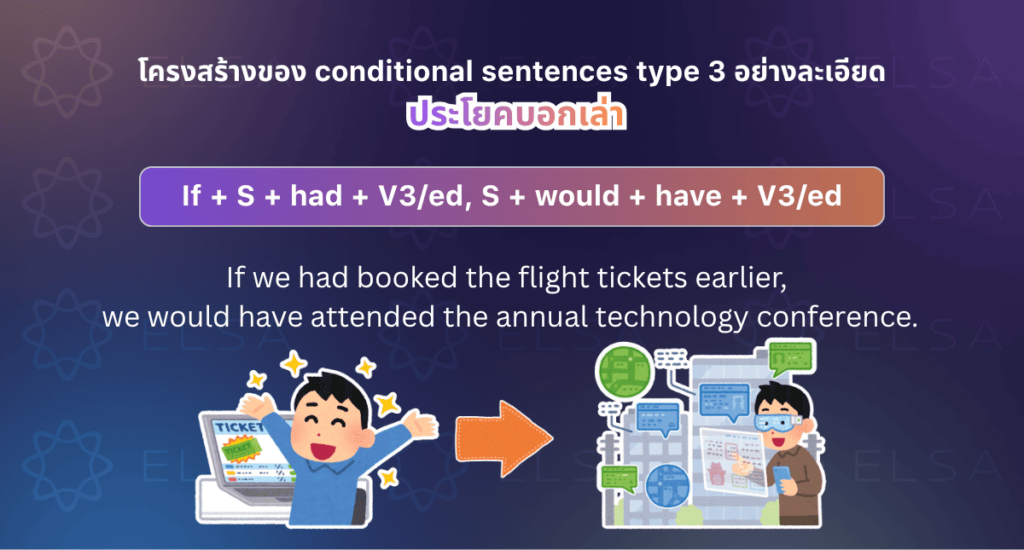
ในรูปแบบประโยคบอกเล่า if clause 3 ใช้เพื่อสมมติถึงเหตุการณ์ที่อาจเกิดขึ้นในอดีต หากเงื่อนไขที่กำหนดไว้ก่อนหน้านั้นได้รับการตอบสนองอย่างครบถ้วน
- โครงสร้างมาตรฐาน:
| If + S + had + V3/ed, S + would + have + V3/ed |
- ตัวอย่าง if clause 3: If we had booked the flight tickets earlier, we would have attended the annual technology conference. (ถ้าเราจองตั๋วเครื่องบินเร็วกว่านี้ เราก็คงได้เข้าร่วมงานประชุมด้านเทคโนโลยีประจำปีไปแล้ว)
ประโยคปฏิเสธ
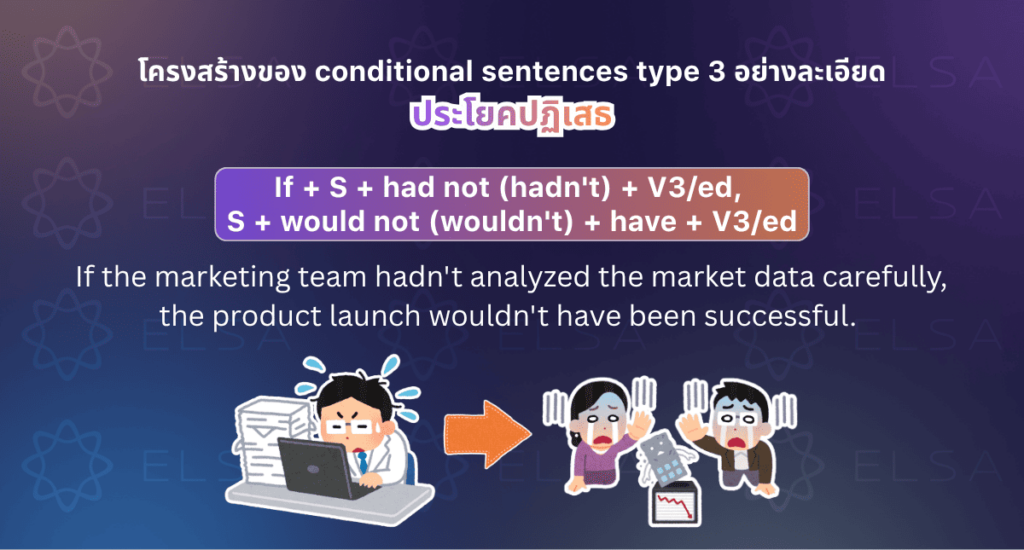
รูปแบบประโยคปฏิเสธใช้เพื่อระบุถึงผลลัพธ์เชิงลบหรือความเสี่ยงที่ไม่ได้เกิดขึ้นจริงในอดีต เนื่องจากมีการยับยั้งการกระทำในประโยคเงื่อนไขไว้ได้ทันท่วงที
- โครงสร้างมาตรฐาน:
| If + S + had not (hadn’t) + V3/ed, S + would not (wouldn’t) + have + V3/ed |
- ตัวอย่าง if clause 3: If the marketing team hadn’t analyzed the market data carefully, the product launch wouldn’t have been successful. (หากทีมการตลาดไม่ได้วิเคราะห์ข้อมูลตลาดอย่างละเอียดถี่ถ้วน การเปิดตัวผลิตภัณฑ์คงไม่ประสบความสำเร็จขนาดนี้)
ประโยคคำถาม
รูปประโยคคำถามมักถูกนำมาใช้เพื่อตั้งคำถามเชิงสมมติเกี่ยวกับวิธีการรับมือกับสถานการณ์ หรือผลลัพธ์ที่จะเกิดขึ้น หากเหตุการณ์ในอดีตดำเนินไปในรูปแบบที่แตกต่างออกไป
- โครงสร้างมาตรฐาน:
| ประโยคคำถามแบบ Yes/No: Would + S + have + V3/ed + if + S + had + V3/ed? |
| ประโยคคำถาม (WH-question): Wh-word + would + S + have + V3/ed + if + S + had + V3/ed? |
- ตัวอย่าง if clause 3 แบบ3: What would you have done if the client had rejected our initial project proposal? (คุณจะรับมือกับสถานการณ์อย่างไร ถ้าลูกค้าปฏิเสธข้อเสนอโครงการฉบับแรกของเรา?)
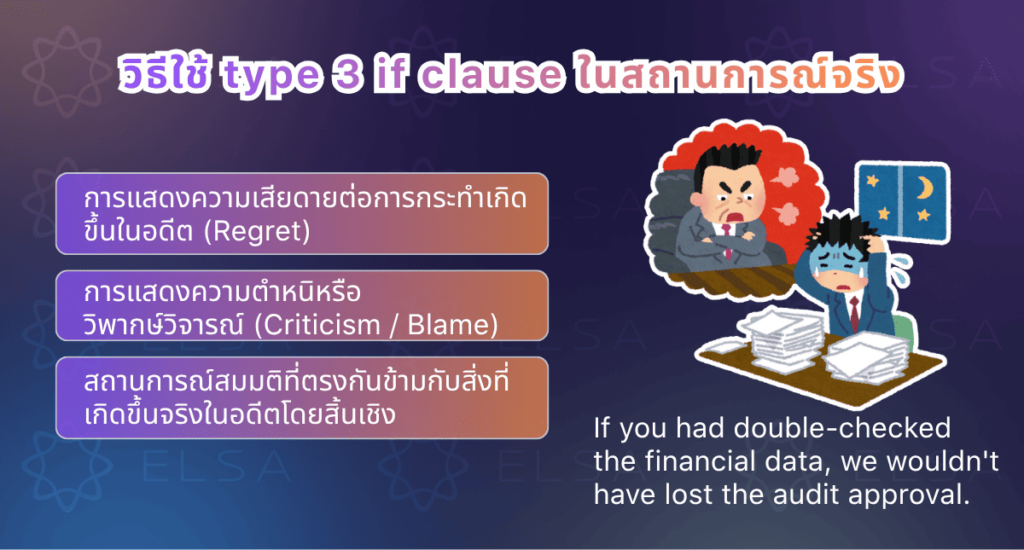
วิธีใช้ type 3 if clause ในสถานการณ์จริง
การแสดงความเสียดายต่อการกระทำที่เกิดขึ้นในอดีต (Regret)
ทั้งคนทำงานและนักศึกษามักใช้โครงสร้าง type 3 if clause เพื่อแสดงความเสียดายต่อการตัดสินใจในอดีตไม่ว่าจะเรื่องงานหรือเรื่องส่วนตัว ซึ่งส่งผลลัพธ์ออกมาไม่ดีเท่าที่ควร
- ตัวอย่าง: If I had focused on learning English during university, I would have secured an international job easily.
การแสดงความตำหนิหรือวิพากษ์วิจารณ์ (Criticism / Blame)
โครงสร้างประโยคนี้มีประโยชน์เมื่อต้องการให้ฟีดแบ็กเกี่ยวกับข้อผิดพลาดในการทำงาน โดยเน้นย้ำถึงผลเสียที่เกิดขึ้นจากการที่อีกฝ่ายไม่ได้ดำเนินการตามที่ควรจะเป็น
- ตัวอย่าง: If you had double-checked the financial data, we wouldn’t have lost the audit approval.
สถานการณ์สมมติที่ตรงกันข้ามกับสิ่งที่เกิดขึ้นจริงในอดีตโดยสิ้นเชิง
ใช้เมื่อวิเคราะห์สถานการณ์ ตั้งสมมติฐานทางธุรกิจ หรืออภิปรายเชิงลึกเกี่ยวกับเหตุการณ์ทางประวัติศาสตร์หรือกรณีศึกษาทางคลินิก
- ตัวอย่าง: If the team had received sufficient funding, they would have completed the software prototype on schedule.
รูปแบบโครงสร้างประโยคขั้นสูงของประโยค if clause type 3
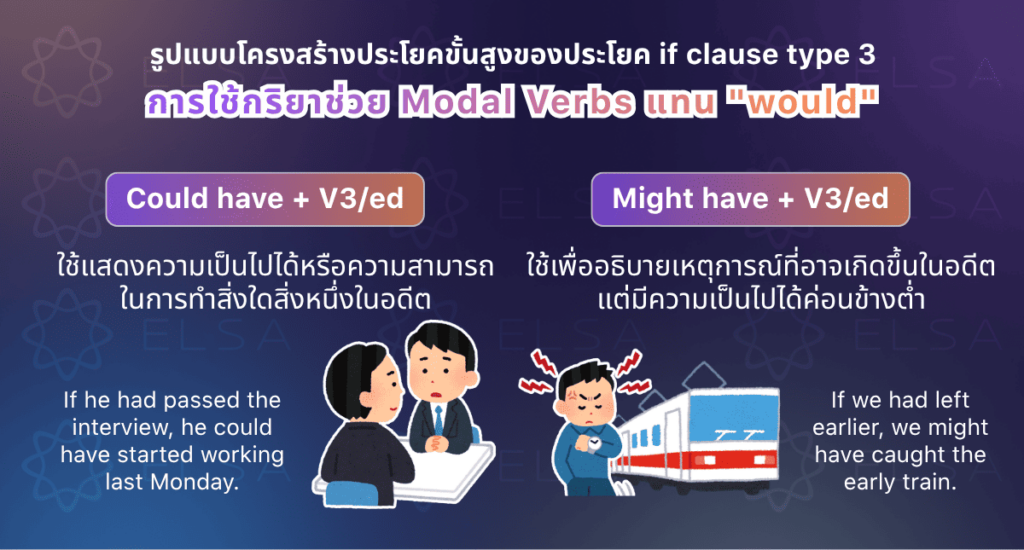
การใช้กริยาช่วย Modal Verbs แทน “would”
ผู้เขียนสามารถเลือกใช้กริยาช่วยได้อย่างยืดหยุ่นตามระดับความแน่นอนหรือความเป็นไปได้ ดังนี้:
- Could have + V3/ed: ใช้แสดงความเป็นไปได้หรือความสามารถในการทำสิ่งใดสิ่งหนึ่งในอดีต
- ตัวอย่าง: If he had passed the interview, he could have started working last Monday.
- Might have + V3/ed: ใช้เพื่ออธิบายเหตุการณ์ที่อาจเกิดขึ้นในอดีต แต่มีความเป็นไปได้ค่อนข้างต่ำ
- ตัวอย่าง: If we had left earlier, we might have caught the early train.
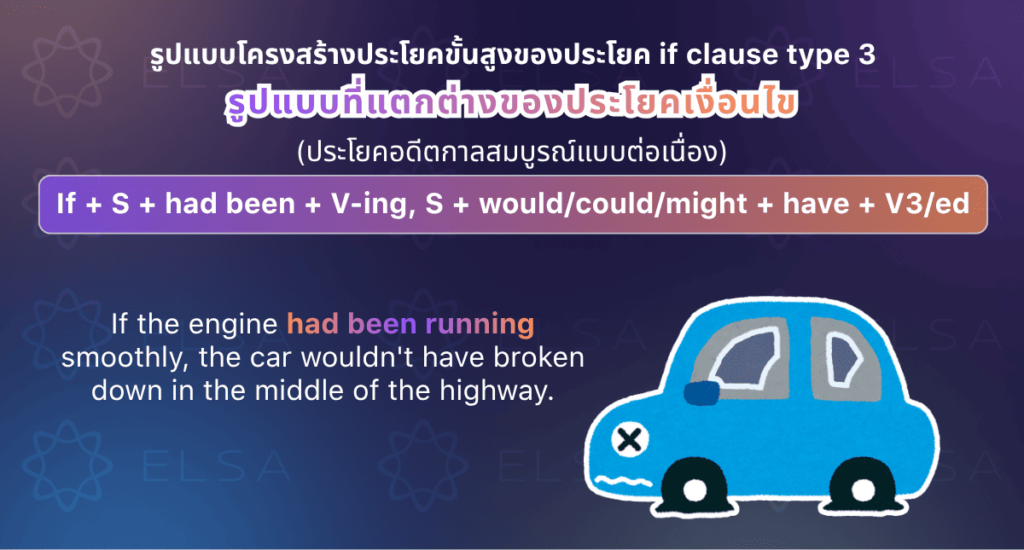
รูปแบบที่แตกต่างของประโยคเงื่อนไข (ประโยคอดีตกาลสมบูรณ์แบบต่อเนื่อง)
หากต้องการเน้นความต่อเนื่องหรือระยะเวลาของการกระทำที่นำไปสู่ผลลัพธ์ ให้เปลี่ยนจาก had + V3/ed เป็น had been + V-ing:
| If + S + had been + V-ing, S + would/could/might + have + V3/ed |
ตัวอย่าง: If the engine had been running smoothly, the car wouldn’t have broken down in the middle of the highway.
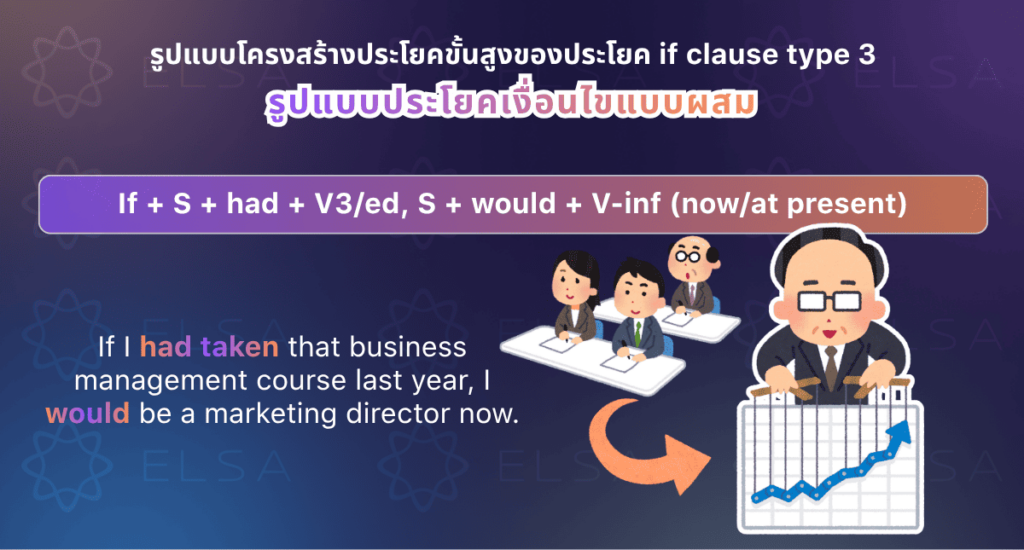
รูปแบบประโยคเงื่อนไขแบบผสม
โครงสร้างนี้เป็นการผสมผสานระหว่างเหตุการณ์สมมติในอดีตกับผลลัพธ์ที่ต่อเนื่องมาถึงหรือส่งผลกระทบโดยตรงต่อปัจจุบัน:
| If + S + had + V3/ed, S + would + V-inf (now/at present) |
ตัวอย่าง: If I had taken that business management course last year, I would be a marketing director now.
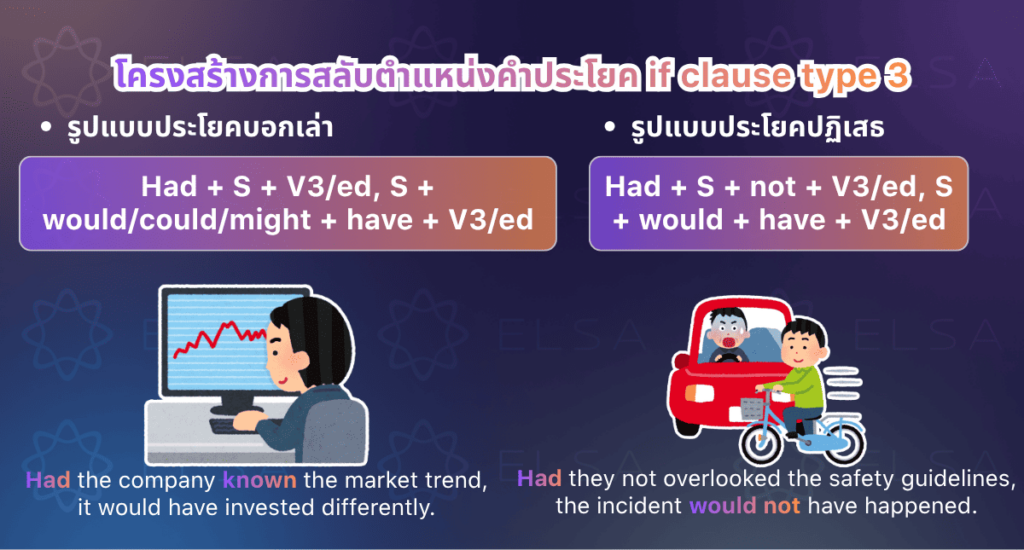
โครงสร้างการสลับตำแหน่งคำประโยค if clause type 3
การสลับตำแหน่งคำเป็นเครื่องมือที่มีประสิทธิภาพในการสร้างน้ำเสียงที่เป็นทางการสำหรับการเขียนเชิงวิชาการ (IELTS Writing) และการติดต่อสื่อสารทางธุรกิจ (formal tone)
กฎหลัก: ตัดคำเชื่อม If ออก ย้ายกริยาช่วย Had มาไว้ต้นประโยคและวางไว้หน้าประธาน สำหรับประโยคปฏิเสธ คำว่า not ต้องตามหลังประธานเสมอ ห้ามใช้รูปย่อ Hadn’t ขึ้นต้นประโยคเด็ดขาด
รูปแบบประโยคบอกเล่า:
| Had + S + V3/ed, S + would/could/might + have + V3/ed |
ตัวอย่าง:
ประโยคต้นฉบับ: If the company had known the market trend, it would have invested differently.
=> การสลับตำแหน่งคำ: Had the company known the market trend, it would have invested differently.
รูปแบบประโยคปฏิเสธ:
| Had + S + not + V3/ed, S + would + have + V3/ed |
ตัวอย่าง:
ประโยคต้นฉบับ: If they had not overlooked the safety guidelines, the incident would not have happened.
=> การสลับตำแหน่งคำ: Had they not overlooked the safety guidelines, the incident would not have happened.
โครงสร้างอื่นที่ใช้แทน “If”
เพื่อหลีกเลี่ยงการใช้คำซ้ำและทำให้งานเขียนของคุณดูเป็นธรรมชาติยิ่งขึ้น ลองมาดูทางเลือกอื่นนอกเหนือจากการใช้คำว่า “If” ด้านล่างกัน:
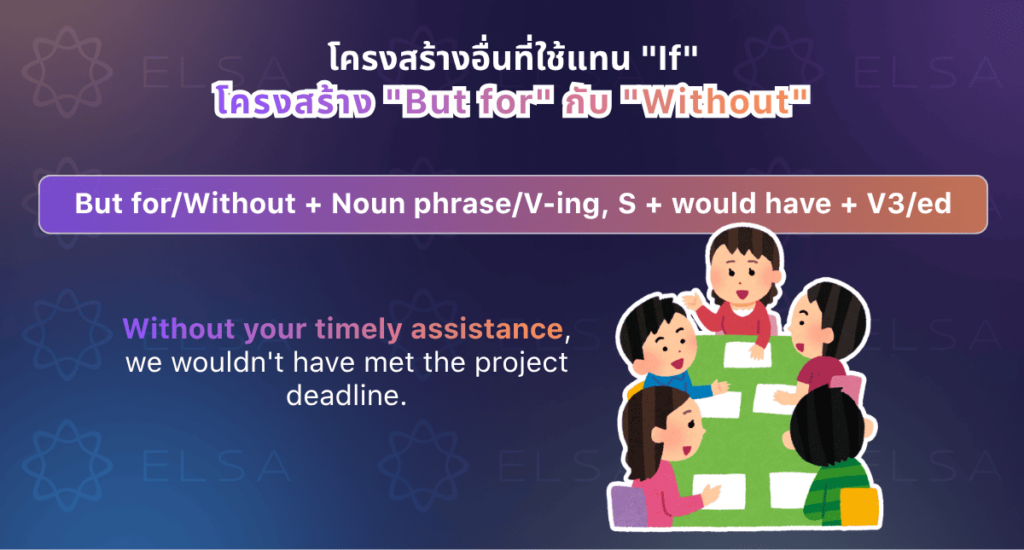
โครงสร้าง “But for” กับ “Without”
โครงสร้างทั้งสองแบบนี้มีความหมายว่า “ถ้าไม่ใช่เพราะ/หากไม่มี” โดยจะตามด้วยวลีคำนาม หรือรูปคำกริยาเติม -ing:
| But for/Without + Noun phrase/V-ing, S + would have + V3/ed |
ตัวอย่าง: Without your timely assistance, we wouldn’t have met the project deadline.
(= If you hadn’t assisted us in a timely manner, we wouldn’t have met the project deadline).
โครงสร้าง “If it hadn’t been for…”
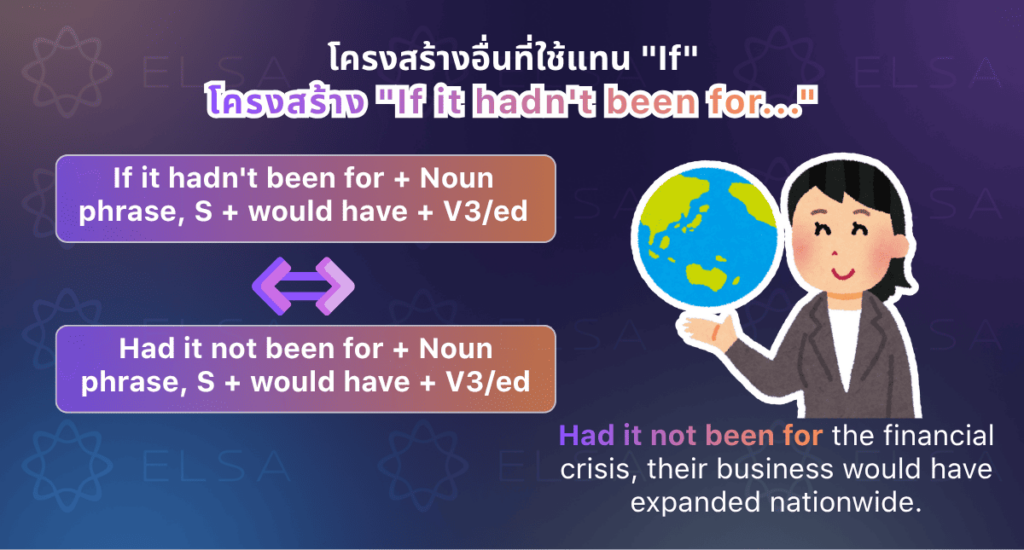
โครงสร้างประโยคแบบทางการที่มักพบในข้อสอบวัดระดับความรู้:
| If it hadn’t been for + Noun phrase, S + would have + V3/ed |
- รูปแบบการสลับตำแหน่งคำที่สอดคล้องกัน:
| Had it not been for + Noun phrase, S + would have + V3/ed |
ตัวอย่าง: Had it not been for the financial crisis, their business would have expanded nationwide.
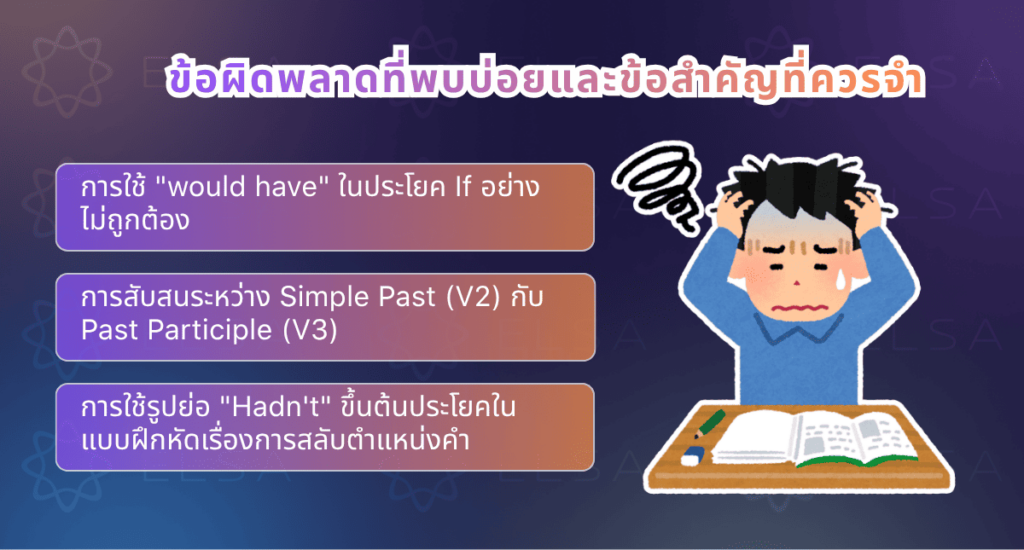
ข้อผิดพลาดที่พบบ่อยและข้อสำคัญที่ควรจำ
การใช้ “would have” ในประโยค If อย่างไม่ถูกต้อง
ประโยคเงื่อนไข (If-clause) ทำหน้าที่ระบุเงื่อนไขสมมติ ดังนั้นตามหลักไวยากรณ์แล้ว กริยาในส่วนนี้จะต้องอยู่ในรูป Past Perfect tense (had + V3/ed) ส่วนวลีกริยาช่วยที่แสดงผลลัพธ์สมมติ (would have + V3/ed) นั้นอนุญาตให้ใช้ได้เฉพาะในประโยคหลักเท่านั้น
ตัวอย่าง:
- ไม่ถูกต้อง: If she would have prepared well, she would have passed the interview.
- ถูกต้อง: If she had prepared well, she would have passed the interview.

การใช้รูปย่อ “Hadn’t” ขึ้นต้นประโยคในแบบฝึกหัดเรื่องการสลับตำแหน่งคำ
ในโครงสร้างการสลับตำแหน่งคำแบบทางการของ ประโยค if clause type 3 เมื่อประโยคเป็นปฏิเสธ กริยาช่วย Had จะถูกย้ายมาไว้ข้างหน้า แต่คำปฏิเสธ not จะต้องวางไว้หลังประธาน ห้ามนำมารวมกันเป็นรูปย่อ Hadn’t ไว้หน้าประธานโดยเด็ดขาด
ตัวอย่าง:
- ไม่ถูกต้อง: Hadn’t we received your guidance, we would have failed the project.
- ถูกต้อง: Had we not received your guidance, we would have failed the project.
การสับสนระหว่าง Simple Past (V2) กับ Past Participle (V3)
ประโยค if clause type 3 จำเป็นต้องใช้รูป Past Participle (V3/ed) ในทั้งสองส่วนของประโยค (had + V3/ed และ would have + V3/ed) ผู้เรียนจำนวนมากมักสับสนรูปแบบนี้กับ Simple Past (V2) ของคำกริยาอปกติที่มีรูปคำแตกต่างกันอย่างชัดเจน
ตัวอย่าง:
- ไม่ถูกต้อง: If I had saw the red light, I would have stopped the car.
- ถูกต้อง: If I had seen the red light, I would have stopped the car. (กริยา “see”: V1 คือ see V2 คือ saw V3 คือ seen)
แบบฝึกหัด if clause type 3 พร้อมเฉลยอย่างละเอียด
แบบที่ 1: ผันคำกริยาในวงเล็บ
หัวข้อ:
- If the manager __________ (inform) us earlier, we __________ (prepare) the financial statement on time.
- They __________ (not lose) the bid if their proposal __________ (be) more thorough.
- If Sarah __________ (take) the medicine yesterday, she __________ (feel) much better this morning.
- What __________ you __________ (do) if the flight to Tokyo __________ (be) canceled last night?
- If the technicians __________ (inspect) the machinery beforehand, the accident __________ (not happen).
- He __________ (pass) the IELTS exam last month if he __________ (practice) writing more consistently.
- If we __________ (not book) the hotel in advance, we __________ (have) nowhere to stay during the conference.
- If the marketing team __________ (launch) the campaign on schedule, sales __________ (reach) the quarterly target.
- Michael __________ (not miss) the train if his alarm clock __________ (ring) this morning.
- If the company __________ (invest) in renewable energy two years ago, it __________ (reduce) production costs significantly.
เฉลย:
| ลำดับ | เฉลย | คำอธิบาย |
| 1 | had informed — would have prepared | ประโยคเงื่อนไข (if-clause) ใช้รูป past perfect (had + V3/ed) และประโยคหลักใช้รูป conditional perfect (would have + V3/ed) |
| 2 | would not have lost — had been | ประโยคหลักขึ้นต้นก่อนในรูปปฏิเสธ (would not have + lost) และประโยคเงื่อนไขใช้คำว่า had been |
| 3 | had taken — would have felt | ประโยคเงื่อนไขใช้คำว่า had taken (take -> took -> taken) และประโยคหลักใช้คำว่า would have felt (feel -> felt -> felt) |
| 4 | would … have done — had been | ประโยค If clause เป็นรูปแบบบอกเล่า (had inspected) และประโยคหลักเป็นรูปแบบปฏิเสธ (would not have happened) |
| 5 | would have passed — had practiced | ประโยค If clause เป็นรูปแบบ (would have passed) และประโยคหลักเป็นรูปแบบป (had practiced) |
| 6 | would have passed — had practiced | ประโยคหลักที่อยู่ก่อน If clause อยู่ในรูป would have passed ส่วน If clause ที่ตามมาอยู่ในรูป had practiced |
| 7 | had not booked — would have had | ประโยค If clause เป็นรูปแบบปฏิเสธ (had not booked) และประโยคหลักใช้ would have had (คำกริยาหลักคือ “have” ซึ่งมีรูป V3 คือ “had”) |
| 8 | had launched — would have reached | ประโยค If clause อยู่ในรูป had launched และประโยคแสดงผลลัพธ์ (result clause) อยู่ในรูป would have reached |
| 9 | would not have missed — had rung | ประโยคหลักเป็นรูปแบบปฏิเสธในรูป would not have missed และ If clause อยู่ในรูป had rung (ring -> rang -> rung) |
| 10 | had invested — would have reduced | โครงสร้างมาตรฐานแบบที่ 3 (Type 3) โดยใช้ had invested และ would have reduced |

แบบที่ 2: การเขียนประโยคใหม่โดยอิงจากสถานการณ์จริงที่กำหนดให้
หัวข้อ:
- I didn’t see the warning sign, so I parked my car in the restricted area.
If I __________________________________________________. - Anna forgot to set her reminder, so she missed the online interview.
If Anna ________________________________________________. - The weather was extremely stormy, so the airline canceled all domestic flights.
If the weather ____________________________________________. - We didn’t hire a professional translator, so there were many mistakes in the contract.
There wouldn’t ____________________________________________. - Peter spent all his savings on luxury goods, so he couldn’t buy a house last year.
If Peter ________________________________________________. - The driver exceeded the speed limit, which caused the collision yesterday.
The collision wouldn’t ____________________________________. - I didn’t know you were in the hospital, so I didn’t visit you.
If I __________________________________________________. - They didn’t test the software properly, so a major bug appeared during the launch.
If they ________________________________________________. - She didn’t listen to her supervisor’s advice, so she made a critical error in the report.
She wouldn’t ____________________________________________. - The company didn’t lower its product prices, so competitors dominated the market.
If the company ___________________________________________.
เฉลย:
| ลำดับ | เฉลย | คำอธิบาย |
| 1 | If I had seen the warning sign, I wouldn’t have parked my car in the restricted area. | สถานการณ์จริงคือ “ไม่ได้เห็น” (didn’t see) และ “จอดรถ” (parked) สมมติฐานแบบตรงกันข้ามกับความเป็นจริงคือ had seen กับ wouldn’t have parked |
| 2 | If Anna hadn’t forgotten to set her reminder, she wouldn’t have missed the online interview. | ตรงข้ามกับความเป็นจริง “ลืมไปแล้ว” เปลี่ยนเป็น hadn’t forgotten และ “พลาดไปแล้ว” เปลี่ยนเป็น wouldn’t have missed |
| 3 | If the weather hadn’t been extremely stormy, the airline wouldn’t have canceled all domestic flights. | เปลี่ยนประโยคที่แสดงความเป็นจริงในอดีตจากอดีตกาลธรรมดา (was) เป็นรูปปฏิเสธของอดีตกาลสมบูรณ์ (hadn’t been) และประโยคผลลัพธ์เป็นรูปปฏิเสธ (wouldn’t have canceled) |
| 4 | There wouldn’t have been many mistakes in the contract if we had hired a professional translator. | ย้ายประโยคหลักมาไว้ด้านหน้าโดยไม่ต้องใช้เครื่องหมายจุลภาค: wouldn’t have been … if we had hired |
| 5 | If Peter hadn’t spent all his savings on luxury goods, he could have bought a house last year. | สมมติในทางตรงกันข้ามสำหรับเรื่องการใช้จ่าย: hadn’t spent ส่วนประโยคหลักใช้ could have bought (หรือ would have been able to buy) |
| 6 | The collision wouldn’t have happened if the driver hadn’t exceeded the speed limit. | ผลลัพธ์ในประโยคหลัก: เหตุการณ์การชนจะไม่เกิดขึ้น (wouldn’t have happened) ส่วนประโยค If: คนขับไม่ได้ขับรถเร็วเกินกำหนด (hadn’t exceeded) |
| 7 | If I had known you were in the hospital, I would have visited you. | เปลี่ยน didn’t know เป็น had known และเปลี่ยน didn’t visit เป็น would have visited |
| 8 | If they had tested the software properly, a major bug wouldn’t have appeared during the launch. | เปลี่ยนรูปปฏิเสธในอดีตเป็นรูปสมมติแบบบอกเล่า had tested และเปลี่ยนส่วนที่เกิดข้อผิดพลาดเป็น wouldn’t have appeared |
| 9 | She wouldn’t have made a critical error in the report if she had listened to her supervisor’s advice. | ย้ายประโยคหลักมาไว้ด้านหน้า: wouldn’t have made … if she had listened |
| 10 | If the company had lowered its product prices, competitors wouldn’t have dominated the market. | ความเป็นจริงคือไม่ได้ลดราคา → รูปสมมติ had lowered ความเป็นจริงคือคู่แข่งเข้ามาครองตลาด → รูปสมมติ wouldn’t have dominated |
แบบที่ 3: เขียนประโยคใหม่โดยใช้โครงสร้างการสลับตำแหน่งคำกริยาและประธานด้วยคำว่า “Had”
หัวข้อ:
- If the board of directors had approved the budget, the new branch would have opened last month.
Had __________________________________________________. - If we had not encountered severe turbulence, the plane would have landed on time.
Had __________________________________________________. - If they had checked the contract terms carefully, they would not have suffered heavy losses.
Had __________________________________________________. - If she had known about your arrival, she would have prepared lunch for you.
Had __________________________________________________. - If the security team had not responded swiftly, the system would have been breached.
Had __________________________________________________. - If Tom had followed the doctor’s prescription, his health would have recovered sooner.
Had __________________________________________________. - If the customer service team had solved the issue immediately, the client wouldn’t have complained.
Had __________________________________________________. - If the research team had secured government funding, they would have finalized the study.
Had __________________________________________________. - If you had not reminded me of the appointment, I would have forgotten it completely.
Had __________________________________________________. - If the factory had maintained the production equipment regularly, it wouldn’t have shut down.
Had __________________________________________________.
เฉลย:
| ลำดับ | เฉลย | คำอธิบาย |
| 1 | Had the board of directors approved the budget, the new branch would have opened last month. | ตัดคำเชื่อม If ออก แล้วนำกริยาช่วย Had ไว้หน้าประธาน the board of directors |
| 2 | Had we not encountered severe turbulence, the plane would have landed on time. | ในรูปปฏิเสธ ให้นำ Had ไว้หน้าประธาน และวาง not หลังประธานทันที (Had we not encountered) โดยไม่ใช้รูปย่อ Hadn’t we |
| 3 | Had they checked the contract terms carefully, they would not have suffered heavy losses. | โครงสร้างประโยคบอกเล่า: Had + S + V3/ed → Had they checked…. |
| 4 | Had she known about your arrival, she would have prepared lunch for you. | ตัด If ออก แล้วนำ Had ไว้หน้าประโยค: Had she known… |
| 5 | Had the security team not responded swiftly, the system would have been breached. | ใช้รูปประโยคการสลับตำแหน่งคำในรูปปฏิเสธ โดยวาง not หลังประธาน the security team |
| 6 | Had Tom followed the doctor’s prescription, his health would have recovered sooner. | ตัด If ออก แล้วนำ Had ไว้หน้าประโยค: Had Tom followed… |
| 7 | Had the customer service team solved the issue immediately, the client wouldn’t have complained. | โครงสร้างที่ถูกต้อง: Had + the customer service team + solved… |
| 8 | Had the research team secured government funding, they would have finalized the study. | ตัด If ออก แล้วนำ Had ไว้หน้าประธาน the research team |
| 9 | Had you not reminded me of the appointment, I would have forgotten it completely. | รูปปฏิเสธแบบสลับตำแหน่งคำ: Had + S + not + V3/ed → Had you not reminded me… |
| 10 | Had the factory maintained the production equipment regularly, it wouldn’t have shut down. | นำกริยาช่วย Had ไว้หน้าประธาน the factory |

คำถามที่พบบ่อย (Q&A) เกี่ยวกับประโยค if clause type 3
ประโยค If ในประโยค if clause type 3 สามารถย่อรูปได้หรือไม่?
ได้ วิธีการย่อรูปที่ใช้กันทั่วไปและถูกต้องตามหลักไวยากรณ์มากที่สุด คือการใช้โครงสร้างแบบสลับตำแหน่งคำด้วย “Had” (ตัดคำเชื่อม If ออก และนำ Had ไว้หน้าประธาน)
ตัวอย่างประโยค if clause type 3:
- จากประโยค “If you had called me earlier,…” สามารถย่อเป็น “Had you called me earlier,…” ได้
นอกจากนี้ ในกรณีที่ต้องการแสดงเงื่อนไขในรูปแบบปฏิเสธ สามารถใช้วลีที่มีความหมายเทียบเท่า เช่น Without หรือ But for ได้ (Without your help, we wouldn’t have succeeded)
เมื่อใดควรใช้ “could have” หรือ “might have” แทน “would have”?
ความแตกต่างอยู่ที่ระดับความแน่นอนและลักษณะของผลลัพธ์:
- Would have + V3/ed: ใช้เพื่อแสดงผลลัพธ์สมมติที่ค่อนข้างแน่นอนว่าจะเกิดขึ้น หากเงื่อนไขนั้นเป็นจริง (I would have attended the party – ฉันคงไปร่วมงานปาร์ตี้อย่างแน่นอน)
- Could have + V3/ed: เน้นความเป็นไปได้หรือความสามารถ (มีความสามารถหรือมีโอกาสที่จะทำสิ่งนั้นได้ แต่ในความเป็นจริงไม่ได้ทำหรือไม่มีโอกาสได้ทำ) (I could have won the race – ฉันมีความสามารถที่จะชนะการแข่งขันได้)
- Might have + V3/ed: ใช้เพื่อแสดงความเป็นไปได้หรือการคาดเดาเกี่ยวกับเหตุการณ์ในอดีต โดยไม่สามารถยืนยันได้อย่างแน่นอน (He might have passed the test – เขาอาจจะสอบผ่าน แต่ไม่สามารถยืนยันได้แน่นอน)
จะแยกแยะ ประโยค if clause type 3 แบบปกติออกจากประโยคเงื่อนไขแบบผสมได้อย่างไร (Mixed 3-2)?
ให้พิจารณาช่วงเวลาของผลลัพธ์ในประโยคหลักเป็นหลัก:
- Type 3 แบบปกติ: ทั้งเงื่อนไขและผลลัพธ์เกิดขึ้นและสิ้นสุดไปแล้วในอดีต (If + had + V3/ed, S + would have + V3/ed)
- แบบผสม (Mixed 3-2): เป็นการสมมติเหตุการณ์ที่ขัดแย้งกับความเป็นจริงในอดีต แต่ผลที่ตามมายังคงส่งผลต่อเนื่องหรือมีผลโดยตรงต่อปัจจุบัน (If + had + V3/ed, S + would + V-inf [now])
If clause type 3 examples:
- Type 3 แบบปกติ: If I had caught the train yesterday, I would have arrived on time yesterday. (ทั้งการพลาดรถไฟและการไปถึงล่าช้าเกิดขึ้นและจบลงเมื่อวาน)
- แบบผสม (Mixed 3-2): If I had accepted that job last month, I would be living in Chiang Mai now. (การรับงานเกิดขึ้นเมื่อเดือนที่แล้ว แต่ผลลัพธ์คือการอาศัยอยู่ที่เชียงใหม่เกิดขึ้นในปัจจุบัน)
ทำไมในการทำแบบฝึกหัดเรื่องการสลับตำแหน่งคำแบบปฏิเสธ จึงเขียน “Hadn’t + S” ไม่ได้?
ตามหลักไวยากรณ์ภาษาอังกฤษเชิงวิชาการ โครงสร้างการสลับตำแหน่งคำเป็นรูปแบบภาษาที่มีความเป็นทางการสูง (formal register) เมื่อมีการนำกริยาช่วยมาไว้หน้าประโยค ต้องแยกกริยาช่วยและคำปฏิเสธออกจากกัน โดยให้ Had อยู่ต้นประโยค และวาง not ไว้หลังประธานทันที
- ไม่ถูกต้อง: Hadn’t we arrived on time, we would have missed the flight.
- ถูกต้อง: Had we not arrived on time, we would have missed the flight.
หวังว่าคู่มือฉบับครบถ้วนนี้จะช่วยให้คุณเข้าใจ if clause type 3 โครงสร้าง รวมถึงรูปแบบต่าง ๆ และวิธีใช้ ประโยค if clause type 3 ได้อย่างถูกต้อง ทั้งในการสื่อสารและการทำงาน เพื่อได้พัฒนาทักษะภาษาอังกฤษและทบทวนโครงสร้างไวยากรณ์ที่สำคัญเพิ่มเติม คุณสามารถศึกษาเนื้อหาเชิงลึกเพิ่มเติมได้จากหมวดไวยากรณ์ภาษาอังกฤษของ ELSA Speak กัน