

If clause type 1 (If clause 1) เป็นหลักไวยากรณ์สำคัญในภาษาอังกฤษ ทั้งในการสื่อสารและการสอบ เช่น IELTS, TOEIC การเข้าใจโครงสร้างนี้อย่างชัดเจนจะช่วยให้คุณมั่นใจในการสื่อสารเกี่ยวกับความตั้งใจ คำสัญญา คำเตือน และการให้เหตุผลได้อย่างชัดเจนและเป็นระบบในการเขียน ด้านล่างนี้คือเนื้อหาเกี่ยวกับประโยคเงื่อนไขประเภทที่ 1 ตั้งแต่พื้นฐานจนถึงระดับสูง พร้อมแบบฝึกหัดและเฉลยให้ฝึกทำ
- if clause type 1 – if clause คือ ประโยคที่ใช้บอกเงื่อนไขของการกระทำหรือเหตุการณ์ที่เป็นไปได้จริง และมีโอกาสเกิดขึ้นในปัจจุบันหรืออนาคต
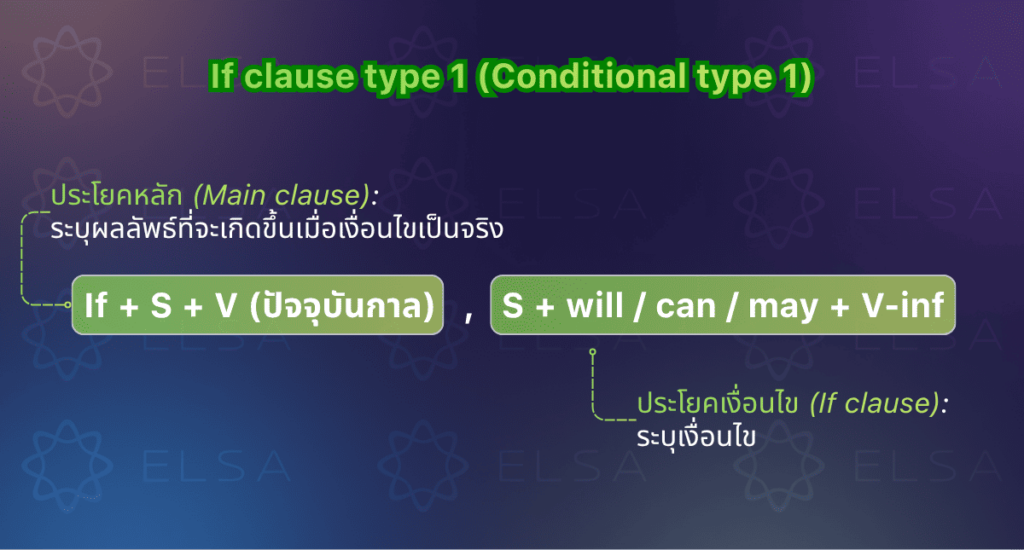
- โครงสร้างหลัก: If + S + V (ปัจจุบันกาล), S + will / can / may + V-inf
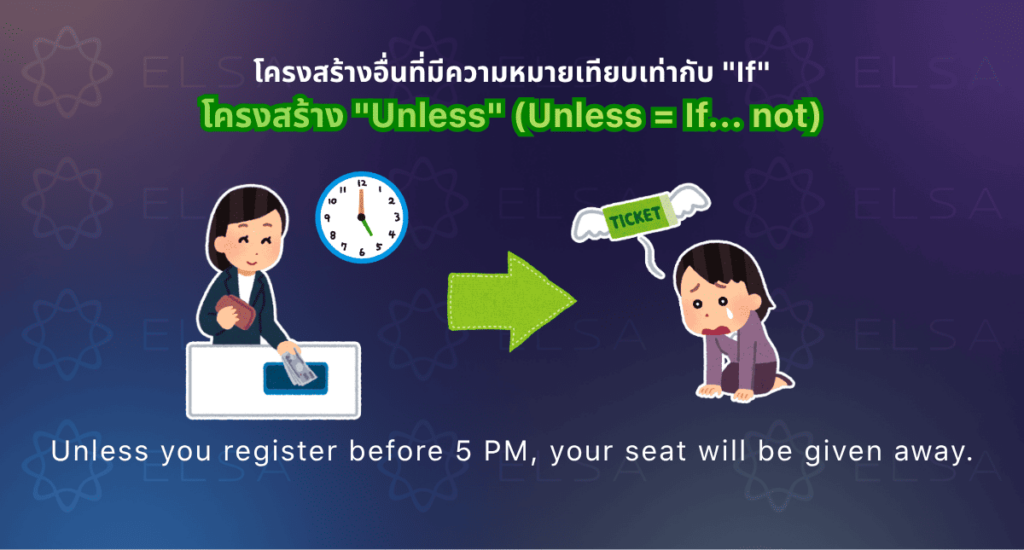
- ใช้รูปปฏิเสธแทน: ใช้ “Unless” แทน “If… not” (Unless = ถ้าไม่…)
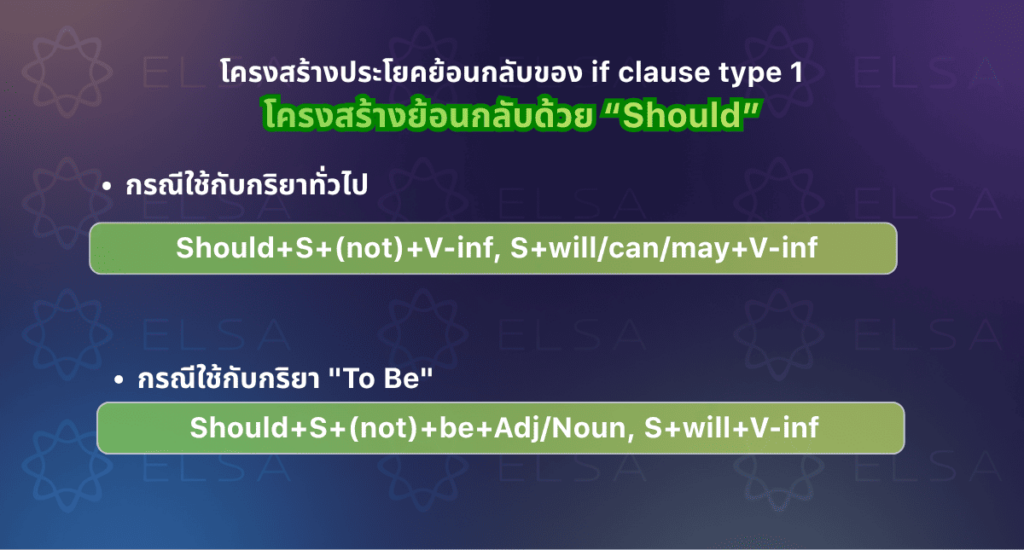
- เพิ่มความเป็นทางการ: ใช้การสลับตำแหน่งด้วย “Should” (Should + S + V-inf…) แทนประโยค If Clause Type 1
ภาพรวมของ if clause type 1 (Conditional type 1)
ด้านล่างนี้คือความรู้หลัก ๆ เกี่ยวกับความหมายและวิธีการวางตำแหน่งประโยคใน if clause type 1 ที่คุณควรรู้
สอบก่อนเข้าฟรี

If clause คือ และ first conditional คืออะไร?
if clause type 1 ใช้เพื่อแสดงเงื่อนไขที่เป็นไปได้จริงและมีโอกาสเกิดขึ้นในปัจจุบันหรืออนาคต ซึ่งจะนำไปสู่ผลลัพธ์ที่สามารถเกิดขึ้นได้จริงหากเงื่อนไขนั้นเป็นไปตามที่กำหนด
ลองอ่านออกเสียง 28 รายการนี้ดู แล้วดูคะแนนของคุณ
โครงสร้างมีสองส่วน
- ประโยคเงื่อนไข (If clause): ระบุเงื่อนไข
- ประโยคหลัก (Main clause): ระบุผลลัพธ์ที่จะเกิดขึ้นเมื่อเงื่อนไขเป็นจริง
ตัวอย่าง: If you review your lessons carefully, you will pass the final test. (ถ้าคุณทบทวนหนังสืออย่างละเอียด คุณจะผ่านการสอบปลายภาค)
ตำแหน่งของประโยคและหลักการใช้เครื่องหมายจุลภาค
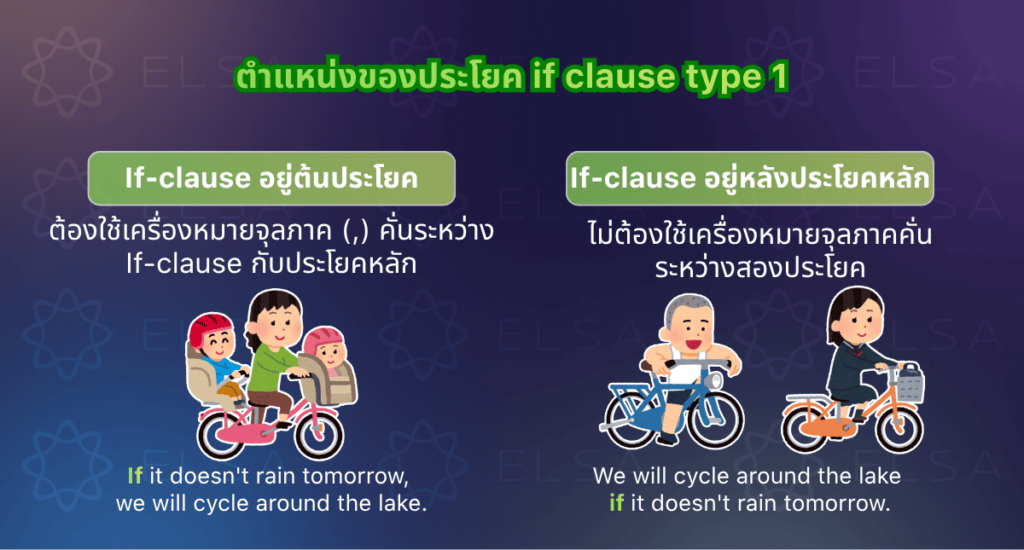
สองประโยคใน conditional type 1 สามารถเปลี่ยนตำแหน่งให้กันได้แต่ความหมายยังเหมือนเดิม
- If-clause อยู่ต้นประโยค: ต้องใช้เครื่องหมายจุลภาค (,) คั่นระหว่าง If-clause กับประโยคหลัก
- ตัวอย่าง: If it doesn’t rain tomorrow, we will cycle around the lake.
- If-clause อยู่หลังประโยคหลัก: ไม่ต้องใช้เครื่องหมายจุลภาคคั่นระหว่างสองประโยค
- ตัวอย่าง: We will cycle around the lake if it doesn’t rain tomorrow.
โครงสร้างและสูตรของ if clause type 1
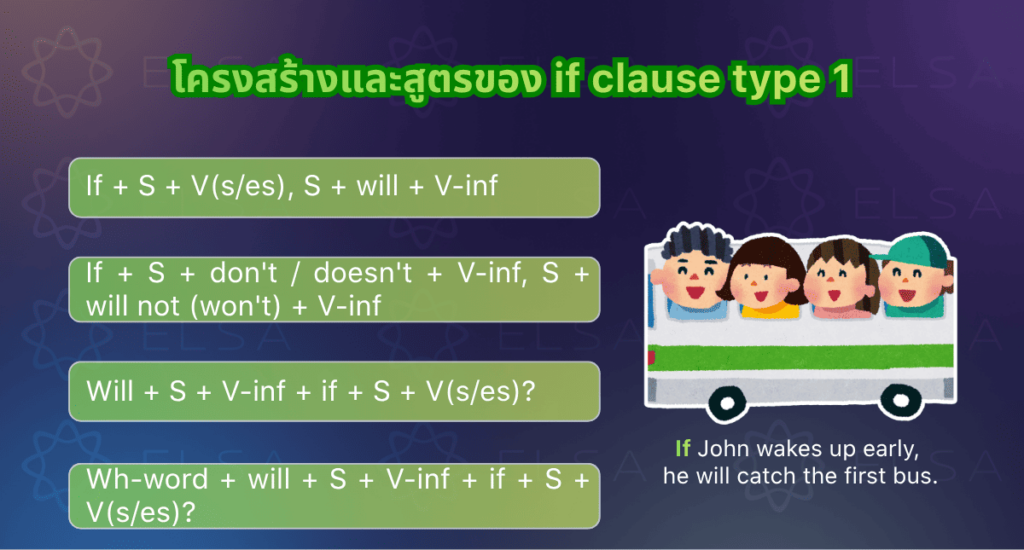
ด้านล่างนี้คือตารางสรุปรายละเอียดเกี่ยวกับ โครงสร้าง if clause type 1 แยกตามรูปประโยคบอกเล่า ปฏิเสธ และประโยคคำถาม พร้อมตัวอย่างที่ชัดเจน เพื่อให้คุณจดจำและนำไปใช้ได้ง่ายขึ้น
| รูปประโยค | if clause type 1 โครงสร้าง | ตัวอย่าง if clause type 1 |
| ประโยคบอกเล่า | If + S + V(s/es), S + will + V-inf | If John wakes up early, he will catch the first bus. |
| ประโยคปฏิเสธ | If + S + don’t / doesn’t + V-inf, S + will not (won’t) + V-inf | If you don’t wear a helmet, you won’t be safe on the road. |
| ประโยคคำถาม (Yes/No) | Will + S + V-inf + if + S + V(s/es)? | Will they accept the offer if we reduce the price? |
| ประโยคคำถาม (WH Question) | Wh-word + will + S + V-inf + if + S + V(s/es)? | What will you do if the flight is delayed? |
วิธีใช้ if clause type 1 ในการสื่อสารและงานวิชาการ
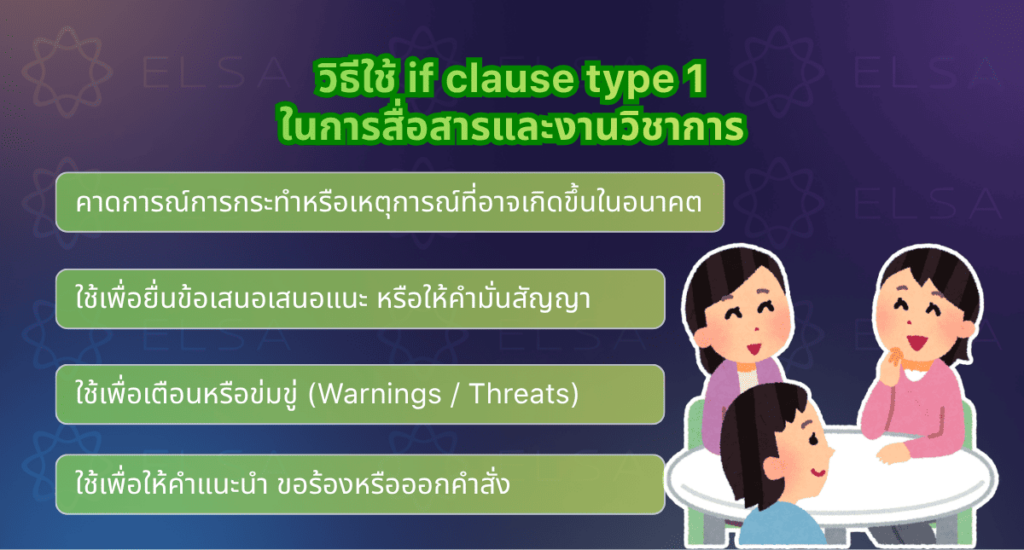
คาดการณ์การกระทำหรือเหตุการณ์ที่อาจเกิดขึ้นในอนาคต
ใช้เมื่อผลลัพธ์ที่เฉพาะเจาะจงเกือบจะแน่นอนว่าจะเกิดขึ้น หากการกระทำในประโยคส่วนหน้าเกิดขึ้น
- ตัวอย่าง: If the company expands into international markets, sales will increase significantly.
ยื่นข้อเสนอ เสนอแนะ หรือให้คำมั่นสัญญา
มักใช้ในการสื่อสารในชีวิตประจำวันเพื่อแสดงความมีน้ำใจหรือเสนอเงื่อนไขในการช่วยเหลือ
- ตัวอย่าง: If you help me clean the garage, I will take you out for dinner.
ใช้เพื่อเตือนหรือข่มขู่ (Warnings / Threats)
เน้นย้ำถึงผลลัพธ์เชิงลบ หากอีกฝ่ายกระทำหรือไม่กระทำสิ่งใดสิ่งหนึ่ง
- ตัวอย่าง: If you leave your bicycle unlocked outside, someone will steal it.
ใช้เพื่อให้คำแนะนำ ขอร้องหรือออกคำสั่ง
ใช้เพื่อแนะนำแนวทางให้อีกฝ่ายรับมือกับสถานการณ์จริงทันทีเมื่อเกิดเหตุการณ์ขึ้น
- ตัวอย่าง: If you experience any technical glitches during the exam, notify the supervisor immediately.
First conditional ตัวอย่าง ประโยค ที่มักใช้ในชีวิตจริง
ในการสื่อสารในชีวิตประจำวัน ประโยคเงื่อนไขประเภทที่ 1 มักถูกใช้เพื่อพูดคุยเรื่องงาน นัดหมาย ให้คำมั่นสัญญา หรือเตือนภัย ด้านล่างนี้คือประโยค if clause 1 ที่เป็นธรรมชาติและใช้บ่อยที่สุดในแต่ละรูปแบบ
ตัวอย่างประโยค first conditional บอกเล่า
- สภาพอากาศและแผนการ
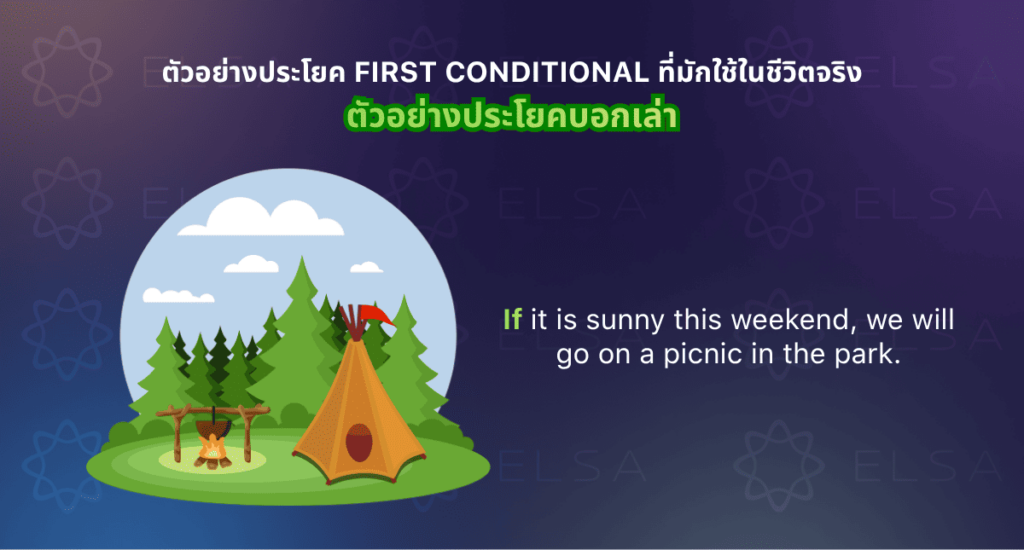
- If it is sunny this weekend, we will go on a picnic in the park.
(ถ้าสุดสัปดาห์นี้อากาศแจ่มใส เราจะไปปิกนิกที่สวนสาธารณะ)
- If it is sunny this weekend, we will go on a picnic in the park.
- การงานและการเรียน
- If I finish this project before 5 PM, I will join you for dinner.
(ถ้าฉันทำโปรเจกต์นี้เสร็จก่อน 5 โมงเย็น ฉันจะไปกินข้าวเย็นกับคุณ)
- If I finish this project before 5 PM, I will join you for dinner.
- การซื้อของและการใช้จ่าย
- If that laptop goes on sale, I will buy it immediately.
(ถ้าแล็ปท็อปเครื่องนั้นลดราคา ฉันจะซื้อทันที)
- If that laptop goes on sale, I will buy it immediately.
- สุขภาพและการใช้ชีวิต
- If you take this medicine, you will feel much better in a few hours.
(ถ้าคุณกินยานี้ คุณจะรู้สึกดีขึ้นมากหลังจากผ่านไปไม่กี่ชั่วโมง)
- If you take this medicine, you will feel much better in a few hours.
First conditional ตัวอย่าง ประโยคปฏิเสธ
- คำเตือนและการแจ้งเตือน
- If you don’t set an alarm, you will miss your morning flight.
(ถ้าคุณไม่ตั้งนาฬิกาปลุก พรุ่งนี้เช้าคุณจะตกเครื่องนะ)
- If you don’t set an alarm, you will miss your morning flight.
- นิสัยและไลฟ์สไตล์
- If he doesn’t drink enough water, he will get a headache.
(ถ้าเขาดื่มน้ำไม่เพียงพอ เขาจะปวดหัว)
- If he doesn’t drink enough water, he will get a headache.
- การปฏิเสธแบบมีเงื่อนไข
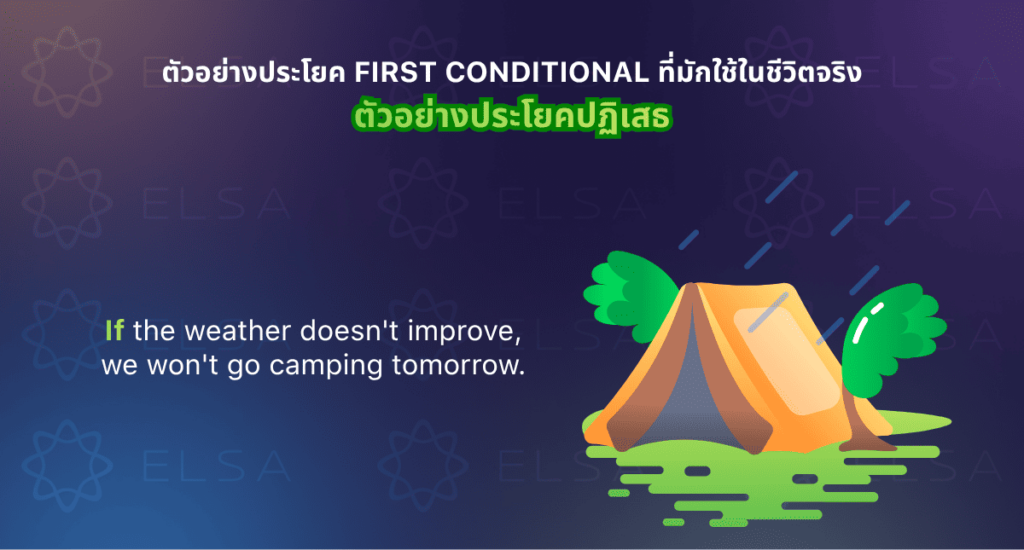
- If the weather doesn’t improve, we won’t go camping tomorrow.
(ถ้าอากาศไม่ดีขึ้น พรุ่งนี้เราจะไม่ไปตั้งแคมป์)
- If the weather doesn’t improve, we won’t go camping tomorrow.
- ความสัมพันธ์และการสื่อสาร
- If she doesn’t apologize, I won’t talk to her again.
(ถ้าเธอไม่ขอโทษ ฉันจะไม่คุยกับเธออีก)
- If she doesn’t apologize, I won’t talk to her again.
ตัวอย่างประโยค first conditional คำถาม
- ประโยคคำถาม Yes/No (ถามเพื่อยืนยันการกระทำ)
- Will you pick me up from the airport if my flight lands late?
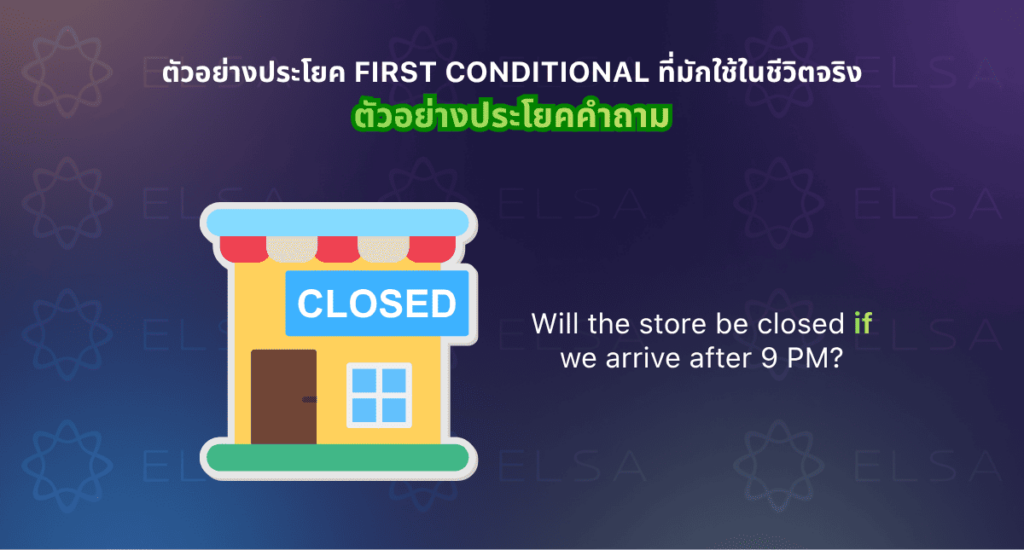
(คุณจะไปรับฉันที่สนามบินไหม ถ้าเที่ยวบินของฉันลงจอดช้า) - Will the store be closed if we arrive after 9 PM?
(ร้านค้าจะปิดไหมถ้าเราไปถึงหลัง 3 ทุ่ม)
- Will you pick me up from the airport if my flight lands late?
- ประโยคคำถาม WH- (ถามแนวทางหรือวิธีแก้ไขสถานการณ์)
- What will you do if your computer suddenly crashes during the presentation?
(คุณจะทำอย่างไรถ้าคอมพิวเตอร์ของคุณเกิดขัดข้องกะทันหันระหว่างการนำเสนอ) - Where will we go if it rains heavily this evening?
(เราจะไปที่ไหนถ้าเย็นนี้ฝนตกหนัก) - How will you get home if there are no buses running?
(คุณจะกลับบ้านอย่างไรถ้าไม่มีรถบัสให้บริการ)
- What will you do if your computer suddenly crashes during the presentation?
โครงสร้างขั้นสูงและรูปแบบต่าง ๆ ของ if clause type 1
ไม่ได้จำกัดอยู่เพียงโครงสร้างพื้นฐานเท่านั้น if clause type 1 ยังมีรูปแบบที่ยืดหยุ่นและหลากหลายทั้งใน If-clause และประโยคหลัก เพื่อใช้สื่อความหมายในบริบทต่าง ๆ ได้มากขึ้น
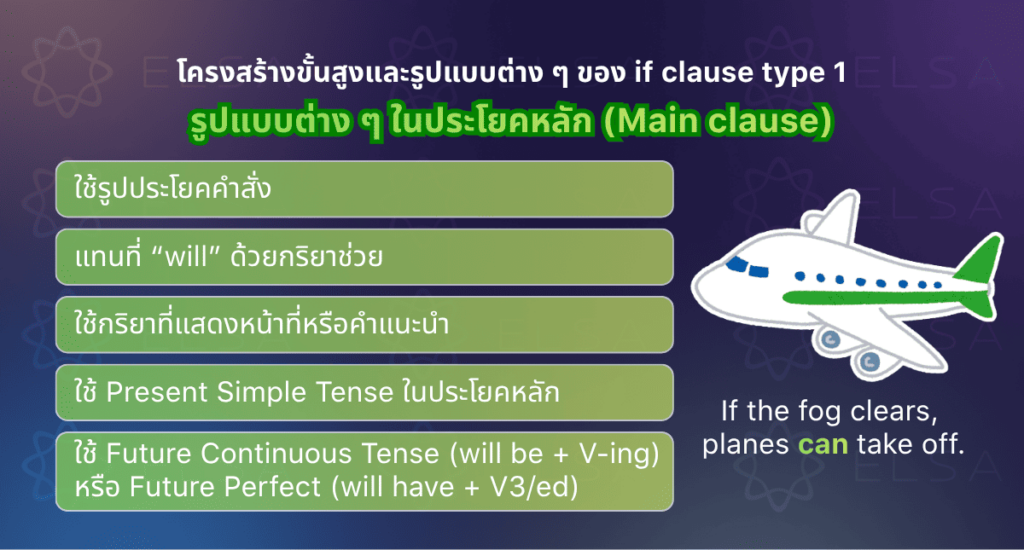
รูปแบบต่าง ๆ ในประโยคหลัก (Main clause)
- แทนที่ “will” ด้วยกริยาช่วย (Modal verb – can, may, might, could) ใช้เพื่อแสดงระดับความแน่นอน ความเป็นไปได้ หรือการอนุญาต
- ตัวอย่าง: If the fog clears, planes can take off. (ความเป็นไปได้)
- ตัวอย่าง: If she finishes early, she may drop by our office. (ความเป็นไปได้ที่ไม่แน่นอน)
- ใช้กริยาที่แสดงหน้าที่หรือคำแนะนำ (must, should, ought to, have to)
- ตัวอย่าง: If you want to improve your pronunciation, you must practice speaking daily.
- ใช้รูปประโยคคำสั่ง (Imperative) ละประธานและใช้กริยารูปพื้นฐานโดยตรง หรือใช้ Don’t + V-inf เพื่อออกคำสั่งหรือคำแนะนำ
- ตัวอย่าง: If anyone calls for me, tell them I am in a meeting.
- ใช้ Present Simple Tense ในประโยคหลัก เน้นผลลัพธ์ที่เป็นเรื่องแน่นอนหรือเป็นนิสัยที่เกิดขึ้นซ้ำ ๆ
- ตัวอย่าง: If my father drinks coffee late at night, he has trouble falling asleep.
- ใช้ Future Continuous Tense (will be + V-ing) หรือ Future Perfect (will have + V3/ed) เน้นการกระทำที่กำลังดำเนินอยู่หรือเสร็จสิ้นก่อนเวลาที่กำหนด
- ตัวอย่าง: If you arrive at 8 PM, I will be cooking dinner in the kitchen.
- ตัวอย่าง: If you submit the form today, the committee will have evaluated it by Friday.
รูปแบบต่าง ๆ ในประโยคเงื่อนไข (If-clause)
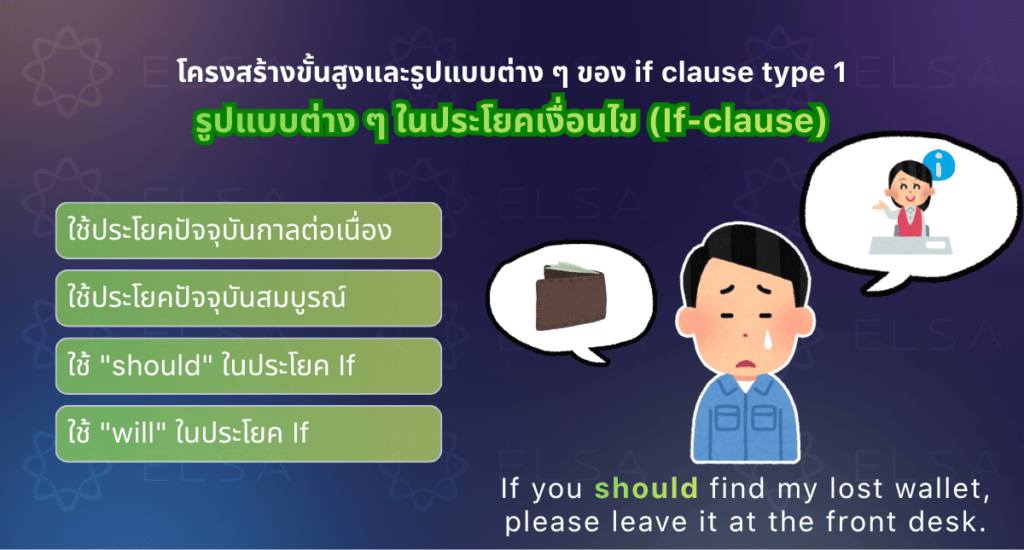
- ใช้ประโยคปัจจุบันกาลต่อเนื่อง (am/is/are + V-ing) เน้นการกระทำที่กำลังเกิดขึ้นในขณะที่พูด หรือแผนการที่กำหนดไว้ล่วงหน้า
- ตัวอย่าง: If they are having dinner, we shouldn’t disturb them right now.
- ใช้ประโยคปัจจุบันสมบูรณ์ (have/has + V3/ed) เน้นเงื่อนไขที่ต้องดำเนินการให้เสร็จสมบูรณ์ก่อนที่ผลลัพธ์จะเกิดขึ้น
- ตัวอย่าง: If you have completed the assignment, you will receive full credit.
- ใช้ “should” ในประโยค If แสดงเงื่อนไขที่มีโอกาสเกิดขึ้นน้อย (ใช้ในกรณีเผื่อไว้)
- ตัวอย่าง: If you should find my lost wallet, please leave it at the front desk.
- ใช้ “will” ในประโยค If ใช้เมื่อต้องการขอร้องอย่างสุภาพ หรือแสดงความเต็มใจที่จะให้ความร่วมมือ
- ตัวอย่าง: If you will just sign here, our consultant will finalize the contract.
โครงสร้างประโยคย้อนกลับของ if clause type 1
ในไวยากรณ์ภาษาอังกฤษระดับสูง นอกจากรูปแบบปกติแล้ว การใช้โครงสร้างประโยคย้อนกลับของ first conditional โครงสร้าง ช่วยให้ประโยคมีความเป็นทางการและสุภาพมากขึ้น (formal tone) โดยมักใช้ในจดหมายธุรกิจ สุนทรพจน์ หรือการเขียนเชิงวิชาการ เช่น IELTS Writing Task 2
โครงสร้างย้อนกลับด้วย “Should”
หลักการ: ตัดคำเชื่อม If ออก แล้วนำ Should ไว้หน้าประโยค และเปลี่ยนกริยาหลักเป็นรูปแบบพื้นฐานของกริยาที่ยังไม่ผัน (V-inf)
- กรณีใช้กับกริยาทั่วไป
Should+S+(not)+V-inf, S+will/can/may+V-inf
ประโยคต้นฉบับ: If you need further details, you can contact our helpdesk.
ประโยคย้อนกลับ: Should you need further details, you can contact our helpdesk.
- กรณีใช้กับกริยา “To Be”
Should+S+(not)+be+Adj/Noun, S+will+V-inf
ประโยคต้นฉบับ: If the applicant is not satisfied with the decision, she will appeal.
ประโยคย้อนกลับ: Should the applicant not be satisfied with the decision, she will appeal.
โครงสร้างอื่นที่มีความหมายเทียบเท่ากับ “If”
โครงสร้าง “Unless” (Unless = If… not)
Unless มีความหมายว่า “เว้นแต่” หรือ “ถ้าไม่” เนื่องจาก Unless มีความหมายในเชิงปฏิเสธอยู่แล้ว ดังนั้นประโยคที่ตามหลังจึงไม่สามารถใช้รูปปฏิเสธ (not) ได้
- ประโยคต้นฉบับ: If you do not register before 5 PM, your seat will be given away.
- เขียนใหม่: Unless you register before 5 PM, your seat will be given away.
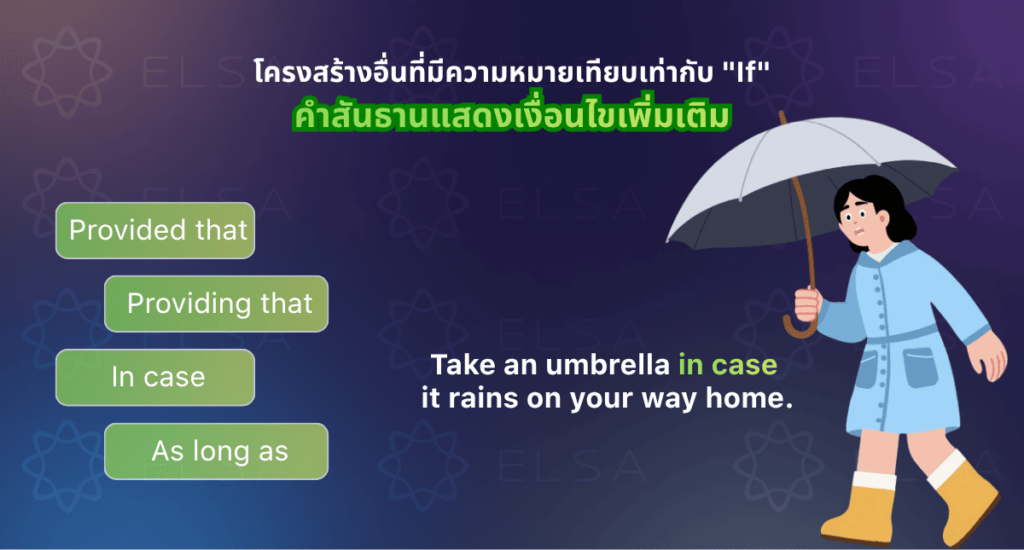
คำสันธานแสดงเงื่อนไขเพิ่มเติม
- Provided that / Providing that / As long as: ตราบใดที่, โดยมีเงื่อนไขว่า (เน้นย้ำถึงเงื่อนไขที่ผูกมัดอย่างเข้มงวด)
- ตัวอย่าง: You will pass the probationary period as long as you meet the quarterly targets.
- In case: เผื่อว่า, เพื่อป้องกันกรณีที่ (การเตรียมการล่วงหน้าเพื่อรับมือกับความเสี่ยงที่อาจเกิดขึ้น)
- ตัวอย่าง: Take an umbrella in case it rains on your way home.
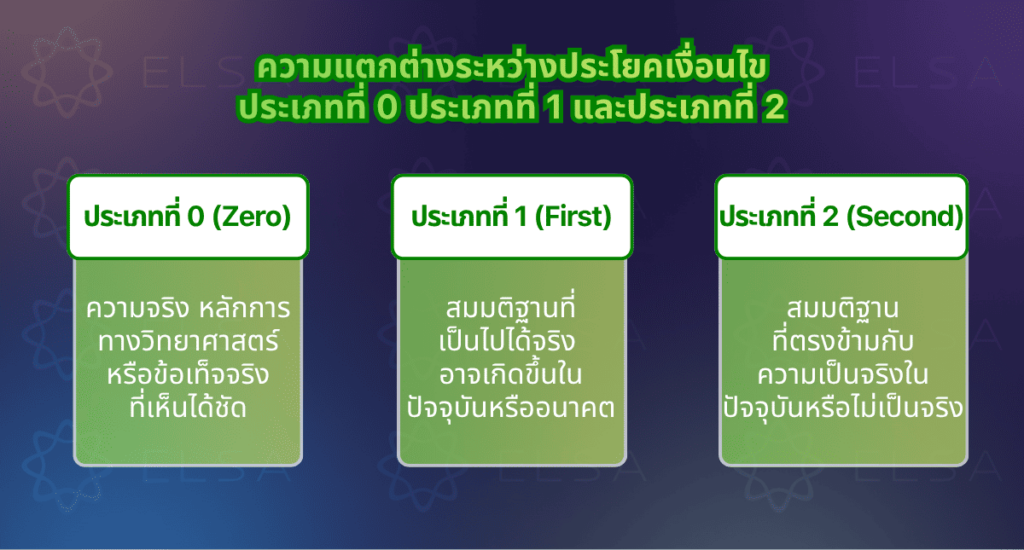
ความแตกต่างระหว่างประโยคเงื่อนไขประเภทที่ 0 ประเภทที่ 1 และประเภทที่ 2
เพื่อหลีกเลี่ยงความสับสนทั้งในการทำแบบฝึกหัดและการสื่อสาร คุณสามารถดูตารางเปรียบเทียบโดยละเอียดระหว่างประโยคเงื่อนไขประเภทที่ 0, ประเภทที่ 1 และประเภทที่ 2 ด้านล่างได้
| ลักษณะเปรียบเทียบ | ประเภทที่ 0 (Zero) | ประเภทที่ 1 (First) | ประเภทที่ 2 (Second) |
| ลักษณะ | ความจริง หลักการทางวิทยาศาสตร์ หรือข้อเท็จจริงที่เห็นได้ชัด | สมมติฐานที่เป็นไปได้จริง อาจเกิดขึ้นในปัจจุบันหรืออนาคต | สมมติฐานที่ตรงข้ามกับความเป็นจริงในปัจจุบัน หรือไม่เป็นจริง |
| ประโยค If | ปัจจุบันกาล (V-s/es) | ปัจจุบันกาล (V-s/es) | อดีตกาลแบบธรรมดา (V2/ed / were) |
| ประโยคหลัก | ปัจจุบันกาล (V-s/es) | กาลอนาคตธรรมดา (will + V-inf) | would / could + V-inf |
| ตัวอย่าง | If you heat ice, it melts. | If it rains, I will stay home. | If I had wings, I would fly. |
แบบฝึกหัดประยุกต์ใช้ if type 1 (type 1 conditional)
รูปแบบที่ 1: ผันคำกริยาในวงเล็บ
- If the store __________ (offer) a discount, I __________ (buy) that laptop.
- She will miss the train if she __________ (not leave) the house right now.
- If they __________ (not arrive) by 9 AM, we __________ (start) the workshop without them.
- If Mark is still working at the library, he __________ (not answer) your message.
- If the team __________ (already submit) the report, the manager will review it this afternoon.
- If you want to get a high band score, you _________ (must / practice) speaking every day.
- Unless it _________ (stop) raining soon, we will cancel the outdoor barbecue.
- If anyone calls me during the meeting, _________ (take) a message, please.
- Should you _________ (need) any further assistance, do not hesitate to contact our team.
- If we finish the project before 5 PM, we _________ (celebrate) at our favorite restaurant tonight.
เฉลยและอธิบายรายละเอียด:
| ข้อ | เฉลย | อธิบาย |
| ข้อ 1 | offers — will buy | ประโยค If ใช้ปัจจุบันกาลกับประธานเอกพจน์ “the store” ส่วนประโยคหลักใช้ “will + V-inf” |
| ข้อ 2 | doesn’t leave | ประโยค If ใช้รูปปฏิเสธในปัจจุบันกาลกับประธาน “she” โดยใช้กริยาช่วย “doesn’t” |
| ข้อ 3 | don’t arrive — will start | ประธาน “they” ใช้กริยาช่วยรูปปฏิเสธ “don’t” ส่วนประโยคหลักใช้ “will + V-inf” |
| ข้อ 4 | won’t answer | การใช้รูปแบบอื่นปัจจุบันกาลต่อเนื่องที่ประโยค If เพื่อแสดงการกระทำที่กำลังเกิดขึ้น ส่วนประโยคหลักใช้รูปปฏิเสธของกาลอนาคตธรรมดา “won’t answer” |
| ข้อ 5 | has already submitted | การใช้รูปแบบอื่นปัจจุบันสมบูรณ์ที่ประโยค If เพื่อแสดงการกระทำที่เสร็จสิ้นแล้วก่อนถึงช่วงเวลาปัจจุบัน |
| ข้อ 6 | must practice | การใช้ Modal verb “must” ในประโยคหลักเพื่อแสดงความจำเป็นหรือให้คำแนะนำแทน “will” |
| ข้อ 7 | stops | ประโยค “Unless” มีความหมายเทียบเท่ากับ “If… not” โดยใช้ ปัจจุบันกาล รูปบอกเล่ากับประธานเอกพจน์ “it” |
| ข้อ 8 | take | รูปแบบประโยคคำสั่งในประโยคหลัก ใช้กริยารูปพื้นฐานโดยไม่มีประธาน เพื่อขอร้องหรือออกคำสั่ง |
| ข้อ 9 | need | โครงสร้างประโยคย้อนกลับของประโยคเงื่อนไขประเภทที่ 1 ด้วย “Should”: Should + S + V-inf |
| ข้อ 10 | will celebrate | โครงสร้างมาตรฐานของประเภทที่ 1: ประโยค If ใช้ ปัจจุบันกาล “finish”, ประโยคหลักใช้กาลอนาคตธรรมดา “will + V-inf” |
รูปแบบที่ 2: เขียนประโยคใหม่ด้วย “Unless” (Unless = If… not)
- If you don’t take your medicine on time, your recovery will take longer.
- Unless __________________________________________________.
- Unless she practices speaking English every day, she won’t gain fluency.
- If ______________________________________________________.
- Don’t touch that hot stove, or you will burn your hand.
- Unless __________________________________________________.
- If he doesn’t leave right now, he will miss the last bus.
- Unless __________________________________________________.
- We will cancel the flight unless the heavy fog clears soon.
- If ______________________________________________________.
- Study hard, or you won’t pass the upcoming examination.
- Unless __________________________________________________.
- If you don’t water these plants regularly, they will die.
- Unless __________________________________________________.
- You cannot enter this restricted area unless you show your security badge.
- If ______________________________________________________.
- Pay attention to the road, or you will cause an accident.
- Unless __________________________________________________.
- If the company does not improve customer service, it will lose loyal clients.
- Unless __________________________________________________.
เฉลยและอธิบายรายละเอียด:
| ข้อ | เฉลย | อธิบาย |
| ข้อ 1 | Unless you take your medicine on time, your recovery will take longer. | แทนที่ If… don’t take ด้วย Unless… take โดยคงประโยคหลักไว้เหมือนเดิม |
| ข้อ 2 | If she doesn’t practice speaking English every day, she won’t gain fluency. | เปลี่ยน Unless she practices เป็นรูปปฏิเสธของ Present Simple สำหรับประธานเอกพจน์บุรุษที่ 3: If she doesn’t practice |
| ข้อ 3 | Unless you stay away from that hot stove, you will burn your hand. (หรือ: You will burn your hand unless you are careful with that hot stove.) | เปลี่ยนจากประโยคคำสั่งเตือนเป็นประโยคเงื่อนไขแบบมีข้อยกเว้นที่มีความหมายเทียบเท่ากัน |
| ข้อ 4 | Unless he leaves right now, he will miss the last bus. | แทนที่ “If he doesn’t leave” ด้วย “Unless he leaves” (ตัดกริยาช่วยปฏิเสธ “doesn’t” และเติม -s ที่ “leaves” ตามประธานเอกพจน์ “he”) โดยคงประโยคหลักไว้เหมือนเดิม |
| ข้อ 5 | We will cancel the flight if the heavy fog doesn’t clear soon. | เปลี่ยนจาก “unless” เป็น “if” โดยเปลี่ยนประโยคเป็นรูปปฏิเสธใน Present Simple กับประธานเอกพจน์: “doesn’t clear” |
| ข้อ 6 | Unless you study hard, you won’t pass the upcoming examination. | เปลี่ยนจากประโยคคำสั่งที่เชื่อมด้วย “or” (ถ้าคุณไม่ตั้งใจเรียน… Unless you study hard…) |
| ข้อ 7 | Unless you water these plants regularly, they will die. | ตัด “don’t” ออก แล้วเปลี่ยน “If you don’t water” เป็น “Unless you water” |
| ข้อ 8 | You cannot enter this restricted area if you don’t show your security badge. | เปลี่ยนจาก “unless you show” เป็นรูปปฏิเสธ “if you don’t show” (ประธาน “you” ใช้กริยาช่วย “don’t”) |
| ข้อ 9 | Unless you pay attention to the road, you will cause an accident. | เปลี่ยนประโยคเตือนรูปแบบ “A, or B” (ทำ A ไม่เช่นนั้นจะเกิด B) เป็นโครงสร้าง “Unless + A, B” |
| ข้อ 10 | Unless the company improves customer service, it will lose loyal clients. | ตัด “does not” ออก และเติม “-s” ที่กริยา “improve” เป็น “improves” ตามประธานเอกพจน์ “the company” |
รูปแบบที่ 3: เขียนประโยคใหม่ที่เป็นประโยคย้อนกลับด้วย “Should”
- If anyone requires urgent medical attention, dial the emergency hotline immediately.
- Should __________________________________________________.
- If the flight is delayed due to severe weather, the airline will provide meal vouchers.
- Should __________________________________________________.
- If they don’t agree with the proposed terms, the meeting will end without an agreement.
- Should __________________________________________________.
- If you encounter any technical difficulties, please contact our support team.
- Should __________________________________________________.
- If the package does not arrive by Friday, we will send a replacement.
- Should __________________________________________________.
- If the manager is available this morning, we will schedule the interview.
- Should __________________________________________________.
- If guests wish to check out late, they must inform the front desk in advance.
- Should __________________________________________________.
- If the weather conditions are unfavorable tomorrow, the outdoor concert will be moved indoors.
- Should __________________________________________________.
- If you don’t receive the confirmation email within 24 hours, check your spam folder.
- Should __________________________________________________.
- If the applicant meets all necessary criteria, the committee will offer him a scholarship.
- Should __________________________________________________.
เฉลยและอธิบายรายละเอียด:
| ข้อ | เฉลย | อธิบาย |
| ข้อ 1 | Should anyone require urgent medical attention, dial the emergency hotline immediately. | ตัด “If” ออก แล้วนำ “Should” ไว้หน้าประโยค โดยเปลี่ยนกริยา “requires” เป็นรูปพื้นฐาน “require” |
| ข้อ 2 | Should the flight be delayed due to severe weather, the airline will provide meal vouchers. | สำหรับ to be “is” เมื่อใช้รูปกลับประโยค ให้เปลี่ยนเป็นรูปพื้นฐาน “be” ตามโครงสร้าง: Should + S + be… |
| ข้อ 3 | Should they not agree with the proposed terms, the meeting will end without an agreement. | รูปกลับประโยคปฏิเสธ ให้วาง “not” หลังประธานและหน้ากริยารูปพื้นฐาน: Should + S + not + V-inf |
| ข้อ 4 | Should you encounter any technical difficulties, please contact our support team. | ตัด “If” ออก แล้วนำ “Should” ไว้หน้าประโยค โดยกริยา “encounter” ยังคงเป็นรูปพื้นฐาน (Should + S + V-inf) |
| ข้อ 5 | Should the package not arrive by Friday, we will send a replacement. | รูปกลับประโยคปฏิเสธ: ตัด “does not” ออก แล้ววาง “not” หลังประธานและหน้ากริยารูปพื้นฐาน “arrive” (Should + S + not + V-inf) |
| ข้อ 6 | Should the manager be available this morning, we will schedule the interview. | กริยา to be “is” เปลี่ยนเป็นรูปพื้นฐาน “be” (Should + S + be…) |
| ข้อ 7 | Should guests wish to check out late, they must inform the front desk in advance. | ตัด “If” ออก แล้วนำ “Should” ไว้หน้าประโยค โดยกริยา “wish” ใช้รูปพื้นฐาน |
| ข้อ 8 | Should the weather conditions be unfavorable tomorrow, the outdoor concert will be moved indoors. | กริยา to be “are” เปลี่ยนเป็นรูปพื้นฐาน “be” และวางหลังประธานพหูพจน์ “the weather conditions” |
| ข้อ 9 | Should you not receive the confirmation email within 24 hours, check your spam folder. | โครงสร้างกลับประโยคปฏิเสธ: ตัดกริยาช่วย “don’t” ออก แล้วเติม “not” หลังประธาน “you” (Should + you + not + receive) |
| ข้อ 10 | Should the applicant meet all necessary criteria, the committee will offer him a scholarship. | ตัด “If” ออก แล้วนำ “Should” ไว้หน้าประโยค โดยกริยา “meets” ตัด “-s” ออกและเปลี่ยนกลับเป็นรูปพื้นฐาน “meet” |

คำถามที่พบบ่อยเกี่ยวกับ if clause type 1
ความแตกต่างระหว่างประโยคเงื่อนไขประเภทที่ 0 และประเภทที่ 1 คืออะไร
- ประโยคเงื่อนไขประเภทที่ 0 (Zero Conditional): ใช้เพื่อแสดงข้อเท็จจริงที่เห็นได้ชัด หลักการทางวิทยาศาสตร์ หรือพฤติกรรมที่เป็นจริงเสมอ (100%) โดยทั้งสองประโยคใช้ปัจจุบันกาล
- ตัวอย่าง: If you heat water to 100°C, it boils.
- conditional type 1 (First Conditional): ใช้เพื่อแสดงสถานการณ์เฉพาะที่มีโอกาสเกิดขึ้นในอนาคต (ไม่ใช่กฎที่เป็นจริงเสมอ) โดยประโยคหลักใช้ will + V-inf
- ตัวอย่าง: If it is hot this afternoon, we will go swimming.
สามารถใช้คำใดแทน “will” ในประโยคหลักได้บ้าง?
ในประโยค if clause type 1 คุณสามารถใช้แทน “will” ที่ประโยคหลักได้โดย
- Modal verbs: can, may, might, could (ความเป็นไปได้ ความน่าจะเป็น), must, should, ought to, have to (คำแนะนำ คำสั่ง)
- ประโยคคำสั่ง: ใช้กริยารูปพื้นฐาน V-inf โดยตรง หรือ Don’t + V-inf (If you see Tom, tell him to call me)
ใช้ “unless” แทน “if” ต้องสังเกตอะไรบ้าง?
Unless มีความหมายในเชิงปฏิเสธอยู่แล้ว (เว้นแต่ / ถ้าไม่) ดังนั้นประโยคที่ตามหลัง Unless จะต้องอยู่ในรูปบอกเล่าเสมอ และไม่ใช้กริยาช่วยหรือคำปฏิเสธ (don’t/doesn’t/not)
ตัวอย่างประโยค if clause type 1 เปลี่ยนเป็น “Unless”:
- ถูก: Unless you study hard, you will fail.
- ผิด: Unless you don’t study hard…
เมื่อใดที่ต้องใช้เครื่องหมายจุลภาค (,) ใน conditional sentences type 1
- มีเครื่องหมายจุลภาค: เมื่อประโยค If อยู่ต้นประโยค (If it rains, we will stay home)
- ไม่ใช้เครื่องหมายจุลภาค: เมื่อประโยคหลักอยู่หน้าประโยค If (We will stay home if it rains)
หวังว่าคู่มือนี้จะช่วยให้คุณเข้าใจโครงสร้าง if clause type 1 รูปแบบต่าง ๆ และ first conditional ตัวอย่าง ประโยค ทั้งในการสื่อสารและการสอบเชิงวิชาการได้อย่างครบถ้วน หากต้องการทบทวนโครงสร้างประโยคเพิ่มเติม สามารถศึกษาเนื้อหาเชิงลึกได้ที่ หมวดไวยากรณ์ภาษาอังกฤษ และอย่าลืมฝึกออกเสียงให้ถูกต้องและพัฒนาทักษะการใช้ไวยากรณ์อย่างเป็นธรรมชาติในทุกวันด้วยแอปเรียนภาษาอังกฤษอัจฉริยะอย่าง ELSA Speak กันนะ